
Yarn Types Guide for Knitwear Manufacturers
Modern knitwear manufacturing depends heavily on yarn selection. Fiber choice determines the garment’s handfeel, durability, performance features, sustainability profile, and production efficiency. This guide provides a full technical breakdown of all common yarn types used in sweaters, cardigans, hoodies, dresses, accessories, and seamless knitwear—helping brands and sourcing teams make informed decisions before sampling.
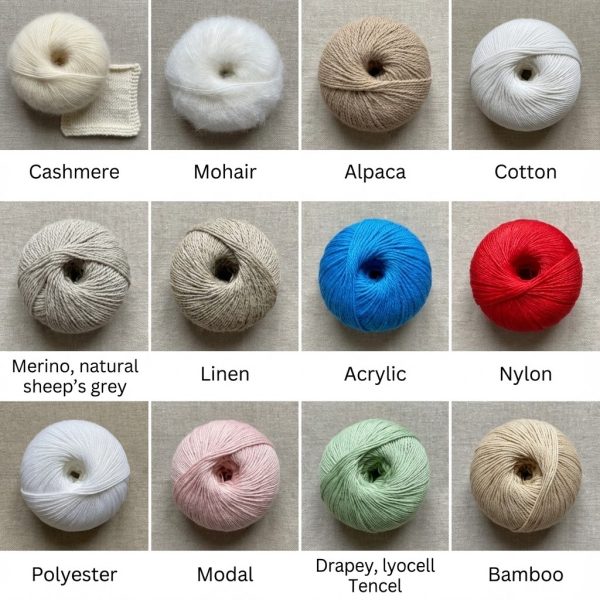
Natural Fibers
Natural fibers offer breathability, comfort, biodegradability, and premium handfeel. They are widely used in mid- to high-end knitwear collections.
Wool / Merino
Wool fibers come from sheep and provide unmatched warmth, elasticity, and moisture-wicking ability.
Merino wool—sourced from Merino sheep—is finer (17–21 microns), softer, and superior for next-to-skin comfort.
Key characteristics:
Excellent thermal insulation
Natural stretch & recovery
Moisture-wicking + odor control
Suitable for 3D knitting, cables, ribs, waffle, jacquard
Common applications:
Premium sweaters, base layers, cardigans, scarves, outdoor knitwear.
Alpaca
A luxury fiber known for exceptional softness and hypoallergenic properties.
Baby alpaca (21–23 microns) is especially prized for softness and loft.
Key characteristics:
30–40% warmer than wool
Natural sheen
Low pilling, long fibers
Hypoallergenic (no lanolin)
Common applications:
High-end sweaters, brushed knitwear, oversized silhouettes, mohair alternatives.
Cashmere
Collected from the undercoat of cashmere goats, offering a soft, lightweight, ultra-luxury feel.
Key characteristics:
One of the softest fibers in knitwear
Lightweight warmth
High value, premium positioning
Requires careful tension, washing, de-pilling processes
Common applications:
Luxury sweaters, scarves, thin-gauge women’s knitwear, premium loungewear.
Cotton / Organic Cotton
Cotton is a breathable, durable, and widely available natural fiber.
Organic cotton is grown without chemical pesticides and widely used in sustainable collections.
Key characteristics:
Skin-friendly, breathable
Strong and durable
Ideal for spring/summer knitwear
Works well with intarsia, jacquard, and fine-gauge knitting
Common applications:
Tops, polos, dresses, cardigans, children’s knitwear, summer sweaters.
Linen
Derived from flax fibers, linen offers strong breathability and a natural, textured drape.
Key characteristics:
Highly breathable & moisture-wicking
Crisp, natural handle
Sustainable and biodegradable
Often blended to reduce stiffness
Common applications:
Summer sweaters, lightweight cardigans, resortwear, open-knit structures.
Synthetic Fibers
Synthetic fibers improve durability, elasticity, price competitiveness, and colorfastness—vital for mass production.
Acrylic
A widely used wool alternative with excellent bulk and softness.
Key characteristics:
Lightweight & warm
High colorfastness
Cost-efficient and versatile
Ideal for brushed effects (AC mohair)
Common applications:
Mass-market sweaters, chunky knits, brushed mohair-style garments, kidswear.
Nylon (Polyamide)
An elastic, strong, and abrasion-resistant fiber often used to improve performance.
Key characteristics:
High elasticity and strength
Improves durability of blends
Enhances recovery and stretch
Ideal for ribbed knitwear and sports knits
Common applications:
Leggings, rib tops, sportswear knits, seamless construction.
Polyester
A durable, stable, and cost-effective synthetic fiber.
Key characteristics:
Excellent shape retention
Quick-drying & moisture-wicking
High color stability
Ideal for price-sensitive production
Common applications:
Sweaters, hoodies, uniforms, kidswear, sports-inspired knitwear.
Recycled Fibers
Recycled fibers support sustainability goals and meet global compliance standards (GRS, RCS).
GRS Yarn (Global Recycled Standard)
GRS-certified yarns ensure verified recycled content and sustainable processing.
Key characteristics:
Verified recycled content
Lower carbon footprint
Supports ESG requirements
Available in wool, polyester, nylon, cotton blends
Common applications:
Eco collections, brand sustainability programs, premium basics.
Recycled Polyester (rPET)
Made from recycled PET bottles; widely used in sustainable knitwear.
Key characteristics:
Quick-drying, durable
Excellent colorfastness
Lower environmental impact than virgin polyester
Common applications:
Sports sweaters, uniforms, cardigans, fashion basics.
Regenerated Fibers
These fibers are engineered for softness, drape, and moisture management while remaining eco-focused.
Modal
A regenerated cellulose fiber made from beechwood pulp.
Key characteristics:
Exceptionally soft & silky
High moisture-wicking
Drapy, smooth handfeel
Often blended with cotton or polyester
Common applications:
Women’s tops, fine-gauge sweaters, loungewear, layered knits.
Tencel (Lyocell)
A premium eco-friendly fiber made through a closed-loop production process.
Key characteristics:
Silky, cool handfeel
Excellent breathability
Strong both wet and dry
Sustainable and biodegradable
Common applications:
Premium tops, dresses, rib-knit sets, luxury basics.
Bamboo
A cellulose fiber with natural antibacterial properties.
Key characteristics:
Soft and cool touch
Naturally antimicrobial
Suitable for sensitive skin
Often blended for better stability
Common applications:
Babywear, underwear, yoga tops, breathable summer knitwear.
Blended Yarn Types
Blends enhance performance, stability, cost efficiency, and aesthetic qualities.
Wool Blends
Common combinations: wool + nylon, wool + acrylic, wool + polyester.
Benefits:
Improved pilling resistance
Lower cost
Better strength & wash durability
Ideal for mid-market collections
Cotton Blends
Examples: cotton + polyester, cotton + modal, cotton + acrylic.
Benefits:
Enhanced softness (cotton-modal)
Anti-shrink stability (cotton-polyester)
Better stretch (cotton-spandex)
Acrylic Blends
Examples: acrylic + nylon, acrylic + wool.
Benefits:
Cost efficiency
Better handfeel than pure acrylic
Stable for large-scale production
Ideal for brushed effects
How to Select Yarn Based on End Use
Choosing the right yarn depends on function, price, season, and garment structure.
Warmth
Best choices:
Wool / Merino
Alpaca
Cashmere
Acrylic blends
Use cases:
Winter sweaters, outdoor knitwear, thermal layers.
Breathability
Best choices:
Cotton
Linen
Bamboo
Tencel / Modal
Use cases:
Spring/summer tops, dresses, polos, open-knit designs.
Quick-Dry Performance
Best choices:
Polyester
Nylon
rPET
Moisture-wicking blends
Use cases:
Sportswear, travel knitwear, hybrid outdoor sweaters.
Price-Driven Development
Best choices:
Acrylic
Acrylic blends
Polyester
Cotton-polyester blends
Use cases:
Mass market collections, uniforms, high-volume production.