
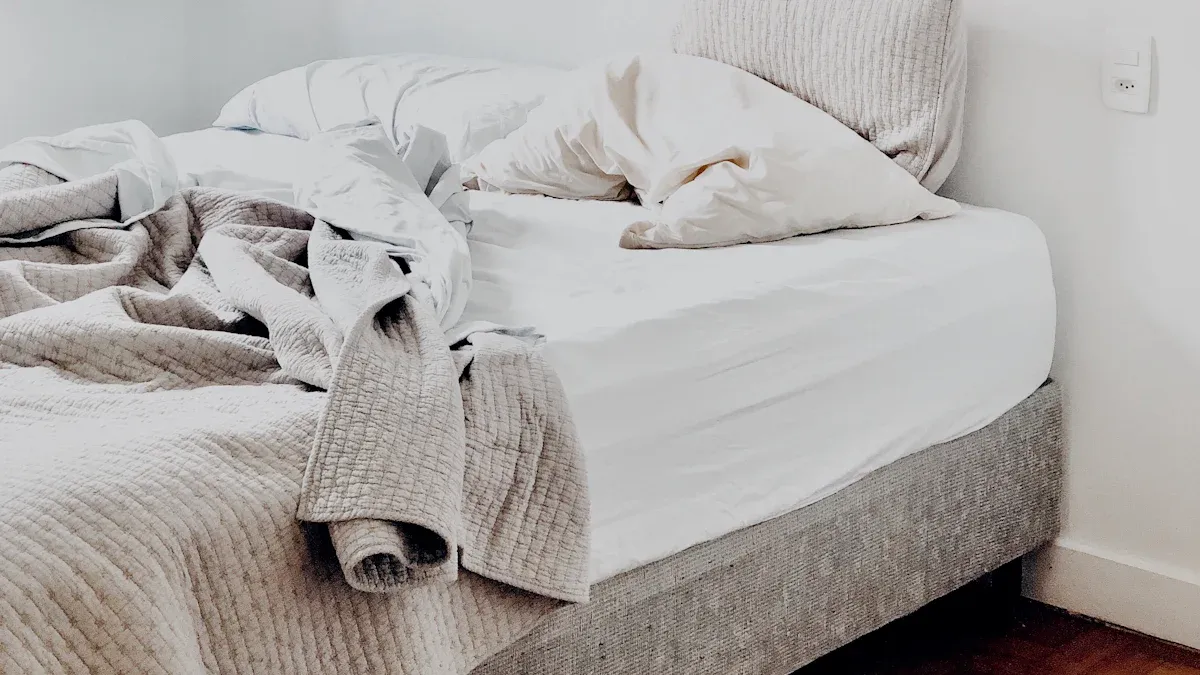
If you’re wondering what is a good thread count for cotton sheets, the ideal range is typically between 300 and 500. Knowing what is a good thread count for cotton sheets helps you find the perfect balance of softness, durability, and breathability, without the sheets feeling too heavy or rough. Many people assume that a higher thread count means better quality, but when it comes to what is a good thread count for cotton sheets, the type of cotton and the weave are often more important. Today, shoppers are more focused on quality and value, especially when choosing Egyptian cotton, and understanding what is a good thread count for cotton sheets can help you make the best choice.
Key Takeaways
The best thread count for cotton sheets is 300 to 500. This range gives you soft, strong, and airy sheets. Higher thread counts are not always better. You should look at the cotton type and weave for comfort. Percale sheets feel cool with a thread count near 500. Sateen sheets feel smooth with a count close to 600. For Egyptian cotton sheets, pick a thread count from 300 to 400. This gives you soft and long-lasting sheets. Always read the labels to make sure they are real. Check for certifications and clear cotton details to get the best sheets.
What Is Thread Count?
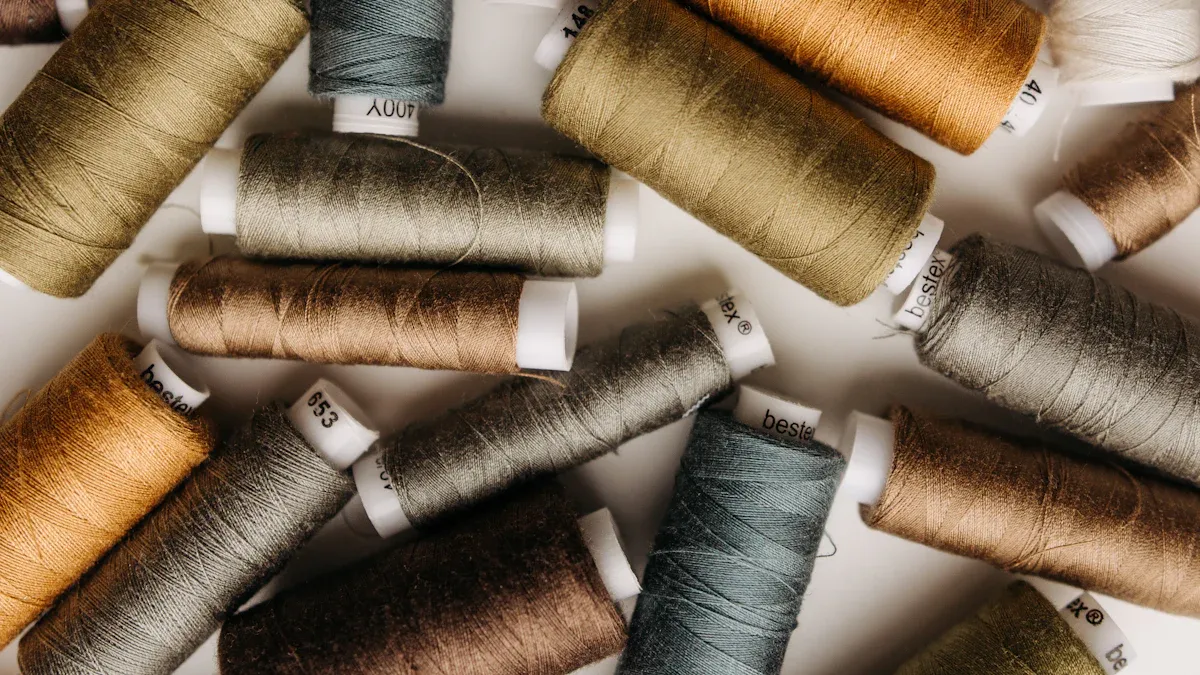
You might see the term “thread count” on almost every sheet package. But what does it really mean? Thread count tells you how many threads run both up-and-down and side-to-side in one square inch of fabric. This number can help you compare different sheets, but it’s not the only thing you should look at.
How Thread Count Is Measured
Let’s break down how thread count is measured.
Thread count is the total number of threads woven together in a square inch, counting both vertical and horizontal threads.
For example, if you have 50 threads going across and 50 threads going down, your sheet has a thread count of 100.
A thread count of 200 means there are 100 threads lengthwise and 100 threads widthwise in each square inch.
The higher the thread count, the denser the weave. This can make sheets feel softer, but only up to a point.
Tip: Don’t get caught up in the numbers alone. Sometimes, a sheet with a lower thread count feels better because of the quality of the cotton or the way it’s woven.
Common Myths About Thread Count
You’ve probably heard that higher thread count always means better sheets. That’s not true. Here are some common myths:
A higher thread count does not guarantee better quality. Sometimes, it can even make sheets less comfortable.
Some manufacturers use double- or triple-ply threads to inflate the thread count. This can trick you into thinking the sheets are better than they really are.
Sheets with super high thread counts can feel heavy and less breathable. You might end up sweating at night instead of sleeping comfortably.
Remember, thread count matters, but it’s not the only thing to check. Look for honest labels and pay attention to the feel of the fabric. Quality cotton and a good weave can make a bigger difference than just a high number.
Best Thread Count for Cotton Sheets

When you shop for cotton sheets, you probably see lots of numbers on the packaging. You might wonder what is a good thread count for cotton sheets and if a higher number means better quality. In 2026, experts agree that the best thread count for cotton sheets falls between 300 and 500. This range gives you a soft, durable, and breathable sheet that feels great every night. If you go above 500 or 600, you won’t get more comfort or strength. In fact, you might end up with sheets that tear more easily or trap heat.
Percale vs. Sateen Thread Count
You’ll notice two main types of cotton sheets: percale and sateen. Each weave has its own feel and ideal thread count for sheets. Let’s break down the differences:
Feature | Percale | Sateen |
|---|---|---|
Weave Style | One thread over, one thread under | One thread under, three threads over |
Feel | Cool, light, matte finish | Luxurious, soft, heavier weight |
Breathability | Great breathability | Less breathable |
Durability | Durable, softens with washes | Tends to wear more quickly |
Percale sheets work best with a thread count around 500. They feel crisp and cool, perfect if you get hot at night. Sateen sheets feel smoother and heavier, and their best thread counts are closer to 600. You get a silky touch, but they don’t breathe as well as percale. If you want the best cotton sheets for summer, percale is a smart choice. For a cozy winter feel, sateen might suit you better.
Tip: Don’t chase a high thread count for sheets. Once you reach the ideal range for each weave, extra threads don’t make a big difference. You might even notice your sheets feel less comfortable or wear out faster.
Good Thread Count for Egyptian Cotton Sheets
Egyptian cotton sheets are famous for their luxury and softness. You might think you need a super high thread count, but that’s not true. The good thread count for Egyptian cotton sheets is usually between 300 and 400. This range gives you the perfect balance of softness, durability, and breathability. Genuine Egyptian cotton sheets almost always fall in this range.
If you want to make sure you’re buying real Egyptian cotton sheets, look for these signs:
The fabric should have a unique luster and sheen.
The label should clearly state the percentage of Egyptian cotton.
Check the stitching. Authentic sheets have even stitching and no loose threads.
Make sure the product is made from 100% cotton sheets, not a blend.
Buy from trusted brands with transparent sourcing.
You’ll notice that the best thread count for Egyptian cotton sheets is lower than what some brands advertise. That’s because high thread count doesn’t always mean better quality. In fact, sheets with a thread count above 500–600 can be less comfortable and more likely to tear. Some companies use tricks to inflate the thread count, like using multi-ply threads, but this doesn’t improve the feel or durability.
Here’s what happens when you go above the recommended range:
Sheets don’t get softer after 500–600 threads.
Tighter weaves can trap heat and make you sweat.
The fabric may tear more easily.
You might pay more for marketing hype instead of real comfort.
If you want the best cotton sheets, focus on the quality of the cotton and the weave, not just the numbers. When you know what is a good thread count for cotton sheets, you can shop with confidence and enjoy a better night’s sleep.
Other Factors for Choosing Cotton Sheets
Cotton Quality & Weave
When you want the best sheets for your bed, you need to look at cotton quality. Long-staple cotton makes high-quality sheets. These fibers are longer and stronger, so your bedding sheets feel softer and last longer. Short-staple cotton can feel rough and wear out faster. You should also pay attention to the weave. The weave changes how your bedding sheets feel and how long they last. Here’s a quick look:
Feel | Durability | |
|---|---|---|
Percale | Soft, crisp, breathable | Durable, long-lasting |
Sateen | Silky-smooth, slightly warmer | Can be delicate and prone to damage |
Percale gives you cool, crisp bedding sheets that last. Sateen feels smooth and cozy but can snag or wear out faster. If you want the best sheets for summer, try percale. For a warmer feel, sateen works well.
Fiber Content & Construction
You should always check what your bedding sheets are made of. The fiber content and how the cotton fabric is put together matter a lot. High-quality fabric means your bedding sheets will stay soft and strong, even after many washes. Here’s a table to help you compare:
Durability | Care Requirements | Softness Retention | |
|---|---|---|---|
Cotton | High | High-heat washing, heavy detergents | Moderate |
Bamboo | Moderate | Gentle handling, lower heat settings | High |
Cotton sheets are tough and can handle hot washes, but they may lose some softness over time. Bamboo bedding sheets need gentle care but stay soft longer. Always read the label to know what you’re getting. The best sheets use high-quality fabric and strong construction.
Marketing Tactics to Avoid
Shopping for bedding sheets can get tricky. Some brands use sneaky tricks to make their products sound better. Watch out for these common tactics:
Some bedding sheets say “Egyptian cotton” but only have 51% real Egyptian cotton.
Not all Egyptian cotton is top quality. Some is just regular cotton grown in Egypt.
Sheets made from Gossypium Barbadense cotton from other places can still get labeled as “Egyptian cotton.”
In the past, some brands sold bedding sheets as “Egyptian cotton” when they were not. This led to big scandals and lots of returns.
If you want the best sheets, always check the label and buy from trusted stores. Look for clear details about the cotton type and where it comes from. This helps you get high-quality sheets that feel great and last longer.
Practical Tips for Buying Sheets
What to Look for on Labels
When you shop for cotton sheet sets, the label tells you a lot about what you’re getting. You want to make sure you’re buying something real and high-quality. Here’s what you should check:
Look for certifications like GOTS, OEKO-Tex, or USDA Organic. These show the sheets meet strict standards for safety and quality.
Check if the label says “100 percent cotton.” This means you get better breathability and comfort.
See if the brand shares details about where and how the sheets are made. Brands that talk about their supply chain and production are usually more trustworthy.
Notice the type of cotton. Long-staple cottons like Egyptian or Pima feel softer and last longer.
Pay attention to the weave. Percale feels crisp and cool, while sateen feels smooth and a bit warmer.
Watch for natural color changes. Organic cotton sometimes has small color differences because of natural dyes.
Make sure the label is clear and not confusing. Some labels try to trick you with fancy words.
Tip: If you see a label with lots of certifications and clear details, you’re probably looking at a good set of sheets.
Balancing Thread Count and Quality
You might think a higher thread count always means better sheets, but that’s not true. You want to find a good thread count for sheets, but you also need to look at other things. Here’s how you can balance thread count and quality:
Choose sheets with a thread count between 300 and 500. This range gives you softness and breathability without making the sheets too heavy.
Look at the quality of the threads. Sheets made with strong, long fibers feel better and last longer.
Think about the weave. Percale and sateen both have their own feel, so pick what you like best.
For warm weather, go for lighter, more breathable sheets. In cooler weather, a slightly higher thread count can help keep you warm.
If you see sheets with a thread count over 1200, be careful. These can be weaker and less durable.
For other materials like jersey or microfiber, check the GSM (grams per square meter) instead of thread count.
Note: A well-made sheet with a good thread count and high-quality cotton will always beat a cheap sheet with a super high thread count.
If you follow these tips, you’ll find cotton sheets that feel great and last a long time.
You now know the best thread count for cotton sheets is usually between 300 and 500. Experts agree that higher thread counts can be misleading and don’t always mean better comfort or durability. When you shop, look for:
High-quality cotton like Egyptian or Pima
Honest labels with clear fiber content
Weaves like percale or sateen for your favorite feel
Tip: Trust your touch—if the sheets feel soft and sturdy, you’re making a smart choice!
FAQ
What thread count feels the softest?
You’ll find that sheets with a thread count between 300 and 500 feel the softest. High-quality cotton and a smooth weave make a big difference. Trust your touch—if the sheets feel soft in your hands, you’ll love sleeping on them.
Do higher thread counts last longer?
Not always. Sheets with a thread count above 500 can wear out faster. They might use weaker, thinner threads. For long-lasting sheets, pick a good thread count and strong cotton fibers.
How can I tell if my sheets are real Egyptian cotton?
Check the label for “100% Egyptian cotton.” Look for trusted certifications. Buy from brands that share where their cotton comes from. If the price seems too low, the sheets might not be real.
How do I keep my cotton sheets soft?
Wash your sheets in cool or warm water. Use a gentle detergent. Skip fabric softeners—they can build up on the fabric. Dry your sheets on low heat or hang them outside for a fresh feel.