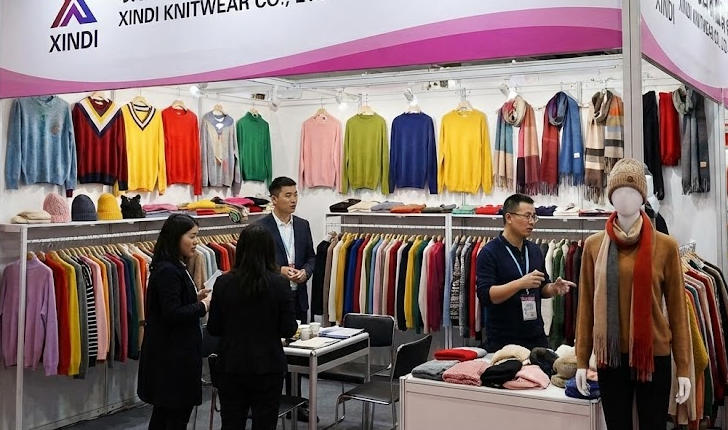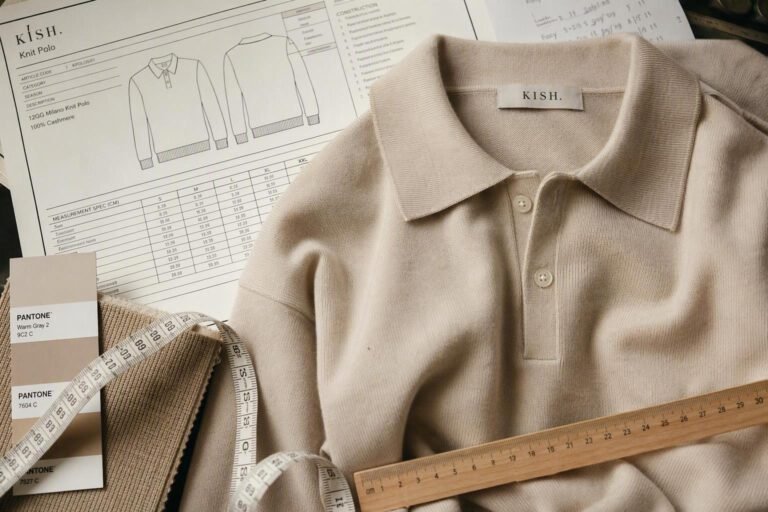

Conflict-of-interest note: This is a first‑party, evidence-led review of Xindi Knitwear’s capability for WHOLEGARMENT gothic cross sweaters. We follow a transparent methodology, cite authoritative sources for definitions and standards, and mark any unverified claims as Insufficient data.
Verdict in brief: If you need WHOLEGARMENT gothic cross sweaters with a fast sample-to-season runway and consistent heavy‑gauge motif fidelity, Xindi looks promising based on published process documents and technology stack. However, to convert promise into proof, buyers should request first‑party artifacts for three areas: (1) WHOLEGARMENT‑specific 3–5 day sampling logs, (2) heavy‑gauge motif clarity photos and measurements, and (3) AQL results with lab test excerpts. Xindi’s pages already outline the workflows and AQL levels, and the WHOLEGARMENT fundamentals are supported by Shima Seiki and CottonWorks, but outcome proof should be shared per project.
Key takeaways
Fast sampling is core to Xindi’s positioning. Public pages mention 3–5 days for sampling, but there’s no page that explicitly binds that SLA to WHOLEGARMENT jobs as of 2026‑02‑02. Ask for time‑stamped sample logs and courier receipts for your style.
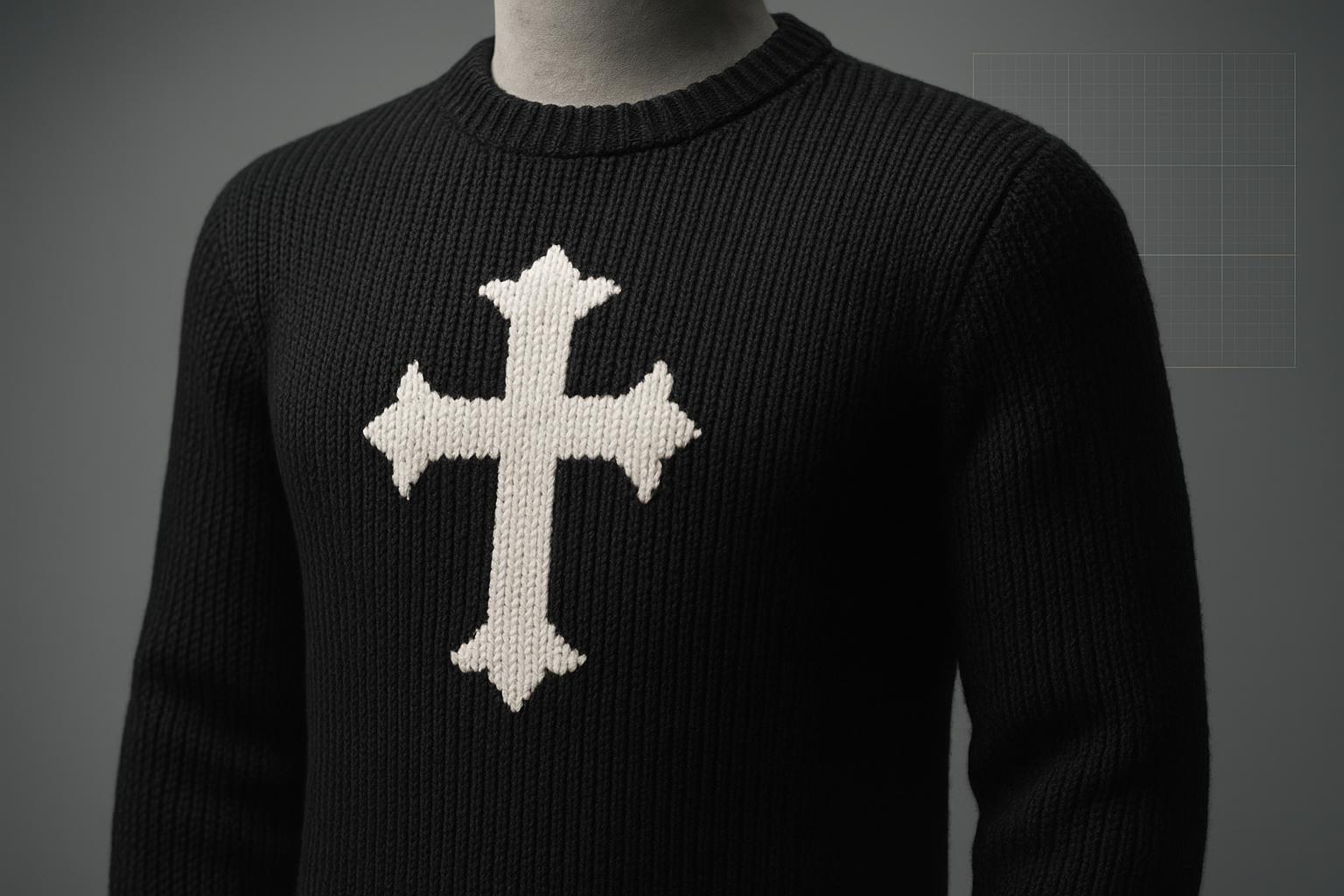
Heavy‑gauge motif clarity (3G–5G) benefits from seamless construction because there are no panel seams to distort a large gothic cross. This is consistent with WHOLEGARMENT principles described by Shima Seiki and educational primers from CottonWorks.
Reproducibility and AQL: Xindi publishes AQL level policies and process checkpoints; buyers should still review measurement sheets, inspection summaries, and, where relevant, lab tests (pilling, shrinkage, colorfastness) for their lots.
Certification readiness: The site explains OEKO‑TEX, GRS, RWS, and GOTS approaches; request certificate IDs, scopes, validity dates, and verification links tied to your POs to complete the chain of custody.
How we evaluate (testing protocol)
As a factory‑aware reviewer, we evaluate this category using a standard protocol. For WHOLEGARMENT gothic cross sweaters we look at:
Environment and tools: Shima Seiki WHOLEGARMENT‑capable flat knitting, SDS‑ONE APEX for programming and jacquard mapping; standard finishing cycles. Technology context for WHOLEGARMENT is described by Shima Seiki in its machine documentation and the SDS‑ONE APEX overview, while educational context on seamless/integral knitting appears in CottonWorks primers.
Motif dataset and measures: A centered gothic cross motif sized to a defined pixel/needle grid. We assess distortion index (grid overlay), edge clarity (macro), and centerline deviation (mm). Seamless shoulders are visually verified to avoid seam-induced deflection.
Reproducibility & QC: Tolerances vs. tech pack (mean absolute error on key POMs), GSM variance, AQL plan used (e.g., 2.5 for major), and pass/fail counts by defect category. Applicable lab tests include pilling (ISO 12945), shrinkage (ISO 5077/6330), and colorfastness (ISO 105 series).
Certification trail: OEKO‑TEX / GRS / RWS / GOTS documentation, including certificate IDs, scopes, validity dates, and verification URLs.
Evidence status labeling in this review: “Verified publicly” means supported by an authoritative public URL; “Project evidence required” means we need first‑party artifacts for your specific style/lot.
Hero angle 1A: 3–5 day sampling and capacity lock
What’s public: Xindi’s process and guide pages consistently reference fast sampling, often “3–5 days,” for knitwear sampling. See the educational overview of WHOLEGARMENT on the Xindi site for technology context, and the production process page for milestones. These are Verified publicly via internal documentation pages, but none of the surfaced public pages explicitly tie the 3–5 day SLA to WHOLEGARMENT jobs as of 2026‑02‑02 (Project evidence required).
What to verify on your project:
Timestamps from design handoff to sample out (calendar days and hours by milestone: programming, first knit, finishing, QC, dispatch).
Courier receipts and PM system logs aligning with a 3–5 day window.
Capacity lock notes aligned to your season window (machine reservation, yarn allocation confirmations).
Practical buyer tip: Ask any factory for an event‑timed sampling Gantt and a “spec freeze” rule. It’s the fastest way to learn whether the 3–5 day claim holds under real‑world change requests.
Helpful reading on Xindi:
WHOLEGARMENT overview and workflow at Xindi: the 3D knitting primer explains seamless production in a single run and SDS‑ONE APEX use. Link: the 3D Knitting & WHOLEGARMENT page on knitwear.io.
Production lifecycle and QC checkpoints: see the OEM/ODM process page for milestone structure and lead‑time management.
Internal links used in this section:
For WHOLEGARMENT principles and Xindi’s workflow, explore the educational overview on the 3D Knitting & WHOLEGARMENT page: 3D knitting and WHOLEGARMENT at Xindi.
For milestones and lead‑time management, see the process explanation: OEM/ODM knitwear production process.
Hero angle 1B: Motif clarity at heavy gauges (3G–5G)
Why seamless matters: WHOLEGARMENT is knitted as one piece, eliminating panel linking seams that can skew large motifs. Shima Seiki explains the principle of whole‑piece knitting and the role of SDS‑ONE APEX in design-to-knit workflows. CottonWorks’ knit machinery primers also describe how integral/seamless approaches can support better fit and fewer seam issues. Together, these support the expectation that a large gothic cross motif benefits from seam‑free construction in heavy‑gauge programs.
What to measure on your sample (Project evidence required):
Distortion index: Place a transparent grid over macro photos and calculate percentage distortion across the motif arms.
Edge clarity score: Qualitative 1–5 with macro photography showing stitch boundaries.
Centerline alignment: Measure deviation from placket/centerline in millimeters across sizes.
Gauge and density settings: Record stitch length, take‑down and tension files for reproducibility.
Planning gauge with Xindi: Heavy‑gauge choices (3G–5G) change yarn, weight, and motif “pixel” size. For background on how gauges map to fabric character, Xindi’s educational resources on gauge selection and sweater types are helpful: Knitting machine types and gauge selection and Sweater types by gauge.
External technology context:
Shima Seiki’s WHOLEGARMENT machines and SDS‑ONE APEX design system describe the platform enabling precise stitch control. See the official machine pages and design system overview on shimaseiki.com.
CottonWorks’ knit machinery primers explain integral/seamless construction benefits for knitwear engineering.
Reproducibility and AQL stability
Definitions and expectations: AQL (Acceptable Quality Limit) sampling is a standard method to decide lot acceptance using defined defect categories and Ac/Re thresholds. A widely used explainer of apparel AQL practice is provided by QIMA, which aligns with ISO/ANSI sampling conventions.
What Xindi publishes: Xindi’s quality pages describe typical AQL levels used for knitwear (for example, AQL 2.5 for general orders and 1.5 for luxury programs) and outline inspection scope. That’s Verified publicly. What’s still needed for your confidence is Project evidence: historical pass‑rate snapshots, a recent inspection sheet showing sample size, Ac/Re, and defect tallies; plus measurement sheets showing tolerances vs. tech pack and GSM variance.
What to ask for:
AQL plan committed for your lot (e.g., AQL 2.5 major, 4.0 minor) and a redacted inspection sheet sample.
Measurement sheets across graded sizes (XS–XL) with mean absolute error vs. tech pack.
Any lab test summaries where relevant to your market: pilling, shrinkage, and colorfastness.
Certification readiness and traceability
What the site explains: Xindi describes working with OEKO‑TEX, GRS, RWS, and GOTS materials and why they matter for sustainability narratives and compliance. That’s Verified publicly at a conceptual level.
What robust proof looks like on your PO (Project evidence required):
Certificate IDs with issuer, scope, and validity dates.
Verification links (e.g., OEKO‑TEX Label Check, Textile Exchange databases) showing current status.
Transaction certificates or supplier chain documents tying yarn → dyehouse → factory to your purchase order and colorways.
Value, MOQ flexibility, and project management
For emerging brands, low MOQs and predictable timelines matter as much as stitch engineering. Xindi’s content signals comfort with low‑MOQ programs and fast sampling. To translate that into predictable value, request quotes that separate yarn, knitting, finishing, and packaging costs, and confirm surcharge rules for multi‑color/multi‑size runs. A practical project rhythm: define a spec‑freeze milestone before knitting, publish a change‑log, and agree on response SLAs. It sounds basic, but this is how you actually hit season windows.
Scorecard (as of 2026‑02‑02)
Dimension | Weight | Our current take |
|---|---|---|
Sampling speed & reliability | 20 | Promising based on public 3–5 day sampling statements; WHOLEGARMENT‑specific SLA requires project artifacts (Insufficient data). |
Motif clarity & garment construction (3G–5G) | 25 | WHOLEGARMENT theory supports seam‑free fidelity; need macro photos, grid overlays, and tension/density files from an actual gothic cross program (Insufficient data). |
Reproducibility & AQL stability | 20 | AQL levels and QC scope described publicly; confidence improves with recent inspection sheets and graded measurement data (Project evidence required). |
Certification readiness & documentation | 12 | Certification frameworks discussed; require certificate IDs, scopes, and verification links tied to buyer POs (Project evidence required). |
Communication & project management | 13 | Process pages suggest milestone discipline; buyer should confirm PM response SLAs and change‑log practice on a live project. |
Value & MOQ flexibility | 10 | Low‑MOQ positioning is clear; ask for transparent quotes with assumptions and surcharge rules to compare landed cost across suppliers. |
Alternatives and buyer’s evidence checklist
If you’re short‑listing WHOLEGARMENT OEMs (EU, Turkey, or China), compare on the same evidence. Bring this checklist to each vendor:
WHOLEGARMENT‑specific sampling logs proving a 3–5 day window (timestamps + courier).
Macro photos with grid overlays for your gothic cross motif on the chosen gauge (3G or 5G), plus stitch density and tension settings.
AQL inspection sheet example (AQL level, sample size, Ac/Re, defect categories) and a recent lot summary.
Lab test summaries for pilling (ISO 12945), shrinkage (ISO 5077/6330), and colorfastness (ISO 105) if applicable.
Certificate IDs and verification URLs for OEKO‑TEX, GRS, RWS, or GOTS materials tied to your PO.
Who this is for — and who should look elsewhere
Best fit: Indie and emerging brands that want a seam‑free heavy‑gauge statement piece (e.g., a bold gothic cross) and care about fast samples, transparent QC, and certification traceability.
Not ideal: Teams that require published, third‑party lab reports and certificate IDs on a public page before engagement; you’ll need to obtain those artifacts under NDA during development.
Sources and further reading
WHOLEGARMENT technology context and design workflow from Shima Seiki: see the official machine portfolio and the SDS‑ONE APEX design system overview on shimaseiki.com.
Educational primer on knit machinery and integral/seamless approaches from CottonWorks: Knit machinery primer and manufacturing basics.
AQL in apparel QC with examples and table logic (ISO/ANSI conventions) from QIMA: How AQL sampling works in apparel inspections.
For WHOLEGARMENT fundamentals and Xindi’s own process overview, see: 3D knitting and WHOLEGARMENT at Xindi and OEM/ODM knitwear production process. Gauge planning context: Knitting machine types and gauge selection.
—
Soft next step: If you’d like to review Xindi’s WHOLEGARMENT workflows and discuss evidence expectations for your gothic cross style, visit the official overview page: Xindi’s WHOLEGARMENT capability.