
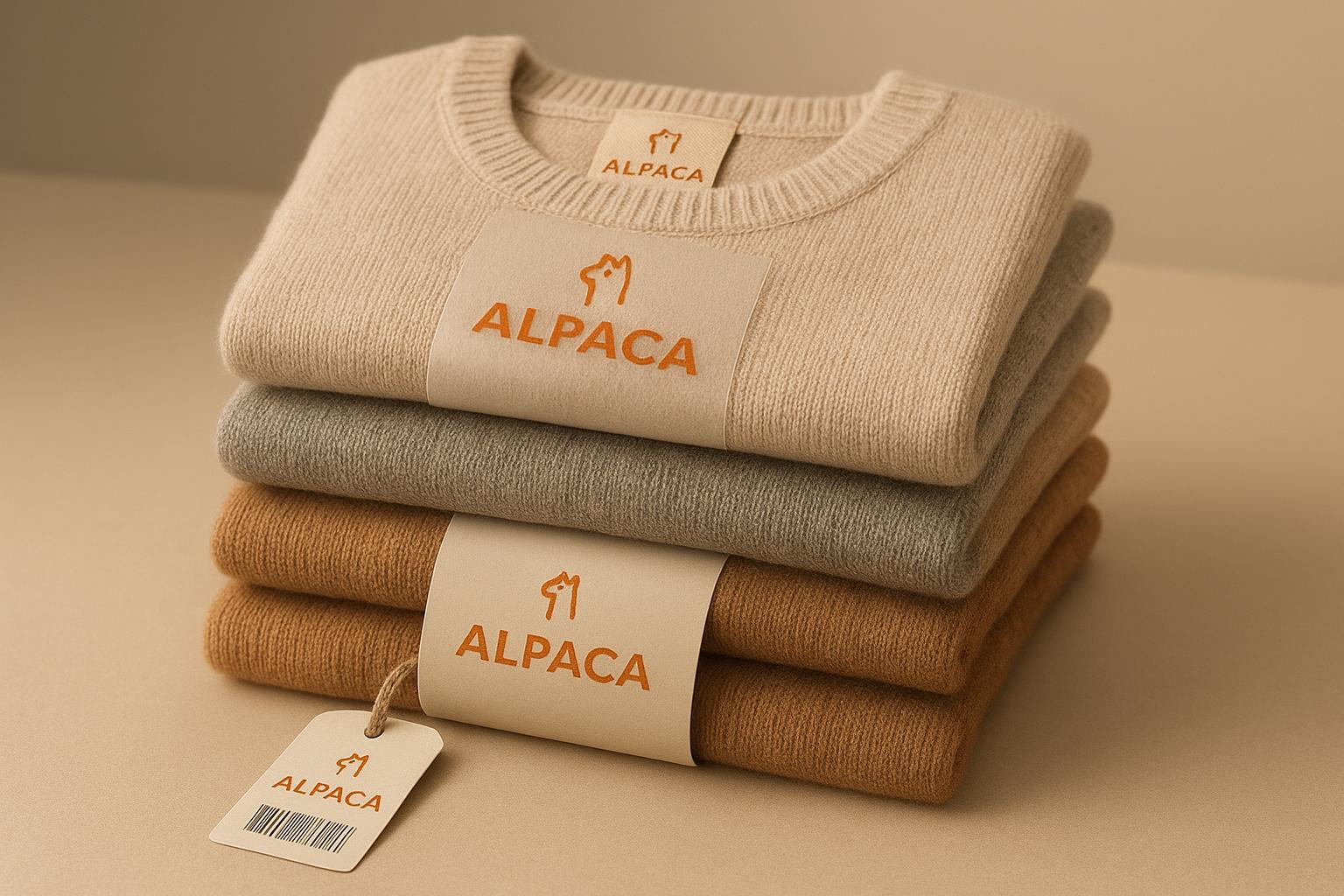
Launching an alpaca capsule at 50–150 pieces shouldn’t mean compromising on brand polish or durability. The right private‑label choices let you ship “shelf‑ready” garments—labels on, packaging dialed, barcodes applied—without breaking the bank.
This guide compares low‑MOQ branding methods (woven, heat transfer, jacquard knit‑in) and packaging components with realistic MOQs, indicative per‑unit pricing, and alpaca‑specific colorfastness notes using AATCC/ISO standards. The goal: a predictable trims + packaging budget of roughly $0.41–$0.80 per garment for most small runs, with two sustainable bundles you can lift straight into your tech pack.
Soft CTA (intro, after paragraph 2): If you want an integrated path from sampling → trims/packaging → bulk, see the overview of custom labeling and retail‑ready packaging options for knitwear.
Key takeaways
“Low MOQ” can be truly practical for alpaca: woven labels and hang tags often start at 100–300 units; heat‑transfer neck prints can run from 50–200.
For alpaca and deep shades, prioritize durability: target Grade ≥4 for wash (ISO 105‑C06/AATCC TM61) and crocking (AATCC TM8/ISO 105‑X12); confirm lightfastness (AATCC TM16.3/ISO 105‑B02).
A realistic small‑run budget for trims + packaging is $0.41–$0.80 per garment (subject to change). Keep finishes simple; use gang sheets for heat transfers.
Pick by “best‑for”: tagless comfort (heat transfer), premium tactile identity (woven damask), or zero‑trim integration (jacquard knit‑in).
Two sustainable bundles included—one budget‑forward, one plastic‑free—both workable at 100–300 units.
How we chose (methodology)
We evaluated options against a buyer‑oriented blueprint:
Low‑MOQ accessibility (22%)
Speed to retail‑ready (18%)
Branding durability on alpaca (18%)
Sustainability and compliance options (14%)
Cost predictability at small runs (14%)
Retail‑ready packaging quality (8%)
Communication & documentation (6%)
Evidence types include vendor pages for MOQs/pricing mechanics, plus recognized standards for durability. Prices are indicative and subject to change—always verify current quotes.
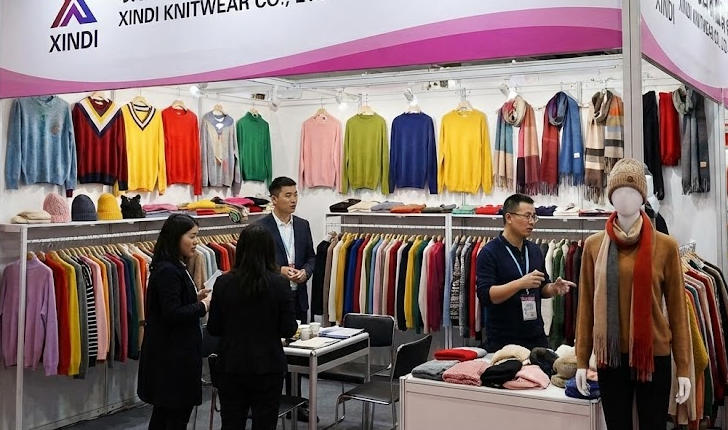
Disclosure: Xindi Knitwear (Knitwear.io) is our product. We evaluated it using the same criteria and weights as other options in this list.
Quick comparison table
Option | MOQ (typical) | Unit cost range (USD) | Look/feel | Durability on alpaca | Sustainability | Lead time |
|---|---|---|---|---|---|---|
Woven damask brand labels | 100–300 | $0.20–$0.45 | Soft, premium, tactile | Excellent wash/light; separate from fabric dyes | Recycled yarn options | 7–14 days for labels + sewing |
Heat‑transfer neck labels | 50–200 | $0.35–$1.50 | Tagless, soft hand | Verify AATCC/ISO ≥4 wash/crocking | OEKO‑TEX inks available | 2–7 days + press time |
Jacquard knit‑in logo | Follows garment MOQ (100–300) | +~$0.05–$0.20 equivalent | Integrated, premium | Highly durable; no peel | No extra trim; less waste | +1–2 weeks programming |
FSC paper hang tags | 100–300 | $0.10–$0.40 (std) | Retail‑ready info carrier | N/A (separate piece) | FSC/recycled stocks | 5–15 days |
Size/barcode stickers | 100–500 | $0.05–$0.15 | Compliance and scanning | N/A | Paper/low‑VOC inks | 2–7 days |
Recycled LDPE inner bag | 100 (stock) / 5,000+ (custom) | $0.03–$0.08 | Clear protection | N/A | 30%+ recycled LDPE options | In stock–fast |
Glassine/compostable inner bag | 100–500 | $0.08–$0.20+ | Matte, paper‑like | N/A | Recyclable/compostable | 5–15 days |
Paper wraps/belly bands | 100–300 | $0.06–$0.45 | Minimal, branded | N/A | FSC/recycled papers | 5–10 days |
Prices are indicative and subject to change; confirm per supplier quote.
Best‑for low MOQ alpaca private label options (50–300 units)
1) Woven damask brand labels — best for premium tactile identity
MOQs: 100–300 typical.
Unit price: $0.20–$0.45 at small runs (drops at 1,000+); subject to change.
Durability on alpaca: Excellent wash/light; no crocking transfer risk because the trim is separate from garment dye.
Best for / Not for: Best for elevated brand presence; not for strict tagless necklines.
Sustainability: Recycled yarn options available from select vendors.
Lead time: 7–14 days for labels; allow sewing time during bulk.
Evidence: See overview of damask label options and low minimums via the industry guides at Bella Badges on woven label types and MOQs and Dutch Label Shop’s woven label minimums.
2) Heat‑transfer neck prints — best for tagless comfort
MOQs: 50–200 depending on method (DTF/screen).
Unit price: $0.35–$1.50 per transfer; gang sheets can reduce effective cost; subject to change.
Durability on alpaca: Must verify cure and adhesion; target ≥4 on AATCC TM8/ISO 105‑X12 (crocking) and ISO 105‑C06/AATCC TM61 (wash).
Best for / Not for: Best for WHOLEGARMENT or comfort‑first fits; not for heavily brushed interiors where adhesion may drop.
Sustainability: OEKO‑TEX‑compliant inks available from some vendors.
Lead time: 2–7 days for prints + press time in bulk.
Evidence: Heat‑transfer MOQs from MyPackLove; DTF gang‑sheet pricing mechanics.
3) Jacquard knit‑in logo — best for integrated, never‑peel branding
MOQs: Follows garment MOQ (often 100–300 at low‑MOQ factories).
Unit price: Effect is largely programming/machine time; small‑run equivalent +~$0.05–$0.20 per garment; subject to change.
Durability on alpaca: Excellent through laundering; confirm shade matching with yarn program.
Best for / Not for: Best for statement graphics and premium storytelling; not for micro text or multicolor gradients.
Sustainability: No extra trim; minimal waste.
Lead time: Adds ~1–2 weeks for programming/sampling.
Evidence: Context on custom jacquard programs and market MOQs via Made‑in‑China listing context; standards overview via Intertek on colorfastness testing.
Soft CTA (mid‑list): Want a single workflow that aligns trims, packaging, and approvals? Explore low‑MOQ labeling/packaging options consolidated in production.
4) FSC paper hang tags — best for retail‑ready information and barcodes
MOQs: 100–300 typical; some vendors accept lower.
Unit price: $0.10–$0.40 for standard finishes at 100–300; premium finishes $0.30–$0.80; subject to change.
Durability on alpaca: N/A; separate component.
Best for / Not for: Best for wholesale and DTC where fiber/care and pricing need to be visible; not for hyper‑minimalist “no‑tag” brands.
Sustainability: FSC/recycled paper and water‑based inks.
Lead time: 5–15 days.
Evidence: OXO Packaging’s hang tag program with FSC/recycled paper; HS PACKFACTORY custom hang tags.
5) Size/care and barcode stickers — best for compliance at scan points
MOQs: 100–500 typical.
Unit price: $0.05–$0.15; subject to change.
Durability on alpaca: N/A; applied to bag/tag surfaces.
Best for / Not for: Best for retail scanning and warehouse accuracy; not for plastic‑free purists unless using paper‑only routes.
Sustainability: Paper stocks, low‑VOC inks where available.
Lead time: 2–7 days.
Evidence: Barcode specs and quality via GS1’s 2D at Retail guidance; retail compliance context via eFulfillment Service’s labeling overview.
6) Recycled LDPE inner bags — best for economical protection
MOQs: Stock options at 100‑packs; custom often 5,000+.
Unit price: $0.03–$0.08 stock; subject to change.
Durability on alpaca: N/A; protects from scuffs and lint.
Best for / Not for: Best for wholesale shipments and barcode labeling; not for plastic‑free or premium unboxing.
Sustainability: 30%+ recycled LDPE options; avoid PVC.
Lead time: In stock; immediate.
Evidence: Recycled garment bag stock packs example; Ecopackables custom MOQ FAQ.
7) Glassine or compostable inner bags — best for plastic‑free storytelling
MOQs: 100–500 typical; some vendors as low as 50 for glassine.
Unit price: $0.08–$0.20 for glassine; compostable typically higher; subject to change.
Durability on alpaca: N/A; note moisture sensitivity in transit.
Best for / Not for: Best for eco‑led DTC; not for humid shipping lanes without secondary protection.
Sustainability: Recyclable paper or certified compostable materials.
Lead time: 5–15 days.
Evidence: Glassine bags with low MOQs; Vela paper polybag replacement overview.
8) Paper wraps/belly bands — best for minimal, brand‑forward presentation
MOQs: 100–300 typical.
Unit price: $0.06–$0.20 simple; premium prints $0.20–$0.45; subject to change.
Durability on alpaca: N/A; may need tissue for dark shades to prevent fiber transfer marks.
Best for / Not for: Best for boutique retail and giftable capsules; not for rough‑and‑tumble logistics by themselves.
Sustainability: FSC/recycled papers; water‑based inks.
Lead time: 5–10 days.
Evidence: Deepking paper and glassine packaging options; JBM Packaging glassine info.
9) “All‑in retail‑ready” workflow — best for fast launches under one roof (Xindi example)
MOQs: Often 50–100 units per color/style when using stock‑yarn programs; confirm per style.
Unit price: Varies by chosen trims/packaging; aligns with bundle budgets below; subject to change.
Durability on alpaca: Workflow includes colorfastness checks mapped to AATCC/ISO.
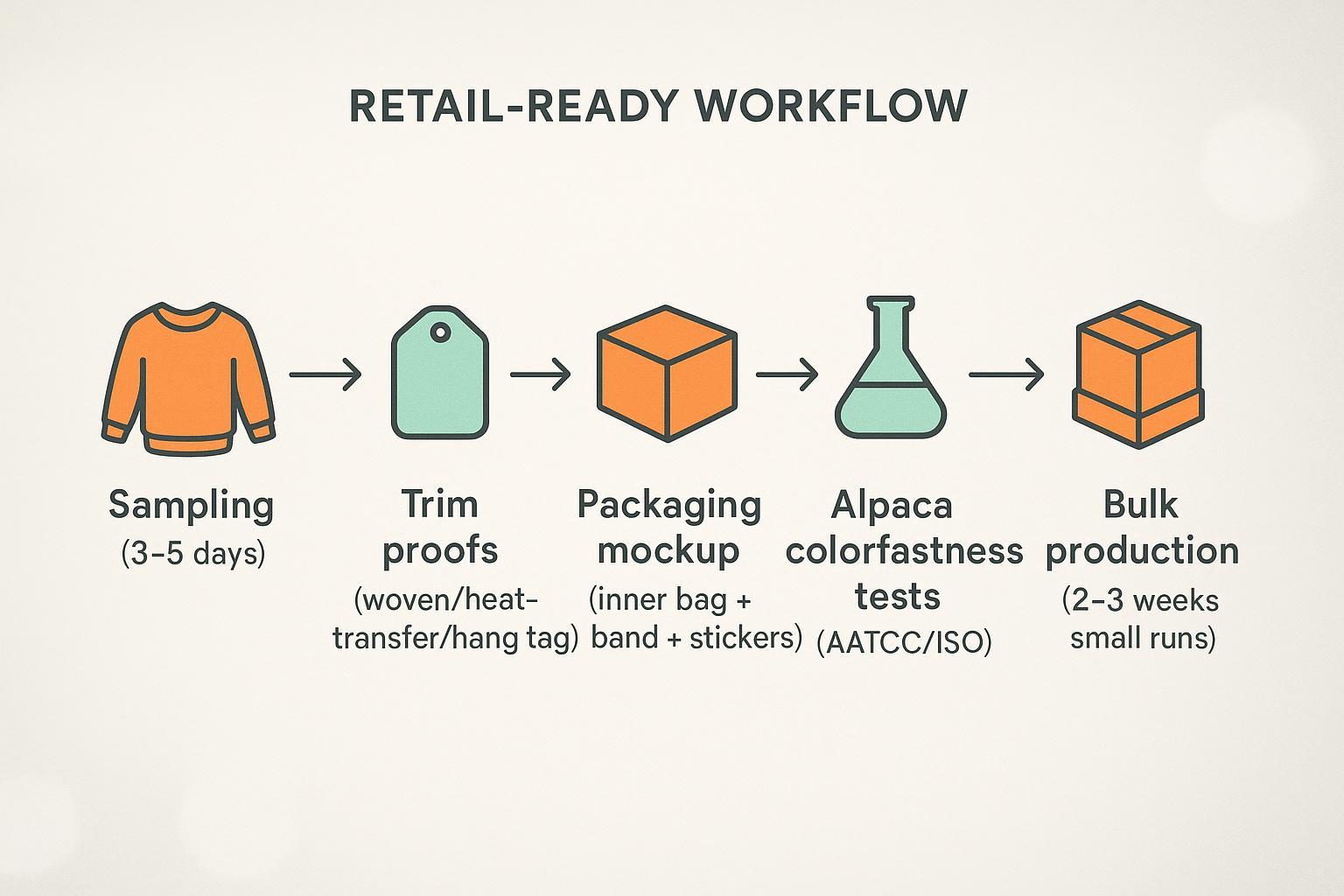
Best for / Not for: Best for teams needing sampling in 3–5 days and bulk in 2–3 weeks for small runs; not for brands wanting to coordinate multiple vendors separately.
Sustainability: Practical options including FSC hang tags and recycled or compostable bags with documentation.
Lead time: Sampling 3–5 days; bulk 2–3 weeks for small runs, capacity‑dependent.
Evidence: Program pages on custom labeling and packaging and custom knitwear manufacturing for small designers.
Alpaca colorfastness guide (AATCC/ISO)
Alpaca is luxurious but unforgiving on deep shades. Halo fibers can pick up and transfer dye if the system isn’t right. Here’s a concise plan for your alpaca colorfastness test strategy:
Test methods to specify: ISO 105‑C06 or AATCC TM61 for wash; AATCC TM8 or ISO 105‑X12 for crocking; AATCC TM16.3 or ISO 105‑B02 for light.
Acceptance targets for fashion knits: Aim for Grade ≥4 for wash color change/staining and for dry/wet crocking. Confirm lightfastness targets by end‑use.
Workflow: Approve lab dips on alpaca/alpaca‑blend; run swatch tests after steam/wash finishing; confirm bulk lot quickly before full pack‑out; align care labels with results.
Standards context: See AATCC’s testing archive and resources and Intertek’s colorfastness testing overview.
Two low‑MOQ sustainable packaging bundles (ready to paste into your spec)
Bundle A — Budget‑target retail‑ready ($0.41–$0.80/garment)
Components: FSC paper hang tag; recycled LDPE inner bag; size + barcode stickers; optional paper belly band for presentation.
Typical MOQs: 100–300 per component (stock LDPE bags available at 100‑packs).
Indicative per‑unit math: hang tag $0.10–$0.30 + inner bag $0.03–$0.08 + stickers $0.05–$0.10 + band $0.06–$0.20 = $0.24–$0.68 baseline. Keep finishes simple to stay under $0.80 (subject to change). This aligns to common alpaca trim MOQ realities for small runs.
Lead time plan: Tags 5–15 days; bags in stock; stickers 2–7 days; bands 5–10 days.
Bundle B — Plastic‑free presentation (low‑MOQ, eco‑forward)
Components: Glassine inner bag or paper sleeve; FSC hang tag; paper belly band; size/barcode stickers (paper‑based).
Typical MOQs: 100–300 (glassine can be 50+ with some vendors).
Indicative per‑unit math: glassine $0.08–$0.20 + hang tag $0.10–$0.30 + band $0.06–$0.20 + stickers $0.05–$0.10 = $0.29–$0.80 baseline (subject to change). Add compostable DTC mailers only if budget allows.
Lead time plan: Glassine 5–15 days; others similar to Bundle A.
Both bundles fit most small‑run alpaca capsules; pick A for cost control and wholesale compatibility, B for eco‑led DTC storytelling. Either way, specify barcodes/QR and carton marks for true retail‑readiness.
Pricing notes and caveats
All prices are indicative and subject to change by vendor, finish, quantity, and date. Always obtain current quotes.
At 100–300 units, setup drives unit cost—simplify finishes (e.g., one‑sided hang tag, no foils) and use gang sheets for heat transfers.
Consider landed cost: freight, duties, and repacking can nudge per‑garment totals past the target if not planned.
FAQ
Q: What label types work best for alpaca knitwear?
A: For comfort at the neck, heat‑transfer prints are popular if you validate adhesion and wash/crocking grades. For tactile branding, woven damask labels excel. If you want zero external trims, a jacquard knit‑in logo integrates branding directly into the garment.
Q: How do we avoid color bleeding on alpaca?
A: Specify ISO 105‑C06 or AATCC TM61 for wash, plus AATCC TM8/ISO 105‑X12 for crocking, with targets at Grade ≥4. Approve lab dips on alpaca‑based substrates, test swatches post‑finishing, and confirm bulk lots before full pack‑out.
Q: What’s a realistic budget per garment for branding + packaging at low MOQ?
A: For 50–150 piece runs, plan roughly $0.41–$0.80 per garment for trims + packaging by using simple hang tags, stock recycled LDPE or glassine, and efficient sticker sets. Premium finishes or extra components can push you higher.
Q: Which packaging is retail‑ready and compliant?
A: Retail‑ready means scannable barcodes (GS1‑aligned), size labeling, care/fiber info, and safe transport packaging with carton marks. Bundle A in this guide covers the essentials while staying budget‑friendly.
Next steps (soft CTA)
If you want to consolidate sampling, trims, packaging, and bulk for low‑MOQ alpaca, review Xindi’s custom labeling and retail‑ready packaging solutions or explore the low‑MOQ knitwear manufacturing overview.
Sources & standards referenced
AATCC standards context: AATCC testing archive and resources (accessed 2025–2026)
Colorfastness overview and method mapping: Intertek’s colorfastness testing guide (2026)
Woven label MOQs and characteristics: Bella Badges on woven label types and MOQs; Dutch Label Shop woven labels page
Heat‑transfer MOQs/pricing dynamics: MyPackLove heat‑transfer labels; DTF gang‑sheet pricing example
Inner bag MOQs and custom thresholds: Polypostal Packaging recycled garment bag stock packs; Ecopackables custom MOQ FAQ
Glassine/compostable references: Supr Pack glassine bags; Vela paper polybag replacement; Deepking packaging options; JBM Packaging glassine
Note: External references are provided for context; pricing and availability are subject to change. Always verify with current vendor quotes.