
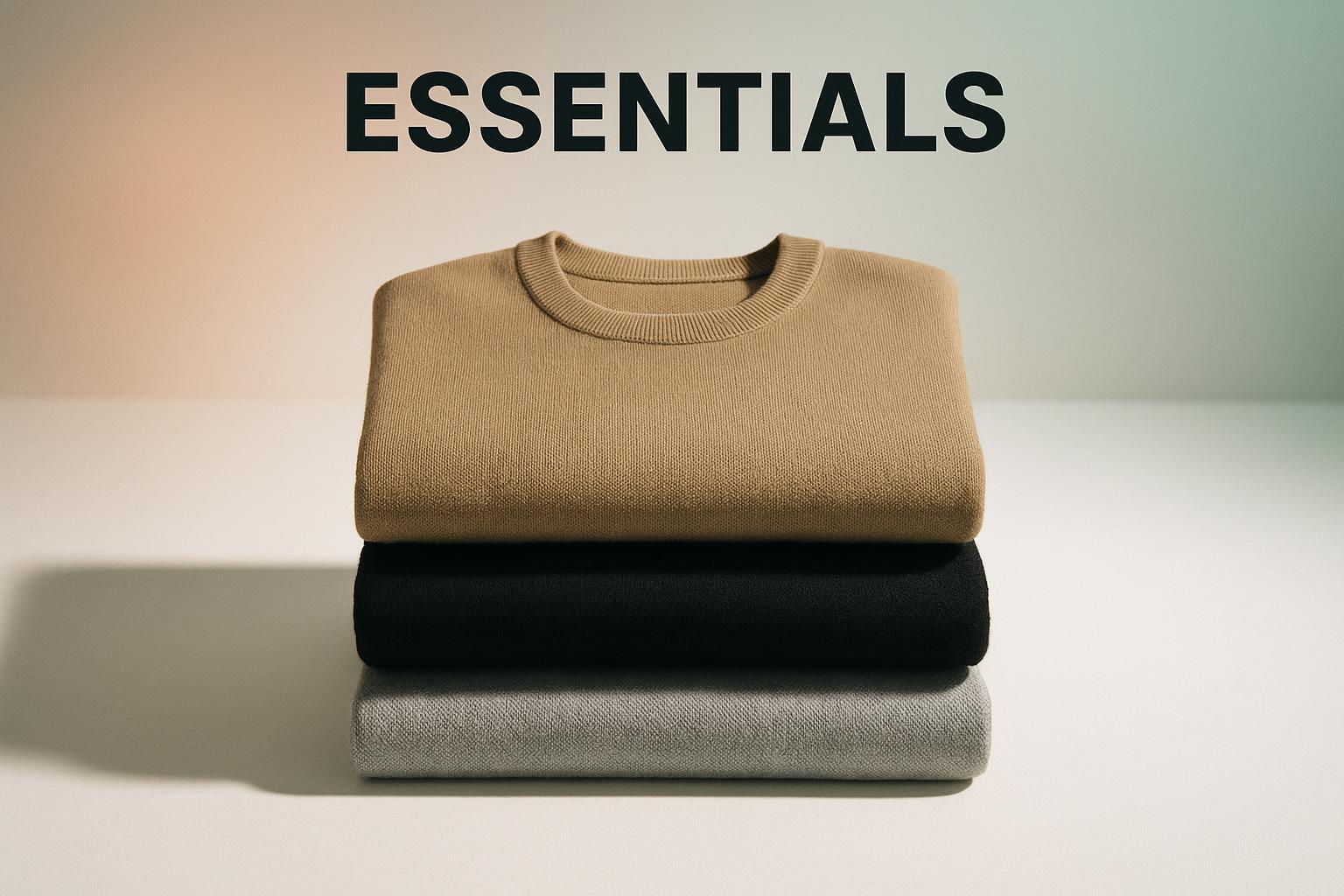
If you’re building a basics line, you’ve likely asked the same question we hear weekly: can you launch anti‑pilling Essentials sweaters at low MOQ without gambling on quality? This first‑party review examines how Xindi Knitwear (Knitwear.io) approaches that challenge, what standards we align to, and how we make performance verifiable—not just promised.
Disclosure: This is a first‑party review by Xindi Knitwear. We follow a testing‑ and evidence‑first approach and clearly label any dimension where public artifacts are not yet available. All process/lead‑time information is as of 2026‑02‑02.
Key takeaways
Low‑MOQ entry without “quality tax”: sampling in 3–5 days and small‑batch options starting at 50 units per style; practical validation runs at 200 pcs/color for DTC basics.
Anti‑pilling target anchored to ASTM D3512 (Random Tumble), with an internal target of Grade ≥4 under defined cycles; we publish methodology and artifacts rather than marketing claims.
Reproducible quality framework: Final AQL inspection (commonly Level II with 2.5 major/4.0 minor policies), DHU tracking for trend analysis, and OTIF monitoring to keep seasonal windows on track.
Fit consistency across repeats: WHOLEGARMENT and fully fashioned programs run with defined POM tolerances and washing/blocking stabilization to keep sample→bulk drift in check.
Evidence culture: Where numeric lab grades or dashboard screenshots are not yet public, we label them “Insufficient data” and point to the exact standards and internal SOPs we use.
How we test and what we consider
We standardize evaluation so you can reproduce it.
Pilling resistance: Anchored to the ASTM D3512 Random Tumble method and graded 5 (no pilling) to 1 (severe). See the official overview in the ASTM D3512 method page.
Dimensional stability: Three care‑label laundering cycles with pre/post measurements; target shrinkage typically ≤2–4% depending on fiber and structure.
Fit reproducibility: Compare POMs (chest, length, across shoulder, sleeve) between approved sample and bulk across size runs; allowable deltas typically within ±0.5–1.0 cm depending on size.
Production quality: Final AQL inspection using ANSI/ASQ Z1.4 (ISO 2859‑1 equivalent). Definitions and typical practice are explained by ASQ’s AQL resources.
DHU (Defects per Hundred Units): Tracked to spot defect trendlines and drive corrective actions; see a concise definition via Fibre2Fashion’s DHU explainer.
OTIF (On Time In Full): Delivery reliability metric, commonly targeted at 95%+ by high‑performing supply chains; see SCOR context in APICS SCOR quick reference.
Within our factory process, these tests are integrated with washing, blocking, and finishing SOPs. For details on those workflows, see our guide to quick sampling and our quality assurance and inline control practices.
Anti-pilling Essentials sweaters low MOQ: quick specs (as of 2026‑02‑02)
Item | Policy/Availability |
|---|---|
Sampling lead time | 3–5 days typical (complex styles/yarns may run 3–7 days) |
Low‑MOQ entry | From 50 units per style; common validation runs at ~200 pcs/color for basics |
WHOLEGARMENT | Available alongside fully fashioned programs (fit parity focus) |
Anti‑pilling target | ASTM D3512 internal target Grade ≥4 under defined cycles (artifacts required) |
QC & inspection | Final AQL (often Level II; typical buyer policies: 0% critical, 2.5% major, 4.0% minor) |
DHU/OTIF | Tracked internally; public dashboards pending (artifacts in preparation) |
Certifications | OEKO‑TEX/GRS/GOTS/RWS sourcing options available via partners; certificate IDs pending publication |
For current production rules and thresholds, see Low MOQ Production.
Anti‑pilling performance (ASTM D3512)
Pills are surface fiber balls that form with abrasion. For everyday Essentials, pilling is the first thing shoppers notice—and the fastest route to returns. Xindi’s target is straightforward: engineer yarn selection, stitch density, and finishing so our Essentials sweaters meet an internal target of Grade ≥4 under ASTM D3512, then document it with side‑by‑side swatch images and lab reports.
How we engineer for fewer pills
Yarn and twist: Favor tighter twists or blends that resist fiber end migration; specify counts appropriate to gauge and intended hand‑feel.
Stitch density and gauge: Dial density for each base to reduce yarn mobility without creating boardiness.
Finishing: Apply enzyme/anti‑pilling washes where appropriate; steam‑set to stabilize the surface; validate with swatch runs by color.
Evidence policy
We will publish lab artifacts (PDFs, swatch photos, machine settings) per colorway once available. Until then, detailed numeric grades are labeled “Insufficient data.” The method remains anchored to ASTM D3512.
Production quality and delivery reliability
AQL at Final: We operate Final AQL inspections (commonly General Inspection Level II) with buyer‑aligned limits (often 0% critical, 2.5% major, 4.0% minor). For context on sampling math and levels, see ASQ’s Z1.4 overview.
DHU trend tracking: We use DHU to monitor process yields and drive corrective actions on the most frequent defects. Definition via Fibre2Fashion’s DHU explainer.
OTIF monitoring: Seasonal calendars matter. Our internal OTIF monitors on‑time, in‑full delivery performance and root‑causes misses to scheduling, material readiness, or change orders. For the supply‑chain standard context, see APICS SCOR quick reference.
Fit and reproducibility (WHOLEGARMENT parity)
A great basic fails if fit drifts between batches. Our approach:
WHOLEGARMENT and fully fashioned parity: Program patterns to achieve consistent POMs across repeats; verify parity by size across S–XL test runs.
Tolerances: Typical POM deltas are held within ±0.5–1.0 cm depending on size. Washing/blocking and steam‑set stabilize the garment before measurement; see our washing, blocking, and stabilization primer.
Sample→bulk checks: Measurements and wearability checks performed on a predefined size set prior to ex‑factory release; issues feed back to density/finishing adjustments.
Two canonical small‑batch scenarios
Scenario A — North America DTC basics (crewneck in khaki/black/athletic heather; 200 pcs/color)
Why this setup: It’s the most common validation run we see—three colorways, straightforward crewneck silhouette, and fast reads on pilling, shrinkage, and fit.
Typical timeline: Sample approval within 3–5 days; fabric/finishing confirmation; AQL at Final prior to shipment.
What we test and document: ASTM D3512 swatches by color; three‑cycle shrinkage; POM reproducibility between sample and bulk.
Result status: Numeric lab grades and DHU/OTIF screenshots pending public release; until then, marked “Insufficient data.”
Scenario B — Europe buyer‑store merino/anti‑pill blend (full size‑color sets with reorder comparison)
Why this setup: Buyer stores demand entire size runs and color consistency. The test of a manufacturer is repeatability across seasons.
Typical timeline: Sampling 3–7 days depending on yarn lead time; program locking after fit/hand approval; reorder manufactured to the same BOM and finishing recipe.
What we test and document: Pilling via ASTM D3512 across merino/anti‑pill blends; shrinkage control; POM deltas season over season; reorder parity.
Result status: Numeric grades and season‑over‑season OTIF/DHU dashboards pending public release; currently “Insufficient data.”
How to read pilling grades (and why care instructions matter)
On the ASTM D3512 visual scale, 5 means no visible pilling; 1 means severe. For a retail basic worn weekly, Grade ≥4 under realistic cycles is a workable target. Care labels matter: even the best finishing will underperform if laundering is harsher than specified. We validate with three wash cycles to reflect early‑life wear and recommend periodic re‑tests on any yarn‑lot change.
Competitor comparison (as of 2026‑02‑02)
Field | Xindi Knitwear (Knitwear.io) | Glory Garbs | La Trama (Italy) |
|---|---|---|---|
Anti‑pilling target/claim | Internal target ASTM D3512 Grade ≥4; artifacts pending | Not disclosed on site | Not disclosed on site |
WHOLEGARMENT/3D | Available; parity focus | Not clearly stated | Available (WholeGarment seamless) |
MOQ transparency | From 50/style; 200/color common validation run | “Flexible MOQs” (no numbers) | Not published |
Sampling lead time | 3–5 days typical | Not published | Not published |
QC disclosures | AQL policy disclosed; DHU/OTIF tracked internally | Limited | Limited |
Certifications | OEKO‑TEX/GRS/GOTS/RWS options via partners | General claims | Not published |
Competitor sources: Glory Garbs expertise pages and La Trama WholeGarment overview.
Who this is for (and who should pass)
Best fit: DTC brands and buyer‑store labels that need anti‑pilling Essentials sweaters at low MOQ with rapid sampling and a transparent QC framework. If you value published testing methods and are willing to co‑design the evidence package (lab reports, QC dashboards), this aligns.
Consider alternatives: If you require published third‑party lab grades and certificate IDs today (without NDAs), or you need ultra‑low lead times on custom‑dyed yarns, you may prefer vendors with off‑the‑shelf stock programs and public certificates on file.
Verdict
Xindi Knitwear’s approach to anti‑pilling Essentials sweaters at low MOQ centers on reproducibility: fast sampling, a defined ASTM D3512 anchor, Final AQL with DHU tracking, and OTIF monitoring—wrapped in SOPs you can audit. While we’re preparing public artifacts for numeric lab grades, dashboards, and certificate IDs, the methodology is already in place—and that’s what makes results repeatable rather than a lucky sample.
Explore technical policies, current MOQs, and timelines on the Low MOQ Production page.