
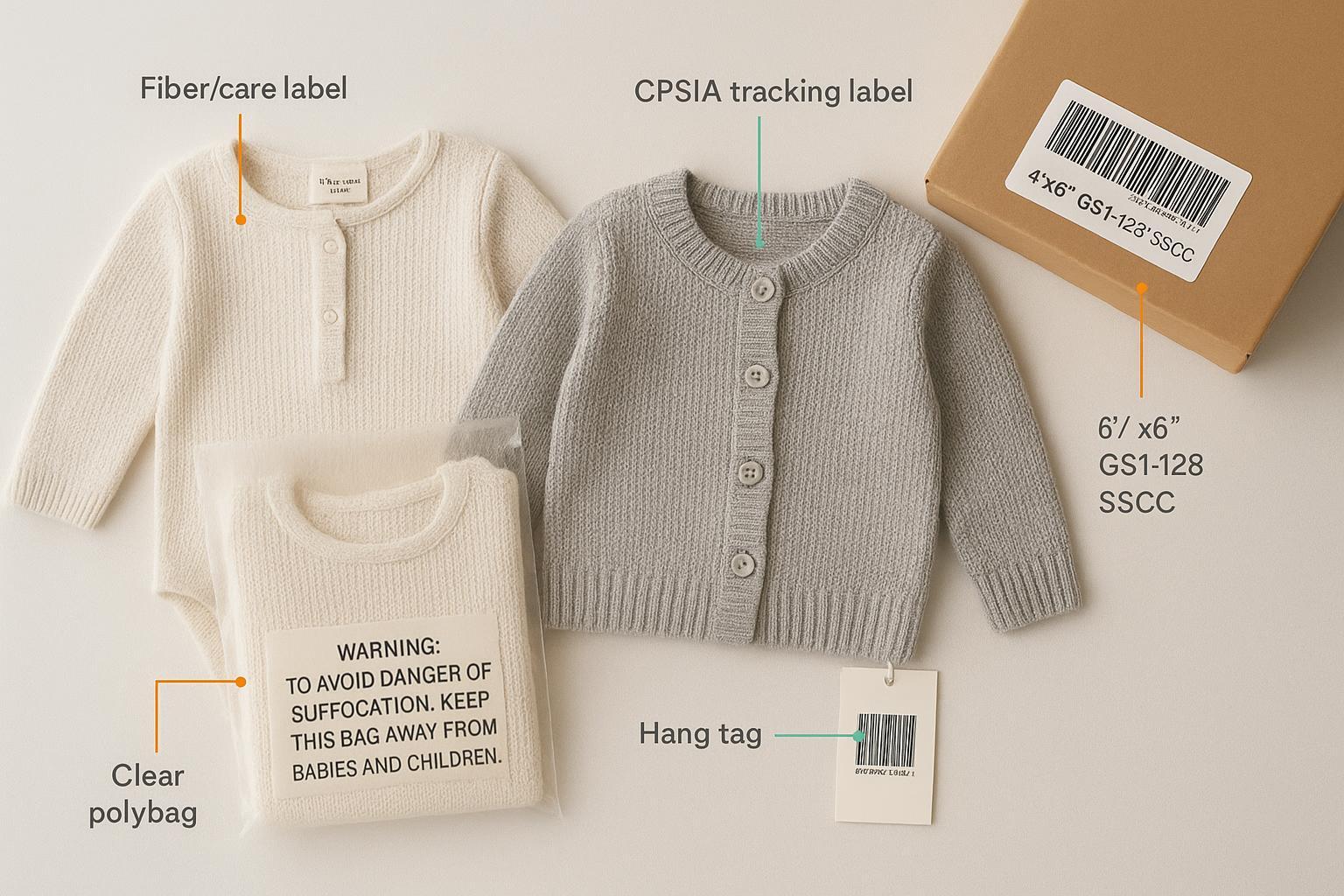
If you’re preparing newborn–24 months or 2T–5T knit styles for DTC or wholesale—and maybe Amazon FBA too—this checklist translates regulatory language into factory-ready tasks. Keep it next to your tech pack and use it for pre-production approvals and pre-shipment sign-off.
Key takeaways
This babywear labeling compliance checklist covers the United States (CPSIA/16 CFR/FTC) and EU/UK (REACH, EU 1007/2011, EN 14682, ISO 3758) side by side.
Prioritize DTC and wholesale requirements first; add Amazon FBA overlays for polybags, scannability, and inbound labels when relevant.
Decide “daywear vs sleepwear” in the tech pack; the wrong call triggers different flammability rules, testing, and warnings.
Track at variant level: assign GTINs/UPCs per size/color and use SSCC for cartons; keep barcodes within GS1 specs for print quality.
Use strictest polybag suffocation warning rules if distributing nationally; FBA thresholds differ from some local laws, so plan for both.
How to read this babywear labeling compliance checklist
Markets: United States vs EU/UK. When both apply, satisfy the stricter rule or create market-specific labels.
Channels: DTC and wholesale requirements first, then Amazon FBA (when applicable).
Age focus: newborn–24 months and 2T–5T. EU/UK EN 14682 bans hood/neck cords up to 7 years.
Citations: We link to primary sources for each critical requirement.
Master checklist — identity, labels, and safety on the retail unit
Identity & documentation
Brand identity present (business name or RN) on required labels; retain RN or full name consistently — see 16 CFR Part 303 and FTC RN database guidance in the FTC’s clothing and textiles hub. Source: the FTC’s industry guidance in the clothing and textiles section links the Fiber Rule and RN usage: FTC clothing and textiles guidance.
] Children’s Product Certificate (CPC) prepared with accredited third‑party test reports for applicable rules; keep with shipment records. Overview: [CPSC labeling requirements overview.
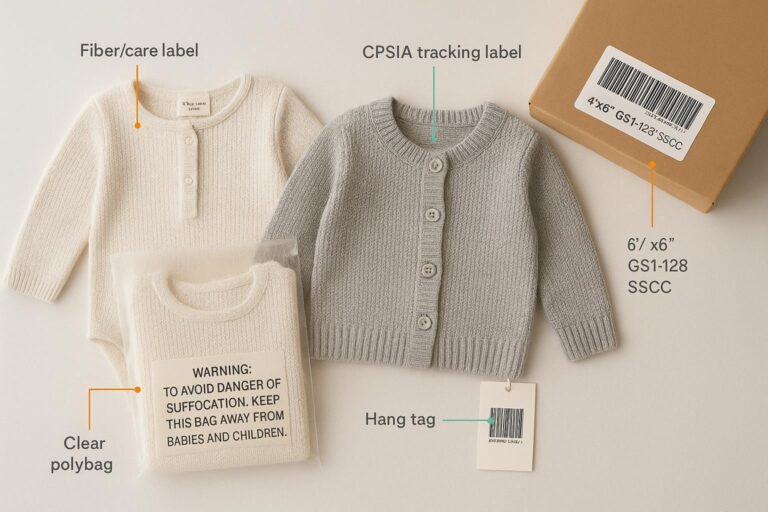
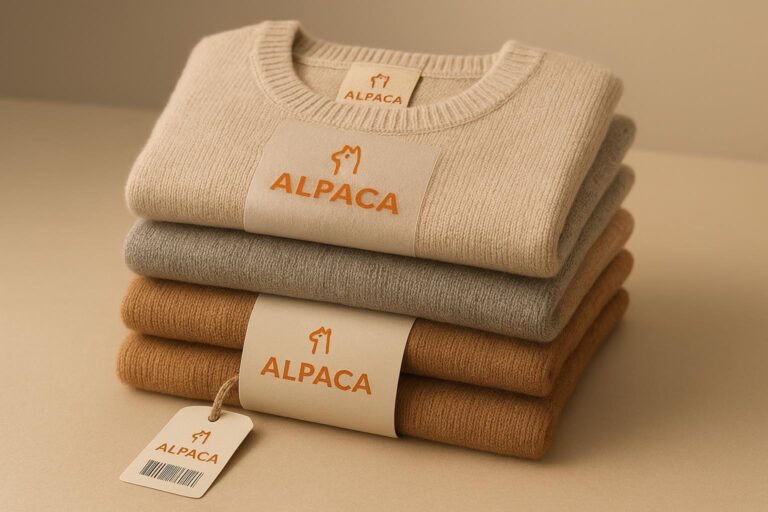
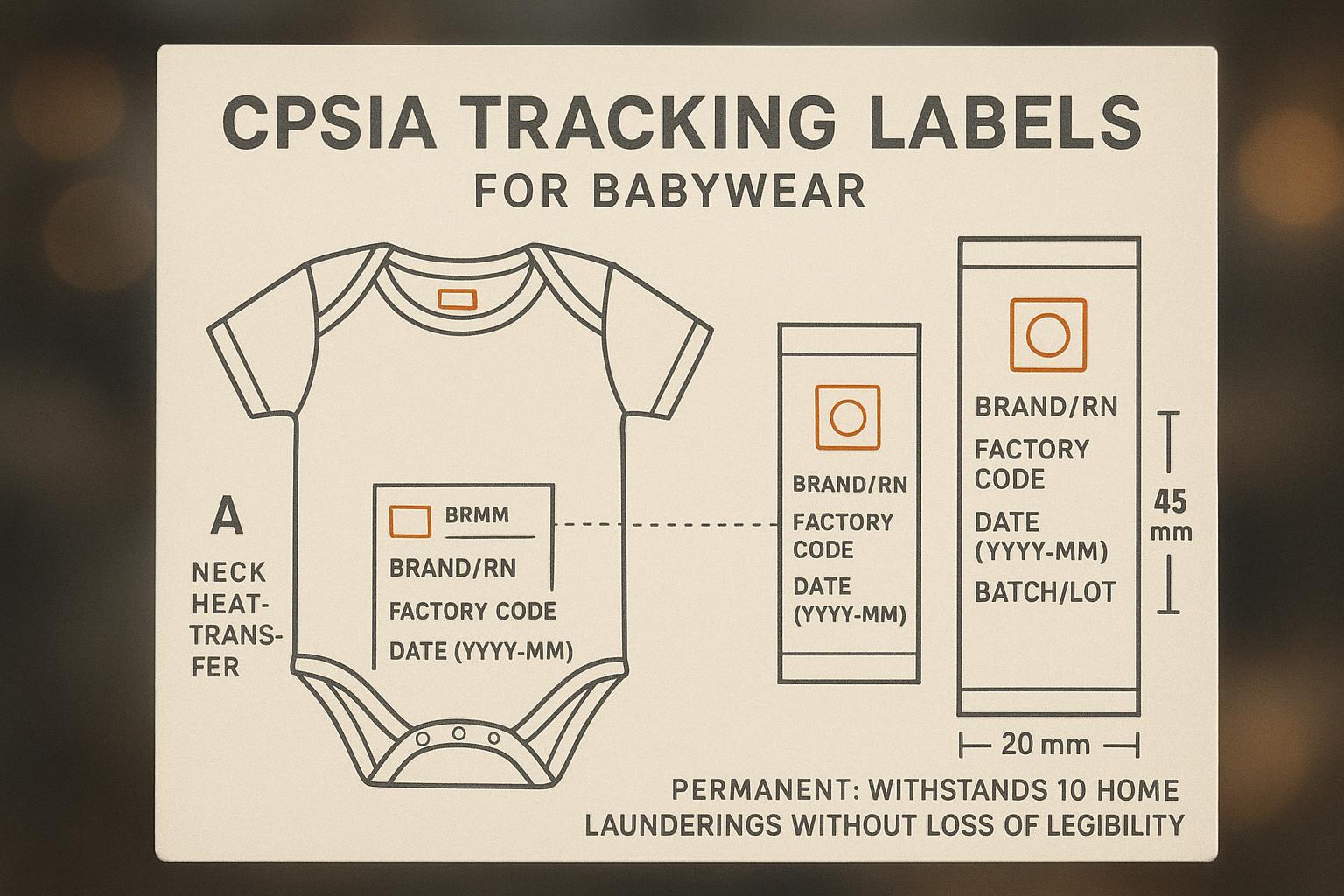
CPSIA tracking label content on product and, if practicable, on packaging: private labeler/manufacturer ID, location/date of manufacture, and batch/lot. No set format; permanence and legibility required. Guidance: CPSC tracking label FAQ.
Fiber, country, and care labels
United States
Fiber content lists FTC‑recognized generic names and percentages by weight in descending order, totaling 100%. Regulation text: 16 CFR Part 303.
Country of origin shown as “Made in [Country]” in English; label is conspicuous and permanent for imports. Legal basis: 19 CFR Part 134 and a CBP ruling clarifying “PRC” isn’t acceptable in place of “China”: CBP ruling N262161.
Permanent care instructions provided in words and/or symbols; accurate for ordinary consumer cleaning. Rule summary: FTC Care Labeling Rule and full text: 16 CFR Part 423.
EU/UK
Fiber composition complies with EU 1007/2011: use Annex I fiber names; show % by weight; label is visible, legible, indelible; language(s) of sale market. Overview and FAQs: European Commission 1007/2011 overview and EU FAQs (2024).
Care symbols: not mandated at EU level; ISO 3758 symbols are widely used via GINETEX licensing (ensure you hold the license to print symbols). Reference: GINETEX care labelling overview.
CPSIA tracking label — content, permanence, and placement
Product mark includes: brand/RN, factory code, date (YYYY‑MM), batch/lot. Packaging mark added if the product mark isn’t visible through clear packaging. Guidance: CPSC tracking label FAQ.
Permanence: legible after typical use; for knits, verify heat‑transfer or woven label withstands rub and at least 10 home launderings (house standard; not a statutory number but commonly adopted for durability).
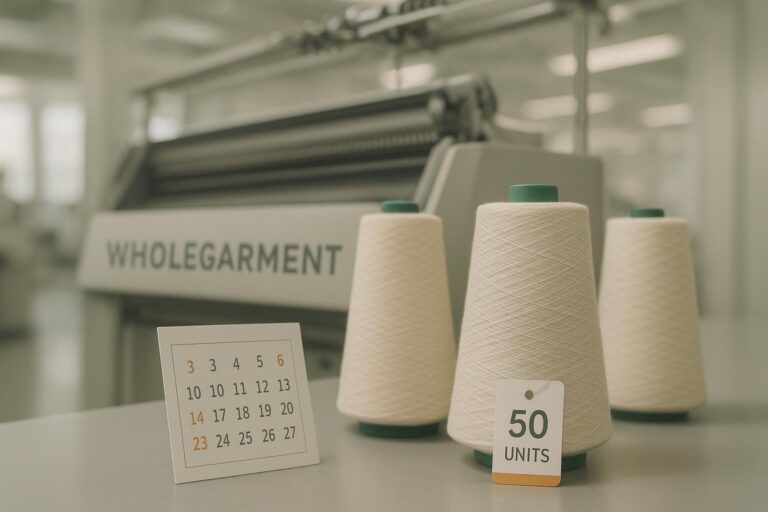
Placement for WHOLEGARMENT/soft knits: prefer low‑irritation locations (back neck transfer or side‑seam loop); avoid scratchy edges on infant sizes.
Safety and category — sleepwear vs daywear, cords/drawstrings, and chemicals
Classification decided in tech pack: general daywear follows 16 CFR Part 1610 (Class 1 acceptable); children’s sleepwear (sizes 0–6X and 7–14) must comply with Parts 1615/1616 unless infant (≤9 months within size limits) or tight/snug‑fit. Overview: CPSC 1610 fact sheet and CPSC sleepwear fact sheet.
Snug‑fit sleepwear uses the required warning and dimensions; if you designate snug‑fit, confirm current wording from CPSC resources: CPSC Children’s Sleepwear FAQ.
EU/UK cords and drawstrings: For ages up to 7 years (≈ height ≤134 cm), no hood/neck cords; apply EN 14682 limits elsewhere (e.g., waist cord lengths). UK references: UK designated standards notice referencing EN 14682 and risk assessment narrative: UK PRISM narrative example.
] Chemicals: Control REACH Annex XVII restricted substances for fabric and trims; monitor SVHC Candidate List updates. References: [ECHA restrictions overview and ECHA guidance for textiles.
Small parts: While 16 CFR 1501 focuses on toys for under‑3s, adopt a voluntary trim security protocol (no detachable small ornaments; attachment pull tests) based on the CPSC Small Parts summary.
Packaging and barcodes — unit polybags, UPC/EAN, and outer cartons
Unit polybags and suffocation warnings
Bag spec: at least 1.5 mil thick, transparent, sealed; the unit barcode must be scannable through the bag or applied externally. Amazon overlay and thresholds: Seller Central bagging requirements.
Suffocation warnings:
Amazon FBA: Required if the bag opening is ≥5 inches when flat; warning must be printed on the bag (or label) with font size scaling by bag dimensions. Cross‑check: Threecolts FBA packaging summary.
Massachusetts (105 CMR 630): Specific text and minimum font sizes by total length + width; repeat for longer bags. Source: 105 CMR 630.000 Plastic Bags and Plastic Film.
New York City Article 173: Specified warning text for retail plastic bags. Source: NYC Health Code Article 173.
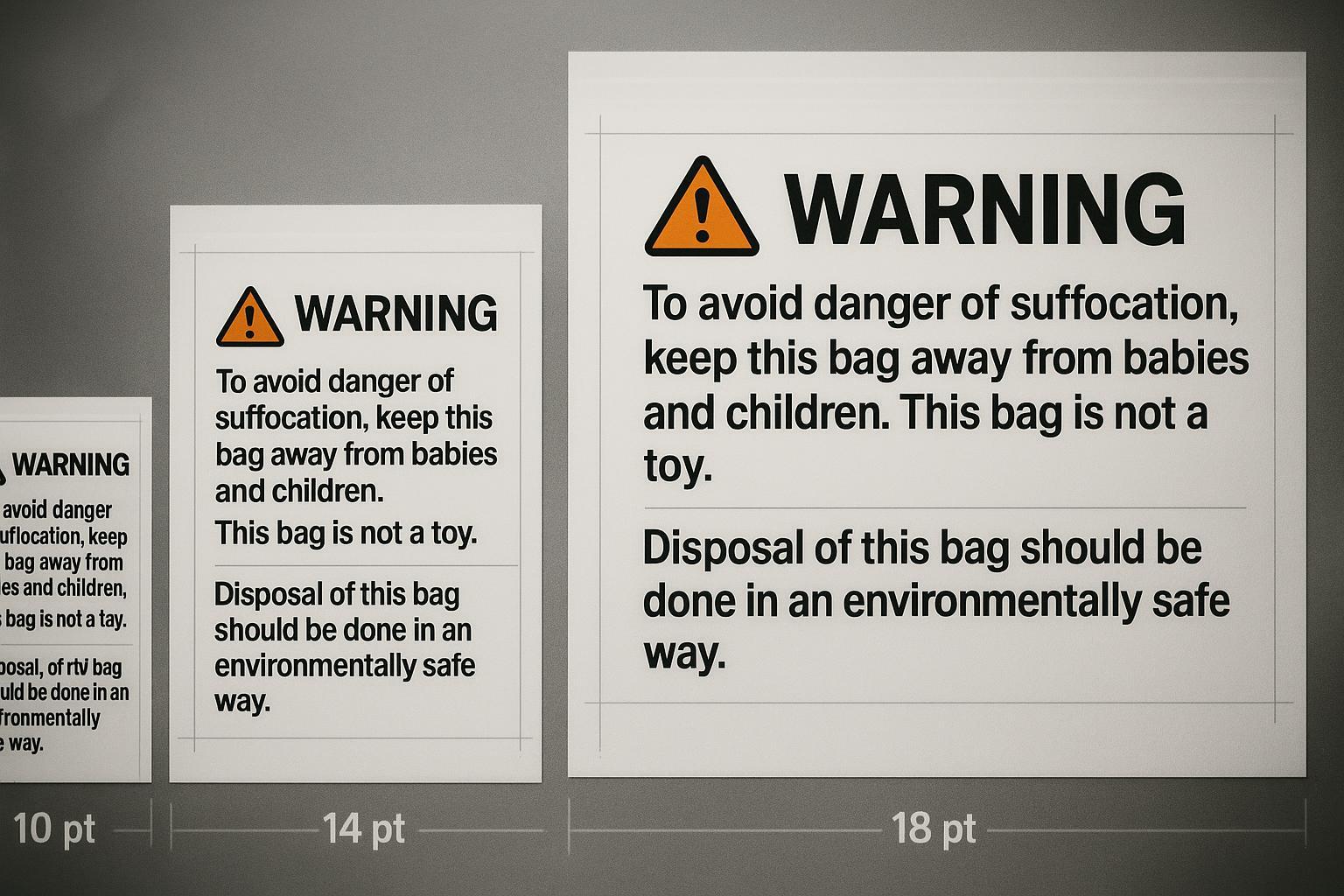
Practical tip: If you distribute nationally and via FBA, choose the strictest font size and message that satisfies both the state/local rule and Amazon’s threshold to avoid rework.
Unit barcodes (UPC/EAN) and variant GTIN discipline
Assign unique GTINs to each consumer‑distinguishable variant (size/color); don’t reuse or invent non‑GS1 codes. Guidance: GS1 GTIN Management Standard.
Print UPC‑A/EAN‑13 with correct x‑dimension, quiet zones, and bar height; verify with a barcode verifier when possible. Specs: GS1 General Specifications.
Quick reference (print targets — confirm in GS1 General Specifications):
Element | Typical target |
|---|---|
UPC‑A x‑dimension | ~0.33 mm (0.013″) nominal; allowable ranges per GS1 |
Quiet zones | Left/Right ≥ 2.54 mm (0.1″) or ≥10× module (whichever greater) |
Bar height (UPC‑A) | ~22.86 mm (0.9″) for 100% magnification |
Outer cartons and SSCC labels (GS1‑128)
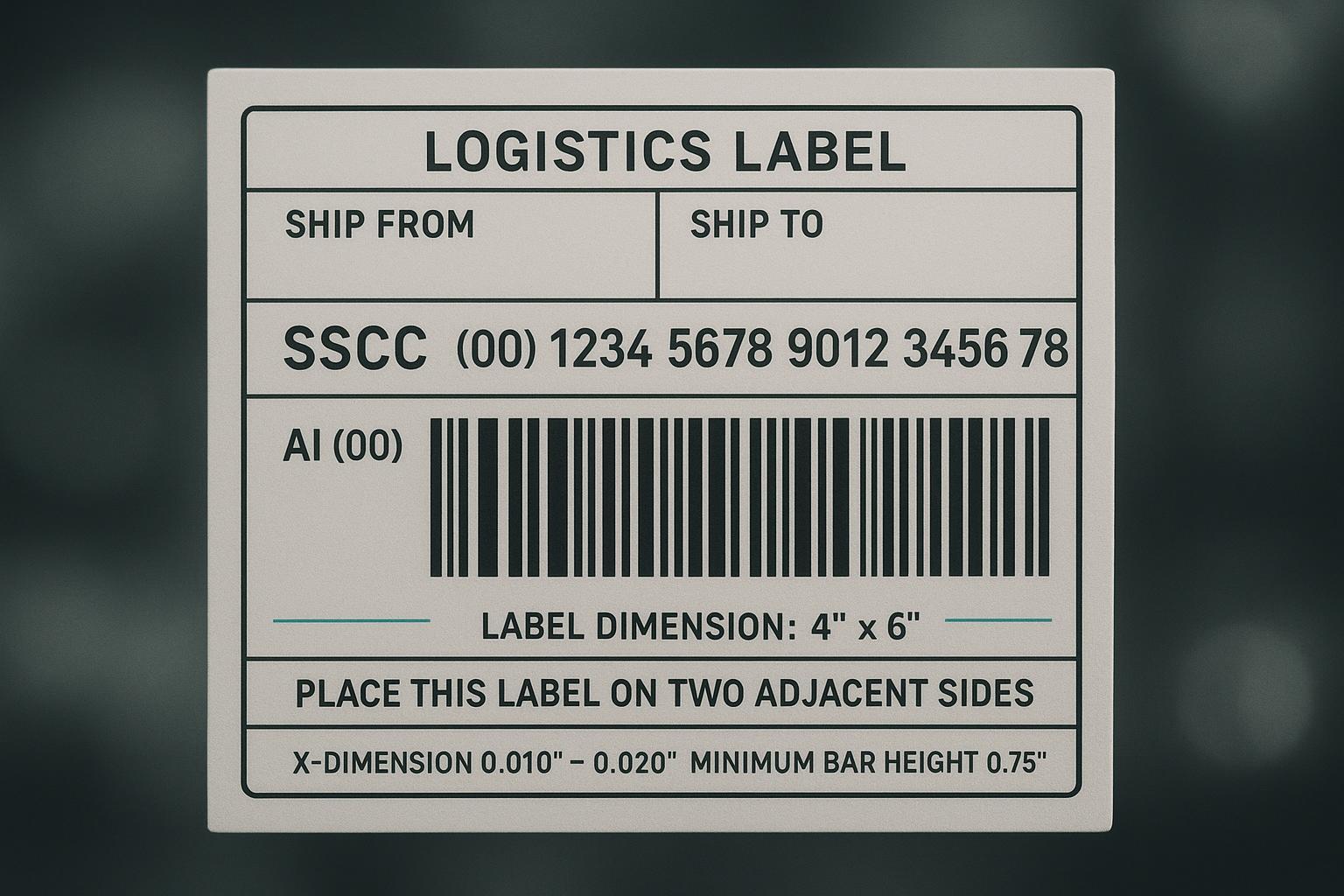
Use SSCC (Application Identifier 00) in GS1‑128 on a 4″×6″ GS1 logistics label; include human‑readable SSCC and ship‑from/to blocks as required by trading partners. References: GS1 US SSCC guidance and GS1 General Specifications.
Placement: apply on two adjacent sides, at readable height; maintain quiet zones and avoid seams or strapping.
Channel overlays — DTC, Wholesale, and Amazon FBA
DTC (own warehouse or 3PL)
Retail unit complete with fiber/COO/care labels and CPSIA tracking label (US) or EU 1007/2011 fiber label (EU/UK); returns‑friendly barcode visible.
Polybag chosen for consumer presentation; consider smaller warning art if not bound for FBA, while still satisfying local requirements where you sell.
Packing slip and returns barcode (if used) do not obscure the unit UPC.
Wholesale (buyers/showrooms/department stores)
Follow buyer routing guide for carton marking: confirm SSCC vs ITF‑14, label placement, and ASN needs; many retailers require SSCC “license plate” labels. Reference: the apparel context in GS1’s Floor‑Ready Merchandise guideline.
Ticketing (price/size) per retailer spec; ensure it doesn’t cover care or fiber labels.
Amazon FBA (in addition to above where relevant)
Polybag at ≥1.5 mil; suffocation warning required if opening ≥5″; FNSKU or UPC scannable through the bag; follow Seller Central bagging/labeling steps: Seller Central bagging requirements.
Cartons: apply FBA shipment labels per inbound plan in addition to any SSCC; make sure codes aren’t covered by straps.
As of 2026, US FBA prep and item labeling services have been discontinued; ensure self‑prep capacity or a compliant prep partner. Cross‑check policy summaries such as Threecolts’ packaging overview.
Example workflow (with disclosure)
Disclosure: Xindi Knitwear (Knitwear.io) is our product.
Say you’re shipping a newborn onesie (0–3M) and a 2T cardigan for wholesale and a small DTC drop.
Tracking label: Use the dieline above to generate a neck heat‑transfer mark (Brand/RN, factory code, 2026‑05, lot 26‑05A). For the WHOLEGARMENT cardigan, switch to a soft side‑seam loop label to minimize irritation. Validate legibility after 10 home washes.
Polybag + barcode: Bag each unit in a 1.5‑mil clear bag. Print the UPC‑A at 100% with proper quiet zones. If any bag opening is ≥5″, add the suffocation warning at the required font size so the UPC remains scannable.
Carton label: For wholesale, print a 4″×6″ GS1‑128 SSCC and place it on two adjacent sides of each master carton. Keep quiet zones clear and avoid seams. If the buyer also wants an ITF‑14, add it on a separate panel without crowding the SSCC.
Downloads and next steps
Download the printable master checklist (fillable PDF) and artwork dielines for tracking labels, care panels, polybag warnings, and a 4″×6″ SSCC carton label. If you need help tailoring the files to WHOLEGARMENT knits, contact the production team.
Sources (selected primary)
US: CPSC labeling overview • CPSC tracking label FAQ • 16 CFR Part 303 • 16 CFR Part 423 • 19 CFR Part 134 • CPSC sleepwear fact sheet
EU/UK: EU 1007/2011 overview • EU 1007/2011 FAQs • GINETEX care symbols • EN 14682 references
GS1 and channels: GTIN Management • GS1 General Specifications • GS1 US SSCC • Seller Central bagging requirements • MA 105 CMR 630 • NYC Article 173