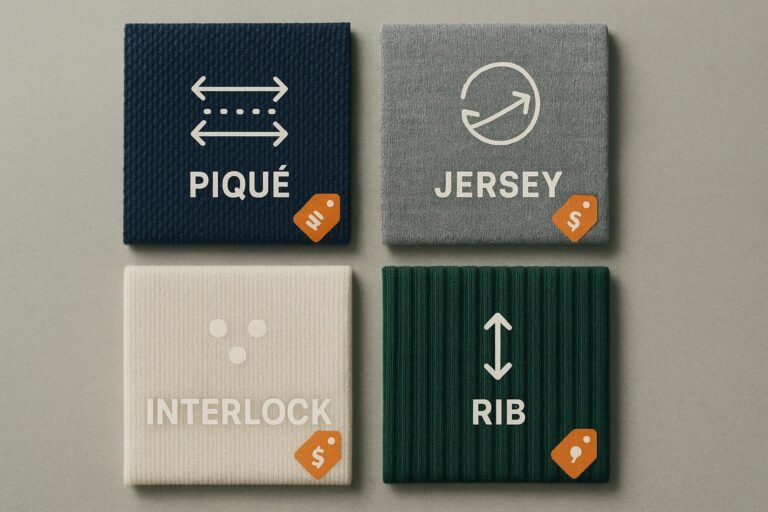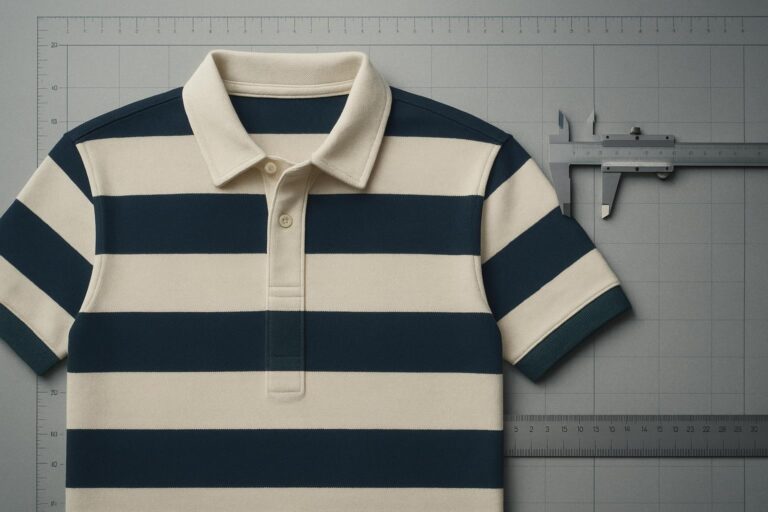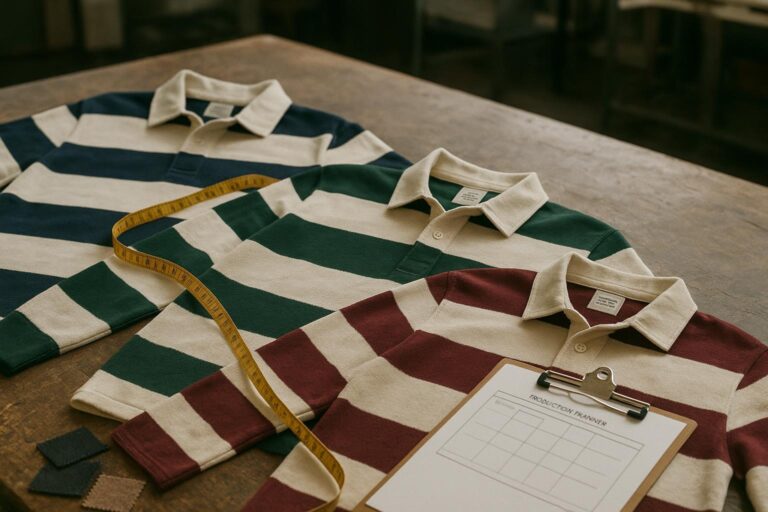

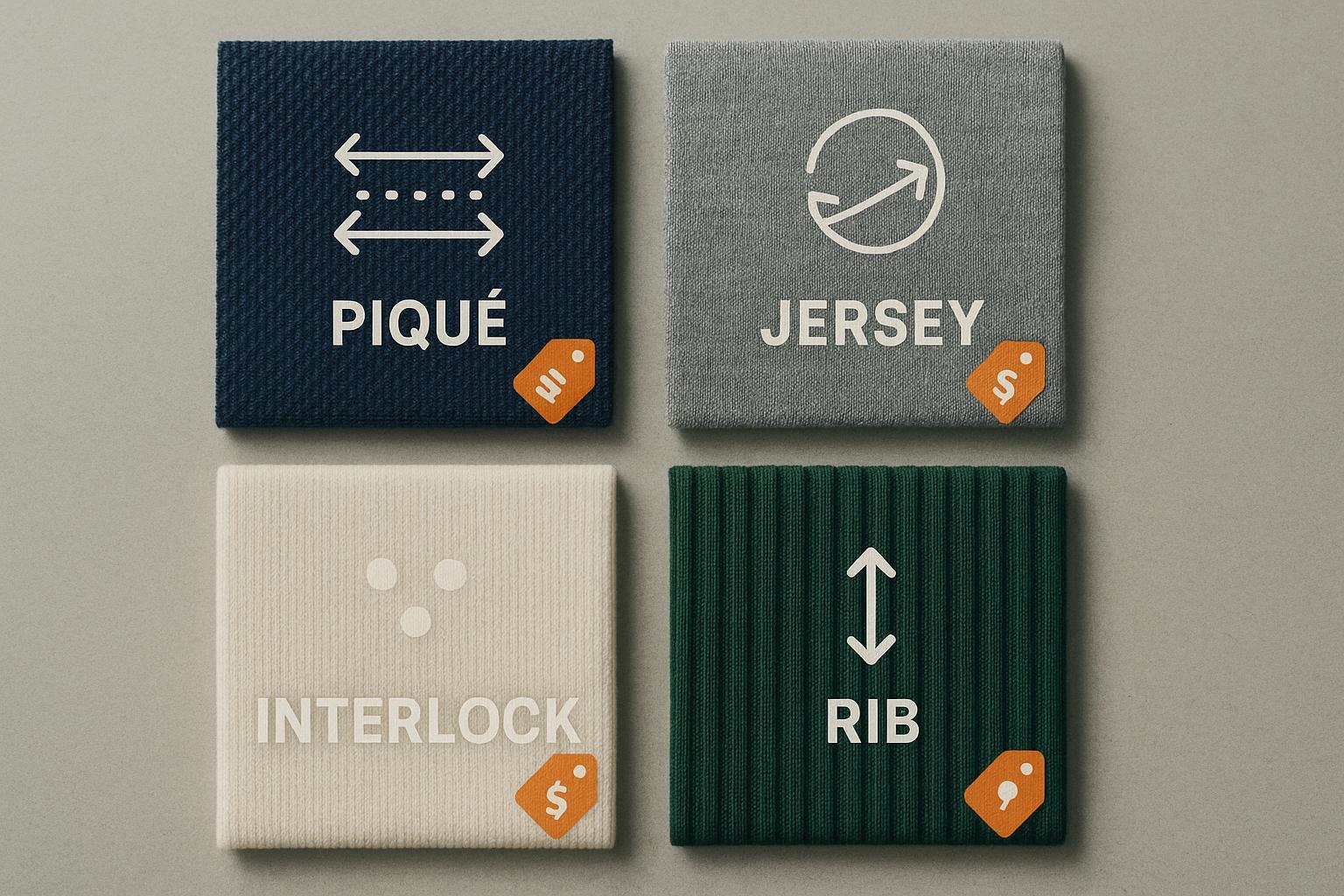
Launching a first polo capsule with low MOQs is a balancing act: keep unit cost predictable, avoid shrink-and-twist headaches, and deliver a handfeel customers love. This guide compares four knit constructions—pique, jersey, interlock, and rib—through a single primary lens: unit cost, yield, and MOQ efficiency, then layers in stability (shrinkage/spirality), pilling, perception, and use-case picks.
Key takeaways
If you need small-batch stability with the classic “polo look,” go pique (~170–200 GSM) with a pre‑shrunk finish; it balances embroidery hold, airflow, and lower spirality risk than single jersey.
If the brief is budget-soft and tee-like, jersey (~160–180 GSM) wins on knit cost and printability—just plan spirality mitigation (yarn twist, compact-spun, relaxed drying).
For a smooth, elevated face and lower torque risk, interlock (~180–220 GSM) reads premium and stays truer after wash, often justifying a higher fabric cost.
Rib is your trim specialist for collars/cuffs (1×1 or 2×2 with elastane); only consider full rib bodies for fitted fashion polos, not mainstream programs.
Prioritize cost/yield math early: pick GSM bands, limit color splits, and pre‑agree per‑color MOQs to keep unit economics tight in a DTC launch.
Bonus: If you’re weighing cotton vs blends for polos and trims, this primer clarifies pros/cons and certification angles: cotton and organic cotton for knitwear OEM.
How we evaluated (methods and acceptance targets)
Dimensional stability (shrinkage) is measured as % length/width change after home laundering per AATCC TM135 or ISO 6330. Many buyers target ≤3–5% after specified cycles. Spirality/torque is the post‑launder skew % per AATCC TM179 or ISO 16322‑3; practical acceptance bands for polos are commonly ≤4–5% with yarn/finish controls. Pilling resistance uses visual grades 1–5 after Martindale abrasion per ASTM D4970/D4970M; higher is better. Performance varies by yarn, blends, dye/finish, and equipment, so results are lot‑specific. Redacted lab sheets can be shared on request; these acceptance targets are industry norms, not guarantees. For standard definitions, see AATCC’s overviews of TM135 — Dimensional Changes of Fabrics after Home Laundering, the listing for TM179 — Skew Change in Fabrics After Home Laundering, and ASTM’s page for D4970 Martindale pilling.
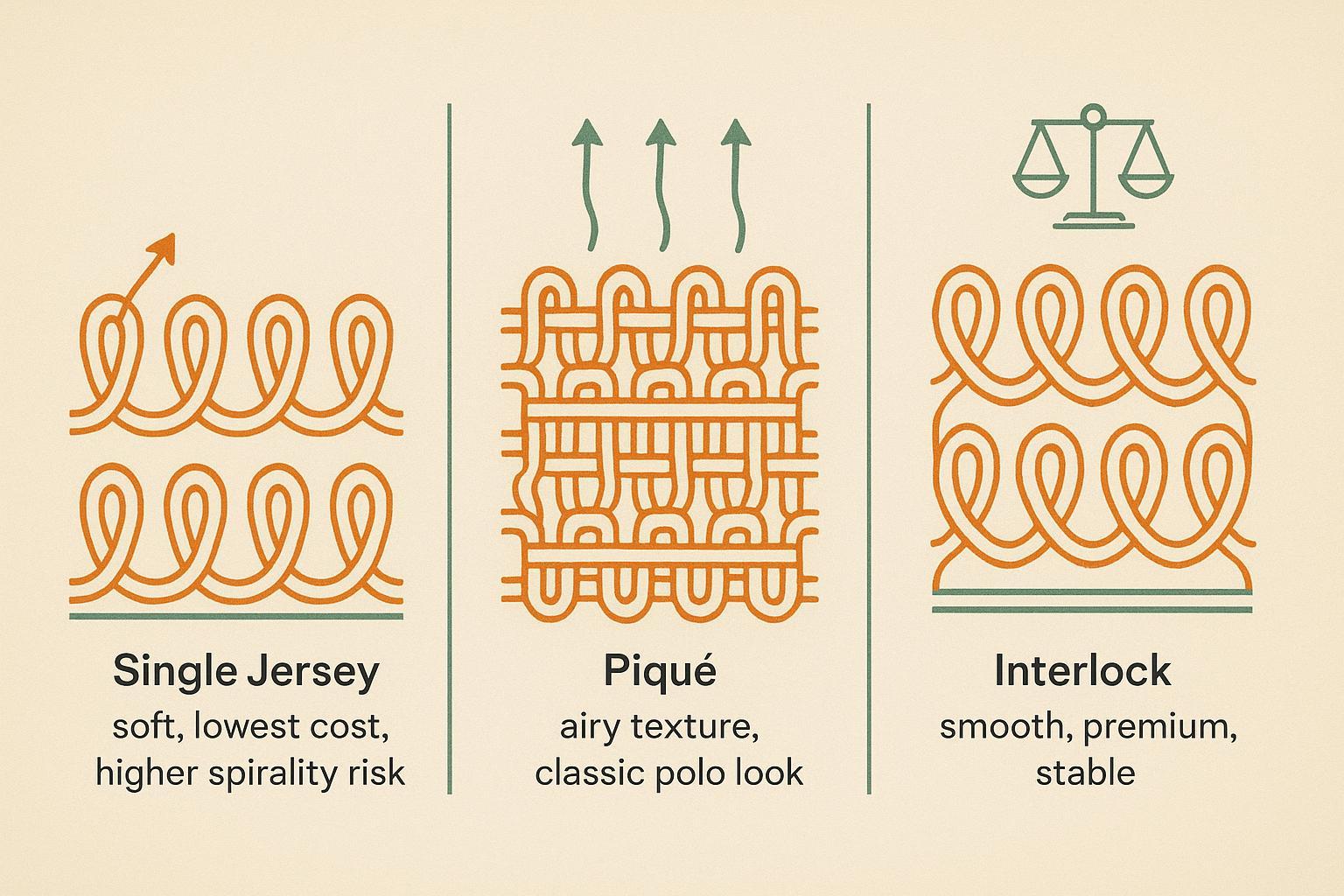
Piqué vs jersey for polos (plus interlock and rib): side‑by‑side
Below is a practitioner’s snapshot. Cost indicators are directional ($ lowest to $$$ highest) and vary by yarn, finish, and season (as of 2026‑03‑10; subject to change).
Fabric (A–Z) | Typical GSM | Unit cost indicator | Shrinkage stability (AATCC 135) | Spirality risk (AATCC 179) | Pilling tendency (ASTM D4970) | Handfeel & drape | Breathability | Decoration compatibility | Collar/trim notes | MOQ efficiency & lead time | Best for |
|---|---|---|---|---|---|---|---|---|---|---|---|
Interlock | 180–220 | $$–$$$ | Strong when pre‑shrunk; often within ≤3–4% | Low (balanced double‑knit) | Low–moderate with quality yarns | Smooth, substantial, premium | Moderate airflow; denser than pique | Embroidery stable; prints/HTV very clean on smooth face | Pair with 1×1 or 2×2 rib w/ elastane for recovery | Sampling often 3–10 days; heavier GSM can lift cost; MOQs per color apply | Premium smooth polos; anti‑spirality builds; uniforms at higher GSM |
Jersey (single) | 160–180 | $–$$ | Variable; aim ≤3–5% with controls | Higher unless mitigated | Moderate if low‑twist yarns; improve with compact yarns | Soft, tee‑like drape | Good comfort; less airflow than pique at like GSM | Prints/DTG excel; embroidery needs stabilizer to prevent tunneling | Standard rib trims; watch collar roll | Fast to sample; efficient knit cost; MOQs easiest to hit in basics | Budget‑soft casual polos; print‑heavy branding |
Piqué | 170–220 | $$ | Good with pre‑shrink; often ≤3–4% | Lower than jersey; above interlock | Low–moderate with ring/compact yarns | Textured, structured “polo” feel | Higher airflow via cellular/tuck texture | Embroidery holds well; prints can show texture | Use robust 1×1/2×2 rib; color match closely | Common polo workhorse; rapid sampling feasible; per‑color MOQ typical | DTC first‑order validation; classic look; hot‑weather cotton polos |
Rib (1×1/2×2) | 200–260 (trims) | $$ (as trim) | Good with elastane and proper finishing | Low (balanced w/ elastane) | Low–moderate; yarn‑dependent | Elastic; body‑hugging if used as main | N/A for body; trims don’t drive airflow | N/A for body; trims affect embroidery seam area | 1×1 or 2×2 with ~2–5% elastane typical | Trim yardage is small; colorway splits add complexity | Collars/cuffs; fitted fashion bodies only by design |
Two quick references on structure and performance: CottonWorks summarizes single vs double knits (including where piqué sits among cellular/tuck constructions) in its single and double knits overview, and Glenmuir’s polo education notes that piqué’s texture improves airflow compared with smoother jersey in what is a piqué polo shirt.
Scenario picks (no universal winner)
DTC first‑order validation (small batch, multi‑color/multi‑size): Choose piqué at ~170–200 GSM with a pre‑shrunk finish. You get brand‑correct structure, cleaner embroidery, and lower spirality risk than jersey—while staying within sensible cost bands.
Budget‑soft casual capsule: Choose single jersey at ~160–180 GSM. It’s the lowest knit‑cost path with great printability. Control torque by matching S/Z yarn twist, using compact‑spun yarns, and relaxed drying.
Premium smooth look: Choose interlock at ~180–220 GSM. The double‑knit symmetry resists skew and pills less with the right yarns, reading “elevated.”
Uniforms or high‑durability programs: Choose piqué or interlock at ~200–220 GSM. Both hold embroidery and shape after frequent washing; pair with elastane ribs for collar/cuff recovery.
Hot‑climate performance: Choose performance piqué (cotton/poly or poly) with wicking chemistry; the more open structure helps airflow vs jersey’s smoother face.
Cost, yield, and MOQ efficiency playbook (your primary lens)
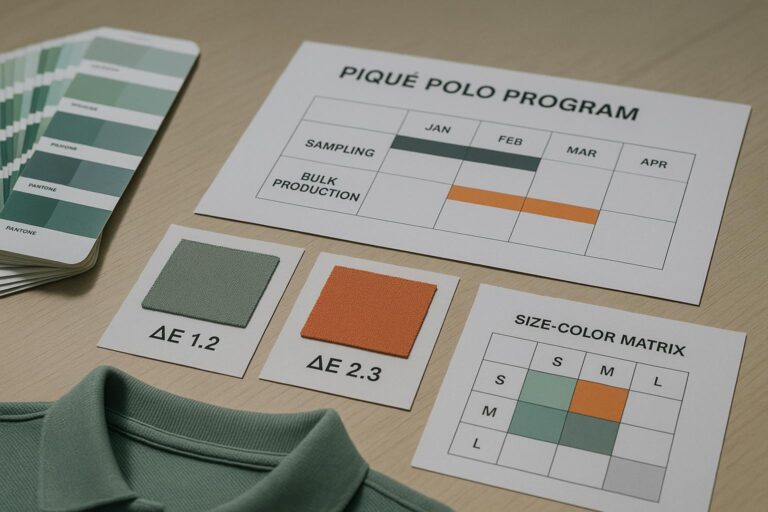
Think of unit economics as a three‑knob console: GSM, color splits, and trim strategy. Here’s the deal: small changes here often beat chasing a new mill quote.
Cut fabric weight wisely: For DTC debuts, aim for 170–200 GSM in piqué or 160–180 in jersey to balance silhouette vs cost. Interlock at 180–200 GSM delivers a premium read but watch fabric kg per unit. Keep your palette tight (2–3 colors) to avoid per‑color surcharges spiking unit cost. Piqué and jersey bodies cut similarly at these weights; interlock’s heavier weight ups consumption. Engineer rib lengths precisely to avoid trim overage. If embroidery is central, piqué reduces rework risk (puckering, tunneling). If prints dominate, jersey/interlock’s smooth faces cut down misprints.
Torque mitigation for jersey: Pair S and Z twist yarns where possible, specify compact‑spun, and require relaxed drying. For acceptance, validate skew % after wash using AATCC 179 within ≤4–5%. Trim engineering: Specify 1×1 or 2×2 rib with ~2–5% elastane for collars/cuffs to control roll and wave, and confirm after‑wash width and recovery alongside body tests. For timing and MOQ policy details, see the Low MOQ knitwear lead times & MOQs — FAQ and the broader Custom Knitwear Manufacturer Guide.
Polo GSM and seasonality cheat sheet
160–170 GSM typically suits light, soft jersey polos (great for print‑forward capsules and very warm climates; watch opacity in light colors). 170–200 GSM is the sweet spot for cotton piqué (summer weight) and smoother interlock—balancing structure, opacity, and embroidery stability. 200–220 GSM supports structured piqué or interlock for uniforms, shoulder seasons, or a premium, weighty hand. Lighter colors at lower GSM may need tighter stitches or yarn upgrades to avoid show‑through—think of it this way: opacity is part yarn, part architecture.
Testing micro‑SOP you can request from suppliers
Ask for a simple packet: Shrinkage by AATCC TM135 (or ISO 6330), with %L/%W after the agreed cycles; Spirality by AATCC TM179 (or ISO 16322‑3), reporting skew % and direction after the same wash; and Pilling by ASTM D4970/D4970M with the grade and the cycles/pressure used. Insist on date, lot code, yarn description, and finishing notes. This gives you a verifiable baseline for “pique vs jersey for polos” conversations with your team and vendors. For background on why jersey twists and how factories fix it, see knitwear.io’s spirality causes and manufacturer solutions.
FAQ
Which knit is best for small‑batch polo shirts? For DTC first orders, piqué typically offers the best blend of stability, airflow, and embroidery hold at 170–200 GSM, while keeping unit economics manageable for low MOQs.
How much does pique vs jersey shrink after washing? With proper pre‑shrink finishing, many buyers target ≤3–5% after AATCC TM135 or ISO 6330 programs; jersey is more variable, while piqué and interlock tend to hold size better when engineered well.
What GSM should I choose for a summer polo? 170–200 GSM is the common summer band for cotton piqué; 160–180 GSM for soft jersey; interlock reads premium in the 180–200 GSM range.
How do I prevent spirality in jersey polos? Match S/Z yarn twists, specify compact‑spun yarns, ensure relaxed drying, and validate skew % after wash using AATCC TM179 within ≤4–5%.
Can you embroider on interlock polos without puckering? Yes—with proper stabilizer and tension settings. Interlock’s smooth, stable face helps.
Also consider: a production partner for low‑MOQ validation
If you need a fast sample‑to‑bulk path with documented testing and certified yarn options, Xindi Knitwear (Knitwear.io) typically turns samples in 3–5 days and offers low MOQs from ~50 units in many programs, with chain‑of‑custody options for OEKO‑TEX, GOTS, GRS, and RWS yarns (as of 2026‑03‑10). Learn more in the Low MOQ Rugby Polo Manufacturer — FAQ.
Sources and notes: Structural behavior of single vs double knits is summarized in CottonWorks’ single and double knits overview. Piqué’s airflow advantage in polos is discussed by Glenmuir’s brand education in what is a piqué polo shirt. Testing frameworks referenced include AATCC TM135, AATCC TM179, and ASTM D4970. External sources are authoritative standards bodies and brand education pages; internal knitwear.io resources provide operational guidance for MOQs, timelines, and stitch types.