
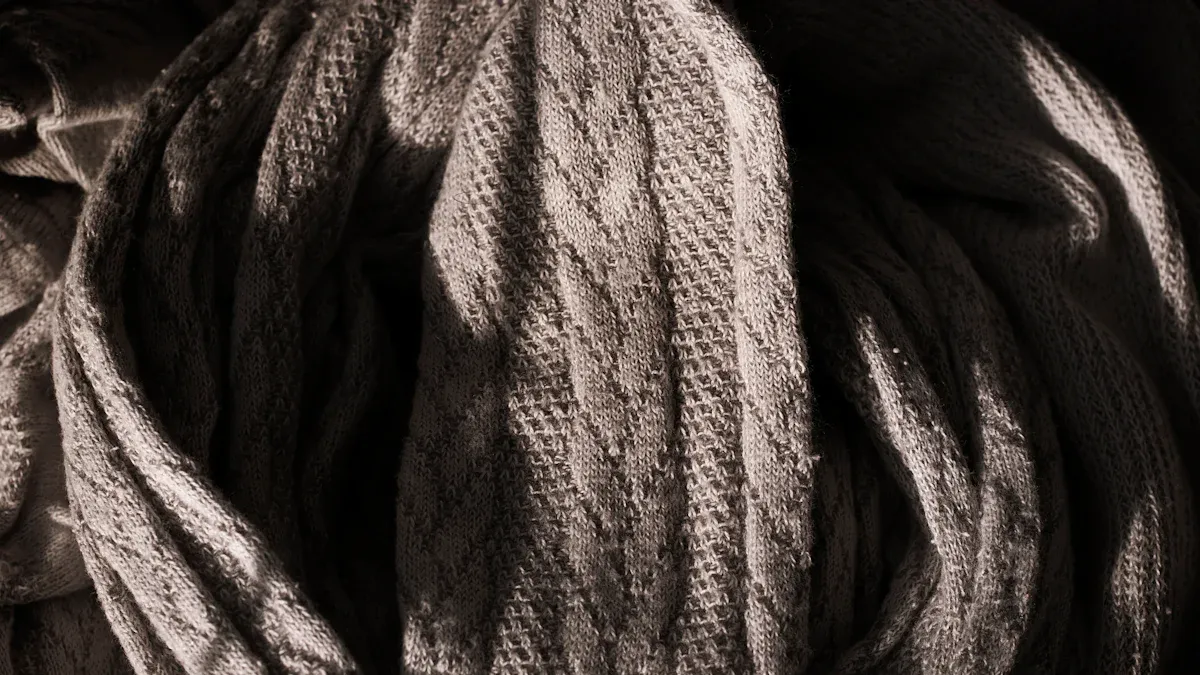
You might notice that knits twist after washing or wearing. This happens because the yarns in knitwear have a twist from spinning, and the fabric structure can be unbalanced. During production, the way machines knit the fabric also affects how the garment behaves. Spirality in knitwear means the garment starts to turn or skew, which can change its look and fit. If you see garment twisting, you know spirality is causing problems for your garment.
Spirality often makes the side seams of a garment move, so you can spot it easily.
Key Takeaways
Spirality in knitwear makes clothes twist after you wash or wear them. You might see side seams move or hems look slanted.
Single jersey fabrics twist the most because their structure is not balanced. Rib or interlock fabrics are more stable and twist less.
You can control yarn twist and knitting settings to help stop spirality. Change stitch length and feeder tension to make clothes better.
Use low-torque or balanced yarns to stop twisting. These yarns help fabric keep its shape and fight spirality.
Seamless knitting can help lower spirality but may not stop it all the way. Always check the design and finishing for the best results.
What is Spirality and How Do You Spot It?
Spirality means the fabric or garment starts to twist or turn. This happens most after you wash or wear it. You can notice this when the side seams move or the hem looks strange. Spirality comes from how the yarn twist, the knit structure, and how the fabric is made. To check for spirality, look for changes in the shape or seams after washing.
Why Do Side Seams Move After Washing?
Sometimes, the side seams on your knitwear do not stay straight after washing. This is because of fabric skew and the yarn twist that stays in the fabric. If the knitting machine does not use the right tension or the fabric does not relax before cutting, twisting gets worse. Both the yarn’s twist and the fabric’s structure matter. If the fabric does not relax, the seams can move more after washing. This makes the garment look twisted and lowers its quality.
Visual Signs of Skewing in Finished Garments
You can see spirality by looking for these signs:
Side seams twist toward the front or back
Hems look slanted or not straight
The whole garment looks twisted or hangs wrong
Quality control teams use special ways to measure spirality. Here is a table with two common ways:
Method | Description |
|---|---|
AATCC Test method 179 -2004 | This method checks how much the fabric twists after washing. It uses marks made before washing to compare. |
Practical Measurement | This way lines up the garment edges, marks points, and measures before and after washing to find the spirality percent. |
Why is Single Jersey Most Susceptible to Torque?
Single jersey fabric shows the most spirality. Its structure is not balanced, so it cannot stop the yarn twist. When you wash single jersey, spirality gets worse and you see more twisting. Other knits, like rib or interlock, are more balanced and show less spirality.
The Unbalanced Structure of Single Knits
Single knits have loops that lean one way. This makes the fabric twist easily. The yarn path in single jersey does not balance the twist, so the garment twists more after washing.
Comparing Jersey vs. Rib and Interlock Stability
If you compare single jersey to rib or interlock, you see rib and interlock are more stable. Their loops go both ways, which balances the twist and lowers spirality. After many washes, rib and interlock keep their shape better and twist less. If you want better quality and less spirality, pick these stable fabrics.
Washing makes spirality worse in knit fabrics, especially loose ones.
Tighter fabrics, like double tuck, twist less and keep their shape.
After many washes, stable fabrics only twist a little more.
What Causes Yarn Torque in the Spinning Process?
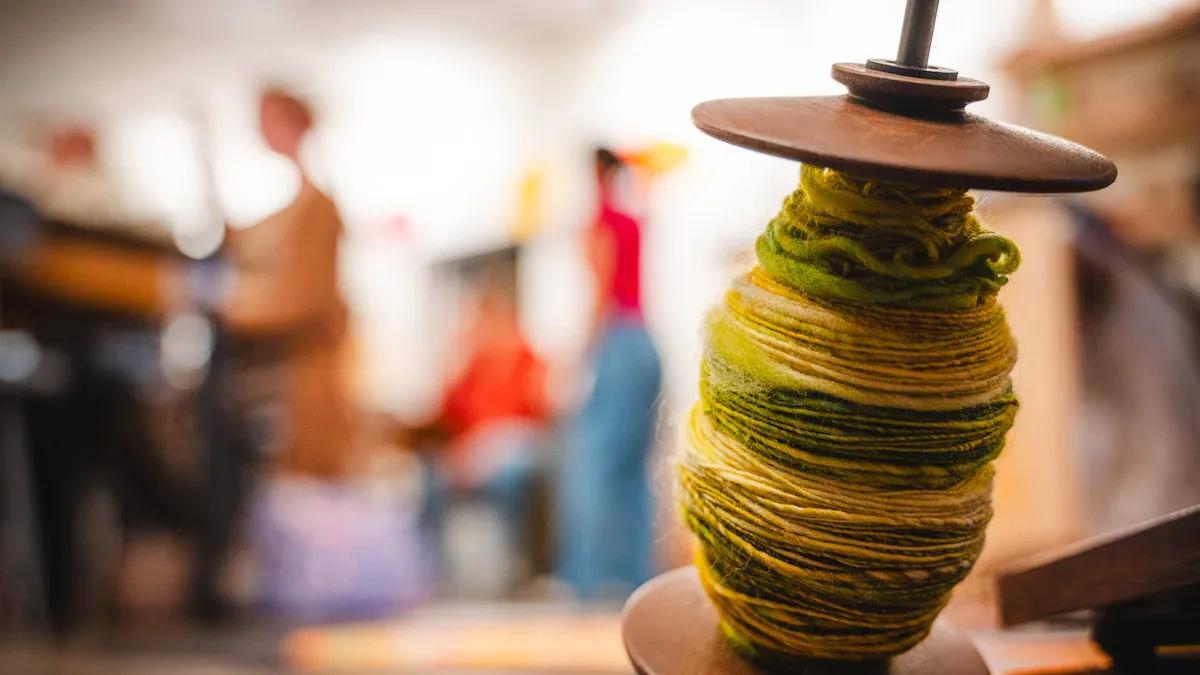
When you look at why knits twist, you need to understand how yarn torque starts during spinning. The spinning process gives yarns their twist, which creates tension inside the fibers. This tension does not always balance out, so the yarn keeps some stress. You see this as spirality in knitwear, especially in single-jersey fabrics. The leftover stress causes the fabric to spiral or curl, which leads to garment twisting and fabric skew. If the twist is too strong, the fabric can lose its shape and show uneven patterns. This affects the quality and look of your knitwear.
How Does Twist Direction (S vs. Z) Affect the Fabric?
Yarn twist direction matters a lot. You find two main types: S-twist and Z-twist. Z-twist yarns make the fabric tighter and smoother. This helps lower the chance of splitting and keeps the garment stable. S-twist yarns work better with some knitting methods, but they can increase spirality. The way the yarn twist matches the knitting style changes how much the fabric will spiral. If the twist and knitting do not match well, you see more garment twisting and less quality in the finished garment.
The Physics of Residual Torque in Spun Yarns
When you spin yarn, the fibers hold onto some internal force. This force is called residual torque. It stays in the yarn after spinning and does not go away. If the twist is not balanced, the yarn wants to turn or spiral. This causes spirality in knitwear and makes the fabric twist after you wash or wear the garment. You notice the garment does not keep its shape and may hang wrong.
What is the Relationship Between Number of Feeders and Spirality?
The number of feeders on a circular knitting machine changes how much spirality you see in the fabric. If you use more feeders, the courses in the fabric slant more. This increases spirality and makes garment twisting worse. Stitch length and yarn tension also play a role. If you do not control these, the fabric can skew and lose quality.
Understanding Course Inclination in Circular Knitting
Course inclination means the angle of the loops in the fabric. When you set up the machine, the number of feeders and the way you feed the yarn change this angle. If the angle is too steep, you see more spirality and fabric skew. You want to adjust the machine to keep the courses straight and lower the risk of garment twisting.
Here is a table showing how feeder setup can help reduce spirality:
Adjustment Type | Description |
|---|---|
Feeder Tension | Optimizing feeder tension can reduce spirality. |
Stitch Length | Adjusting stitch length is crucial for reducing spirality. |
Tip: You can improve the quality of your knitwear by checking yarn twist, controlling feeder numbers, and adjusting stitch length.
How Can Manufacturers Eliminate Torque?
Can Yarn Selection Fix the Problem?
Picking the right yarn helps stop spirality and twisting. Low-torque or balanced yarns have less twist. This means the fabric does not skew or change shape as much. Some yarns are made with special spinning methods like Nu-Torque technology. This method changes how tight the fibers are and how the twist spreads out. Because of this, knits twist less and the fabric stays stable.
What are Low-Torque or Balanced Yarns?
Low-torque yarns do not twist much inside. These yarns help the fabric stay flat and stop spirality. There are two main types: core spun yarn and covered yarn. Core spun yarn costs less than covered yarn by about 15-25%. People use core spun yarn for cheap, throw-away clothes. Covered yarn is better for fancy or special clothes because it works better and lasts longer.
How Does Plating S and Z Twist Yarns Work?
Plating is when you knit two yarns together. One yarn has S twist and the other has Z twist. This balances the forces in the fabric. You see less twisting and spirality when you use plating. Makers use this for clothes that need to be strong and keep their shape.
What Knitting Adjustments Are Required?
You can change knitting settings to lower spirality. Making stitches shorter and changing how feeders work helps control twist and fabric skew.
Does Tightening Stitch Length Help?
Shorter stitches make the fabric tighter. This means there is less spirality and twisting in strong knits. If you make stitches longer, spirality and shrinking get worse, especially in cotton. Slub single jersey twists more, but cross tuck fabrics twist less.
Alternate Feeder Progression Strategies
Changing the number and order of feeders changes the angle of the loops. You can lower spirality by keeping feeder tension the same and changing how feeders work. This helps the garment keep its shape and stay nice.
Can Finishing Processes Correct Skewing?
Finishing steps can fix fabric skew and spirality after knitting. Compacting squishes the fabric with heat, water, and pressure. This makes the fabric softer, smoother, and helps it keep its size. You see less twisting and bowing in the finished garment.
Is Resin Finishing a Permanent Solution?
Resin finishing holds the fibers in place and fixes spirality. But resin can make the fabric feel different and not last as long. Also, using chemicals is not good for the environment, so people use them less now.
Why Does “Forcing” the Grain Line Fail Long-Term?
Some people try to force the grain line straight at the end. This does not work for long. The twist inside the yarn comes back after washing, and the garment twists again. You need to fix spirality when making the yarn and knitting for the best results.
Tip: Always check your yarn, knitting settings, and finishing steps to keep your clothes strong and high quality.
How Can Designers Minimize the Risk of Spirality?
Which Fabric Structures Are Most Stable?
You can help stop spirality by picking the right fabric. Some knits twist more than others. Single jersey twists a lot because its loops lean one way. Rib and interlock have loops that balance each other out. This helps them keep their shape and not twist. Pique and moss stitch also help lower spirality. These patterns break up the twist and make the fabric stronger.
Here is a table to show how knit structures compare:
Fabric Structure | Spirality Risk | Stability | Best Use |
|---|---|---|---|
Single Jersey | High | Low | Basic tees, casual wear |
Rib | Low | High | Cuffs, collars, trims |
Interlock | Very Low | Very High | Premium knitwear |
Pique | Low | High | Polos, sportswear |
Moss Stitch | Low | High | Sweaters, textured tops |
Tip: For less twisting and better quality, use rib, interlock, pique, or moss stitch in your knits.
When to Switch from Jersey to Pique or Moss Stitch
Change from jersey to pique or moss stitch if you see too much twisting. If you want your garment to keep its shape, pick these fabrics. Pique and moss stitch are good for activewear, polos, and sweaters. They give comfort and help the garment stay stable.
Does Seamless (Wholegarment) Technology Eliminate Twist?
Seamless knitting makes clothes right from yarn. This helps lower spirality because there are no seams to twist. You get more stretch, breathability, and comfort. Seamless clothes fit better and last longer. You also waste less fabric, which is good for the planet and helps stop twisting.
The Impact of Seamless Construction on Torque
Seamless construction lowers twisting, but it does not stop all torque. The final result depends on the designer and finishing steps. Some seamless clothes still need side seams or extra sewing. This can bring back twisting or fabric skew. For example, seamless bras might squeeze and feel tight. Always check the design and finishing to keep the garment high quality.
You notice spirality in knitwear when yarn twist, machine settings, and fabric structure do not match well. Knits twist because of leftover torque, loose fabric, and poor process control. You can stop garment twisting by picking stable yarns, using the right stitch length, and choosing balanced fabric structures. Good process control, like SCS technology, helps your garment stay stable and lowers twist. For the best results, try these tips:
Use the right number of stitches per inch and keep sewing tension even.
Make sure body and rib shrink the same amount.
Wash clothes gently to help them keep their shape.
Process Stage | |
|---|---|
Raw Material | Fiber type, yarn twist |
Knitting | Machine gauge, stitch length |
Finishing | Compaction, resin treatment |
FAQ
What causes spirality in knitwear?
You see spirality when yarn twist, fabric structure, and poorly set knitting parameters work together. These factors make the garment twist after washing or wearing. You notice this problem most in single jersey knitwear.
How can you test for garment spirality?
You can use a garment spirality test. Mark the side seams before washing, then check if they move after washing. This test helps you measure how much the garment twists and shows if the fabric has stability issues.
Why does poor knitwear quality lead to twisting?
Poor knitwear quality often comes from using low-grade yarns or ignoring the pre-wash fabric spirality test. When you skip these steps, the garment twists more, and you see uneven seams or slanted hems.
Can you fix twisting by changing the knitting settings?
You can improve garment quality by adjusting stitch length and feeder tension. If you use poorly set knitting parameters, the fabric will twist more. Always check these settings to keep your garment stable.
What is the best way to prevent spirality in your garments?
You should choose balanced yarns and stable fabric structures. Run a pre-wash fabric spirality test before production. These steps help you avoid twisting and keep knitwear quality high.