
You want the best when you look for a knitwear maker. Here are the top 10 knitwear makers for 2025:
-
Luso Knitwear
-
Dongguan Jiayan Knitwear
-
Knit Lab Peru
-
Modaknits
-
Hingto
-
Gildan
-
Delta Galil
-
Pact
-
MATE the Label
-
Organic Basics
When you choose a knitwear maker, look for sustainability. Check for certifications like GOTS. Make sure they use ethical labor. Look for strong product quality. These rules help you find a trusted organic cotton knitwear factory. Working with a certified knitwear maker means you get safe and eco-friendly knitwear.
Picking a knitwear maker with a global name helps your brand grow.
Key Takeaways
-
Pick manufacturers with GOTS and OEKO-TEX certifications. This helps make sure products are safe and good for the planet. Look for factories that treat workers fairly. Workers should get fair pay and work in safe places. Check if the manufacturer can make enough products for your brand. This helps your brand grow without waiting too long. Customization is important. Choose a factory that lets you make special designs and styles. Ask suppliers about the smallest order you can make. Also, ask how long it takes to get your products. This helps you avoid problems with production. Check certifications and transparency by looking at official papers and websites. Pick manufacturers that use eco-friendly materials and ways of working. This makes your brand look better. Work with suppliers who give good customer service. They can help your brand do well.
Criteria for Selecting a Knitwear Manufacturer
Sustainability and Certifications
When you pick a knitwear partner, you want them to care about the planet. The best makers use certified organic cotton and eco-friendly ways. You should look for GOTS certified and OEKO-TEX certified labels. These labels mean the knitwear is safe for you and the earth. Gots certified shows the cotton is grown without bad chemicals and workers are treated well. Oeko-tex certified means the knitwear does not have harmful stuff in it.
Here’s a simple table to help you compare the main certifications for organic cotton clothes:
|
Certification |
Requirements |
|---|---|
|
GOTS |
Has strict rules from cotton farming to finished knitwear. Checks for good environment and fair treatment. |
|
OCS |
Makes sure the cotton is really organic. Not as strict about the environment or workers. |
|
USDA Organic |
Checks raw cotton for non-GMO, but does not check how it is made. |
|
OEKO-TEX |
Tests for bad chemicals and checks organic cotton from farm to finished product. |
You want your knitwear to have GOTS certified and OEKO-TEX certified marks. These show the maker uses safe materials and good sourcing. When you see these labels, you know the knitwear is made from yarn to garment with care. Every step uses certified organic cotton and follows tough rules.
Tip: Picking GOTS certified knitwear helps your brand look good and makes you stand out.
Ethical Labor and Fair Trade
You care about the people who make your knitwear. Factories should treat workers fairly. The best ones use certified organic cotton and follow fair trade rules. Gots certified and OEKO-TEX certified factories promise safe places to work and fair pay. You should ask if the factory is GOTS certified and OEKO-TEX certified. These labels mean workers are safe.
Look for these signs of fair treatment:
-
Workers get fair pay
-
Workplaces are safe and clean
-
No child labor or forced labor
-
Supply chain is open and honest
-
Factory cares about the planet
Fair Trade rules make sure workers get paid well and work safely. Gots certified and OEKO-TEX certified factories also follow strict labor rules. When you pick a factory with these labels, you help the planet and people.
Product Quality and Innovation
You want your knitwear to last and look nice. Good quality is important. The best makers use certified organic cotton and GOTS certified ways to make strong fabrics. They test their knitwear to make sure it lasts and feels good. You should ask how they check for quality and keep it the same.
Factories use new machines to make better knitwear. These machines help make strong, soft, and even certified organic cotton clothes. Some factories use computers to check for good quality and less waste. They also try new eco-friendly ways to make cotton, so the knitwear is safe for you and the earth.
Here are some ways factories keep quality and try new things:
-
Basic quality checks
-
Regular testing for quality
-
Checks to see if clothes last
-
Tests for shrinking and twisting
-
New cotton fabric ideas for comfort and warmth
When you pick a maker with GOTS certified and OEKO-TEX certified knitwear, you get good quality and new ideas. Your brand will have organic cotton clothes that people like.
Production Capacity and Customization
When you pick an organic cotton knitwear maker, you want to know if they can make enough for you. Production capacity means how much a factory can make in a certain time. If you want your brand to grow or sell a lot, you need a partner who can keep up.
Some big factories make a lot of knitwear. For example:
-
Rajlakshmi Cotton Mills makes about 1.4 tons of knitwear each year.
-
This company has six places to help fill orders.
Big factories like this can make thousands of pieces. They have lots of space and machines. If you have a small brand, you may not need that much. But it is good to know your factory can grow with you.
Tip: Always ask your supplier about the biggest and smallest order sizes. This helps you avoid problems or delays.
Customization is important too. You want your knitwear to be special. Maybe you want different colors, cool stitches, or your own label. Some makers let you pick many things. Others only offer simple styles.
Here is a quick look at how two top makers do customization:
|
Manufacturer |
Customization Options |
Product Range |
|---|---|---|
|
JM Knitwear |
Custom designs, GOTS certified, many gauges |
Men’s, women’s, kids, home: throws, blankets, sweaters, hats, scarves, and more. |
|
Knitup |
No minimums, design preview, customizable |
Special shapes, many stitches and colors, can make small or big orders for new designers. |
JM Knitwear lets you make your own designs and has GOTS certification. You can choose from many types and products, like sweaters or home items. Knitup gives you even more choices. You can order one piece or a thousand. Their design tool lets you see your ideas before you buy. This is good if you want to try new styles or make small batches.
Think about what matters most for your brand. Do you want to start small and grow? Look for makers with flexible order sizes. Do you need special yarns or eco-certifications? Pick a partner who has those choices.
-
Ask about how long custom orders take.
-
Check if the factory can do rush jobs.
-
Find out if they help with design or just follow your plan.
Note: The right mix of making power and custom choices helps your brand stay special and meet demand. Ask questions and compare your options.
Picking a maker with the right production and custom choices makes things easier. You get the products you want, when you need them, and your brand stands out.
How to Choose an Organic Cotton Knitwear Factory
Key Questions to Ask Suppliers
When you talk to a knitwear supplier, you want to get clear answers. You need to know if they meet your standards for organic cotton and ethical practices. Here are some smart questions to ask:
-
Can you show a Scope Certificate for your knitwear? This certificate lists every certified company in your supply chain, from the cotton farm to the finished product.
-
What class type and certification does your knitwear have? Ask about the percentage of organic content in each item.
-
Are you listed in the GOTS online database? You can check this yourself to make sure the supplier is truly certified.
You should also ask about their experience with custom knitwear production. Find out if they can handle your designs and special requests. Ask how they keep quality high and if they offer help with design or just follow your plan.
Tip: Always ask for official documents, not just screenshots. Look for certificates with QR codes or registry numbers.
Understanding Certifications (GOTS, Fair Trade)
Certifications help you trust your knitwear supplier. GOTS and Fair Trade are two of the most important labels. GOTS checks every step, from growing cotton to making the final knitwear. Fair Trade makes sure workers get fair pay and safe jobs.
You can verify certifications in a few ways:
-
Look for logos and certificates on products.
-
Use the GOTS public database to check Scope Certificates. Enter the company name to see if they are listed.
-
Try the OEKO-TEX Label Check tool to track labels.
-
Ask for official PDFs with QR codes or registry numbers.
-
Contact the certification body directly if you have doubts.
These steps help you make sure your knitwear is truly organic and ethical. You want to work with suppliers who are open and honest about their certifications.
Assessing Transparency and Traceability
Transparency and traceability matter when you choose a knitwear factory. You want to know where your cotton comes from and how your knitwear is made. This helps you avoid hidden problems and build trust with your customers.
Here’s a simple way to check traceability:
-
Create a full overview of all suppliers and actors for each knitwear product.
-
Do risk assessments based on this information. Look for weak spots in the supply chain.
-
Put corrective measures in place if you find any issues. Keep checking to make sure things improve.
-
Report your findings and share what you did with your customers and stakeholders.
If you follow these steps, you can track every part of your knitwear supply chain. You will know who made your knitwear and how they did it. This makes your brand stronger and helps you stand out.
Note: Good traceability means you can answer tough questions from buyers and show your commitment to ethical fashion.
When you choose a factory, think about your business needs. You want reliable sources of organic cotton, fair prices, and strong quality assurance. You also need to scale up sustainable practices and educate your customers about the benefits of organic knitwear.
If you focus on these areas, you will find a factory that fits your brand and helps you grow in the organic knitwear market.
Minimum Orders and Lead Times
When you start working with an organic cotton knitwear factory, you need to know about minimum orders and lead times. These two things can change how you plan your collection and manage your budget. If you want to launch a new line or test a design, you should ask about the smallest order you can place. Some factories let you order just a few pieces. Others want you to order hundreds.
Factories set minimum order quantities (MOQ) to keep production smooth. If you run a small brand, a high MOQ can make things tough. You might not want to order 200 sweaters at once. You should look for factories with flexible MOQs. This helps you start small and grow when you are ready.
Here’s a quick look at what you might see:
|
Manufacturer |
Minimum Order Quantity |
Lead Time |
|---|---|---|
|
Little Good Knits |
50 pieces |
14 days + shipping |
Factories in different places have their own rules. You might find lower MOQs in Portugal or the Netherlands. Lead times also change from place to place. Some factories finish orders in two weeks. Others need up to eight weeks.
|
Location |
Minimum Order Quantity |
Lead Time |
|---|---|---|
|
Porto, Portugal |
4-6 weeks |
|
|
Amsterdam, Netherlands |
25-100 pieces |
5-7 weeks |
|
London, UK & Berlin, Germany |
50-200 pieces |
6-8 weeks |
You should always ask about lead times before you order. Lead time means how long it takes for the factory to make your knitwear. If you need your products fast, pick a factory with short lead times. If you want special designs or colors, the process might take longer.
Here are some tips to help you:
-
Ask for the MOQ and lead time before you sign anything.
-
Check if the factory can do rush orders.
-
Find out if they offer samples before you place a big order.
-
Ask if you can mix styles or colors in one order.
Tip: If you plan ahead, you can avoid delays and surprises. Factories get busy during peak seasons, so order early.
Factories with low MOQs and short lead times help you test new ideas. You can launch small batches and see what your customers like. If your brand grows, you can order more next time. This way, you keep your costs low and your collection fresh.
You should pick a factory that matches your business needs. If you want to scale up, choose one with flexible MOQs and reliable lead times. This helps you stay on track and deliver great organic cotton knitwear to your customers.
Top 10 Organic Cotton Knitwear Manufacturers in 2025
Luso Knitwear
Company Overview
Luso Knitwear is a trusted knitwear factory in Portugal. The company started more than 30 years ago. They make high-quality knitwear for brands that care about the planet. You can find their clothes in fancy stores and eco-friendly shops. Luso Knitwear works with many companies and helps small brands grow.
Unique Strengths
Luso Knitwear helps you from start to finish. They help with patterns, samples, and making the clothes. The team listens to your ideas and helps you make special knitwear. They use new knitting machines and skilled workers. You can order a few pieces or many at once. Luso Knitwear works with factories in Europe and other places. This means you get fast shipping and good service.
Sustainability Credentials
You want to know your knitwear is made the right way. Luso Knitwear has GOTS and OEKO-TEX certifications. They use only certified organic cotton and recycle water when they dye clothes. Their factory uses solar power and tries to make less waste. You can see every step from the cotton farm to the finished knitwear. Luso Knitwear works with factories that follow strict rules for the environment.
Notable Offerings
Luso Knitwear makes many things like sweaters, hats, scarves, and baby clothes. You can pick from lots of colors and textures. Their factory lets you add your own labels and packaging. Luso Knitwear also has special yarns if you want something different. You get soft and strong knitwear that matches your style.
Dongguan Jiayan Knitwear
Company Overview
Dongguan Jiayan Knitwear is a top factory in China. They work with companies from all over the world. You can find their knitwear in big stores and online. The company started in China’s textile area and grew fast because they care about quality and service.
Unique Strengths
Dongguan Jiayan Knitwear gives you many choices for making clothes. You can order small amounts or big orders. They finish orders quickly. The team helps with design, samples, and making lots of clothes. They use new machines and skilled workers. You can pick classic or new styles. They work with factories in China and other countries, so prices are good.
Sustainability Credentials
Dongguan Jiayan Knitwear cares about the planet. Their factory has GOTS and OEKO-TEX certifications. They use certified organic cotton from trusted places in China. The factory recycles water and saves energy. You can ask to see where your cotton comes from. Dongguan Jiayan Knitwear works with factories that follow strict rules for workers and the environment.
Notable Offerings
Dongguan Jiayan Knitwear makes sweaters, hoodies, dresses, and more. You can pick different thicknesses and finishes. Their factory lets you add your own labels and packaging. They also have special blends if you want new textures. You get good quality and fast delivery from China.
Knit Lab Peru
Company Overview
Knit Lab Peru is a leading factory in South America. You can find their knitwear in eco-friendly shops and fashion stores. They work with companies that care about fair trade and local people. Knit Lab Peru uses Peruvian organic cotton, which is soft and strong.
Unique Strengths
Knit Lab Peru lets you work with skilled knitters. Their team helps you design and make new styles. You can order small or big amounts. They use old knitting ways and new machines. You can work with factories in Peru and other countries.
Sustainability Credentials
Knit Lab Peru has GOTS and Fair Trade certifications. Their factory uses local cotton and helps farmers. They recycle water and use natural dyes. You can see every step from the cotton field to the finished knitwear. Knit Lab Peru works with factories that follow strict social and environmental rules.
Notable Offerings
Knit Lab Peru makes sweaters, cardigans, ponchos, and more. Their factory lets you pick custom colors and patterns. They have special yarns if you want something unique. You get soft, strong knitwear with a story behind each piece.
Tip: If you want ethical knitwear with a local touch, Knit Lab Peru is a great choice.
Modaknits
Company Overview
Modaknits is a modern knitwear maker in India. Their products are sold in many countries. The company started small but now works with many brands. They help both big and small fashion labels. You get help from the first idea to the final delivery.
Unique Strengths
Modaknits lets you order small or big amounts. Their team helps you make new designs and styles. They use advanced machines and skilled workers. You get samples fast and quick delivery. Modaknits also helps with packaging and branding, so your products look good.
-
They help you with design and tech packs.
-
Modaknits works with new and big brands.
-
Their team answers your questions quickly.
Sustainability Credentials
Modaknits cares about the earth. They use GOTS-certified organic cotton and follow strict safety rules. The factory recycles water and uses solar power. Workers get fair pay and safe jobs. Modaknits checks every step from farm to sweater. You can ask for full traceability reports.
-
GOTS and OEKO-TEX certifications
-
Water recycling and solar energy
-
Fair labor for workers
Notable Offerings
Modaknits makes many types of knitwear. They make sweaters, cardigans, hats, scarves, and baby clothes. You can pick from many colors, textures, and patterns. Modaknits lets you add your own labels and tags. They offer special yarns for unique looks. You get soft, strong knitwear that fits your brand.
Hingto
Company Overview
Hingto is a top knitwear maker in China. Their products are in eco-friendly shops and fashion stores. Hingto works with brands that want organic cotton and fair production. The company started with sportswear and now makes sustainable knitwear.
Unique Strengths
Hingto gives you help from design to big orders. Their team helps with design, samples, and bulk making. They use modern machines and skilled workers. You can order small or big amounts. They deliver fast and help both new and big brands.
-
Fast samples and production
-
Custom designs and private labels
-
Support for all brands
Sustainability Credentials
Hingto follows strict global rules for sustainability. Their GOTS certification covers the whole supply chain. Hingto meets tough rules for the environment and workers. Their facilities handle and pack products in GOTS-certified spaces. You know your knitwear is organic and ethical.
|
Aspect |
Description |
|---|---|
|
Certification Authority |
Global Organic Textile Standard (GOTS) |
|
Coverage |
Whole supply chain, including environment and social rules |
|
Environmental Criteria |
Limits on bad chemicals, waste, and water use |
|
Social Criteria |
Follows social responsibility rules in the supply chain |
|
Certification Process |
Needs GOTS-certified places for making and packing |
|
Consumer Assurance |
Gives proof of organic status to buyers |
-
GOTS covers the whole supply chain.
-
Products must be made and packed in certified places.
-
Hingto meets strict environment and worker rules.
Notable Offerings
Hingto makes sweaters, hoodies, joggers, and accessories. They offer many styles, colors, and yarn blends. You can get custom labels and packaging. Hingto helps brands launch new lines or test small batches. Their knitwear is soft, lasts long, and meets high standards.
Gildan
Company Overview
Gildan is a big name in knitwear making. You see their products in many stores and online. The company started in Canada and now has factories in many places. Gildan works with famous brands and offers lots of organic cotton knitwear.
Unique Strengths
Gildan can make huge orders and deliver on time. They use advanced machines and check quality carefully. Their team helps with design, samples, and shipping. You get good service and steady quality.
-
Big production for large brands
-
Fast delivery and global shipping
-
Strong help for custom orders
Sustainability Credentials
Gildan has high standards for the planet. They are part of the U.S. Cotton Trust Protocol, so their cotton is grown right. Gildan’s products have the STANDARD 100 by OEKO-TEX® label, so they are safe. Their factories in Honduras and Nicaragua have OEKO-TEX® STeP certification for best practices.
|
Initiative/Certification |
Description |
|---|---|
|
U.S. Cotton Trust Protocol |
Shows Gildan uses cotton that is grown and picked the right way. |
|
STANDARD 100 by OEKO-TEX® |
Proves products are safe and meet strict rules. |
|
OEKO-TEX® STeP Certification |
Given to factories in Honduras and Nicaragua for best practices. |
-
First to get STeP in Nicaragua.
-
First fully-integrated maker to get STeP in Honduras.
Gildan® and Comfort Colors® products are certified by STANDARD 100 by OEKO-TEX®. This helps people check for harmful stuff in clothes using many tests.
Notable Offerings
Gildan has a huge range of products. They make sweaters, t-shirts, hoodies, and socks. You can pick organic cotton in many colors and sizes. Gildan offers private labels and custom packaging. Their knitwear is soft, strong, and safe for you and the earth. You get products that meet tough rules for quality and sustainability.
Delta Galil
Company Overview
Delta Galil is a big name in knitwear. They make many types of clothes, from simple to fancy. The company started in Israel. Now, they work with brands and stores everywhere. Delta Galil owns famous labels and teams up with top fashion brands. They care about making clothes that feel good and look nice. They always try new ideas.
Unique Strengths
Delta Galil gives you lots of choices. They have many factories and design teams. You can order a few or many pieces. You still get good service. Delta Galil uses new machines and tools. Your knitwear is always modern. They help with design, samples, and quick making. Their team listens and helps you make custom clothes.
-
Factories in many countries
-
Strong design teams
-
Fast making for big or small orders
-
Help with custom styles and labels
Sustainability Credentials
Delta Galil cares about the planet and workers. When you pick them, you help people and nature.
-
Delta Galil owns Organic Basics. This brand makes eco-friendly clothes.
-
Organic Basics uses only certified factories. These places do not use child or forced labor. Workers get safe jobs and fair pay.
-
Most partner factories have certifications like SEDEX, SMETA, ISO14001, GOTS, or SA8000.
-
Delta Galil uses GOTS-certified organic cotton in most knitwear. About 90% of their main materials are GOTS-certified organic cotton. They also use other green fibers like TENCEL™ Lyocell.
-
Organic Basics gets recycled nylon from GRS-certified suppliers.
-
They use TENCEL™ Lyocell and LENZING™ ECOVERO™, both certified STANDARD 100 by OEKO-TEX®. This means their products are safe.
Picking Delta Galil means you support fair jobs, safe factories, and green materials.
Notable Offerings
Delta Galil makes many kinds of organic cotton knitwear. You can get basics like t-shirts, underwear, and socks. They also make sweaters and comfy clothes. They have products for men, women, and kids. You can pick from many colors, styles, and sizes. Delta Galil lets you add your own label or packaging. Their knitwear is soft, lasts long, and meets high safety and green standards.
Organic Basics
Company Overview
Organic Basics is a brand that cares about the earth and your comfort. They started with one goal. They wanted to make stylish clothes that are good for you and the planet. The company uses organic, recycled, and other eco-friendly materials. They tell you how their products are made and where everything comes from. You always know what you are buying from Organic Basics.
Unique Strengths
Organic Basics is special because they care about the environment. They only use trusted factories that treat workers well. Their clothes feel soft and last a long time. The styles are simple and modern, so you can wear them every day. Their designs fit many people and different needs. If you want a brand that is honest and open, Organic Basics is a smart pick.
You can count on Organic Basics for comfort and trust.
Sustainability Credentials
You want to know what is in your clothes. Organic Basics uses top certifications to show they care about the planet and people. Here are some main certifications you will see:
-
Global Organic Textile Standard (GOTS): Checks the whole supply chain and makes sure the cotton is truly organic.
-
Global Recycled Standard (GRS): Confirms that recycled materials are real and made the right way.
-
Organic Content Standard (OCS): Tracks organic materials from the source to the finished product.
The company also picks materials that help the earth. Here is what they use:
|
Material Type |
Description |
|---|---|
|
Organic Cotton |
Grown without synthetic fertilizers, helps keep soil healthy. |
|
Recycled Nylon |
Strong and helps cut down on waste. |
|
TENCEL™ Lyocell |
Made from wood that is grown the right way, feels soft and smooth. |
|
LENZING™ ECOVERO |
Light fibers from safe wood sources, soft and easy to wear. |
Organic Basics keeps their supply chain open for everyone to see. You can learn how your knitwear is made and who makes it. This honesty helps you make good choices for yourself and the planet.
Notable Offerings
Organic Basics gives you more than just plain basics. Their knitwear line has sweaters, cardigans, and comfy tops. Each piece feels soft and nice on your skin. You can find simple styles for school, work, or relaxing at home. They have many sizes and colors, so you can choose what you like best. If you want something light, try their TENCEL™ Lyocell or LENZING™ ECOVERO pieces. For classic comfort, pick their organic cotton sweaters.
-
Soft sweaters and cardigans for all seasons
-
Simple, modern designs that go with any outfit
-
Eco-friendly materials that stay nice after many washes
When you pick Organic Basics, you help people and the planet. You get knitwear that feels good and does good.
Comparing Leading Knitwear Manufacturers
Regional Strengths
Where knitwear comes from is important. Each place has something special. China, Europe, North America, and Latin America have strong knitwear makers. Asia Pacific makes the most, with 40% of the market. Europe and North America are next. These places care about making good and green knitwear.
Here’s a simple table to show how regions compare:
|
Region |
Market Share |
Key Insights |
|---|---|---|
|
North America |
28% |
People want green knitwear. Brands grow fast here. |
|
Europe |
25% |
Eco-friendly knitwear is popular. Many brands work together. |
|
Asia Pacific |
40% |
Makers in China and nearby countries meet big demand. They care about green ways. |
|
Latin America |
5% |
More brands use organic cotton. People are learning more. |
|
Middle East |
2% |
Knitwear is new here. Home textiles are liked. |
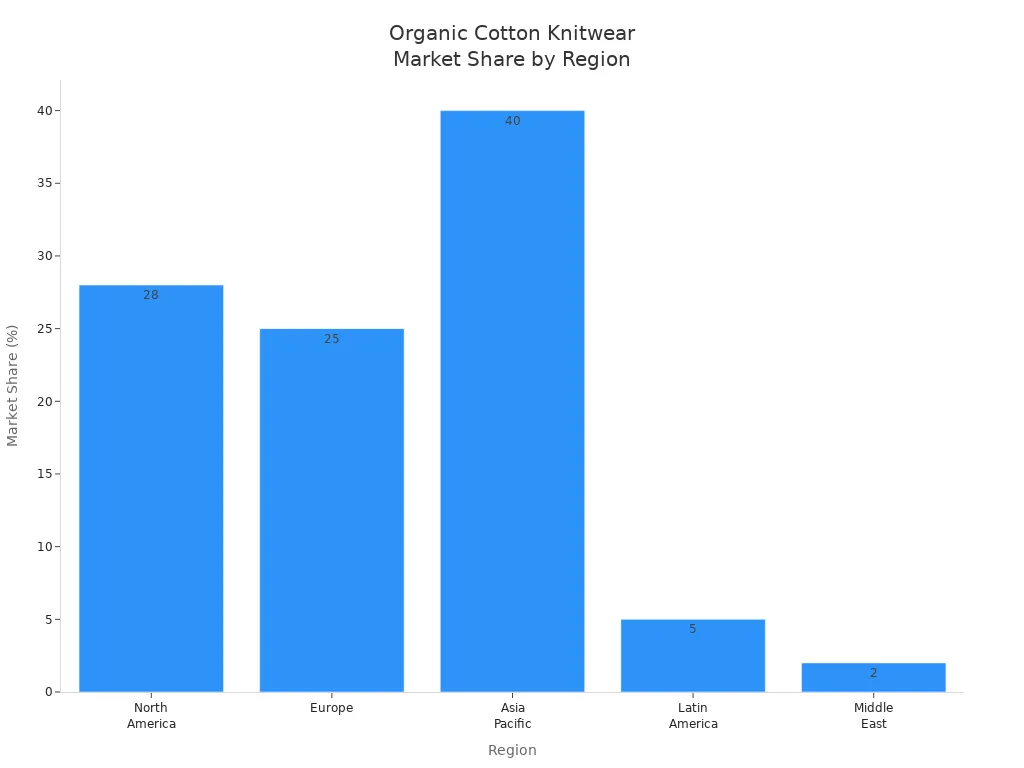
If you want quick making and good prices, China is a strong choice. Europe gives you fancy knitwear and eco-certifications. North America is known for reliable makers and good help.
Tip: Pick a place that matches your brand and your customers.
Price and Value
It’s important to know what you pay for. Knitwear made with ethical cotton costs more than regular cotton. You pay extra for better products and certifications. These products last longer, and people notice the difference.
Look at this table to see how prices compare:
|
Cost Factor |
Conventional Cotton |
Ethical Cotton |
|---|---|---|
|
Raw Material Price ($/kg) |
2.5–3.0 |
3.5–4.5 |
|
Processing Cost |
Standard |
+10% |
|
Retail Price Impact |
Neutral |
+5–8% |
|
Consumer Perceived Value |
Moderate |
High |
|
Lifecycle Value (per year) |
$1.00 |
$1.45 |
You pay more for ethical knitwear, but it lasts longer. Customers see the value in organic cotton. Brands using ethical cotton stand out. Makers in China often have lower prices, but check for certifications and quality.
Note: Spending more on ethical knitwear helps your brand earn trust.
Customer Service
Customer service is very important. You want a partner who listens and helps you. European makers give personal help and quick answers. North American companies help with design and shipping. Makers in China work fast and take flexible orders, but check how they answer questions.
Here’s what you should look for:
-
Quick replies to questions
-
Help with design and samples
-
Clear updates on orders
-
Support after you get your products
If you want special designs or small orders, pick a factory with good service. Reliable makers help your brand grow and avoid mistakes. You get good products and help all the way.
Tip: Good customer service means less stress and better knitwear.
When you compare knitwear makers, think about place, price, and service. Pick a partner who fits your brand, budget, and goals. You get the best results when you match your needs with the right factory.
Sustainable Brands in Organic Cotton Clothing
You want to find the best organic cotton clothing for your closet. Many brands now focus on making knitwear that is good for you and the planet. When you pick these brands, you help the earth and support fair jobs. Let’s look at some leaders in this space and see what makes them special.
Harvest & Mill
Harvest & Mill stands out for its simple approach to organic cotton clothing. You get knitwear that is grown, milled, and sewn in the USA. This brand keeps its supply chain short, so you know where your knitwear comes from. They use only organic cotton clothing, which means no harmful chemicals touch your skin. You can trust their knitwear to last and feel soft every time you wear it. Harvest & Mill also uses natural dyes, so your knitwear stays safe and gentle. If you want basics like tees, joggers, or socks, this brand gives you clean options for everyday wear.
When you choose Harvest & Mill, you support local farmers and workers. You also help reduce pollution from shipping.
Outerknown
Outerknown brings a cool, surf-inspired style to organic cotton clothing. You see their knitwear on people who love the beach and care about the planet. Outerknown uses organic cotton clothing and recycled materials in every piece. Their knitwear feels soft and looks modern, so you can wear it anywhere. The brand works hard to keep its supply chain open. You always know how your knitwear is made. Outerknown also partners with Fair Trade factories, so workers get fair pay and safe jobs. Their knitwear includes sweaters, hoodies, and tees that fit your active life.
Outerknown proves you can look good and do good at the same time.
Other Notable Sustainable Brands
You have more choices when it comes to organic cotton clothing. Many brands lead the way with fresh ideas and strong values. Here’s a quick look at some top names:
|
Brand |
Description |
|---|---|
|
Makes essential organic cotton clothing with Fair Trade certification and full transparency. |
|
|
Amour Vert |
Mixes French style with green practices, using organic fabrics and low-impact dyes. |
|
Indigenous |
Teams up with artisans to create eco-friendly knitwear using organic and natural fibers. |
Pact gives you everyday knitwear that feels good and supports fair jobs. Amour Vert brings style and color to organic cotton clothing, so you never have to pick between fashion and the planet. Indigenous offers knitwear made by skilled hands, using only the best organic cotton clothing and natural fibers.
When you pick these brands, you join a movement. You help grow the market for organic cotton clothing and show that people care about how their knitwear is made. You also support brands that treat workers right and protect the earth.
Choosing sustainable brands helps you make a real difference with every piece of knitwear you buy.
You want your brand to do well, so picking a good knitwear partner is important. Factories that are certified, ethical, and care about the planet help your brand stand out. The top 10 knitwear makers give you strong quality, fair jobs, and eco-friendly options. Use the tips and company profiles to help you find the right knitwear maker. Ask questions, check for certifications, and make sure you can track where things come from. When you choose trusted knitwear suppliers, you help make the future better. Are you ready to begin? Contact a knitwear factory and see how your new knitwear can look great.
FAQ
What does “GOTS certified” mean for knitwear?
GOTS stands for Global Organic Textile Standard. If you see this label, you know your knitwear uses organic cotton and follows strict rules for safety and fair treatment. You get peace of mind about your clothes.
How can I check if a factory uses ethical labor?
You can ask for certifications like Fair Trade or GOTS. Look for proof of safe working conditions and fair pay. You may also check online databases or ask for reports from the factory.
Do organic cotton sweaters last as long as regular ones?
Yes, organic cotton sweaters can last just as long. You get strong, soft fabric that holds up well. If you care for your knitwear, it stays nice for years.
Can I order custom designs from these manufacturers?
Most top factories offer custom designs. You can pick colors, patterns, and labels. Some even help you with samples and design ideas. Just ask about their options before you order.
What is the usual minimum order quantity (MOQ)?
MOQ means the smallest number of pieces you can order. Some factories let you start with 25 to 50 pieces. Others want bigger orders. Always check the MOQ before you plan your collection.
Are organic cotton clothes more expensive?
Organic cotton clothes usually cost more. You pay for safer materials and fair jobs. Many people think the extra cost is worth it because you get better quality and help the planet.
How do I know my knitwear is truly organic?
You should look for labels like GOTS or OEKO-TEX. Ask for certificates with QR codes or registry numbers. You can also check the brand’s website for details about their supply chain.
Can I mix styles and colors in one order?
Many factories let you mix styles and colors. You can create a varied collection without ordering huge amounts of each style. Just ask your supplier about their rules for mixing orders.