OEM/ODM Knitwear Production Process
The OEM/ODM knitwear production process involves a precise technical workflow that transforms yarn into finished garments through machine programming, gauge selection, linking craftsmanship, washing, ironing, quality control, and final packing. This guide explains the complete manufacturing lifecycle used by leading knitwear factories in Dalang, Dongguan—the world’s sweater manufacturing capital.
For brands, understanding the workflow is essential for better communication, accurate cost prediction, and smoother cooperation with factories.
Overview: OEM vs ODM Production Logic
OEM and ODM represent two different collaboration models. The production process is similar, but the starting point of creation differs.
OEM — The Customer Provides Design
Under OEM, the brand owns the design direction and provides:
Tech pack
Measurements
Stitch reference
Artwork files
The factory executes exactly as instructed, offering technical advice on gauge, tension, and feasibility. This model ensures brand consistency and controlled design outcomes.
ODM — The Factory Provides Design
Under ODM, the factory creates:
Seasonal knitwear collections
Trend-based styles
Pattern variations (cable, jacquard, intarsia, rib)
Yarn recommendations
Color stories
The brand selects from these pre-developed designs and customizes if needed. This model accelerates development and is ideal for fast launches, startups, and buyers needing low MOQ solutions.
Factory Workflow Overview (Full Production Cycle)
A modern knitwear factory follows a structured manufacturing pipeline, supported by digital order management, machine networks, and standardized quality checkpoints.
Yarn → Knitting → Linking → Washing → QC → Packing
This sequence defines the full lifecycle:
Yarn preparation
Knitting via computerized flat knitting machines
Linking/assembly of body, sleeves, ribs
Washing & finishing (pre-shrink, softening, shape retention)
Final QC
Packing & shipping
Each stage requires technical precision—especially knitting density, tension control, linking finish, and shaped washing.
Order Management System (MES System)
Advanced factories operate through a MES (Manufacturing Execution System) that manages all workflow activities:
Yarn batch tracking
Production scheduling
Machine assignments
Real-time progress display
QC checkpoints
Packing and shipping logs
For buyers, MES ensures traceability, transparency, and stable lead times.
Yarn Preparation
Yarn preparation is the first and most critical step in the knitwear production workflow. Before any knitting can begin, the factory must ensure that the yarn meets the exact color, quality, and performance requirements of the customer. This stage directly influences knitting stability, stitch consistency, machine efficiency, and final garment quality.
Yarn Procurement Based on Customer Color Requirements
Once the customer confirms the style and provides the Pantone code or color reference, the factory proceeds to:
Purchase yarn from approved, long-term material suppliers
Match the precise color number (color lot) required by the buyer
Order the correct quantity based on sampling or bulk production needs
Ensure the yarn batch (lot) maintains consistent color, twist, and count
This step ensures that yarn meets the customer’s expectations before entering the knitting stage. Color accuracy is especially important for multi-color jacquard, intarsia, and replenishment orders.
Smoothing & Conditioning with the Yarn Rewinding/Oiling Machine
After the yarn arrives at the factory, it goes through a rewinding and conditioning process using a specialized yarn smooth machine (yarn rewinding/oiling machine).
The purpose of this process is to:
Make the yarn smoother and more uniform
Remove loose fibers and impurities
Apply appropriate oil or lubrication to reduce friction
Improve yarn feeding smoothness during knitting
Prevent breakage, dropped stitches, and machine jams
Enhance tension stability on fine-gauge machines (12GG–18GG)
A well-rewound and conditioned yarn cone ensures that the yarn can run through STOLL or Shima Seiki knitting machines efficiently and continuously without interruptions.
Ensuring Knitting-Ready Yarn Quality
Before yarn enters the production line, technicians check:
Evenness of rewinding
Yarn strength and twist
Surface smoothness
Oil application level
Cone stability and feeding consistency
Only yarn that passes this inspection is released for knitting.
Knitting & Machine Programming (Core Factory Capability)
Knitting is the most technologically intensive and skill-dependent stage in the entire OEM/ODM production process. The precision of the knitting machine, the programming logic, and the technician’s experience directly influence the garment’s fit, stitch clarity, tension stability, and structural integrity.
Leading factories commonly utilize three major brands of computerized flat knitting machines:
STOLL (Germany)
Shima Seiki (Japan)
Cixing (China)
Each machine type has unique strengths that support different product categories, gauges, patterns, and production volumes.
STOLL (Germany)
Best for: luxury fine-gauge knitwear, high detail accuracy
STOLL is known for its engineering precision and stitch uniformity. It is preferred for:
12GG–18GG fine-gauge sweaters
Premium merino/cashmere production
Clean, consistent rib and jersey structures
Fully fashioned shaping with stable tension
Advantages:
Exceptional stitch accuracy and tension control
Smooth handling of delicate yarns like cashmere
Excellent for high-end European and Japanese brands
Ideal for clean, minimal, luxury knitwear
Shima Seiki (Japan)
Best for: complex jacquard, intarsia, and seamless knitting
Shima Seiki is the industry leader in advanced patterning and WholeGarment (无缝) knitting. It excels at:
Jacquard patterns with multiple colors
Intarsia artworks
Seamless garments with zero linking
High-speed production with stable output
Advantages:
Very strong pattern-processing and color-control capability
WHOLEGARMENT technology (no seams, full comfort)
Reliable for complex color transitions and artwork precision
Excellent for sports knitwear, fashion knits, and high-volume items
Cixing (China)
Best for: cost-efficient high-volume production with strong flexibility
Cixing is China’s largest manufacturer of computerized flat knitting machines and has become a dominant force in large-scale production environments.
Cixing machines are ideal for:
Bulk orders requiring fast lead times
Commercial sweaters in 3GG–12GG
Cost-effective production lines
Rib knits, cable styles, and standard stitching
Advantages:
Strong performance-to-cost ratio
Widely used across China’s major knitwear hubs (Dalang, Puyuan, Ningbo)
Fast machine cycles suitable for mass production
Easy maintenance and high compatibility with factory MES systems
Why factories use Cixing:
Increases output efficiency
Allows competitive pricing for brands
Supports rapid scaling during peak seasons
Performs exceptionally well with acrylic, cotton, and wool-blend yarns
Cixing machines have significantly improved in recent years, offering stability and output that can exceed expectations for mid- to high-volume orders.
How Factories Choose Which Machine to Use
Factories decide machine allocation based on:
Gauge required
Stitch pattern (cable, jacquard, intarsia)
Yarn type (cashmere vs acrylic vs cotton)
Order quantity
Target market (luxury vs high-volume commercial)
Example allocation:
STOLL → cashmere 16GG sweaters
Shima → multi-color holiday jacquard
Cixing → commercial sweaters for fast fashion brands
Each machine platform is supported by advanced programming software, where technicians create pattern files controlling every stitch, tension setting, carriage movement, and shaping line.
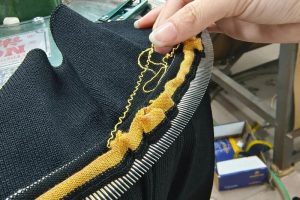
Linking & Assembly (The Stage that Most Affects Quality)
Linking is the most craftsmanship-dependent stage. Even with perfect knitting, poor linking ruins garment quality.
Panel → Linking
Flat-knit pieces (front/back/sleeves/collars) are joined by linking machines or hand-linking.
Quality indicators:
Clean seams
No needle jumps
Balanced tension
Invisible linking lines for premium garments
Neckline Construction
Neckline techniques include:
Fully fashioned neck
Folded rib neck
Single-layer rib
Double-layer rib
Milano or tubular neck
Neck opening stability ensures shape retention after washing.
Armhole Shaping
Good factories shape panels on machines (fully fashioned), reducing cutting and waste, improving:
Fit
Shoulder stability
Seam strength
WholeGarment / Seamless Technology
Using Shima Seiki WHOLEGARMENT knitting, garments can be made with zero seams:
Better comfort
Perfect stretch
No linking needed
This is ideal for yoga wear, premium knitwear, and form-fitting styles.
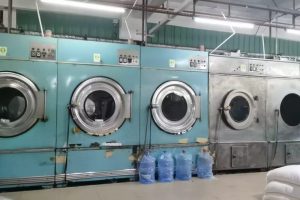
Washing & Finishing
Washing determines softness, shrinkage control, and final garment shape.
Softness Treatment
Fabric softening based on fiber type:
Wool → softening + conditioning
Cotton → bio-polish + softening
Acrylic → light softener
Ensures consistent handfeel across batches.
Shape Retention
Steam blocking and controlled drying maintain:
Garment measurements
Tension uniformity
Neckline stability
Setting Boards
Panels are placed on wooden or aluminum boards representing final measurements.
This ensures accuracy after drying.
Drying Methods
Flat drying for wool/cashmere
Machine drying (low heat) for cotton/acrylic
Tunnel drying for mass-production speed
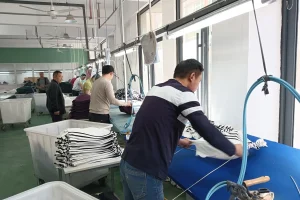
Final QC (Quality Inspection)
QC is conducted at multiple checkpoints—after knitting, linking, washing, and before packing.
Measurement Check
Garments are measured against the approved spec sheet with ± tolerance.
Needle Holes
Checking for:
Small holes
Dropped stitches
Float breakage
Inconsistent stitch density
Elasticity & Tension
Ensures neckline, hem, and cuffs maintain durability.
Color Difference
Tested under different light sources:
D65
TL84
UV lighting
Critical for multi-color orders and replenishments.
Packing & Shipping
Packing methods impact shipping cost and garment quality.
Compressed vs Flat Packing
Compressed Packing
Saves 30–50% shipping volume
Suitable for acrylic/cotton
Not recommended for wool/cashmere
Flat Packing
Maintains garment shape
Preferred for premium brands
Increases carton size
Insurance & Cargo Protection
Export shipments often include:
Marine insurance
Moisture-proof packaging
Anti-mold stickers
Lead Time Management
Typical lead times:
Sampling: 3–5 days
Bulk production: 15–20 days
Shipping:
Air: 4–8 days
Sea: 20–35 days
FAQs
OEM means the brand provides its complete design, tech pack, and specifications, and the factory strictly follows those instructions. ODM means the factory provides ready-made knitwear designs that the buyer can customize.
For small clothing brands, ODM often shortens development time, reduces sampling cost, and allows faster market launches. OEM is preferred when the brand wants full control over design details, custom fits, exclusive patterns, or unique yarn choices.
A professional knitwear factory purchases yarn based on confirmed Pantone codes and then processes it through rewinding/oiling machines . This makes the yarn smoother, removes loose fibers, and improves feeding consistency during knitting.
Technicians check yarn strength, evenness, twist, and cone stability to ensure it won’t break or jam machines during production. This preparation step is essential for preventing knitting defects and ensuring high-quality, stable garment output.
For multi-color jacquard and intarsia projects, Shima Seiki machines are the industry standard due to their advanced patterning system and precise color control. Their programming supports detailed artworks, clean transitions, and stable floats.
STOLL also performs well for fine-gauge jacquard, while Cixing is ideal for commercial jacquard production at high volume with competitive pricing. The machine chosen depends on gauge, yarn type, and complexity of the design.
Professional knitwear factories conduct multi-stage QC including:
-
Panel inspection: density, tension, holes
-
Linking QC: seam alignment and stability
-
Washing QC: shrinkage, shape retention, softness
-
Final measurement: matching the approved spec sheet
-
Color fastness test: daylight vs TL84 vs UV
-
Pilling resistance test for wool, cotton, acrylic, and blends
This ensures consistency across bulk production and reduces the chance of returns or measurement deviation.
Factories typically offer two packing methods:
-
Compressed packing for acrylic/cotton garments to reduce freight volume
-
Flat packing for wool, cashmere, and premium knitwear to protect shape
For shipping, brands can choose FOB, CIF, DDP, air freight, or sea freight depending on lead time and cost. High-value shipments often include moisture-proof packaging, foam protection, anti-mold inserts, and full cargo insurance.