
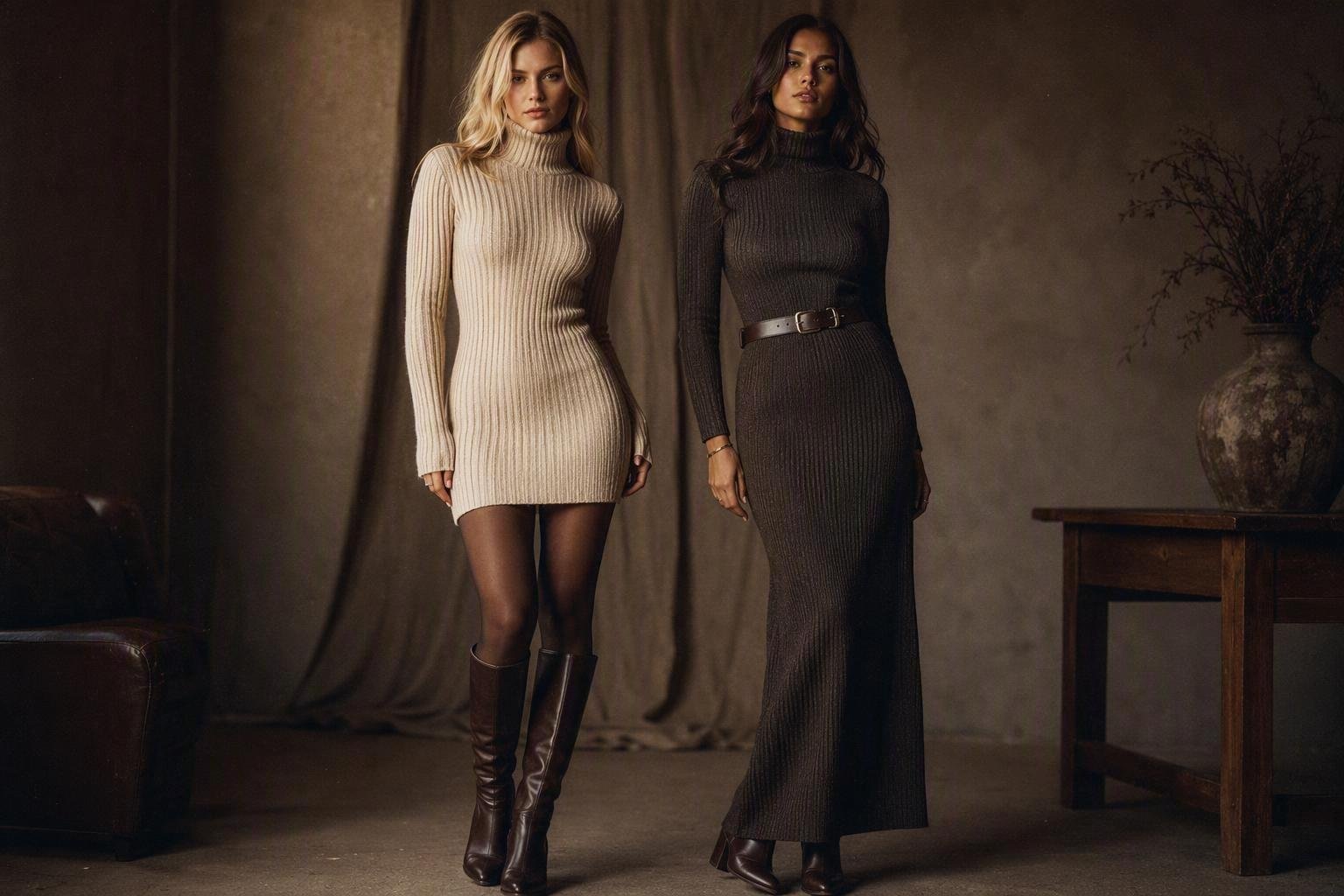
A knit dress you love as a mini can feel like a completely different garment the moment you scale it to the floor. The short, leg-forward hemline reads playful and easy; the maxi version turns into a long, draped column that elongates and dresses up. Neither is better — they just behave differently, and that difference is about more than style. Choosing the right knit dress length is really a choice between two very different ways the same fabric can fall.
For anyone choosing a knit dress to buy, the question comes down to where you’ll wear it and how you want the fabric to sit on your body. For an emerging label developing its own mini or maxi knit dress, the same comparison decides silhouettes, fabric weight, and how much you can trust the finished length.
Here’s an honest side-by-side that covers both — how a knitted maxi dress differs from a knitted mini dress, and what that means whether you’re wearing one or ordering the next one.
Key Takeaway: Choose a knitted mini for an easy, leg-lengthening day-to-night look. Choose a knitted maxi for a more covered, elongating, dressier line. But remember the fabric does the work — the same knit that’s comfortable as a mini can grow, cling, or pool if you simply stretch it to a floor-length silhouette.
What actually makes a knit dress a “mini” or a “maxi”?
Before comparing, it helps to set the scale. By the common dress-length conventions, a mini hits mid-thigh to a few inches above the knee (roughly 30–35 inches of finished length on a mid-size body), while a maxi runs from the ankle to the floor (about 55–62 inches), with the midi sitting between the two. That’s the framing used by wardrobing guides such as FashionInformed’s mini-vs-midi-vs-maxi breakdown.
Those twenty-plus inches of extra garment are exactly where the interesting behaviour lives. A maxi carries much more knit — and therefore much more weight hanging from your shoulders — so the way the fabric drapes, stretches, and recovers matters far more than it does on a short dress.
Here’s the fast comparison if you’re close to deciding.
Criterion | Knitted mini dress | Knitted maxi dress |
|---|---|---|
Hem & coverage | Mid-thigh to above the knee; most leg | Ankle to floor; most coverage |
Silhouette | Compact, leg-lengthening, sharper outline | Long, unbroken vertical line, elongating column |
Typical occasions | Brunch, casual day, parties, warm weather | Dinners, formal, resort, cooler day-to-evening |
Vibe | Playful, youthful, dynamic | Elegant, refined, effortless |
Fabric demand | More forgiving of structure & medium weight | Needs controlled drape, recovery, and shrink control |
Main risk | Ride-up & cling if recovery is weak | Length growth, hem drop & pooling if fabric is heavy or unstable |
Silhouette and leg line: how mini and maxi knit dresses diverge
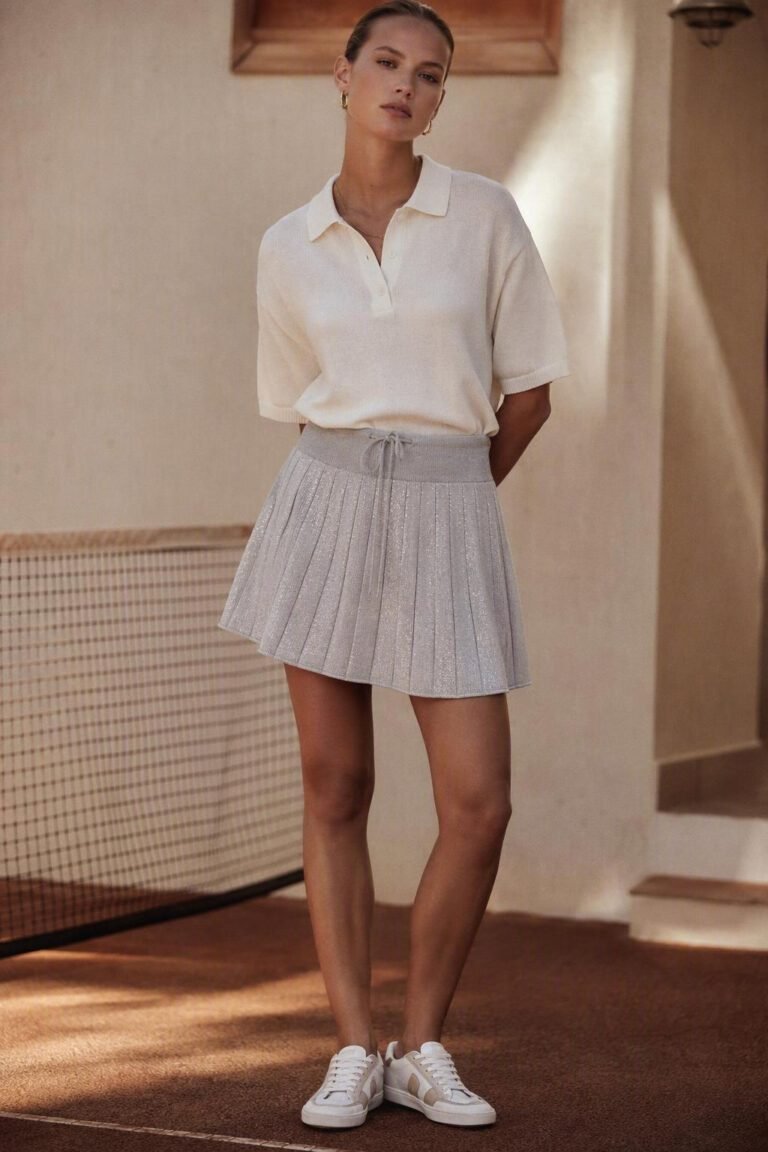
A knitted mini draws the eye to the legs and keeps the whole outline compact. If the dress is fitted, you get a sharp, body-skimming line that reads energetic and leg-forward — which is why minis suit day looks and night-outs where you want ease of movement.
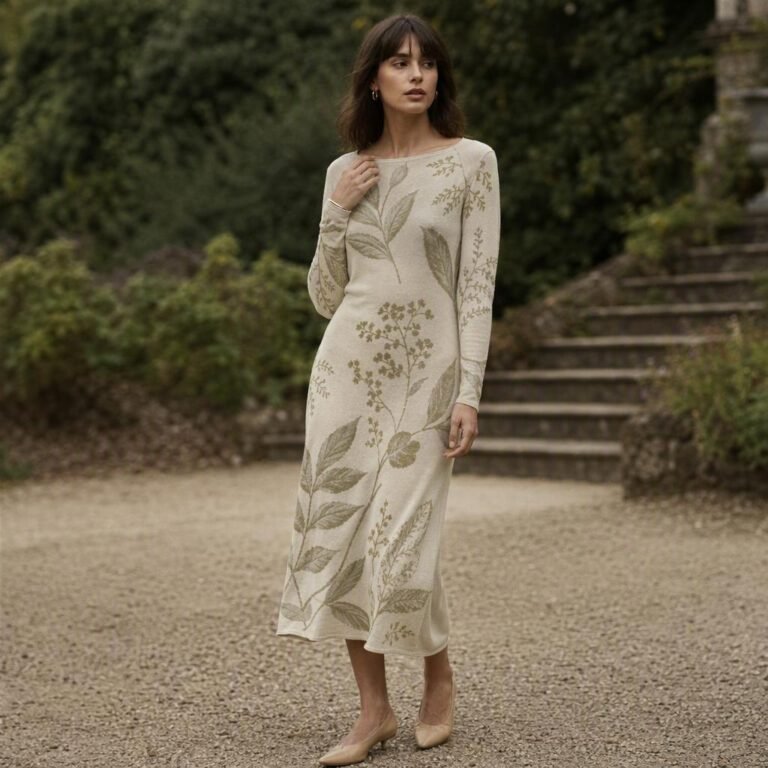
A knitted maxi does the opposite. It removes most of the visible leg and replaces it with one continuous vertical line from the shoulder to the hem. That unbroken column is what makes a long knit dress feel so elongating, and a slimmer body-skimming maxi reads polished rather than voluminous. Guides curating knit dresses across lengths often note how a knitted maxi keeps its effortless drape “without sacrificing structure”.
The silhouette you prefer is really a preference about legs versus line: minis put your legs in the composition, maxis put the shape of the dress in it.
Occasion and season: where each knit dress earns its keep
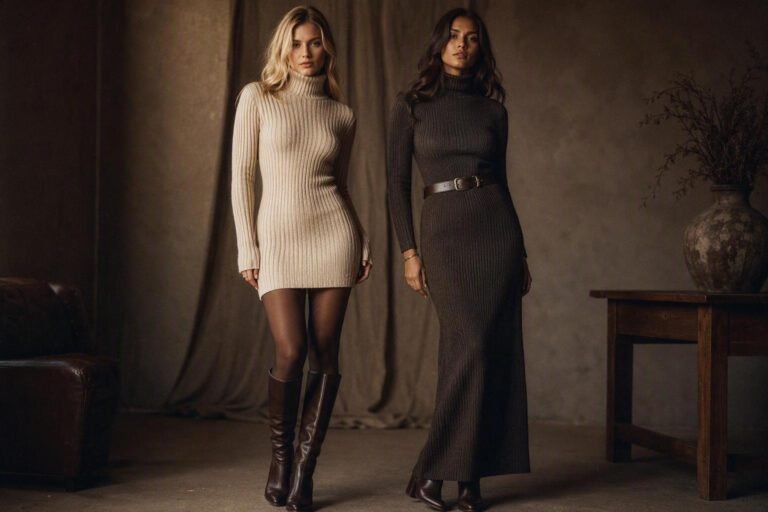
Think about what a short knit dress is asking for. Above the knee, it’s an easy, confident piece for brunch, shopping, a casual date, a party, or warm-weather nights out. It reads lighter and more dynamic, and it layers surprisingly well once the weather turns — a mini sweater dress with opaque tights, knee-high boots, and a wool coat is a genuinely useful cold-weather combination rather than a summer-only afterthought. The runways circled mini sweater dresses as a standout for the colder season precisely because they can carry weight and warmth while staying current.
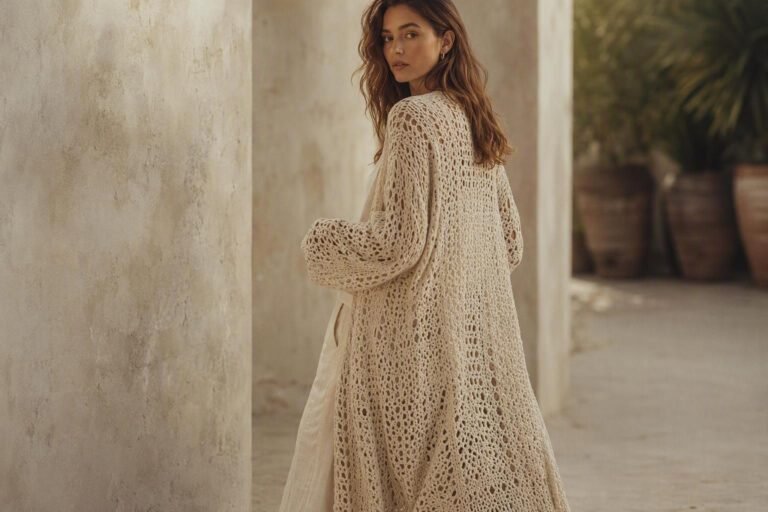
A knitted maxi covers more and therefore reads more dressed-up and more covered. It’s the natural choice for dinners, weddings, holiday gatherings, and resort trips, and it does double duty across cooler days because the long column keeps you warm without looking bulky. On warm weather, a lightweight, openwork or fine-gauge maxi knit keeps the breezy coverage while staying seasonally appropriate.
There’s a clean rule of thumb for dress-shoe coordination: pick the mini when you want easy, leg-forward dressing; pick the maxi when you want the hemline itself to do more of the styling. For fit, note that when comparing knit dress length and silhouette, a mini gives more freedom of movement for daytime steps and dancing.
The part most style guides skip: how knit fabric behaves at each length
This is where a knitted mini and a knitted maxi genuinely diverge, and it’s worth understanding even before you choose which one to buy.
Drape and weight. A short knit dress doesn’t have enough fabric for drape or weight to become a problem — even a slightly heavier or more structured knit is usually fine in a mini because there simply isn’t much downward load. A maxi is different. A full-length column hangs all that knit off your body, so a heavy or bulky yarn reads as visible bulk and drags the silhouette downward. Long knit dresses want fluid but controlled drape; minis can tolerate more structure.
Stretch, growth, and recovery. Because knit is made of loops, it stretches — some knit constructions stretch a great deal — which is why recovery matters so much. In a maxi, the fabric is constantly under its own weight, so if it has weak recovery it can gradually grow in length, letting the hem drop and the proportions distort. In a mini, the opposite problem shows up: with less length anchoring it, a stretchy knit with weak recovery can ride up and cling to the body. Fit guides for knit dresses emphasise that a mini knit dress lives and dies on body recovery and anti-cling control, while a maxi balances recovery against low vertical growth.
Shrinkage. Knits shrink more readily than wovens, and cotton knits in particular can change length and width unless they’re pre-treated and stabilised. A short dress can absorb a little shrinkage as a fit and balance issue. A maxi cannot — even a couple of percentage points of lengthwise shrinkage changes exactly where the floor-length hem lands, which is very visible. That’s one reason maxi knit dresses demand well-finished, shrink-controlled yarn and conservative length allowances at the pattern stage.
What this means for you: if you’re shopping, don’t judge a knit dress purely on how it looks on the hanger. A mini should snap back after a stretch; a maxi should hang true and not pool at your feet after a wash. And if you’re building a collection, these are the behaviours to specify, not assume.
Fit and comfort: who each length tends to suit
Leg-forward versus elongating also maps to body shape and comfort. A knitted mini is a natural fit if you like showing your legs and want a youthful, energetic line, and it works especially well when the knit holds its shape instead of clinging unpredictably. A knitted maxi flatters people who want more coverage through the hips and legs, or who want the elongating effect of a long, defined column.
If you’re petite, a maxi can still work beautifully provided the hem is cut to skim rather than pool and the waist is defined or the line is kept vertical. Tall frames carry long maxis especially well, since the length looks intentional rather than overwhelming — while minis suit tall frames with equal ease. The real constraint is less height and more about choosing a knit with the recovery the length demands.
Styling: outfit formulas that make each length work
For a knitted mini dress:
With tights and knee-high boots, plus a structured coat — an easy cold-weather look that makes the short hem feel intentional.
With loafers or sneakers for a relaxed daytime version.
Add a belt or a blazer when you want to pull the short silhouette into something slightly more put-together.
For a knitted maxi dress:
A slim, body-skimming ribbed maxi reads elegant on its own — that unbroken column does the styling for you.
Layer a long coat over it and add heeled or ankle boots for a tonal, refined winter look.
Belt at the natural waist to give a loose or cable-knit maxi shape and stop it reading as bulky.
Monochrome dressing in warm neutrals, charcoal, or chocolate amplifies the knit’s texture and keeps the long line clean.
Pro Tip: Because a maxi creates one continuous vertical line, the cleaner you keep the palette, the more elongating it reads. A mini is more forgiving of a bolder, higher-contrast look since the shorter hem already breaks the line.
Who should choose which: the honest verdict
There is no universal winner — it depends on occasion, climate, and how you want the fabric to behave.
Choose a knitted mini dress if you want an easy, leg-forward piece for casual days, parties, or warm-to-transitional weather, and you can rely on a knit with good recovery so it never rides up.
Choose a knitted maxi dress if you want more coverage, an elongating line, or something that dresses up easily — and you’re prepared for the fact that a good maxi knit needs stable drape, strong recovery, and shrink control to stay looking like itself.
If you’re torn, the shortcut is the hemline itself: want the dress to do the talking and the legs to read — go mini. Want a longer, quieter, dressier line — go maxi.
What each length means if you’re developing your own knit dress
For an emerging label, choosing between a knit mini and a knit maxi is a sourcing decision as much as a style one, and the two lengths are not equally easy to get right.
Construction matters first. A fully fashioned knit dress is shaped panel by panel on the machine and then linked, which gives clean, flat seams and an elevated knitwear finish. Cut and sew knits the fabric first and then cuts and joins it like apparel — simpler and more flexible, but with bulkier seams and more waste. Seamless / WHOLEGARMENT knits the whole dress in one piece with minimal assembly, which gives a premium, seam-free feel and is often the natural choice for body-skimming knit dresses. A seamless knit dress is a strong option when you want that smooth, cling-free fit and the factory genuinely owns that machine class. Sources comparing cut-and-sew, fully-fashioned, and whole-garment knitwear production lay out these trade-offs clearly.
Then specify the fabric and the length tightly:
Give a target GSM range with a tolerance, not one number — and let the silhouette dictate it. A fitted mini can be lighter; a maxi generally needs more body and opacity so it neither clings nor goes sheer.
State the fit and ease you want. A fitted dress relies on the intended stretch, so define your target ease at bust, waist, and hip rather than leaving the factory to guess. Guidance on how to read and use garment ease explains the difference between “comfort ease” and the tension that makes a ribbed dress fit.
Be explicit about length grading. “Mini” and “maxi” mean different things to different people, so give an exact hem point per size and a per-size grading rule. For a maxi especially, define whether the hem skims the ankle, hits above it, or pools, and build in a conservative length allowance for shrinkage so the finished garment lands where you intended.
Pick the construction and finishing that protects your length risk: stable recovery and low growth for a maxi; good body recovery and anti-cling for a mini; and linked or clean hems rather than a raw rolled edge on a long dress.
This is precisely the kind of custom work a knitwear partner is set up for. As an OEM/ODM knitwear manufacturer, Xindi Knitwear (Knitwear.io) makes seamless and custom knit dresses at small minimums — dresses and skirts from around 50–100 pieces per style and colour, with knit-dress sampling typically running a week or so depending on complexity. If you’re early and testing a mini or maxi knit dress idea, their custom knit dress production pages and low-MOQ knitwear manufacturing explain how a small initial run works, and their rib-knit dress bodice guide is a useful read if your fitted mini or bodycon needs reliable rib and recovery.
What this means for your label: whichever length you lead with, nail the fabric behaviour and the hem spec before you commit to a run. A mini that rides up and a maxi that grows are both quality failures a shopper can feel — and both are preventable at the sampling stage when you confirm stretch, recovery, and wash shrinkage on real garment fabric.
Next steps
Start from the hemline you’ll actually live in — a knitted mini for easy, leg-forward dressing, or a knitted maxi for a covered, elongating line — and let the fabric’s behaviour guide the rest. When you’re ready to build your own version, confirm your target knit structure, GSM, stretch and recovery, and exactly where the hem should land on every size before you sample, and request a wash-and-stretch check on the real fabric rather than trusting the hanger.
If you’re a small brand weighing your first knit dress run at a low MOQ, confirm your silhouette and spec with a knitwear partner and pilot a short sample first so the finished garment matches the sketch — hem drop, cling, and shrinkage are all visible before you ever hit bulk.