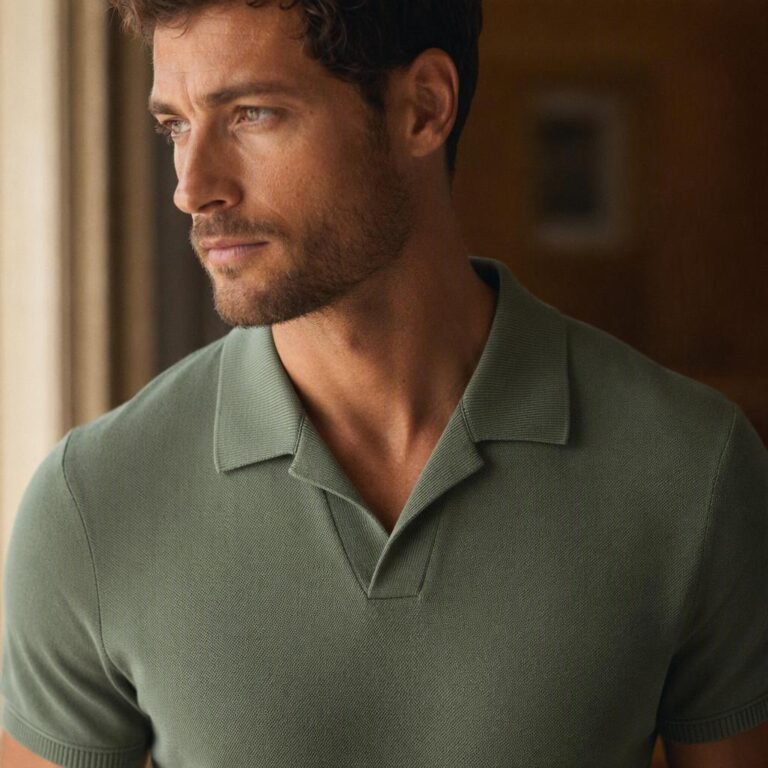

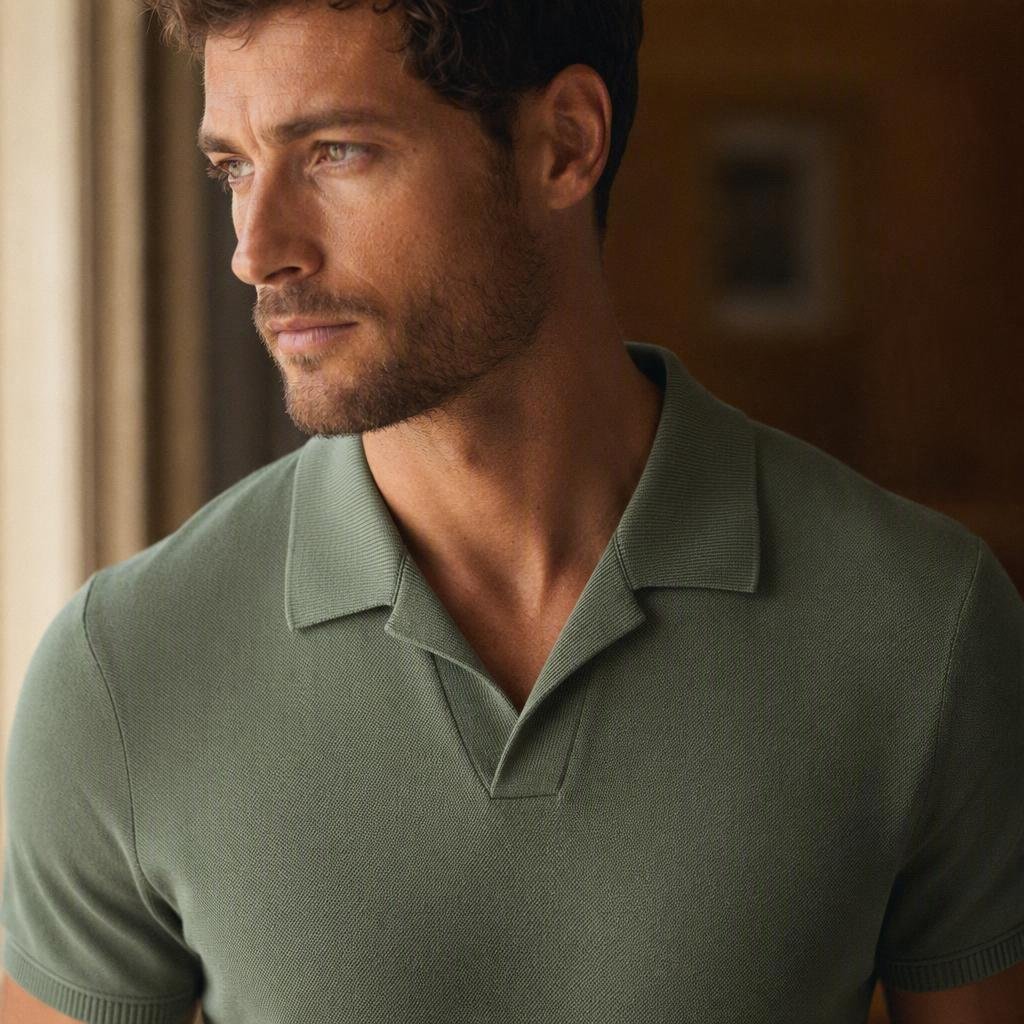
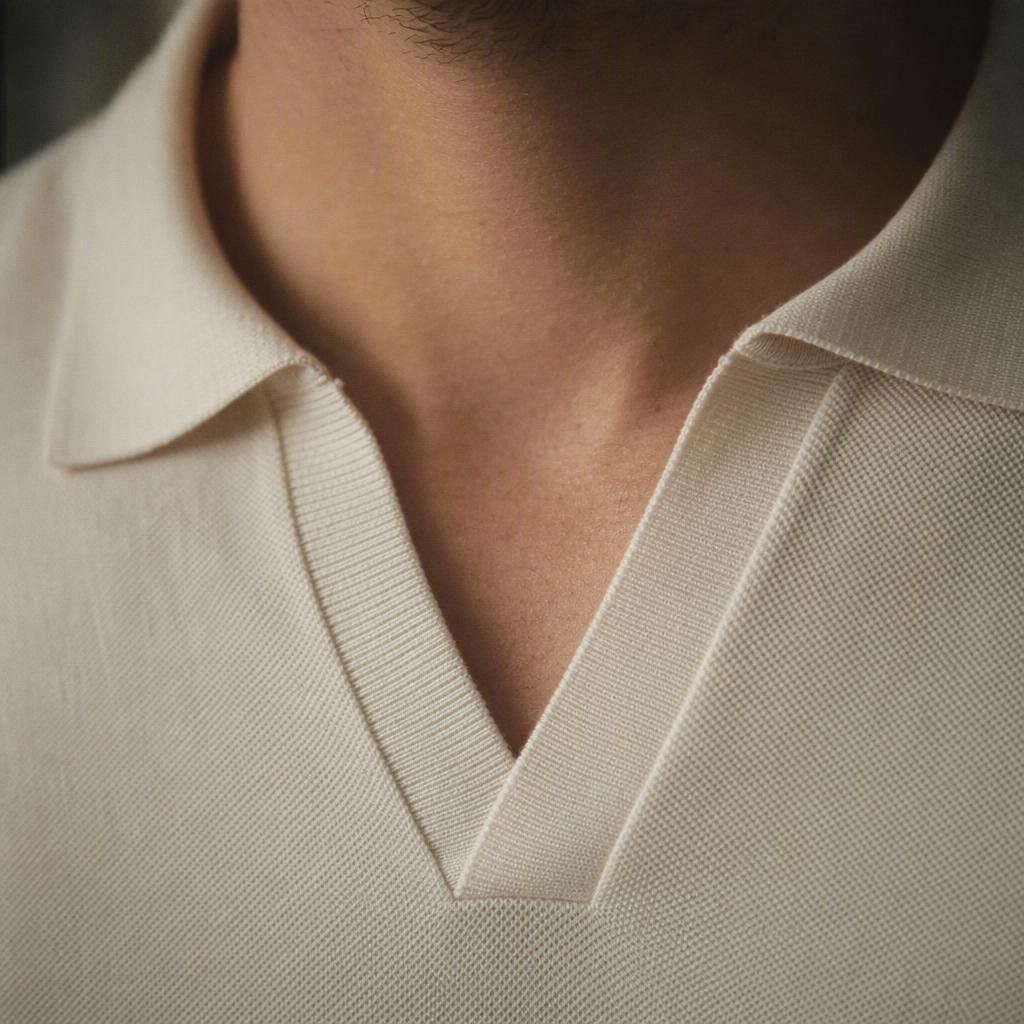
A Johnny collar knit polo is, in the simplest terms, a polo with the buttons taken out — a soft, open V-neck opening finished by a knitted collar, with no fold-over placket below it. It reads a little more relaxed and modern than a classic buttoned polo, and it has quietly become a favourite starting silhouette for labels that want a knit top that sits between a tee and a full polo.
For an emerging brand, the appeal is partly aesthetic and partly practical. Because there is no placket, no buttons, and no buttonhole row to engineer, the Johnny collar is genuinely simpler to construct than a classic polo — which can work in your favour at small order quantities. The catch is that a buttonless open neck is unforgiving: with nothing to hold the front closed, the V has to be cut, stabilized, and knitted so it does not grow, curl, or gape after the first wash.
This guide walks through how to design, construct, and spec a Johnny collar knit polo for low-MOQ production, covering the collar route, the V-neck finish, the body knit, the construction method, and the sampling checks that protect your small run.
Key Takeaway: The Johnny collar is a simpler build than a classic polo, but only if the open V-neck is engineered — depth, reinforcement, collar recovery, and symmetry — rather than left to chance.
Choosing the collar route
The collar is where a Johnny collar polo is won or lost. With no button placket, the garment depends on the collar and the shape of the neckline opening to stay tidy. For a knit polo there are three practical ways to build that collar.
Flat-knit rib collar
The collar is knitted to shape as its own panel and then attached around the V. This gives you the most control over height, edge shape, and any contrast or tipping stripes, and it is the easiest option to sample and adjust in small runs. It suits a dressed-up Johnny collar that needs to sit flat and roll cleanly.
Tubular rib collar
The collar is knitted as a continuously ribbed tube and then closed or cut and attached. It produces a clean, seamless look at the fold and is efficient when your supplier already makes rib tubes, but it offers less scope for shaping and open-V edge control than a flat-knit collar.
Self-fabric collar
The collar is cut from the same knit as the body rather than made from a separate rib. It looks soft and minimalist and blends into the garment, which fits the Johnny collar’s fashion-forward mood, but it has the highest risk of losing shape over time unless the fabric and the attachment are engineered carefully.
Which one for a Johnny collar?
Most factories treat a buttonless Johnny collar more like a knitwear neck finish than a woven-shirt collar package. The common, manufacturable starting point is a separate 1×1 or 2×2 rib-knit collar, cut fairly open to form the V, matched to the body colour or tipped for contrast. Rib structure alternates knit and purl stitches to create vertical wales, which gives the collar horizontal stretch with full recovery — precisely what stops the V from curling out at the edges over time.
What this means for you: On round one, a flat-knit rib collar on a clean V is the easiest to spec, sample, and repeat at low MOQ. Save self-fabric until you know the body knit will hold the opening.
Engineering the buttonless V-neck
A classic polo keeps its collar base supported by the buttoned placket below. A Johnny collar has no such support, so the neckline itself has to do the work. Three specifications matter most.
V depth and shape
Decide how deep the V should go and mark the exact drop on the front pattern. A shallow, modest V is easier to stabilize and reads cleaner; a very deep V exposes more chest and puts more tension on the front opening, which makes curling and gaping more likely. Sketch the intended depth on the tech pack rather than leaving it to the factory.
Reinforcement at the V point and neckline
The point where the two sides meet (the base of the V) is the main stress point and the first place a Johnny collar shows wear. Expect the factory to reinforce the opening — commonly with a clean internal facing, a taping strip, or stay stitching along the neckline — so the V keeps its shape under tension and does not grow in wear.
Collar symmetry and recovery
The two collar points must match in length and angle both when the garment lies flat and when it is worn. Check that the collar returns to its shape after a gentle stretch, because rib recovery is what prevents a slowly sagging, wavy neckline after washing. This is the same principle as the structured knitwear stitch types used across collar and cuff ribs — denser, better-recovering rib holds its edge where a loosely knitted one will spread.
Pro Tip: Inspect collar symmetry and V depth on a washed sample, on-body, not just flat on a table. A collar can look even when it is laid out and sit crooked the moment a body is in it.
Picking the body knit for the Johnny collar
Because the Johnny collar is most at home on a knit polo, the body fabric choice shapes both the look and how easy the collar is to keep under control. For a first validation order, the usual route mirrors classic low-MOQ polo logic.
Piqué — the textured, tuck-based knit that people associate with a polo — is the common workhorse for a reason. At roughly 170–200 g/m² it balances structure, airflow, and embroidery hold while keeping spirality and shrinkage manageable in a small multi-size, multi-colour run.
Single jersey is the softest and cheapest knit, around 160–180 g/m², with a tee-like drape that suits a very laid-back Johnny collar, but it curls more easily at open edges, so the V finish needs more attention. Interlock, a denser smooth double-knit around 180–220 g/m², reads more premium and resists skew well, which is a good match for a cleaner, dressier Johnny collar.
For a deeper look at how these fabrics differ on shrinkage, spirality, and cost at small runs, this piqué vs. jersey vs. interlock vs. rib comparison for polo bodies sets out the trade-offs and GSM bands in one place. The short version for a Johnny collar knit polo: pick piqué or interlock for a structured, stable collar-to-body story, and treat rib as the trim specialist rather than the main body knit.
Construction method: cut-and-sew vs fully-fashioned vs WHOLEGARMENT
A “knit polo” can be built two different ways in the factory, and the distinction matters for how your collar and V finish are handled.
Cut-and-sew knit polo
The classic route: the body is knitted as fabric yardage (piqué, jersey, or interlock), cut into pattern pieces, and sewn together, with the collar attached as a separate sewn component to a cut V-neckline. It is flexible, samples quickly, and keeps cost down — the most accessible route for a low-MOQ Johnny collar first run.
Fully-fashioned knit
Panels are knitted to their finished shape and then linked or assembled, with the collar and V integrated more cleanly into the knit structure and less seam bulk at the join. This is the route for a premium “sweater-polo” Johnny collar in merino or a fine cotton/wool blend, and it generally reads and drapes better than a cut collar.
WHOLEGARMENT / seamless
A 3D-knitting approach that produces the body and neck shaping in one piece with minimal cutting and sewing, reducing seams and bulk around the neckline. It gives the cleanest knit-native finish around an open collar but has tighter programming constraints, needs a factory with the right machines, and adds lead time, so it is better suited to a later, scaled run than a very first pilot.
The practical guidance is to match the route to your silhouette. For a soft cotton or piqué Johnny collar polo with woven-shirt ease, a cut-and-sew knit is the fastest path to a first sample. For a knitted sweater-polo feel, a fully-fashioned build is the better home for a fine rib Johnny collar. For the lowest seam bulk at the neckline, seamless WHOLEGARMENT knitting is the direction to explore once you have a supplier with that capability. The choice between a fully-fashioned and a cut-and-sew knitwear route usually comes down to hand feel and how much you can spend on the first run.
The low-MOQ route to your first run
The Johnny collar’s simplicity can be a small-batch advantage — fewer trim SKUs (no buttons, no buttonhole thread, no placket facing beyond the neckline support) than a classic polo. But low-MOQ economics still reward the same discipline every knitwear program needs.
Keep customization intentional. Start with stock yarns and limited colour splits — two to three colours across one fit block keeps per-colour minimums and unit cost reasonable, which is a core lever for any low-MOQ knitwear production program. Every bespoke element you add, whether a dyed-to-match trim, an engineered texture, or a special yarn, quietly raises both the minimum order and the unit price.
Budget for a real sample loop. Plan for at least one development sample that settles the fabric hand, the V depth, collar behaviour, and trim placement before bulk. Because the Johnny collar lives on rib recovery and neckline stabilization, the fastest way to de-risk it is a washed sample you can stretch and inspect by hand — not a flat sketch.
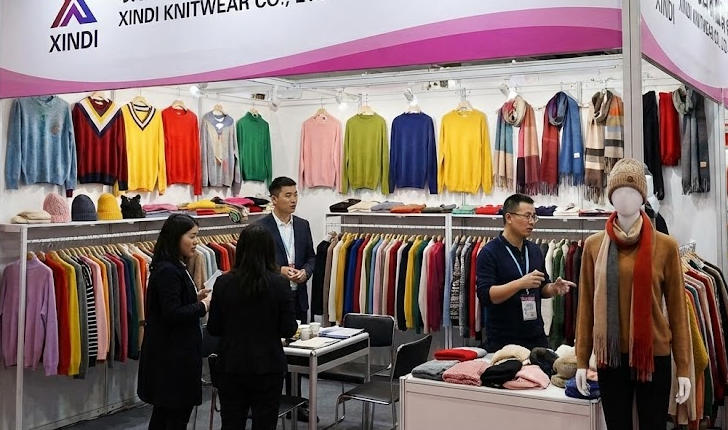
Where a partner offers a fast sample-to-small-run loop, an experienced factory moves from a tech pack or reference photo through yarn and gauge confirmation to a knitted, washed sample before production, and a stock-yarn small run turns around in a matter of weeks. Leading knitwear makers such as Xindi Knitwear work with emerging labels on low-MOQ knit development from around 50 units per style and colour, so you can test a Johnny collar knit polo before committing to a larger order.
A factory-ready spec checklist
Use this as a starting point when you brief a knitwear partner for a Johnny collar knit polo. Everything below should be confirmed on a washed sample, since yarn, machine, and finish all shift the final numbers.
Spec Field | What to Fill In | Example Direction |
|---|---|---|
Garment style | Knit polo vs sweater-polo | Cotton piqué Johnny collar knit polo |
Silhouette / sleeve | Short or long sleeve + cuffs | Short sleeve, banded or ribbed cuffs |
Body knit & GSM | Structure + target weight band | Piqué ~170–200 g/m² (confirm on swatch) |
Collar type & rib | Flat-knit vs tubular vs self-fabric; rib structure | Flat-knit collar, 1×1 or 2×2 rib (with elastane for recovery) |
Neckline opening | V depth, shape, overlap | Modest open V, V depth marked on front pattern |
V-point / neckline support | Facing / tape / stabilization | Clean internal facing or neckline tape at V base |
Cuffs / hem | Rib match or contrast, height | Matching rib cuffs, straight relaxed hem |
Colour / trim plan | Pantone refs + collar-cuff-body colour logic | Body sage, matching rib collar & cuffs, collar 1×1 or 2×2 |
Size range & grading | Measurement table + tolerances | XS–XL, chest/body/sleeve POM with tolerance |
Finish / wash | Pre-shrink, relaxation | Pre-shrunk, relaxed dry finish |
QC / approval | Samples + tests required | Rib swatch + wash test (recovery, shrink) + pre-production sample |
The thread that runs through the whole list is stabilization and recovery in the open collar. Fill in the V depth, the collar rib, and the reinforcement, and a supplier can build you a Johnny collar knit polo that stays flat and symmetrical wash after wash.
Validate the collar before you commit to bulk
Because everything about a Johnny collar comes down to how the open neck holds its shape, use the sampling stage to confirm three things by hand and after a wash: the collar returns to its edge after stretching, the V does not grow or gape, and the two collar sides sit symmetrically on the body.
When the collar and body are different structures, watch for differential shrinkage — if the rib collar and the piqué body shrink at different rates, the neckline can wave or lift at the corners. A wash test on your actual yarn is the reliable way to catch this before production, which is the same principle garment makers apply to any collar-quality program: check recovery, symmetry, seam attachment, and shrinkage on a sample rather than trusting the first impression of a dry collar, as Ninghow Apparel’s checklist for polo collar quality explains in practical detail. Mekong Garment’s breakdown of polo necklines, including the Johnny collar, is a useful reference for how it is positioned against a classic fold-over collar.
For an emerging label, a Johnny collar knit polo is an unusually good first knit top to bring to market: fewer components than a classic polo, a clean modern silhouette that reads intentional, and a shape that rewards exactly the careful collar engineering small knitwear teams already do well. Lock the collar and the V in sampling, keep the first run disciplined on yarn and colour, and you can launch a considered knit polo without the inventory risk of a big first order.
Ready to spec a Johnny collar knit polo for your label? Talk to a knitwear manufacturing partner about your collar rib, V depth, and body knit before you lock your tech pack, and confirm the details on a washed sample.