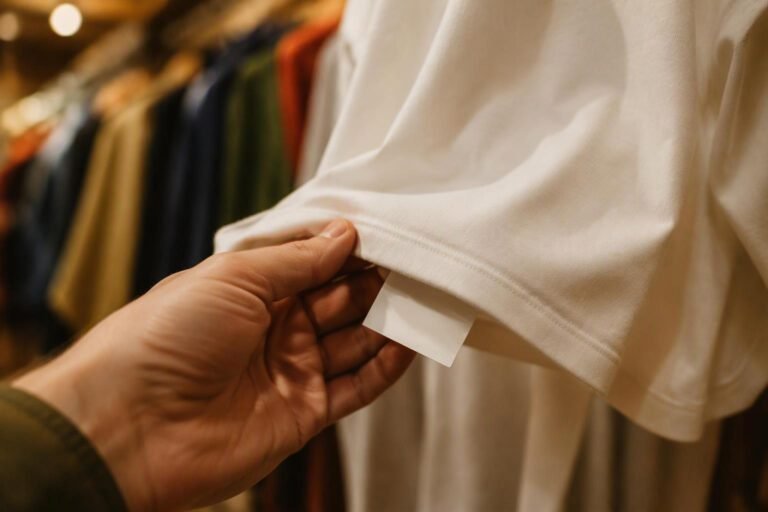

The hangtag says “pima,” and you still cannot tell whether the word means anything. That is the honest starting point for most people sourcing knitwear, because four different words get used as if they were interchangeable: pima is a fibre species, Supima is a licensed trademark, and Egyptian and Peruvian are origins. Each claim rests on a different mechanism, and each one can be checked in a different way.
This comparison covers what pima is at the fibre level, what the four label words legally denote, how pima knits perform in t-shirts, polos, pajamas and sheets, what shrinkage actually depends on, and how a small brand sources pima or Supima in quantities a mill will accept. The evidence base is USDA classification standards, the Supima and Cotton Egypt Association licensing documents, and Cotton Incorporated’s shrinkage testing.
Key Takeaways
Pima is Gossypium barbadense, an extra-long staple fibre, not a brand and not a place.
Supima is the protected trademark for verified U.S.-grown pima, so all Supima is pima but not all pima is Supima.
Shrinkage is set by knit structure, yarn construction and finishing, not by fibre length.
Verification runs through three separate mechanisms: a licensing programme with chain of custody, molecular purity testing, or accredited origin testing.
Small-quantity sourcing runs on documentation and stock availability, not on volume leverage.
What is Pima cotton, and why is it different from regular cotton?
Pima is a different species of cotton, not a nicer grade of the same plant. Cotton Incorporated’s fibre-science explainer states that Gossypium barbadense is known as pima cotton while Gossypium hirsutum is Upland, and that the primary difference between the two species is fibre length, which is why pima is classed as “extra long staple” (ELS) (CottonWorks, page read 2026). The same explainer puts pima fibre length at 1 3/8 inches or more against 1 to 1 1/4 inches for Upland, and pima at roughly 3% of U.S. cotton grown against 97% for Upland.
The USDA’s own classification handbook gives a wider pima range, describing American Pima as G. barbadense of early South American origin that “varies in length from 1 1/4 to 1 9/16 inches” and is commonly referred to as Extra Long Staple cotton (USDA AMS, Agriculture Handbook 566, rev. September 1995). The same handbook states that Upland accounts for more than 95% of U.S. production and varies in length from about 7/8 to 15/16 inches.
Those two USDA documents do not agree with each other, and it is worth knowing which one to trust. The handbook is an older extension publication, while USDA’s cotton sector overview is dated 8 January 2025 and gives pima at 1 3/8 inches or longer, Upland at 1 to 1 1/4 inches, and the same 3%/97% split (USDA ERS, updated 8 January 2025). CottonWorks repeats the ERS length range and cites ERS as its source, so the handbook’s 7/8 to 15/16 inch Upland figure stands alone against two sources that agree with each other.
The handbook also contradicts itself in a way that matters if you are reading a spec sheet. Its American Pima length conversion chart tops out at “52 / 1.48 and above,” meaning 1.48 inches, which sits below the 1 9/16 inch upper bound stated in its own text (Agriculture Handbook 566). The federal staple-length standard lists original Pima representations only up to 1 1/2 inches, effective 1 August 1929 (7 CFR Part 28, current edition). Treat any single number above 1 3/8 inches as a range, not a specification.
Micronaire, the measure of fibre fineness and maturity, is a separate axis. The handbook’s general interpretation chart runs 34 and below as a discount, 35 to 36 as a premium, 37 to 42 as the base range, and 43 and above as a discount (Agriculture Handbook 566). That chart is general rather than pima-specific, so use it to read a test report, not to grade a fibre.
Why staple length changes how the yarn behaves
Longer fibres change what the yarn can be, not how stable the finished fabric is. Cotton Incorporated’s shrinkage guide states plainly that long staple does not remove shrinkage: it changes yarn quality, producing a smoother, more uniform yarn with fewer protruding ends, while dimensional stability is decided by yarn construction, knitting tension and finishing or compaction (Cotton Incorporated ISP-1009, undated revision).
The mechanical reason is that a longer fibre can be spun into a finer yarn with more fibres in the cross-section, so the yarn is stronger and more even at the same count. Combing removes short fibres before spinning, which is why a combed yarn reads smoother and takes dye more evenly, and compact-spun yarns reduce the protruding fibre ends that create surface hairiness. Ring-spun yarns are the baseline against which those two are compared. None of those steps is a pima property; they are spinning choices you can specify on any cotton.
The sensory result follows from the yarn rather than from the fibre name. A finer, more uniform yarn gives a fabric with more drape and a smoother hand at the same weight, which is the practical reason a 180 GSM pima jersey feels different from a 180 GSM Upland jersey even though the two fabrics weigh the same.
What is the difference between Pima, Supima, Egyptian and Peruvian cotton?
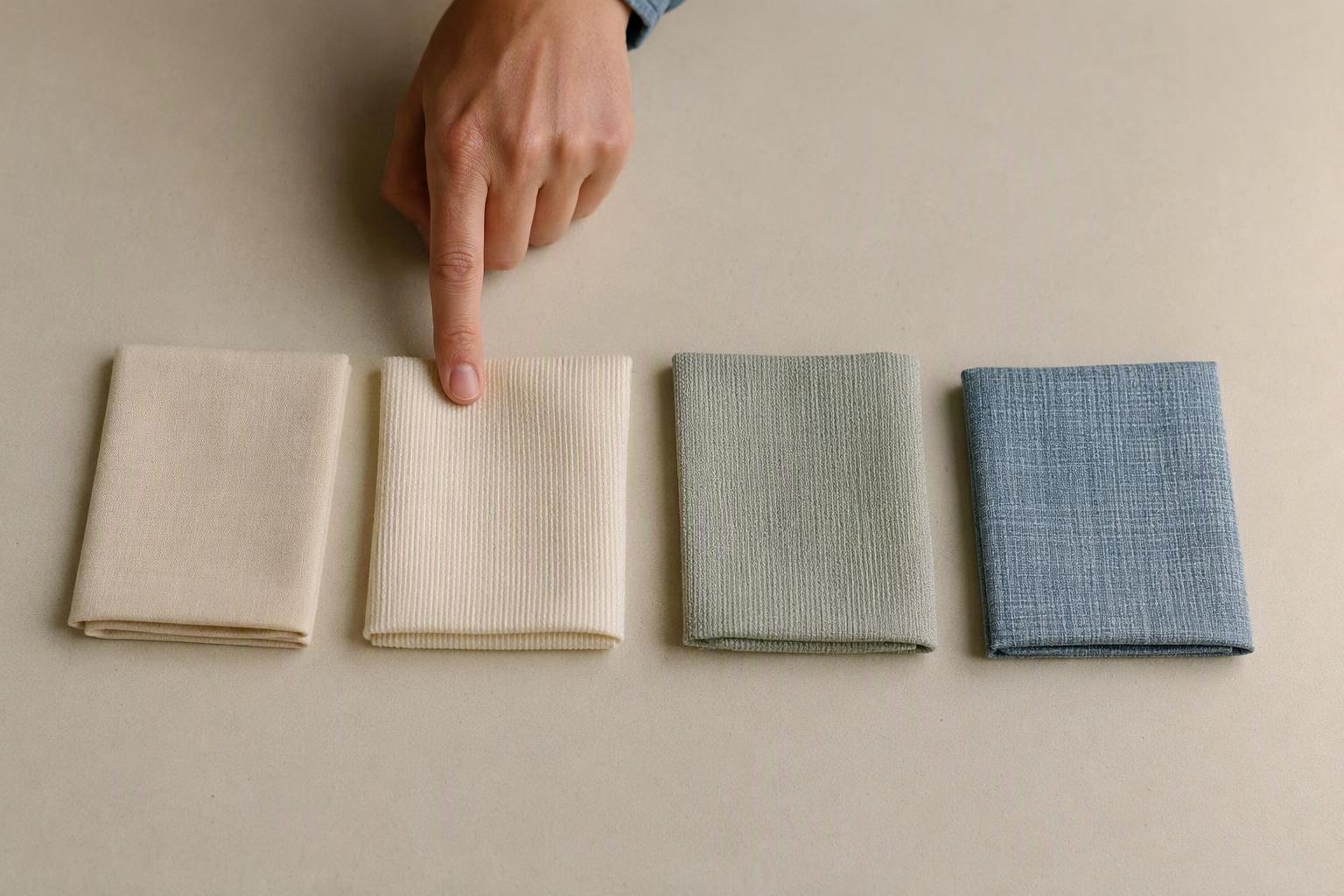
Pima cotton vs Supima and pima cotton vs Egyptian cotton are not two contests between four grades of the same thing. They are four different kinds of claim, and only one of them is a trademark. Supima’s own licensing guide describes Supima cotton as 100% extra-long staple cotton grown exclusively in the American west and southwest, and calls it the world’s only American-grown pima cotton (Supima AQRe Project Guide, 2023). Read against the species definition, that makes Supima a protected mark layered on top of the pima category: all Supima is pima, not all pima is Supima.
“Egyptian cotton” is not one claim either. The Cotton Egypt Association, which exclusively manages the Egyptian Cotton™ trademark and licensing programme on behalf of Egypt’s Ministry of Trade & Industry and the Alexandria Cotton Exporters’ Association, states that the mark may be used only for 100% pure Egyptian cotton with no blends (Cotton Egypt Association, page read 2026). The ordinary words “Egyptian cotton” on a hangtag guarantee neither a Giza variety, nor an ELS grade, nor purity, nor certification. CottonWorks makes the same point from the other direction, noting that both G. hirsutum and G. barbadense are grown in Egypt, so Egyptian cotton can be either Upland or pima (CottonWorks).
Pima (generic) | Supima | Egyptian | Peruvian | |
|---|---|---|---|---|
What it denotes | Fibre species, G. barbadense, ELS | Licensed trademark for verified U.S.-grown pima | Origin term, or the controlled Egyptian Cotton™ mark | Origin term |
— | — | — | — | — |
Staple length | 1 3/8 in or more (ERS); 1 1/4 to 1 9/16 in (Handbook 566) | 100% ELS, U.S. west and southwest | Not fixed by the words alone | Pima 33.3 to 36.5 mm; Tanguis 29.4 to 32.5 mm |
Where it grows | Multiple origins | American west and southwest only | Nile Valley | Mainly Piura (pima); central coast (Tanguis) |
Who controls the name | No single owner | Supima Association of America | Egypt’s Ministry of Trade & Industry and ACEA, managed by CEA | No single owner |
Verification | Lab fibre testing of delivered goods | Forensic origin testing plus digital tracking | DNA testing and auditing with Bureau Veritas | Lab fibre testing of delivered goods |
What the label guarantees | Fibre type, if truthful | Authorised qualifying U.S. pima | Certified Egyptian origin, if the mark is licensed | Fibre type and stated origin, if truthful |
The FTC rule and the Supima brand guide pull in opposite directions on wording. Under U.S. law a garment may be labelled “100% Pima Cotton” only if it contains 100% pima fibres, and a 50/50 blend must be disclosed as “100% Cotton (50% Pima)” or “50% Pima Cotton, 50% Upland Cotton” (FTC labelling guidance, Textile Fiber Products Identification Act). Supima’s guide instructs partners to write “100% SUPIMA COTTON” and lists “PIMA Cotton” as incorrect (Supima AQRe Project Guide). So “Pima” is a legally usable fibre name that the owner of the American ELS crop asks partners not to use.
Where Peruvian pima and Tanguis fit
Peru is a separate pima origin, and it grows two cottons that buyers routinely conflate. USDA’s Peru cotton report describes Tanguis as a long-staple cotton grown on the central coast, accounting for about 70% of Peruvian cotton with a fibre length of 29.4 to 32.5 mm, and pima as an extra-long staple grown mainly in Piura with a fibre length of 33.3 to 36.5 mm (USDA FAS GAIN, Peru Cotton Update, 15 December 2009). The same report notes that Peruvian pima supply is limited and insufficient to satisfy domestic spinning mills.
That report is from 2009 and describes an industry in crisis, with production falling to an expected 28,000 metric tons in calendar year 2009 from 64,383 MT in 2008. Its variety definitions and fibre lengths are usable; its volumes are not current, and nothing in the sources reviewed here updates Peru’s production or area. If a supplier quotes you a current Peruvian pima crop figure, ask which year it covers.
Does ‘Pima’ on a label actually mean anything, and how do I verify it?
Yes, but only through one of three mechanisms, and none of them is a government certificate for a finished garment. Supima’s programme combines forensic origin testing, which it says provides certainty of origin and provenance at any point in the supply chain, with digital tracking from seed to shelf, and the trademark is used by licensed brands only (Supima AQRe Project Guide, 2023). That mechanism answers a specific question: is this authorised, qualifying pima grown in the United States?
PimaCott answers a different question. Its verification technology uses a patented genomic test to confirm pure pima and an invisible molecular marker to tag, test and track fibre from farm to finished product, and the company states the marker cannot be washed out, scrubbed out or bleached away (PimaCott, page read 2026). That mechanism answers: is this fibre pure pima through the supply chain? PimaCott sells the mark it promotes, so treat its purity claims as the programme’s own position rather than an independent finding.
The Egyptian route runs through DNA testing and auditing in exclusive partnership with Bureau Veritas, at any stage of the supply chain, with retailer audits targeted quarterly (Cotton Egypt Association). That mechanism answers: is this certified Egyptian origin?
The reason all three exist is that the ordinary words were not enforced. Target severed ties with Welspun India in 2016 after 750,000 sheets and pillowcases labelled Egyptian cotton were found not to be 100% Egyptian, and the Cotton Egypt Association estimated that 90% of global Egyptian cotton supplies that year were fake (BBC Future, 7 February 2023). Both figures are 2016 history, not current market conditions. The association later opened a public blacklist of counterfeiters, naming Pakistani towel manufacturer Indus Home Limited as its first entry (Home Textiles Today, 31 May 2019).
Under U.S. law, “Pima” on a label is a permitted fibre-type disclosure only if it is truthful and non-deceptive, and advertising for premium cottons must not imply the product is made only of the premium cotton unless it is (FTC labelling guidance). In practice, verification rests either on an accredited programme with chain of custody or on lab fibre testing of the delivered goods, and there is no generic government “Pima” certificate for a finished garment (7 CFR Part 28, current edition). That absence is the single most useful thing to know before a stockist asks you to prove a claim.
The documents to ask a supplier for
Ask for the fibre-content test report on the delivered goods first, because it is the only document that describes what you actually received. Staple length in the official U.S. system is defined as the normal length by measurement of a typical portion of fibres, measured at 65% relative humidity and 70 °F, and designated in inches and thirty-seconds (7 CFR Part 28). A supplier who cannot produce a length and micronaire result for the lot is asking you to take the fibre name on trust.
Second, ask which programme the claim sits under, and get the licence reference if there is one. Supima’s mark is used by licensed brands only, and its tracking runs from point of origin to point of purchase (Supima AQRe Project Guide). A licence number is checkable; a verbal assurance is not.
Third, ask for the dimensional-change test report on the finished fabric, because that is the number your customer will experience. AATCC TM135, in its 2025 edition, covers dimensional changes of fabrics after home laundering across four wash temperatures, three agitation cycles and four drying procedures, and AATCC TM150 applies the same condition codes to whole garments with measurement points at chest width, body length, sleeve length and neck width (AATCC TM135, 2025 edition).
How does Pima cotton perform in t-shirts, polos, pajamas and sheets?
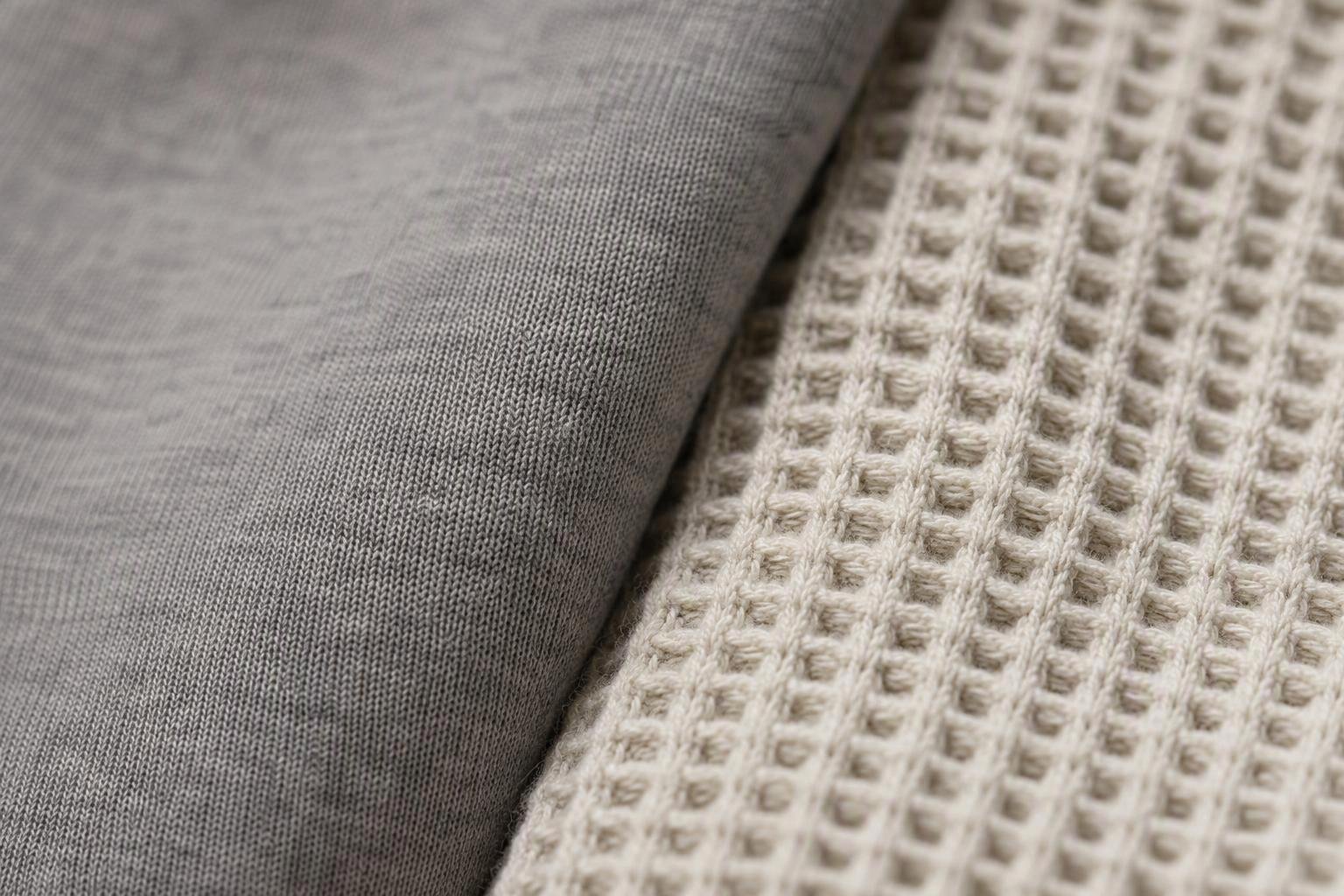
Pima’s advantage shows up as drape, hand and shine at a given weight, and it comes with a processing cost. Cotton Incorporated’s explainer states that longer fibres create thinner yarn that can be spun into textiles with extra drape, hand and shine, and that processing steps for pima-based goods are typically more expensive, resulting in a higher price point (CottonWorks). The same page notes that neither variety is inherently better, and that shorter Upland fibres create thicker yarns with greater absorbency and durability.
For pima cotton t-shirts, that means a lighter, smoother fabric at the same cover, which is why the fibre is used for premium basics rather than workwear. Live retail pricing shows where the claim lands commercially: Gap lists a Supima Cotton Relaxed T-Shirt at $49.95 (L.L.Bean; Gap, pages read 2026). Note that Gap’s category page says “pima cotton” while the items are titled Supima, which is exactly the slippage between the species name and the trademark that this article is about.
L.L.Bean’s own copy states that Supima makes up only 1% of the world’s cotton and that its ELS fibres are twice as strong as regular cotton fibres (L.L.Bean, page read 2026). The first figure is a brand claim rather than a Supima statistic, and the second is marketing language rather than an independent measurement. Use both as examples of how the claim is sold, not as evidence for a spec sheet.
For polos, the structure matters more than the fibre. A piqué is an open, textured knit that breathes and holds shape, while a jersey is smoother and drapes more, and an interlock is denser and more stable on both faces. Choosing pima for a piqué polo buys you a finer yarn in the same structure, not a different structure.
Sheets, pajamas and the sensory case
The sensory case for pima in sheets and pajamas is real, and it traces to yarn fineness rather than to the fibre name. A finer, more uniform yarn produces a smoother surface against skin, which is why pima percale reads crisp and cool rather than heavy. L.L.Bean sells a pima percale fitted sheet (L.L.Bean, page read 2026). That is the concrete data point available; thread-count ranges marketed for pima sheets were not verified from a primary source, so treat any quoted range as a retailer’s positioning.
For pajamas, the same logic applies with one addition: because pima takes dye evenly, deep or saturated colours hold more consistently across a production run. That is a finishing benefit that shows up in your QC photos, not on the hangtag.
Does Pima cotton shrink, and how much?
Pima shrinks by the same mechanisms as any other cotton knit, and the fibre length does not protect you. Cotton Incorporated’s shrinkage guide defines elastic shrinkage as the fabric relaxing from tensions experienced during knitting and processing, and drying shrinkage as the fibre, yarn and structure deswelling in the drying step, with the knitted loops rounding toward their lowest-energy state (Cotton Incorporated ISP-1009). The same guide states that long staple changes yarn quality rather than dimensional stability.
The magnitudes are larger than most people expect before finishing. In the guide’s mill trial, a 100% cotton 28-cut single jersey made with combed 30/1 ring-spun yarn was measured for delivered and relaxed dimensions (Cotton Incorporated ISP-1009). The same guide reports that compaction removed roughly 4 points of residual length shrinkage on a 24-cut interlock, from 9.0% by 7.0% after relaxed drying to 5.0% by 8.0% after compaction, and notes that piqué fabrics have much higher length shrinkage than width shrinkage.
Knit structure decides the direction and the size of the change. A Beltwide study of six weft-knit structures found that interlock tends to shrink more than fine rib and single jersey in width, that jersey and interlock change more in length while fine rib is least changeable, that 100% cotton interlock is less dimensionally stable than a 60/40 poly-cotton interlock, and that single jersey with Lycra shrinks about 30% less lengthwise than plain single jersey (El-Geiheini & El-Kateb, Beltwide Cotton Conferences, January 2012). That study is published largely as charts, so read its comparisons as directional rather than as exact percentages.
Knits are inherently more shrink-prone than wovens because the structure is more open and loose (CottonWorks, Shrinking & Skewing, page read 2026). That page gives no numeric tolerances, so do not attribute a percentage to it.
How to read a shrinkage claim on a spec sheet
A shrinkage number without a test method and a cycle count is not a specification. AATCC TM135 in its 2025 edition specifies four wash temperatures, three agitation cycles and four drying procedures, and AATCC TM150 applies the same condition codes to whole garments measured at chest width, body length, sleeve length and neck width (AATCC TM135, 2025 edition). Ask which of those conditions produced the number, because a result at one gentle cycle is not comparable to a result after five home launderings.
The acceptance band most buyers specify for cotton knits is 3% to 5% after the agreed cycles, with skew or spirality bands of 4% to 5% measured per AATCC TM179 or ISO 16322-3. That band is trade practice rather than a standard, so write the method, the cycle count and the band into your spec sheet and hold the mill to the document rather than to the word “pre-shrunk.”
How do I source Pima or Supima cotton in small quantities for a small brand?
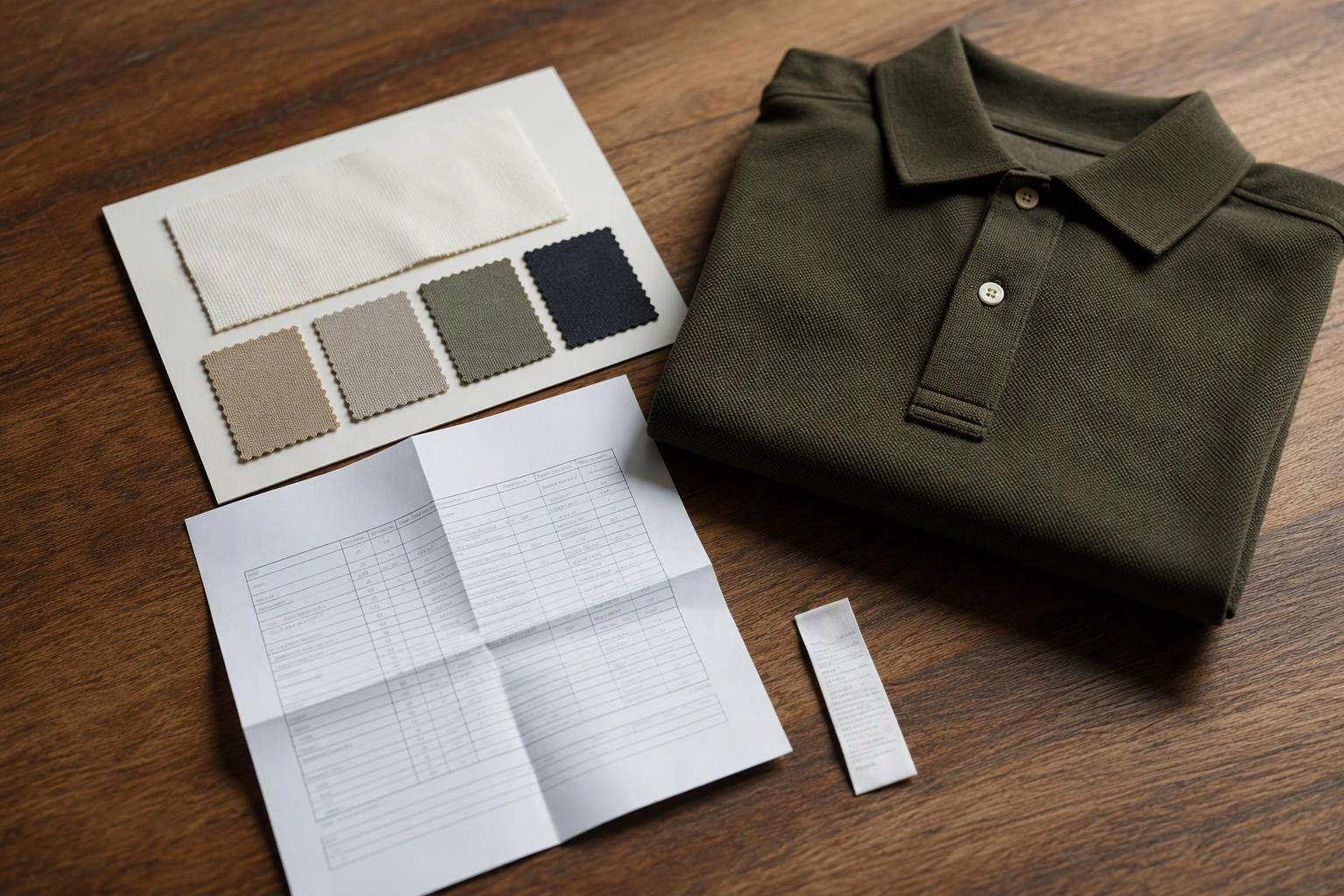
Small-quantity pima sourcing is a documentation problem before it is a volume problem. The fibre is available in small runs, but only through routes that already hold the yarn or the fabric: buying stock yarn or fabric in a colour the mill already runs, working through a converter who holds the greige, or working with a knitwear factory with low minimums that already keeps the construction on hand. Your job is to verify the claim, not to negotiate tonnage.
Commonly quoted minimums for pima and Supima yarns sit around 300 to 500 kg per count and colour, and roughly 300 to 500 metres for a greige knit. Those figures come from vendor and agency blogs rather than from spinners’ published terms, so treat them as an indication of scale and ask the specific mill what it holds in stock before you design around a custom dye lot.
The documentation you need does not change with order size. Ask for the fibre-content test report on the delivered goods, the licence reference if the claim sits under a programme, and the dimensional-change report on the finished fabric, measured per AATCC TM135 or at garment level per AATCC TM135. Those three documents are what let you defend the claim to a stockist.
The five-step sourcing sequence, and what to obtain at each step
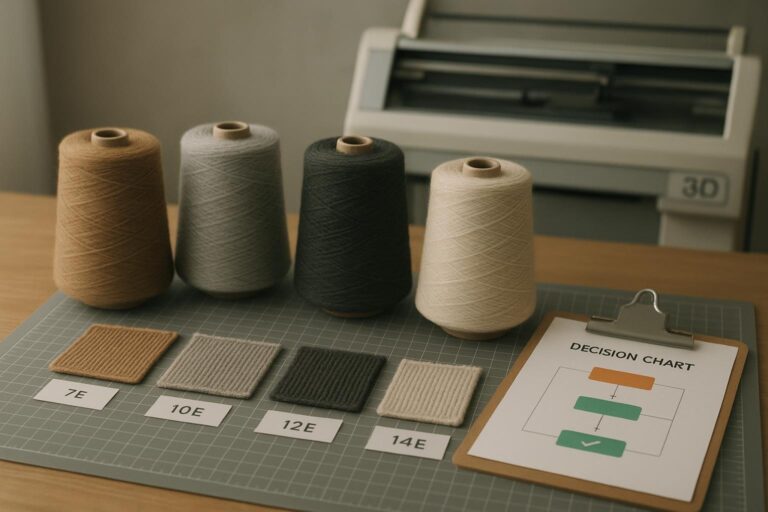
Request swatches. Ask for the fibre-content declaration and the yarn count behind the swatch.
Confirm fibre documentation. Get the fibre-content test report, plus the licence reference if the claim sits under a programme.
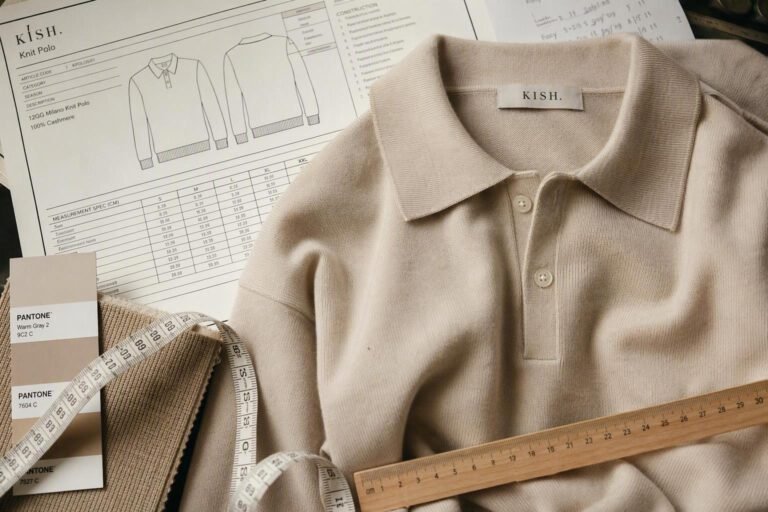
Specify the build. Fix yarn count, GSM and structure in writing: piqué typically runs 170 to 220 GSM, single jersey 160 to 180 GSM.
Approve a pilot run. Require the dimensional-change report on the finished fabric before you sign off.
Move to bulk. Agree the inspection standard up front, commonly AQL per ISO 2859-1, and request lab tests such as AATCC 135 or ISO 12945-2 where the claim depends on them.
A 50-unit organic cotton piqué polo programme is one example of that sequence running at startup scale, and it shows why the order of the steps matters more than the size of the order.
What a small run actually costs you in time
The cost of a small pima run is mostly calendar time, and it sits in the yarn rather than in the sewing. A custom-dyed pima yarn has to be spun and dyed to your colour before knitting starts, and that queue is where a spring drop gets lost. Stock-colour builds avoid the queue entirely, which is why keeping the palette tight at two or three colours is the single most effective way to protect a launch date.
Sampling is the other variable. A prototype from a tech pack typically takes 3 to 5 business days, with a standard lane running up to 7 to 10 business days, and bulk production on a simple stock-colour build typically runs 2 to 3 weeks. Those timelines assume the yarn is available; a custom pima count adds the spinning and dyeing lead time on top. For a spring drop, that means committing to the yarn before the calendar turns, not after.
One caution on price: there is no primary published series for the Supima premium. The USDA Foreign Agricultural Service cotton circular tracks the upland A-Index, which stood at 91.5 c/lb on 6-Oct 2026, and carries no extra-long-staple premium line. The widely repeated premium percentages you will find quoted online cannot be presented as sourced, so budget from a mill quote rather than from a published figure. If you are sourcing a premium-fiber knit polo at low MOQ, get the yarn price and the lead time in the same conversation.
How we apply this at Xindi Knitwear (Knitwear.io), the publisher of this guide. Our production runs start from 50 units, which covers the small-quantity step above: a first collection can be built on stock yarns without committing to a mill’s volume minimum. What we cannot do is guarantee the fibre content of the yarn we buy in — that is verified by the customer against the GOTS Certified Suppliers Database, the OEKO-TEX Label Check and the issuing bodies, and lab testing of delivered goods remains the reader’s own step, with any supplier, ours included.
Who should choose which
Choose generic pima when you want the fibre’s drape and hand and you are prepared to verify the content yourself through lab testing of the delivered goods. It is the right call for a brand that controls its own QC and does not need a licensed mark on the hangtag.
Choose Supima when the claim itself is part of the product story and you want a checkable licence behind it. The mark is used by licensed brands only and carries forensic origin testing plus digital tracking from point of origin to point of purchase (Supima AQRe Project Guide). That is worth the premium if a stockist or a customer will ask you to prove the claim.
Choose Egyptian Cotton™ only if the supplier holds the licence, because the ordinary words guarantee nothing on their own (Cotton Egypt Association). Choose Peruvian pima when the origin story matters and you accept that the available variety data is dated, with the 2009 USDA report as the definitional reference (USDA FAS GAIN). And choose Upland when absorbency, durability and price point matter more than drape, because the fibre is not inherently worse, only different (CottonWorks).
Verdict
Pima is a species, Supima is a licence, and Egyptian and Peruvian are origins. The fibre delivers a finer yarn and more drape at a given weight, and it does not deliver better shrinkage performance, because dimensional stability is decided by knit structure, knitting tension and finishing rather than by staple length (Cotton Incorporated ISP-1009).
The evidence is uneven in two places worth naming. There is no published primary price series for the ELS premium, so any figure quoted as a percentage over Upland at fibre or garment level is unsourced, and the only current reference price available is the upland A-Index at 91.5 cents per pound on 6 October 2026 (USDA FAS, Cotton: World Markets and Trade, October 2026). And the Peruvian variety data rests on a 2009 report that describes an industry in decline, so treat its lengths as definitions rather than as current supply conditions.
The next step is a swatch and a document request, not a purchase order. Ask for the fibre-content report, the licence reference if there is one, and the dimensional-change result, then run a pilot in the construction you actually intend to sell.
Frequently asked questions
Is Supima better than pima?
Not inherently, because Supima is a subset of pima rather than a competing fibre. The trademark sets a floor: fibre grown in the American West and Southwest, verified through the programme’s own licensing and testing chain. A well-grown and well-finished Peruvian pima can match it on staple length and hand feel. Supima’s advantage is documentation, not biology.
Can I use pima and Supima interchangeably on a label?
No. Supima is a licensed mark, so a garment carrying it must be made from verified American-grown pima and the brand must hold a licence. Calling a Peruvian or Chinese-grown extra-long staple fibre “Supima” is a false claim even when the fibre itself is genuine pima. Use “pima” generically, or name the origin, and reserve “Supima” for fibre you can trace to the programme.
Is Egyptian cotton better than pima?
Neither is better as a category, because Egyptian cotton is an origin term rather than a fibre standard. It can describe G. hirsutum or G. barbadense grown in Egypt, so quality varies with the specific variety and growing season. The controlled Egyptian Cotton™ mark narrows this: it may be used only for 100% pure Egyptian cotton with no blends, licensed separately by the Cotton Egypt Association (Cotton Egypt Association). Compare a named Egyptian variety against a named pima lot, not the two labels.
Can I move a program from Upland to pima without changing the spec?
Not without re-testing. Pima’s longer staple spins into a stronger, smoother yarn, so the same yarn count and GSM will give a different fabric: slightly different drape, cover and shrinkage behaviour. Keep the construction and re-run dimensional-change testing per AATCC TM135 or ISO 6330 on the new lot rather than carrying the old tolerance across. Treat it as a new development round, not a fibre swap.
Does pima cotton shrink?
Yes, by the same mechanisms as any cotton knit, and fibre length does not change that. Cotton Incorporated’s shrinkage guide reports a greige 28-cut single jersey at 12.1% length and 15.9% width shrinkage, falling to 7.3% and 3.5% after relaxed drying and finishing (Cotton Incorporated ISP-1009). What controls shrinkage is knit structure, yarn tension and finishing, so ask for the finished-goods dimensional-change report rather than assuming pima behaves differently.
Is pima still worth the premium?
It depends on what the garment is selling on. For pima cotton t-shirts and fine-gauge polos, the longer staple shows up as a smoother surface and less pilling, which is what the price difference buys. For a heavy fleece or a structured outer layer, the fibre’s advantages are largely hidden and the premium is harder to justify. Buy it where hand feel and surface quality are the product, not as a blanket upgrade.
How do I verify a pima claim on a garment?
Ask for the fibre-content test report on the delivered goods, the licence reference if the claim sits under a programme such as Supima or Egyptian Cotton™, and the dimensional-change report per AATCC TM135 or TM150 (AATCC TM135). There is no generic government “Pima” certificate for a finished garment (7 CFR Part 28). Note that the 2016 US fraud cases that prompted the current labelling scrutiny are history, not a description of today’s market.
Can I label a 50/50 pima and Upland blend as pima?
No. A garment may be labelled “100% Pima Cotton” only if it contains 100% pima fibres, and a 50% blend must be disclosed as “100% Cotton (50% Pima)” or “50% Pima Cotton, 50% Upland Cotton” (FTC labelling guidance).
Conclusion
The word on the hangtag means something only when you know which of the four claims it is making. Pima describes a species, Supima describes a licensed and verified U.S. subset, and Egyptian and Peruvian describe origins that carry no guarantee on their own. Each one can be checked, and the check is a document rather than a conversation.
The performance case for pima is about yarn fineness and drape at a given weight, and it comes with a processing cost that shows up in your landed price. The shrinkage case is about knit structure and finishing, and it is the same problem whether the fibre is pima or Upland. The sourcing case is about stock availability and documentation, and it does not get easier with volume alone.
Start with a swatch card and three documents: the fibre-content report, the licence reference if there is one, and the dimensional-change result. Run a pilot in the construction you intend to sell before you commit to a bulk order, and write the test method and acceptance band into the spec sheet so the claim survives contact with a stockist.