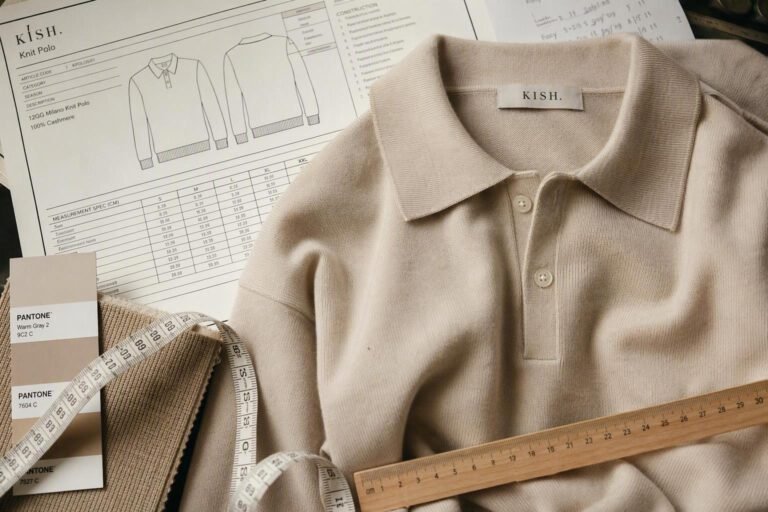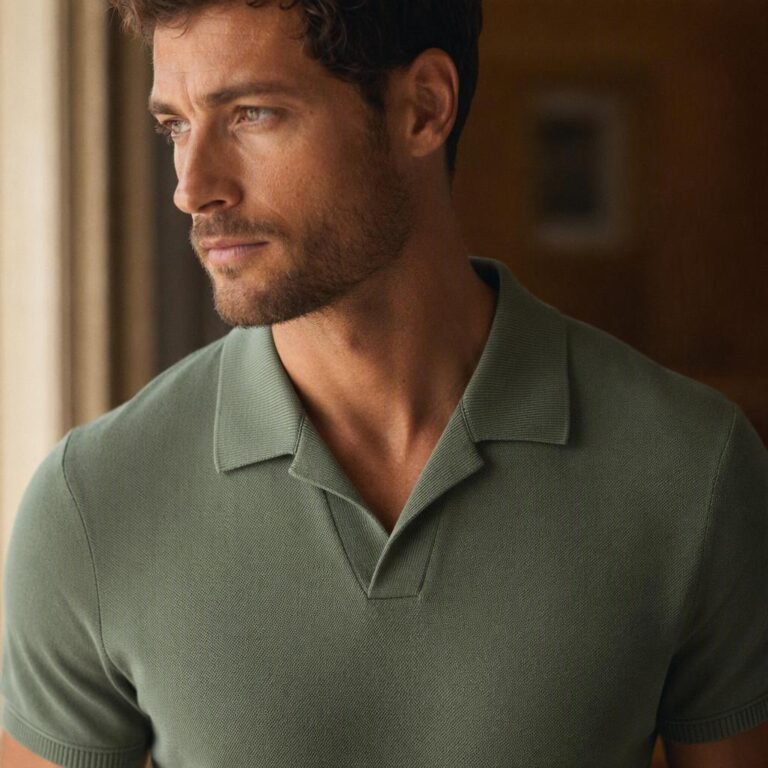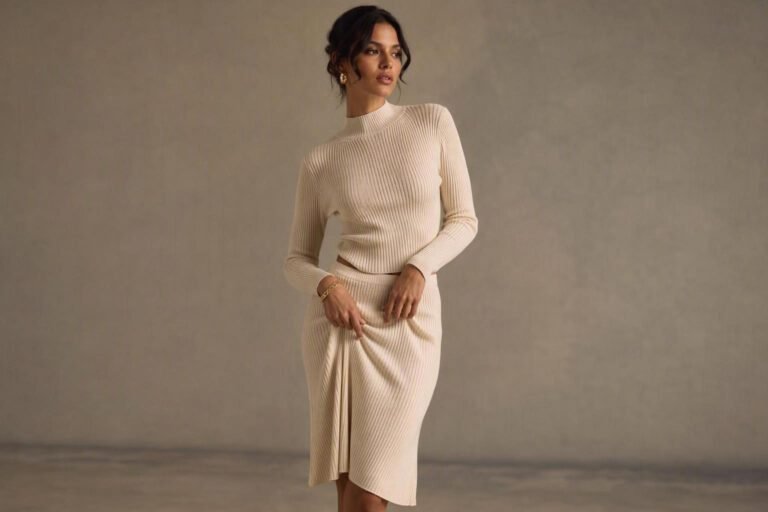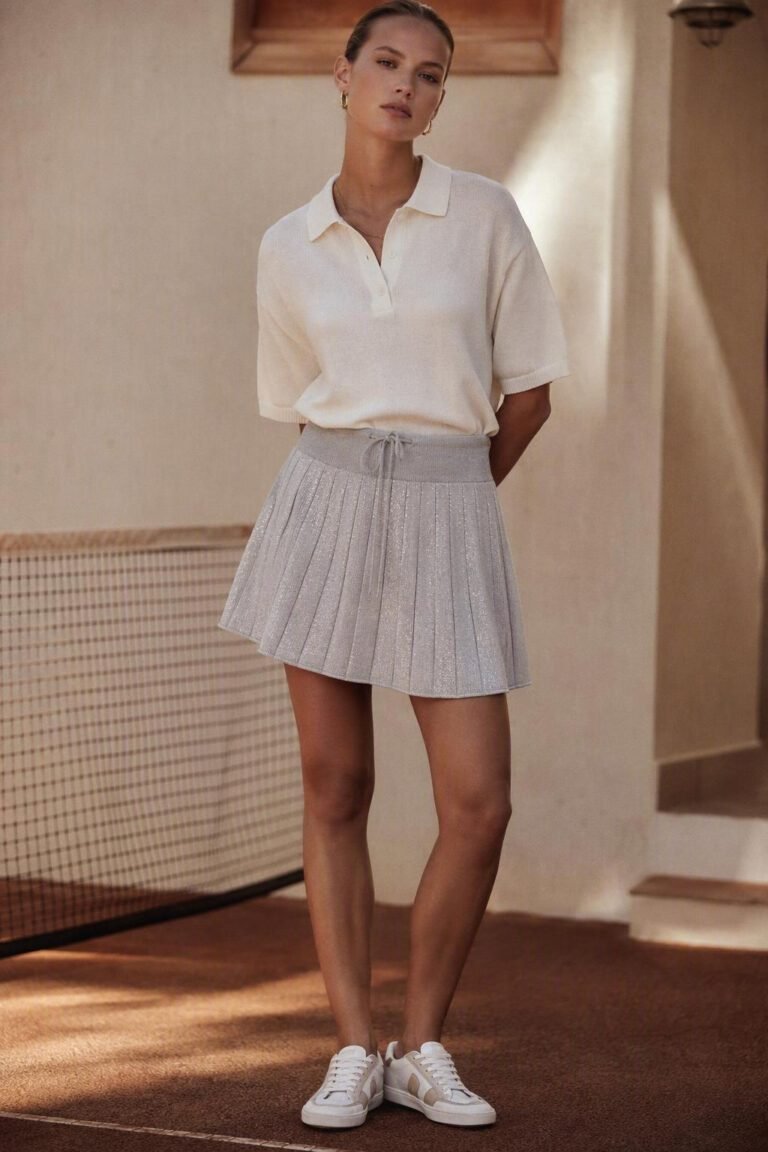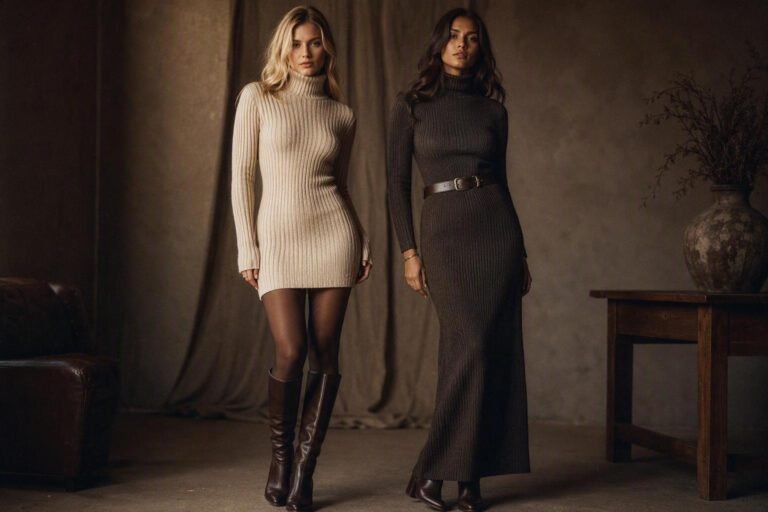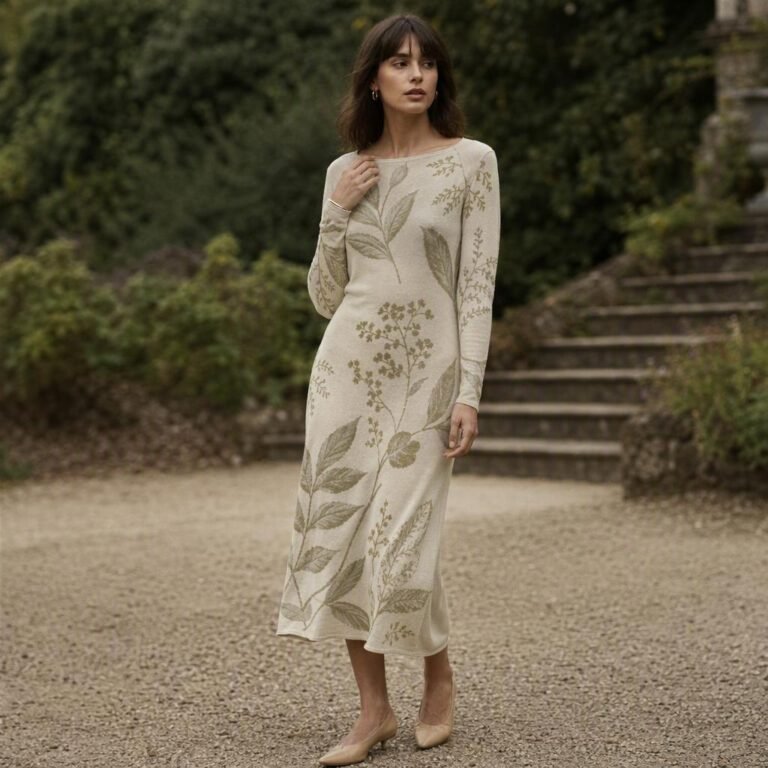

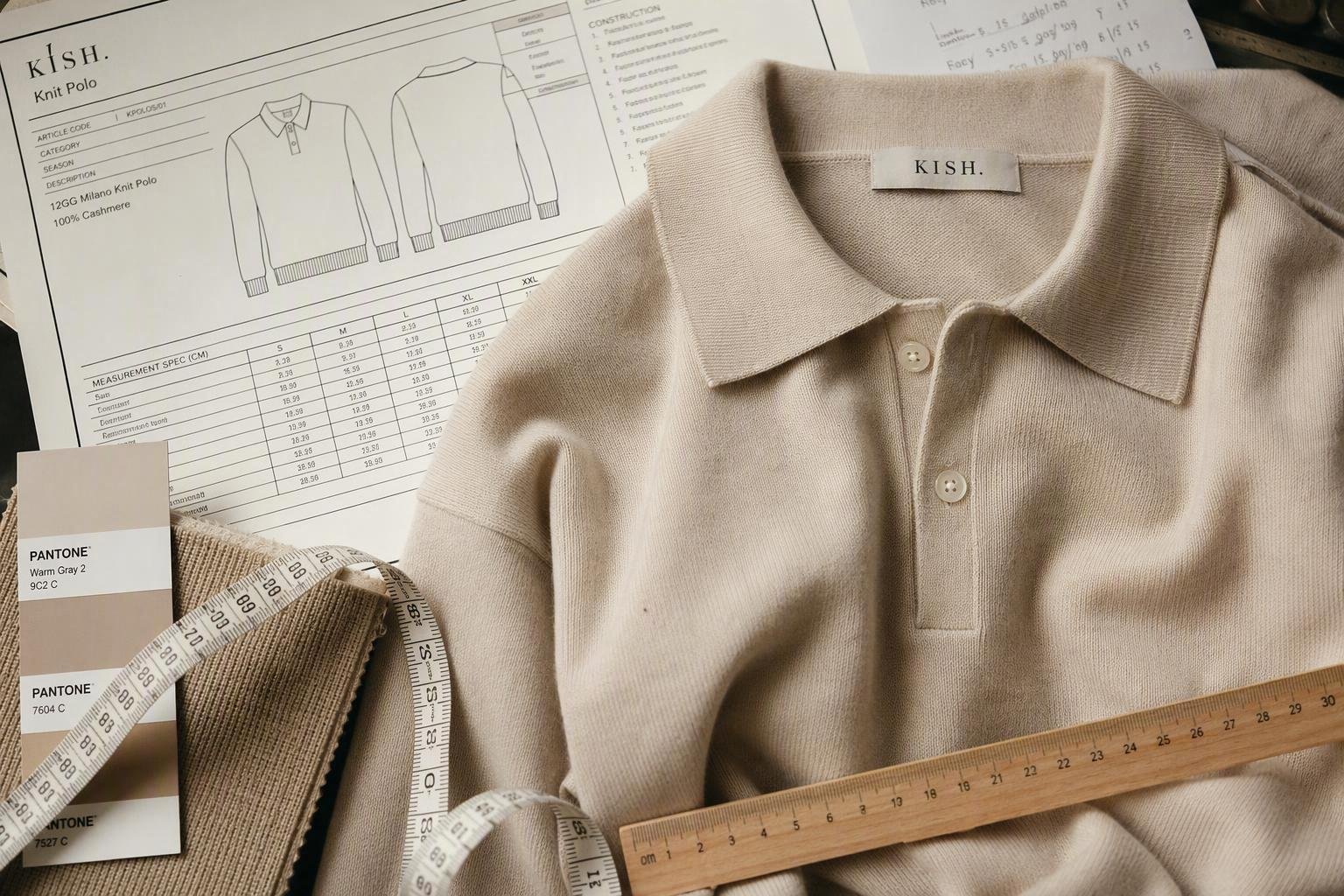
A cashmere knit polo sits in an interesting spot between a shirt and a sweater. It has the collar and placket of a polo, but it is built as true knitwear — knitted to shape rather than cut from fabric — which changes everything about how you spec it, how its minimum order is set, and how its quality is tested.
If you are an emerging label ready to launch one, this guide walks you through the decisions that actually matter at the sourcing stage: what “mid-weight” means in production terms, what drives a low MOQ for cashmere, the sampling ladder to lock, and the tests and certificates to ask for so your first run comes back right.
Key Takeaway: A low-MOQ cashmere polo is less about “how many pieces” and more about controlling yarn (stock vs custom dye, ply, grade) and construction (collar, placket, gauge). Nail those early and the MOQ, timeline, and cost all become far more predictable.
1) What “mid-weight cashmere knit polo” means in production terms
“Mid-weight” is a real specification, not a vibe. Selvane’s cashmere weight guide describes mid-gauge cashmere as roughly 7 to 9 gauge, and places medium-weight cashmere around 280–330 gsm — substantial enough to hold the collar’s shape, soft enough to still drape and layer.
For a knit polo you can roughly read the spectrum like this:
Lighter luxury knit polo: around 12–14 gauge, roughly 150–220 gsm — feels more like a fine shirt, wears into summer.
True mid-weight knit polo: around 7–10 gauge, roughly 280–330 gsm — the “shirt that behaves like a sweater” middle ground.
Heavier, sweater-like polo: above ~330 gsm — winter-weighted and less shirt-like.
Gsm alone can mislead you because knit weight shifts with stitch structure and finishing, so specify by the combination of yarn count, gauge, ply, and weight, with gsm as a confirmation check rather than the only number.
The construction details that matter
Fully-fashioned body and sleeves. Two-ply cashmere and a fully-fashioned body is what separates a premium knit polo from a cut-and-sew top. Fully-fashioned panels are shaped on the machine with loop-to-loop linking, which gives cleaner armholes and a neckline that stays put — versus cut-and-sew, which is faster and cheaper but adds fabric waste and weaker overlock seams.
A stabilised collar. A knit polo collar has to stand up through layering, so it is usually knitted in a dense Milano rib rather than left to flop.
A clean placket. Luxury knit polos tend to run a shorter, 2–4 button placket than a classic sports polo.
Ribbed cuffs and hem for recovery so the piece doesn’t stretch out of shape.
Pro Tip: When you brief a factory, separate “fully-fashioned, stabilised rib collar” from “cut-and-sew with a sewn collar.” It is the single fastest way to communicate whether you are after a premium knitwear piece or a faster, lower-cost silhouette.
2) Needs assessment: lock your spec before you send RFQs
Factories cannot quote an accurate cashmere MOQ — or protect your timeline — while the spec is still moving. Before you email anyone, decide these six things:
Cashmere content and fiber grade — 100% pure vs a wool/cashmere or silk/cashmere blend, and the staple/micron you expect.
Ply — single vs two-ply affects opacity, stability, and cost.
Gauge and target gsm — e.g. 9 gauge aiming at ~300 gsm.
Collar and placket construction — Milano rib collar, placket length, button count.
Color strategy — starting with stock colors keeps cost and MOQ low; custom dye raises both.
Size run plan — a balanced S–XL run versus a narrow one changes how many pieces per color you need.
If you can only do one disciplined thing in your first season, write a one-page spec that names your target gauge, ply, weight band, and collar construction, and attach it to the tech pack. It prevents most “we thought you meant a different kind of polo” problems.
3) How a low MOQ actually works for cashmere
Cashmere is not acrylic: the yarn is expensive, and the knitwear mills that offer genuinely low MOQs do it by managing yarn more than by slimming the garment itself.
The biggest lever is stock yarn versus custom dye. Custom-dyed cashmere needs a spinner or dyehouse to commit to a minimum dye lot and a shade-approval process, so its MOQ climbs sharply. Starting with a stock yarn color you want to keep is how a small first run stays affordable. Several knitwear suppliers describe cashmere as a “luxury low MOQ” tier that typically starts around 50 units per style when yarn stock allows — for example, Knitwear.io’s low-MOQ production notes cashmere minimums around 50–80 pieces per style where stock yarn is available. The ICP-friendly planning reality for a pure-cashmere or high-cashmere first drop commonly sits in the 50–150 pieces per style range.
Beyond stock vs custom dye, these drivers set the real number:
Ply count — more ply means more yarn and more knitting time, and it becomes an MOQ/pricing breakpoint.
Gauge and construction complexity — a fully-fashioned Milano-rib polo with a placket has more setup and QC steps than a plain pullover.
Color and size splits — can you flex MOQ by mixing colors and sizes to hit the factory threshold?
Trims and finishing — buttons, labels, and packaging all add development and QC burden at small scale.
What this means for you: Keep the first order to one or two colors and one body treatment. That is how an emerging label keeps a genuine cashmere low MOQ without quietly pricing yourself out.
4) The sampling ladder and timeline for a cashmere knit polo
Cashmere is more sensitive than other fibers, so sampling is best run as a disciplined ladder. Knitwear.io’s cashmere yarn guide lays out a typical sequence: lab dips (1–2 kg of yarn) → knit prototype panels → shrinkage and pilling testing → first fit sample → revised pre-production sample (PPS) — with cashmere sampling itself taking roughly 5–7 days because of fiber sensitivity.
A realistic small-brand ladder looks like this:
Yarn approval — confirm fiber content, grade, micron, and stock/custom status (~7–14 days).
Lab dips — only needed for custom colors; get shade approval.
Knit prototype panel — check gauge, hand, and closure feel.
First fit sample — the real collar, placket, and silhouette.
Revised PPS / golden sample — lock the spec that bulk will copy.
Budget generously if you plan a genuinely custom, high-cashmere polo: four to five months before launch is a sensible cushion when custom color, multiple fit rounds, and certification paperwork are involved. If you stay on stock yarn and a proven block, the lead times compress considerably.
Cashmere also needs pre-shrinking as a standard step — light steaming, flat drying, and controlled agitation under about 30°C. Expect unfinished cashmere to show meaningful length and width movement before finishing, which is why a trusted partner reports post-finish shrinkage rather than raw numbers.
5) A QC and test plan you can actually enforce
Pre-book the standards you will enforce, and put them in the tech pack before sampling so there is no debate at bulk. For a cashmere knit polo, specify:
Pilling — ISO 12945-2 (Martindale). Target grade 3–3.5 as a minimum; aim for grade 3–4 if the polo’s premium positioning depends on it.
Shrinkage / dimensional stability — ISO 6330 wash testing measured to ISO 3759/ISO 5077. A common target is under about 3% shrinkage after repeated washes, given cashmere can run 2–4% after proper finishing.
Colorfastness — wash (ISO 105-C06), light (ISO 105-B02), and rubbing/crocking (ISO 105-X12).
Seam strength — ISO 13935-2, especially on linked seams in the placket and shoulders.
Inspection — an AQL-based random inspection (rooted in ISO 2859-1) plus 100% visual checks, with measurement tolerance typically ±1–2 cm by fit.
Ask that the lab reports come from the production yarn lot, not from a one-off reference sample. That is the difference between “this could pass” and “this bulk will pass.”
6) Sustainability and traceability without greenwashing
Your retail and wholesale buyers will ask for proof, so build the compliance story before you need it. Know what each certification actually covers so you ask for the right scope:
RWS (Responsible Wool Standard) — animal welfare, land management, and traceability across the fiber supply chain.
GRS (Global Recycled Standard) — verifies recycled content from recycler to finished product.
GOTS / OCS — verify organic fibre content and environmentally safe processing; GOTS is supply-chain based, so confirm whether your program participates in a certified chain.
OEKO-TEX Standard 100 — confirms no harmful restricted substances in the finished garment.
On the fiber itself, real cashmere quality is measured in microns and staple length — premium cashmere commonly runs in the 14–16 micron range, and longer staple is prized because it pills less and knits more cleanly at fine gauge. Knitwear.io’s cashmere yarn & production guide walks through sampling stages, fiber grade, and anti-pilling treatment in practical terms.
Ask your factory to show you certificate scope, yarn-lot transaction records, and batch traceability for the actual yarn you are buying — not just a sustainability page. On supply-chain origin, especially around China and Xinjiang, request clear sourcing documentation so you can make an informed, defensible decision for your market.
7) Reading a quote and spotting red flags
A fair cashmere quote should break down the cost drivers: yarn (grade, ply, stock/custom), knitting gauge and machine time, linking/finishing, trims and buttons, sampling, and the landed-cost items you still owe (freight, duty, testing). Watch for these deal-breakers:
A single flat “MOQ” with no explanation of what drives it — that hides stock-vs-custom yarn reality.
No named QC standards — “we do good QC” is not an enforceable spec.
Lab results quoted on a reference sample instead of your production yarn lot.
Vague certification claims without certificate scope or batch traceability.
Sample-to-bulk promises with no locked golden-sample milestone.
If a factory cannot name the test standard you plan to enforce, you are not looking at a sourcing partner so much as a risk you will discover at the worst moment.
8) Next steps: turn the spec into a sampling plan
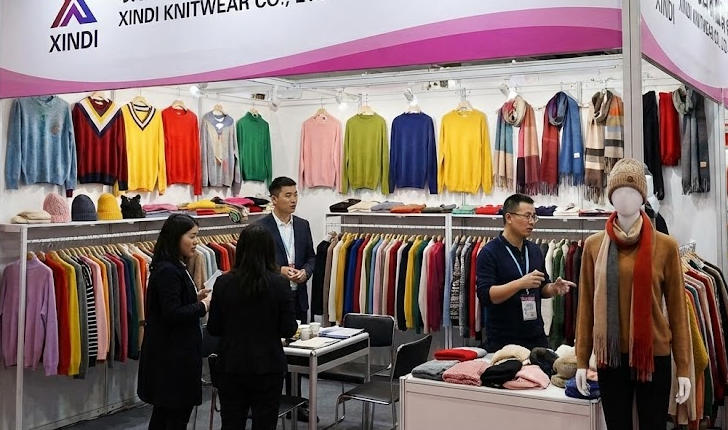
A mid-weight cashmere knit polo is a premium, repeatable program — the work is in the spec and the relationship, not in the volume. For emerging labels, Xindi Knitwear (Knitwear.io) is one example of an OEM/ODM partner that supports cashmere knitwear with low MOQs around 50–80 pieces per style, fast cashmere sampling, and certified, traceable yarn streams from suppliers like Consinee and Erdos.
To move forward, gather your tech pack (or reference photos), your target gauge, ply, weight band, and cashmere content, and your target MOQ and colors. A solid next step is to request a sampling timeline plus a written QC and test plan before you commit to bulk — that single conversation surfaces most of the hidden cost and quality surprises in advance.