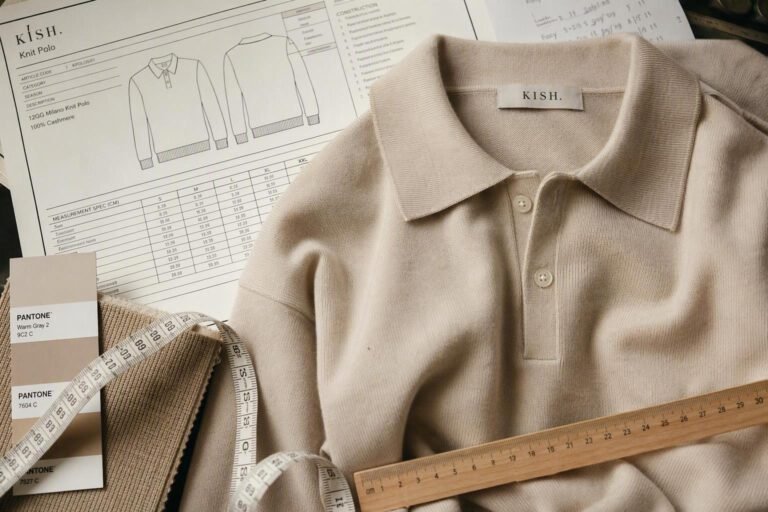

A sweater is a set of material and construction decisions before it is a brand, and the label inside the neck is the only place those decisions are stated in full. Croft & Barrow sweaters are a Kohl’s private label sold only through Kohl’s stores and kohls.com, so this guide cannot inspect the specific garment in your hands. What it can do is give you the criteria that decide whether a knit wears well: fiber blend, gauge, knit structure, finishing, and care behavior. If you run a small label, the same criteria become a development brief, and the second half of this article covers what a comparable classic knit costs in MOQ, sampling time, and unit economics.
Key Takeaways
Croft & Barrow is a Kohl’s private label, not an independent brand, and Kohl’s describes it as an only-at-Kohl’s brand and one of its three $1 billion proprietary brands (Kohl’s Corporation).
Fiber content varies by style and colourway: current listings include 60% acrylic / 40% nylon and 50% recycled polyester / 29% polyester / 17% nylon / 4% spandex (Kohl’s).
The sewn-in fiber and care labels outrank any general advice, because US law requires the fiber percentages and the care instruction to be stated there (FTC).
A small label can develop a comparable knit at low MOQ, but the real constraint is usually the dye-lot minimum per colour, not the garment quantity.
Certification claims are threshold claims: GOTS needs 70% or 95% certified organic fiber, and GRS needs 20% to certify and 50% to carry the product label (GOTS, Textile Exchange).
What is Croft & Barrow, and who actually makes and sells it?
Croft & Barrow is a Kohl’s private label, sold only through Kohl’s stores and kohls.com, and it is not a national brand or an independent company with its own store (Kohl’s). Kohl’s describes it as an only-at-Kohl’s brand covering men’s and women’s apparel, footwear, accessories and home, and lists it among three proprietary brands that each pass $1 billion, alongside SONOMA Goods for Life and Apt. 9 (Kohl’s Corporation). That corporate page carries a September 18 date but no year, so treat the $1 billion figure as the brand owner’s own description rather than an audited number.
The brand status question matters because the search results around it are polluted. Lookalike domains that are not the Kohl’s retail domain, including croftbarrowco.com, present themselves as brand homes and then redirect shoppers to Kohl’s, and reported fake Kohl’s storefronts have misused the branding while advertising extreme discounts (MalwareTips, 2024-04-23). The practical rule is narrow: buy on kohls.com or in a Kohl’s store, and treat any other domain claiming to be the brand’s official outlet as unverified.
On price, the band moves with promotions. Kohl’s listings show Croft & Barrow sweaters at roughly $19.99 to $34.99 regular, with promotional prices around $12.96 to $27.99 (Kohl’s, pages dated 2026-09-27 to 2026-10-11). Those figures are volatile by design, so read them as a band that tells you which tier of construction to expect, not as a stable price.
Callout: buy only on kohls.com. Kohl’s and Croft & Barrow branding is misused by lookalike storefronts. If a site is not kohls.com and is not a Kohl’s store, it is not an authorised channel.
What are Croft & Barrow sweaters actually made of?
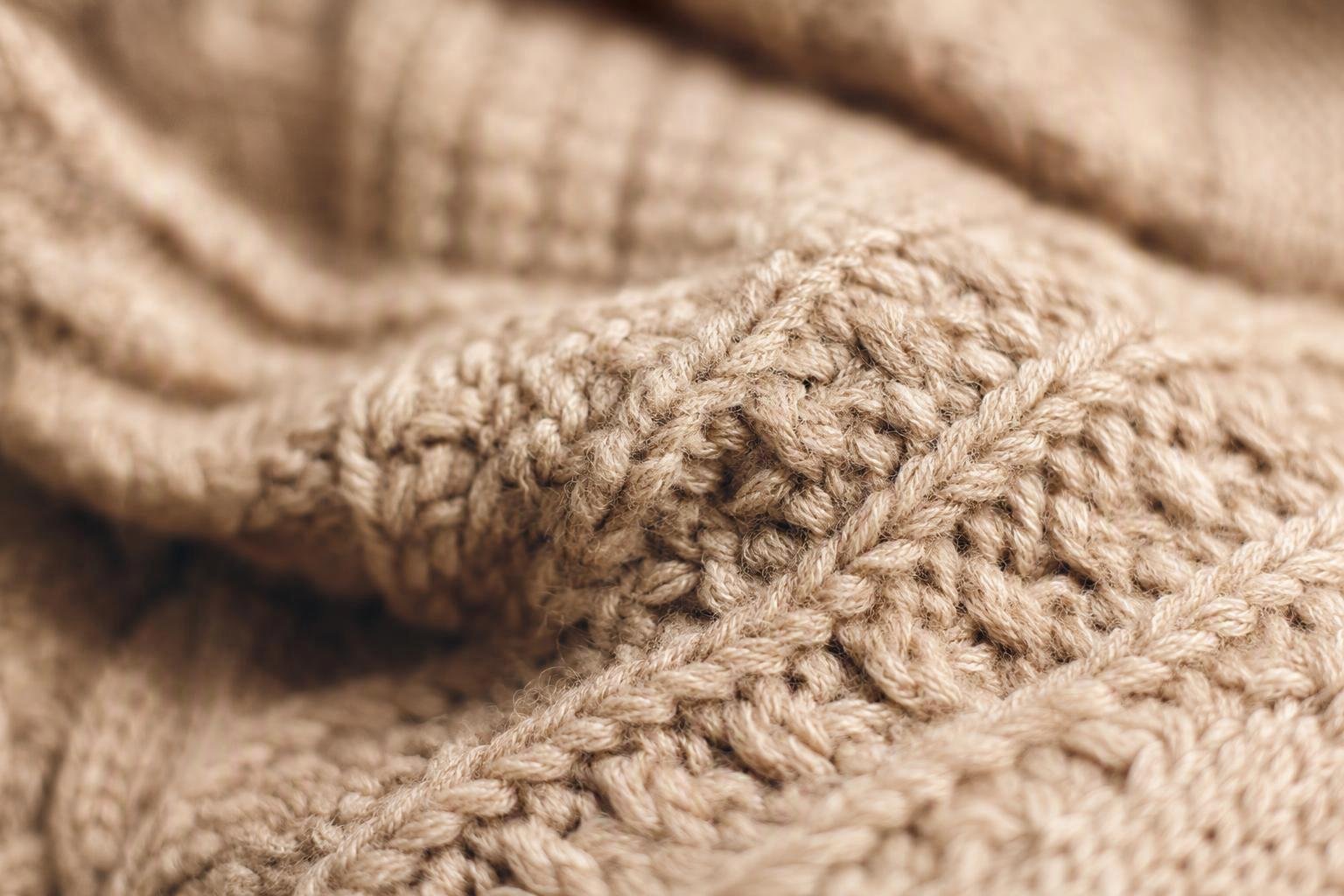
There is no single answer, and that is the honest starting point for Croft & Barrow sweater materials and care: the fiber content varies by style and colourway. Current listings declare 60% acrylic / 40% nylon, 65% polyester / 32% recycled polyester / 3% spandex, 70% recycled polyester / 18% acrylic / 12% nylon, and 50% recycled polyester / 29% polyester / 17% nylon / 4% spandex, depending on the style and the colour chosen (Kohl’s, pages dated 2026-04-15 to 2026-09-27). Two sweaters from the same line can be different materials, so a review that says “the fabric feels like acrylic” describes one colourway, not the brand.
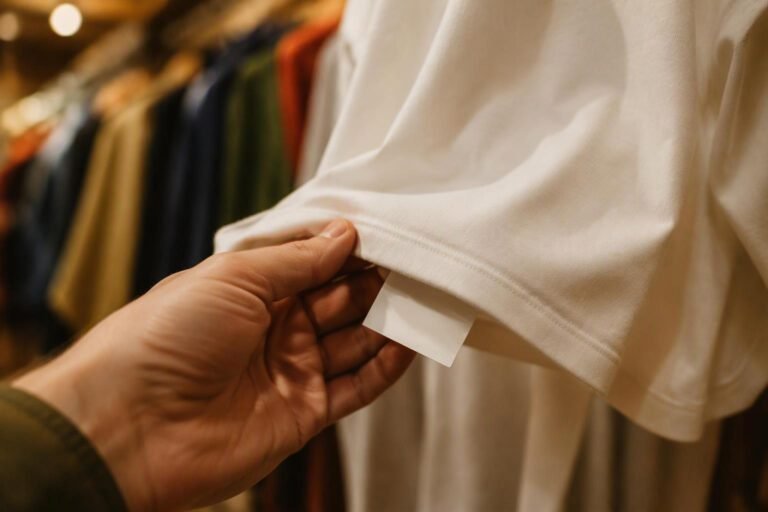
Those numbers are not marketing copy. Under the FTC’s Textile Fiber Rule, textiles sold in the US must disclose the generic names and percentages by weight of the constituent fibers, the manufacturer or marketer name, and the country of origin. Two thresholds decide how the label reads. The 5% other-fiber threshold means a fiber present in under 5% of total fiber weight is designated as “other fiber” rather than by name, unless it has a clearly established functional significance at that level, which is why a small elastane content can still appear by name (eCFR 16 CFR 303). The 3% content tolerance means a stated percentage may drift by up to 3% of total fiber weight before the product counts as misbranded, so “40% acrylic” is a band from 37% to 43%, not an exact figure (eCFR 16 CFR 303).
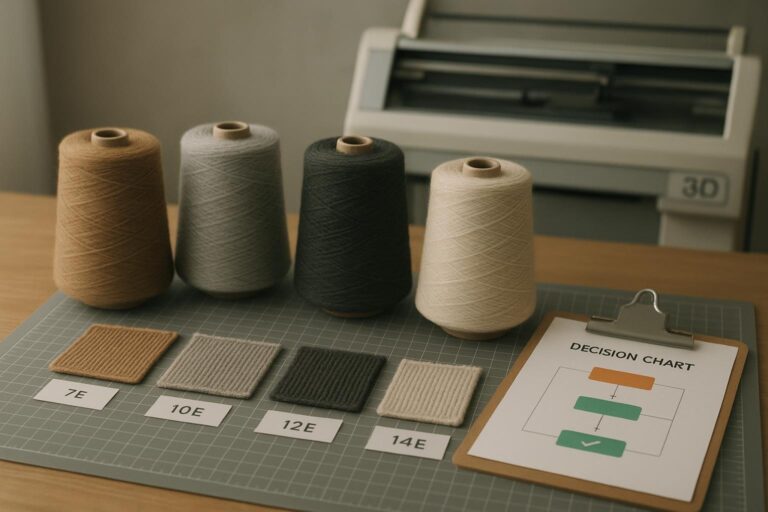
Fiber content is only half the material story, because gauge is a separate decision from fiber content and from machine type. Gauge is measured in needles per inch: coarser 7gg knits read warmer, chunkier and more textured with bolder cable definition, mid 9gg knits balance warmth and durability, and finer 12gg and 14gg knits are lighter and smoother but slower to knit and usually costlier (Belle Vouz, 2026-07-19). Gauge has to be matched to yarn count and stitch length, which is why the same fiber blend can produce a dense, warm classic knit or a thin, draping one.
For a label sourcing wool rather than synthetics, quality is specified by fiber diameter in microns, with sourcing-guide examples running from about 11.2 to 29 microns across mills and yarn counts spanning roughly 3 Nm to 120 Nm (The Woolmark Company). Wool is bought by micron and yarn count, not by feel, and a mill’s micron range is not a market-wide standard.
How do Croft & Barrow sweaters fit, and how should I size them?
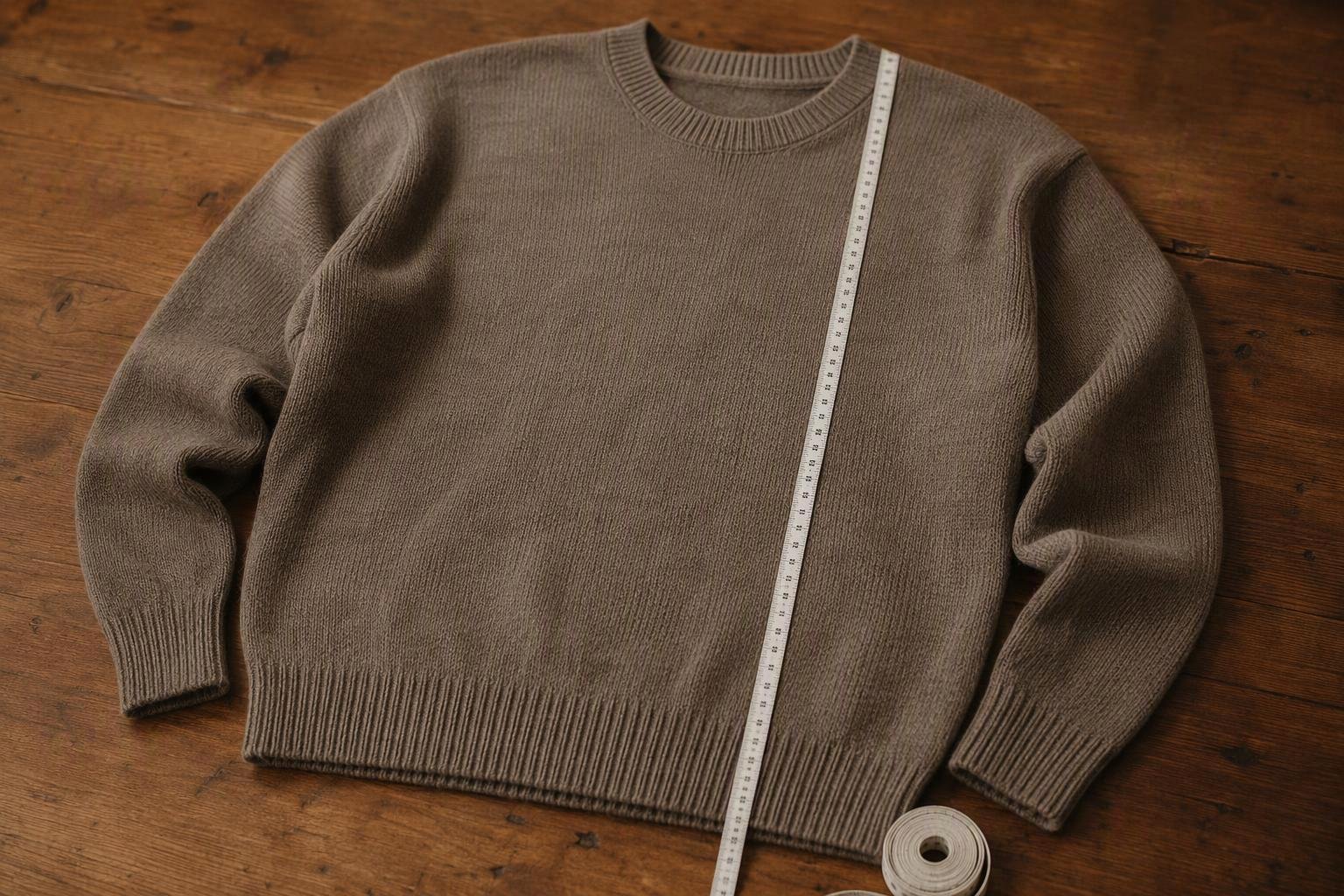
Croft & Barrow sweater fit and sizing is not one chart but three, and the plus run uses a conversion you should read before ordering. Kohl’s publishes three separate size charts: regular XS to XXL (2-20), petite PXS to PXXL (2-20), and plus 0X to 4X (14W-30W), where 0X equals 14W, 1X equals 16W-18W, 2X equals 20W-22W, 3X equals 24W-26W, and 4X equals 28W-30W (Kohl’s, 2026-10-09). The chart shows the brand’s full range even where a colourway is unavailable, so a size can appear in the chart and be out of stock in the colour you want.
Run | Sizes | Numeric equivalent |
|---|---|---|
Regular | XS-XXL | 2-20 |
Petite | PXS-PXXL | 2-20 |
Plus | 0X-4X | 14W-30W (0X = 14W, 1X = 16W-18W, 2X = 20W-22W, 3X = 24W-26W, 4X = 28W-30W) |
Petite and plus are separate grades with their own proportions, not scaled versions of the regular run, so a letter size does not carry across. The honest limitation: Kohl’s finished-measurement charts were not readable as text on the pages reviewed, so this guide gives the size architecture and the fit decisions rather than a chest-and-length table. Take your own bust measurement over a light layer and compare it to the garment measurement on the product page, not to your usual letter size.
Two construction variables change the answer more than the label does. A coarser gauge reads bulkier at the same labelled size, because gauge is matched to yarn count and stitch length, and yarn count conventions describe how many strands make up the yarn. Rib trims at the cuff and hem govern recovery, so a sweater with dense ribbing holds its shape better than one with a soft, open trim. If you want the structural vocabulary behind that, how rib and interlock structures behave explains why rib stretches and recovers along its direction while double-faced knits stay flatter, and spec details that actually matter shows how those choices get written down before production.
Seasonal framing belongs here and only here: this season’s holiday assortment adds motif and fair isle styles, and those tend to be cut as layering pieces over a tee rather than as a close-fitting base layer. Read the fit notes on the specific style instead of carrying an assumption from a sweater you bought last year.
How do these sweaters wear over time, and how should I care for them?
Care instructions on Croft & Barrow sweaters are style-specific, so the sewn-in label governs. Kohl’s listings show “machine wash cold” with one Full Zip listing adding “reshape and dry flat”, “machine wash” or “machine wash delicate” on several Cozy listings, and “machine wash and tumble dry low” on the Petite Fair Isle and Petite Harvest Motif sweaters (Kohl’s, 2026-10-09). Generalising one style’s tumble-dry instruction to the whole range is the most common care mistake with this brand.
That instruction set is a legal document, not a suggestion. The FTC’s care-labeling rule requires apparel labels to carry either a washing or a drycleaning instruction, and a washing instruction must address five elements: washing method, bleaching, drying, ironing, and warnings (FTC). The regulation is conditional in two places that the FTC’s summary does not show: ironing must be mentioned only if it will be needed on a regular basis, and bleaching need not be mentioned if all commercially available bleaches are safe (eCFR 16 CFR 423). A permanent care label must also stay legible for the useful life of the product, and if packaging hides it, the care information must appear on the package or a hang tag (eCFR 16 CFR 423).
Two wear problems dominate this fiber family, and both have named test methods rather than guarantees. Pilling is scored on ASTM’s 5-to-1 scale, where 5 is no pilling and 1 is very severe pilling, using the random tumble pilling tester, and the active edition is D3512/D3512M-22 (ASTM International). The standard’s own limitation is the strongest caution available: pilling resistance in actual wear varies more with conditions of use and individual wearers than in controlled laboratory specimens, and counting pills is not recommended because the method’s between-laboratory precision is poor. A lab result tells you how a fabric performed in a tumbler, not how your sweater will look after a winter of wear under a coat.
Shrinkage is measured by AATCC TM135, which determines length and width change after home laundering using four wash temperatures, three agitation cycles and four drying procedures (AATCC). It is a method, not a limit, so it does not tell you a percentage to expect. The practical read is that a knit with a “reshape and dry flat” instruction is telling you the garment is dimensionally sensitive, and heat plus agitation is the combination that changes it.
Callout: the label outranks the blog. If a care instruction on your sweater contradicts anything here, follow the label. It is the manufacturer’s own reasonable-basis statement, and the regulation requires the maker to have reliable evidence behind it.
Are Croft & Barrow sweaters worth buying, and how do they compare with other private-label and value knits?
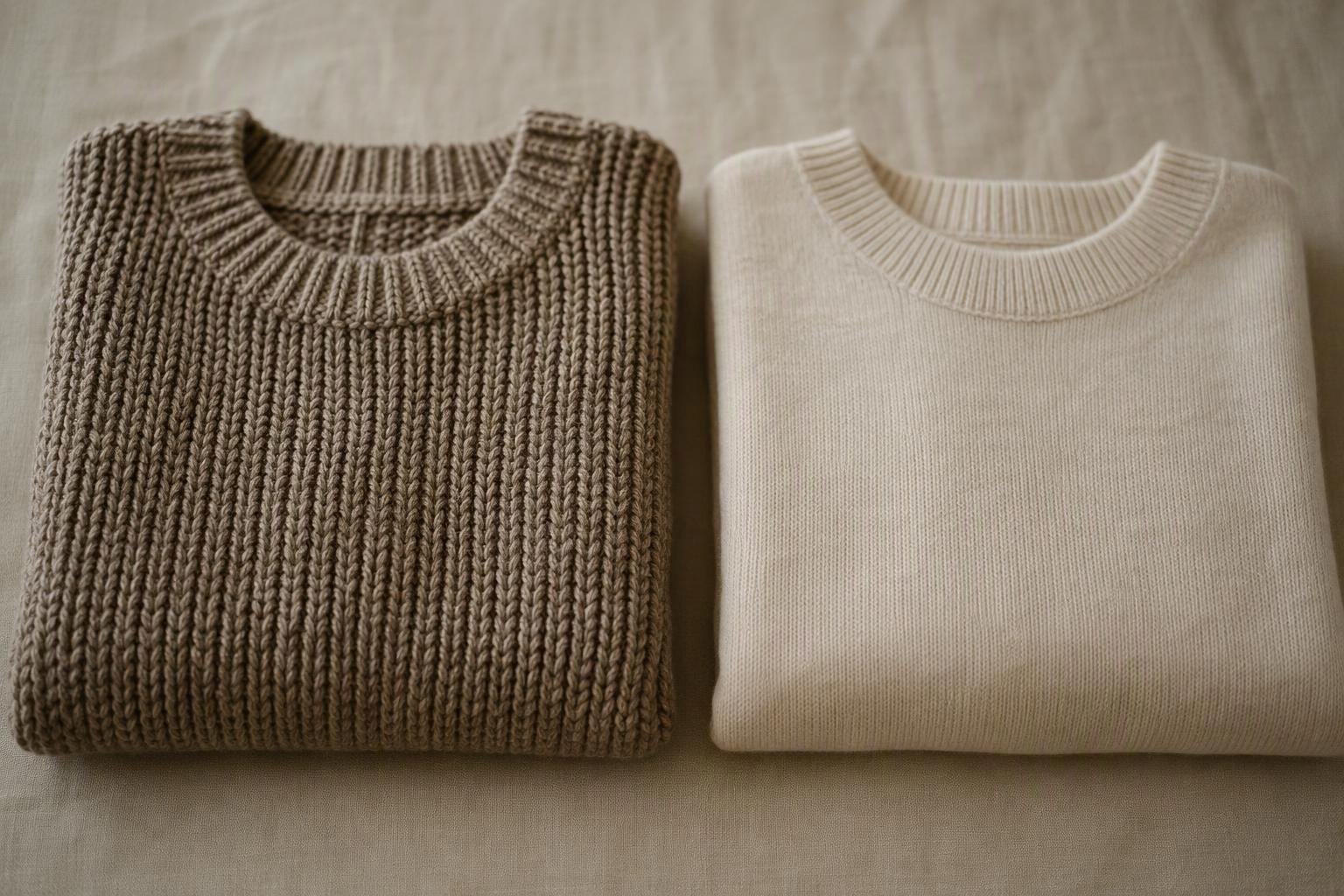
Worth buying depends on which of two value propositions you are shopping for, and the range serves the first one well. At a $19.99 to $34.99 regular band, with promotions down to roughly $12.96 to $27.99, Croft & Barrow sits in the value tier where the fiber blend is chosen for cost and easy care rather than for longevity (Kohl’s, pages dated 2026-09-27 to 2026-10-11). Acrylic and polyester blends resist moths, wash without special handling, and hold colour, which is exactly what a high-turnover seasonal knit needs.
The comparison that matters is against other private labels, and the honest answer is that the sources do not support a general claim about store-brand apparel quality. Kohl’s product and catalog pages cover a single private label, and nothing in them indicates whether its care instructions, size ranges or price bands are representative of other retailers or brands. What you can compare is the label: fiber percentages, gauge if stated, care instruction, and country of origin are all required disclosures, and they are the only comparable data across brands.
What to compare | What the label tells you | What it predicts |
|---|---|---|
Fiber blend | Percentages by weight, with a 3% tolerance | Warmth, hand-feel, pilling propensity, care needs |
Gauge | Rarely stated on retail labels | Weight, drape, stitch definition, cost tier |
Care instruction | Washing method, temperature, drying method | Whether the knit is dimensionally sensitive |
Country of origin | Required disclosure | Duty structure and supply-chain route |
Price band | Regular versus promotional | Which construction tier the brand is buying |
Against a wool or wool-blend knit, the trade is explicit. Wool is about 0.9% of global fibre production at roughly 1 million tonnes of clean fibre, which is a large part of why a wool sweater costs more than an acrylic one (Textile Exchange, published September 2025, data year 2024). Wool also brings care requirements that an acrylic-nylon blend does not, and it can be specified precisely by micron and yarn count when you are buying it as a material (The Woolmark Company).
For a shopper, the decision rule is straightforward. If you want a low-cost, low-maintenance knit for a season or two, the value tier delivers that, and the recycled-polyester blends in the range are a reasonable choice within it. If you want a sweater you will still be wearing in five years, you are shopping for a different fiber and a different price band, and the label will tell you which one you are holding.
If I run a small label, what does it take to develop a comparable classic knit at low MOQ?
Private label sweater development is a spec-order exercise: fiber and yarn first, then gauge, then knit structure, then trim and finishing, then fit approval. Get that order wrong and you have fixed most of your cost before you have seen a sample.
Gauge is where the cascade starts, because it has to be matched to yarn count and stitch length. A 7gg knit gives a warmer, chunkier surface with bolder cable definition, 9gg balances warmth and durability, and 12gg or 14gg gives a lighter, smoother knit that is slower to produce and usually costlier (Belle Vouz, 2026-07-19). Wool adds a second variable: it is specified by fibre diameter in microns, and mill yarn counts span a wide range, so the same nominal gauge behaves differently across yarns (Fibre diameter and yarn count). For classic knit sweaters at low MOQ, the practical consequence is that a yarn substitution late in development is a gauge decision, not a sourcing decision.
The constraint that catches small labels is rarely the garment quantity, it is the dye lot. Colour has to be dyed in a minimum batch, usually expressed in kilograms of yarn rather than units of garment, so a 50-unit run across three colours can mean three dye lots before a single sweater is knitted. No verified dye-lot minimum from a dyehouse, standards body or trade association was found in the sources reviewed here, so treat any figure you are quoted as supplier-specific and ask for it in writing next to the yarn price per kilogram.
Sampling is the second schedule risk. A knit sample is developed, knitted, finished and approved before bulk, and each revision restarts part of that sequence, which is why drop windows are usually lost to sample rounds rather than production. Brief the factory in the order above, and ask for the sample against the production yarn rather than a stock substitute.
The import layer decides landed cost, and it changed in 2026. USITC’s Chapter 61 classification sorts knitted sweaters by fibre: cotton at 6110.20, man-made fibres at 6110.30, wool at 6110.11 to 6110.12, so a fibre substitution is also a duty change. CBP’s June 2026 suspension of the de minimis exemption ended duty-free treatment for merchandise of $800 or less arriving by any mode other than the international postal network, effective 24 June 2026, indefinitely, by interim final rule. The July 2026 postal rule closed the postal channel from 24 July 2026 and created a postal informal entry process for shipments of $2,500 or less classifiable only in HTSUS chapters 1 to 97. The $800 statutory threshold was not repealed; the administrative exemption was suspended.
Vet suppliers against a framework rather than a feeling. The OECD’s six-step due diligence framework for garment and footwear supply chains, published in 2018 and still the current sector guidance, gives you that structure. Kohl’s supplier standards are the benchmark a private label is measured against: partners must follow the Business Partner Code of Conduct and meet the Terms of Engagement for responsible sourcing, though the sourcing pages reviewed do not confirm a named factory list. A replicable micro-example of the low-MOQ model is a 50-unit GOTS organic cotton piqué polo run with a defined sampling SLA and GSM options, which is the shape of order a small label can actually place. If you want the sequence written down before you brief anyone, the onboarding checklist for a private-label knit program covers it.
What certifications and traceability can a small label actually claim?
A certification claim is a threshold claim, and the threshold decides the wording. GOTS v8.0 covers textiles made from at least 70% certified organic natural fibres and offers two label grades: “Organic” at 95% or more certified fibre content, and “Made with (x%) organic materials” at 70% or more, with certification required at every processing, manufacturing and trading stage (GOTS). GRS v4.0 applies to products containing at least 20% recycled material for certification, but only products with at least 50% recycled content qualify for product-specific GRS labelling, and it adds social and chemical requirements at certified sites (Textile Exchange, GRS 4.0 effective 1 July 2017).
Those two thresholds are the most actionable numbers in this article for a label, because they tell you what you can honestly print. A 30% recycled-content knit can be certified under GRS but cannot carry the GRS product label, and a 75% organic blend can say “Made with 75% organic materials” but not “Organic”. Getting this wrong is a labelling problem, not a marketing problem.
The standards also do different jobs, and conflating them is the second common error. OEKO-TEX STANDARD 100 certifies that a specific article, whether yarn, fabric, finished garment, threads, buttons or accessories, was tested against a list of over 1,000 harmful substances, with limit values set by product class and stricter for more intensive skin contact, from Class 1 for babies and children up to 3 through Class 4 for home textiles (OEKO-TEX). It tests for harmful substances; it does not certify fiber content, animal welfare or labour conditions. GRS is not a harmful-substances standard either, which is OEKO-TEX’s job.
Traceability is where a small label has to be careful about what it can evidence. If you want to claim recycled or responsible wool content, ask the supplier to evidence the specific standard and check the certificate number against the fibre and the colourway you are buying, because a certificate held for one yarn does not transfer to another. The standards reviewed here do not document responsible-wool or recycled-wool capability for every supplier, so the honest position is that these are standards you ask a supplier to evidence, not capabilities you assume.
Quality control at low volume is contractual rather than regulatory. ISO 2859-1 defines the AQL as the quality level that is the worst tolerable, and inspection is typically conducted at General Inspection Level II with critical defects set at 0.0, major defects commonly at 2.5 and minor defects commonly at 4.0, with sample size following the lot size (QIMA; QualityInspection.org). Those figures are common commercial practice, not a legal requirement, and for a 50-unit run the sample size is small enough that the accept/reject numbers matter more than the defect percentages.
Frequently Asked Questions
Is Croft & Barrow a brand or a store label?
It is a store label, not an independent company. Croft & Barrow is a Kohl’s private label sold through Kohl’s stores and kohls.com, and Kohl’s lists it among its billion-dollar proprietary brands. Nothing outside Kohl’s controls the name, so treat any other storefront using it as unrelated to the label.
How do I read a sweater’s fiber and care label?
Read the fiber label’s percentages first, then the care panel, because the two together set how the garment will behave. US law requires the sewn-in label to state the exact blend for that garment (FTC Textile Fiber Rule), so the percentages on the tag, not the website copy, are the authoritative version. Watch for the 5% rule: minor fibers at or below that threshold may be disclosed as “other fiber” rather than named, which is why a tag can look shorter than the listing.
Acrylic-nylon versus wool at the same weight: which holds up better?
Wool generally wins on warmth, resilience and odour, while acrylic-nylon wins on price, colourfastness and easy machine care. At equal fabric weight the acrylic-nylon blend is the lighter-wearing option: it resists moths and washes without felting, but it pills more readily and loses loft faster under friction. Wool costs more per unit and needs cooler washing, yet it recovers shape between wears. Neither is better in the abstract; the choice follows how often the sweater will be washed and what the wearer will pay.
Why does the promotional price band move so much?
Because the ticket price and the selling price are two different numbers, and only one of them reflects the garment. The promotional price band on a private-label knit swings with the retailer’s markdown calendar, coupon stacking and seasonal clearance, so a deep discount tells you about inventory timing rather than about fiber content or construction. A sale price does not tell you what the sweater cost to make, what the yarn cost, or how many units were committed. Judge the garment on the label and the hand-feel, and treat the discount as a separate decision.
Does a certification logo on a hangtag mean the garment is certified?
No. A logo on a hangtag shows only what the certificate actually covers, and that scope is often narrower than buyers assume. Certifications attach to a specific facility, product line or material lot, and a brand can hold a valid certificate for one item while the sweater in your hand sits outside it. Ask for the certificate number and check it against the issuing body’s public database, and confirm the certified entity, the product category and the validity dates before repeating the claim.
What changes for a small label importing a low-value shipment now that the 2026 de minimis suspension is in effect?
The duty-free, low-paperwork route for small parcels is gone, so budget for formal entry, duties and broker fees on shipments that previously cleared without them. Under the 2026 de minimis suspension, low-value consignments that once entered free now face the same tariff treatment and documentation as ordinary commercial imports. For a small label this changes landed cost per unit, not just paperwork, so model the duty into your sample-to-bulk pricing before you commit to a quantity. Confirm current thresholds and entry rules with a customs broker, since the framework has moved repeatedly.
Conclusion
The evaluation criteria are the same whether you are holding a Croft & Barrow sweater in a Kohl’s aisle or briefing a factory. Read the fiber percentages and the care instruction, because those are the two disclosures US law requires and the two that predict how the knit wears (FTC). A 60/40 acrylic-nylon blend at a value price band is a coherent set of decisions for a seasonal knit, and a 50% recycled polyester blend with 4% spandex is a different set of decisions at the same brand.
If you are building a comparable knit, the sequence is fiber, gauge, structure, trim, fit approval, and the two constraints that decide your timeline are the dye lot and the sample rounds. The import layer now adds an entry step that low-value shipments did not need before June 2026, so build that into the landed cost rather than discovering it at the port (CBP).
The next step is a concrete one: before you commit to a production run, request swatches in the yarns you are actually considering, confirm which tests the factory will run on the bulk, and order pilot sizes in the colourways you intend to sell. That gives you the fiber, the gauge and the fit in your hands before the dye lot is committed.