
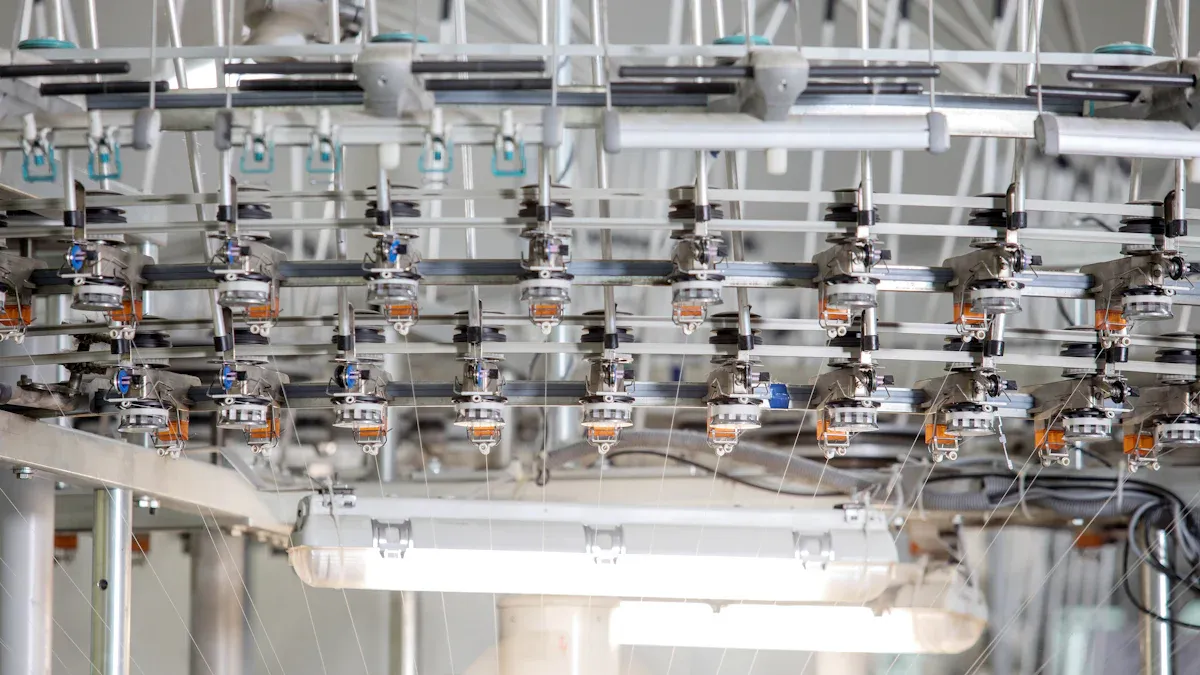
In 2025, you observe rapid changes in fashion brand knitwear sourcing. As the global market for knitwear expands by over 12% annually, more consumers are seeking these products. It is essential to adhere to strict EU regulations and meticulously track every stage of the knitwear production process. By utilizing innovative tools, you contribute to environmental sustainability while ensuring that each knitwear item complies with stringent standards. You strive to cultivate strong relationships with suppliers and prioritize sustainability at every level. You recognize that only fashion brands with a clear commitment to sustainability can thrive in a market where knitwear options are increasingly significant.
Key Takeaways
Use digital sourcing platforms to make knitwear sourcing easier. These tools help you design better and talk to suppliers well.
Work with more suppliers to be flexible and fast. Having many suppliers helps you change quickly when the market changes.
Think about nearshoring to save on shipping and help the environment. This plan gives you faster delivery and more control over your supply chain.
Talk about prices by knowing all the costs. Go over each part with suppliers to build trust and find fair answers.
Use strong quality assurance steps. Check often and get certifications to make sure your knitwear is good and meets what customers want.
Use low minimum order quantities (MOQs) to try new styles. This way, you lower risk and can change quickly for what customers like.
Build long-term partnerships with suppliers. Good relationships give you better quality, reliability, and trust for your brand.
Keep up with trade rules and market trends. Changing with new rules helps you stay ahead in the knitwear market.
Fashion brand knitwear sourcing strategies
Digital sourcing platforms
You use digital sourcing platforms to make knitwear sourcing faster and more accurate. These platforms put all your designs in one place. They help you connect with suppliers from all over the world. Browzwear lets you make digital twins of your designs. You can test these designs on the computer. This saves a lot of time. SHIMA Datamall gives you many digital tools. You get patterns and 3D models for planning knitwear.
Browzwear: Puts designs together and helps you create new ideas faster.
SHIMA Datamall: Gives you digital tools for planning and making knitwear.
These tools make designing easier. You do not need to make as many real samples. This saves money and time. You can make better choices and keep customers happy. Digital platforms also let you talk to trusted suppliers right away. You see up-to-date information about certifications, traceability, lead times, and prices.
Tip: Use digital platforms to make your supply chain clear. You can follow each product from start to finish. This helps you follow rules and make customers happy.
Benefit | Description |
|---|---|
Direct Access to Suppliers | Find trusted suppliers quickly and easily. |
Real-time Data | Get the latest information on certifications and prices. |
Supply Chain Transparency | Watch every step of making products for better control. |
Supplier diversification
You have many challenges when finding knitwear suppliers. You fix this by working with many suppliers in different places. This helps you stay flexible and react fast to changes. Zara makes clothes close to home for quick delivery. H&M gets products from many countries to save money and get more items. Factories in Bangladesh are known for being eco-friendly with LEED certification.
Agility: You keep production flexible and close by.
Speed: You buy from many countries for faster shipping.
Sustainability: You pick suppliers who care for the environment.
Cost Efficiency: You save money while being fast and eco-friendly.
You get better results by working with local suppliers. You match products with what each place does best. You have backup suppliers for important items. This helps you avoid problems. Brands that used many suppliers before trade problems did better. You see using many suppliers as a smart plan, not just a quick fix.
Better Solutions: You make sure clothes are reliable by using many suppliers.
Faster Delivery: You get materials faster by buying near factories.
Quality Alignment: You meet quality needs by picking local partners.
Nearshoring trends
You see more brands using nearshoring for knitwear. In 2025, most apparel leaders think over 20% of their products will come from nearby places. Nearshoring helps you spend less on shipping and get products faster. It also helps the environment by lowering emissions.
Advantages | Challenges |
|---|---|
Lower shipping costs | Hard to find raw materials |
Faster delivery | Not enough skilled workers in some areas |
Better for the environment | Need to change some processes |
Less pollution |
You need to change some ways of working to use nearshoring. Sometimes it is hard to find materials or skilled workers nearby. You learn to adapt and work with partners like Deepwear. These partners help you solve problems and keep up with the market.
Note: Nearshoring helps you react quickly to what customers want and reach your eco goals. You build better relationships with suppliers and have more control over your supply chain.
You see that in 2025, knitwear sourcing uses digital tools, many suppliers, and nearshoring. These strategies help you handle challenges and stay ahead in a fast-moving market.
Cost, quality, and order management
Price negotiation
You face many challenges when you negotiate prices for knitwear. To succeed, you need to understand the true cost of each item. This means you look at every part of the price, such as yarn, knitting, dyeing, trims, and the time it takes to make each piece. You do not just ask for a lower price. You talk with suppliers about each detail. This helps you find fair solutions and build trust.
Know the cost price before you start.
Break down the price into yarn, knitting, dyeing, trims, and labor.
Discuss each part with your supplier, not just the total price.
Global trends also affect your price talks. Raw material prices, energy costs, and labor rates can change quickly. Trade policies and currency shifts may cause prices to rise or fall. When demand drops in big markets like the US or China, you may see more competition among suppliers. This can help you get better deals, but you must stay alert to changes.
Quality assurance
You want your knitwear to meet high standards. Good quality keeps your customers happy and loyal. It also helps your brand stand out in a busy market. You need a strong system to check quality at every step.
Watch and control the production process.
Use sustainable methods.
Make sure your products are socially responsible.
You should check your suppliers’ records. Look at their ratings and reviews. Ask for certifications or do your own inspections. Use random checks to test fabric quality. Third-party certifications like ISO 9001, GOTS, or OEKO-TEX show that your knitwear meets global standards.
Description | |
|---|---|
Assess the Supplier’s Track Record | Check yarn suppliers’ ratings and reviews, confirm credibility through inspections or certifications. |
Comprehensive Statistical Sampling | Use random and stratified sampling methods to assess fabric quality. |
Third-Party Testing Certifications | Obtain certifications like ISO 9001, GOTS, OEKO-TEX to ensure compliance with quality standards. |
You must also follow different rules in each country. A good quality system helps you avoid legal problems and keeps your knitwear safe for everyone.
Minimum order quantities
You need to manage how much knitwear you order. Minimum order quantities, or MOQs, can range from 50 to 1,000 pieces. Lower MOQs give you more freedom. You can test new styles or colors without taking big risks. For example, you might start with just 100 pieces of a new design. This lets you see what your customers like before you order more.
Low MOQs help you try new ideas.
You can launch new collections with less risk.
Small brands can adapt quickly to what customers want.
When you keep your orders flexible, you avoid having too much stock. You also respond faster to trends. This makes your knitwear business stronger and more competitive.
Supplier relationships across borders
Cross-cultural communication
You work with suppliers in many countries to get knitwear. Every day, you face problems talking with people from different cultures. Sometimes, these problems cause mistakes or late deliveries. Many Western buyers say talking with Asian suppliers is hard. More than half say these problems hurt their business. In China, not understanding “face” can ruin deals. You can do better if you learn about other cultures. Companies that teach their teams about culture have fewer delays and better partnerships.
Problems with talking can cause wrong orders or late shipments.
Learning about other cultures helps you trust each other.
Showing respect for local ways makes your team stronger.
Tip: Try to learn about your supplier’s culture before you work together. This helps you avoid mistakes and build good relationships.
Remote management
You manage knitwear suppliers in other countries without going there. You use digital tools to watch orders and check quality. Many brands use ERP systems, blockchain, and AI to help. These tools let you see every step of making knitwear. You know where your materials come from and if they are real. You save time and money by making buying easier and faster. You also work better with suppliers because you share clear information. Remote management helps you stay ahead and keep your supply chain open.
Tool | Benefit |
|---|---|
ERP System | Watches orders and materials |
Blockchain | Checks if things are real |
AI Supply Chain | Stops delays and mistakes |
Long-term partnerships
You work with knitwear suppliers for a long time to help your business. These relationships help you always have products to sell. You make better knitwear because you and your suppliers know what is needed. You also have fewer problems with making products. Customers trust your brand more when you work with good partners.
Good supply chains help you keep products in stock.
Talking often with suppliers makes knitwear better.
Strong partnerships help you avoid problems and keep your brand safe.
Note: Working with the same suppliers for a long time gives you more control and helps your business grow.
Knitwear logistics and trade shifts
Supply chain optimization
You want your knitwear business to work well. You use new ways to make your supply chain better. These ways help you save money and protect nature. They also keep your products moving.
You use machines that use less energy. You also use renewable energy to lower costs.
You pick sea and rail transport for big shipments. This saves money and cuts down pollution.
You build strong ties with suppliers. This helps you get good prices and steady quality.
You use tracking and data tools. These let you see where your products are and help you waste less.
Tip: If you follow these steps, your fashion supply chain gets stronger and more reliable.
Trade regulations
Trade rules change a lot. You must watch these changes to avoid trouble. New U.S. tariffs have changed how you buy knitwear. Many brands now look for suppliers in places with lower tariffs. Some brands pick materials that meet new green standards.
U.S. tariffs now affect imports from China and Vietnam. You may pay more if you buy from these places.
You can avoid high fees by picking suppliers in countries with lower tariffs.
Some countries give lower tariffs for goods made with green materials. If you use these, you save money and show customers you care about the planet.
You need to watch trade rules closely. This helps you keep your fashion supply chain ready for change.
Lead time reduction
You want your knitwear to reach stores fast. You use smart ways to do this. The table below shows some top ways to cut lead times:
Strategy | Description |
|---|---|
Optimize raw material sourcing | Work with trusted suppliers and use many sources. Use just-in-time systems to get materials quickly. |
Implement lean manufacturing | Remove waste and make your process work better. |
Technology adoption | Use CAD and CAM tools to speed up design and production. |
Improve production planning | Plan tasks well and use real-time checks to stop delays. |
Enhance production efficiency | Buy new machines and train your workers. |
Strengthen workforce management | Hire skilled workers and use flexible schedules. |
Reduce setup and changeover times | Plan machine use and staff shifts to stop delays during setup. |
Note: If you use these ways, your knitwear gets to market faster and your customers stay happy.
Sustainable fashion and compliance

Environmental regulations
You have to follow new rules for fashion in 2025. Governments and the EU want brands to meet strict standards. These rules tell you to use eco-friendly materials. You also need to use less water. You must show that your knitwear uses recycled and organic fibers. Many brands now follow ESG standards. These standards help you cut waste and save energy. They also support a circular economy. Customers want clothes that are good for the planet. They look for brands that care about sustainability. You need to keep records of every step. This proves you care about the environment. It helps you follow the law and meet customer needs.
Traceability systems
You have to show where your knitwear comes from. Traceability systems help you track each step. You start with organic cotton farms and end with finished products. You use digital product passports and forensic tracers. These tools give details about materials and where they come from. You can share this information with customers. This builds trust and shows you care about the planet.
Brand Type | Supplier Disclosure Practices | Notable Practices |
|---|---|---|
Incumbent Brands | Share names, addresses, and worker numbers of manufacturers. | Do not share average salary or work hours for supplier workers. |
Start-up Brands | Some share supplier names, addresses, and worker numbers, but it varies. | ASKET shares work hours and salary, and lets you trace from cotton growers to apparel producers. |
ASKET lets you follow a product’s path from cotton fields to knitwear.
All American Clothing Co. gives a traceability number for jeans. You can see which cotton farmer grew the fiber.
Traceability helps you make better choices for the planet. You can prove your knitwear uses recycled and organic materials. This helps you meet what customers and laws want for sustainability.
Ethical sourcing
You need to follow rules to protect workers and nature. You pick suppliers who use eco-friendly and fair practices. You look for certifications that show safe workplaces and fair rights.
Sedex certification is known for supply chain transparency, labor rights, health and safety, and business integrity. It is a top ethical sourcing certification for knitwear.
You also check for organic and recycled content in your products. You work with suppliers who pay fair wages and use green methods. Ethical sourcing is more than just rules. It is about showing you care and building trust with customers. You help lead sustainable fashion by choosing recycled fibers and organic materials.
Innovation and technology in knitwear sourcing
AI and analytics
Today, you use AI and analytics to help with knitwear sourcing. AI tools help you gather data fast and guess which styles will be popular. These tools show you which fabrics fit your designs best. You can spot trends before others do. AI helps you control your inventory. You do not order too much or too little. This saves money and keeps shelves full of what customers want.
AI also helps you talk to suppliers. You use data to get better prices and make sure suppliers deliver on time. AI checks how well each supplier does their job. You can pick the best partners for your business.
AI makes sourcing quicker, more correct, and more flexible. You can handle market changes with confidence.
Benefit | Impact |
|---|---|
Cost Reduction | 35% lower supply chain costs |
Forecasting Accuracy | Up to 70% better at predicting what you need |
Waste Reduction | Less overstock and smarter use of materials |
Environmental Impact | Fewer carbon emissions and less waste in production |
AI helps you choose fabrics and manage the supply chain.
It lets you get better deals with suppliers by knowing what you need.
AI checks if suppliers are reliable and helps you work well together.
Automation in production
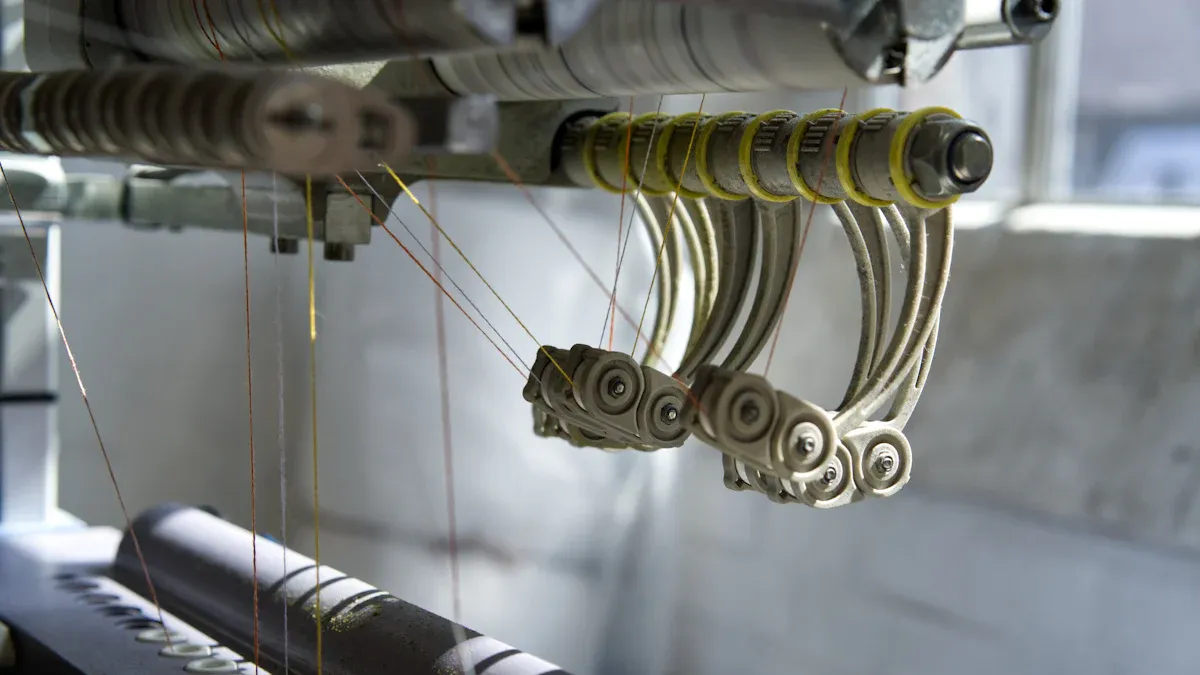
In 2025, more factories use automation. Machines now knit, cut, and finish clothes with little help from people. Automated knitting machines make hard patterns fast. You get the same quality every time and fewer mistakes. Robots move materials and pack finished items. This makes production faster and cuts labor costs.
Sensors watch every step of the process. If something is wrong, you get a warning right away. This helps you fix problems before they grow. Automation lets you make more knitwear in less time. You can also change designs quickly to follow new trends.
Tip: Use automation to make more products and keep quality high. You will meet what customers want and stay ahead of others.
Blockchain transparency
Blockchain gives you a new way to track knitwear. It makes a digital record for each step, from fiber to finished sweater. This record cannot be changed or erased. You can see where materials come from and how products are made.
Evidence Type | Description |
|---|---|
Decentralized and Immutable Record | Blockchain provides a record of every stage of production, enhancing transparency in sourcing. |
Tracking Origins | It allows brands to trace the origin of fibers, ensuring they are sourced ethically. |
Verification of Labor Practices | Blockchain helps verify fair wages and safe working conditions, promoting trust in sourcing. |
Consumer Access | Consumers can use QR codes to check product authenticity and ethical compliance, building trust. |
You can use blockchain to show your knitwear is safe and fair. Customers scan a QR code on the label. They see where the sweater was made and who made it. This builds trust and shows you care about fair work and the planet.
Note: Blockchain makes your supply chain open and honest. You can show customers every step, from farm to fashion.
Luxury sourcing and future trends
Elite textile mills
Luxury knitwear brands pick elite textile mills for their special skills. These mills spend a lot of money on research each year. They use €150 million to make new fabrics and improve comfort. Mills use advanced technology and eco-friendly ways. Their fabrics feel soft and last a long time. Some mills use AI to help program looms. This almost stops fabric mistakes. Mills use recycled materials from the ocean. They save water with closed-loop systems. Special finishes like laser-etched 3D textures help brands look unique.
Characteristic | Description |
|---|---|
Investment in R&D | €150 million yearly to create new fabrics and improve comfort. |
Innovative Fabrics | TENCEL™ Lyocell with temperature control and bio-based nylon with high stretch recovery. |
Sustainable Practices | Use of recycled rPET from ocean plastics and water systems that recycle 98% of water. |
Advanced Technology | AI-driven loom programming cuts fabric defects by 99.7%. |
Unique Finishes | Laser-etched 3D textures for zero-waste, high-fashion looks. |
Tip: Working with elite mills gives you new fabrics and eco-friendly methods.
Market outlook
The luxury knitwear market gets bigger every year. In 2023, the market was $111.59 billion. By 2030, experts think it will reach $165.92 billion. The market grows by 5.83% each year. More brands now sell premium knitwear and new styles. The whole knitwear market could be $1.6 trillion by 2030. Customers have more choices and want better products.
Year | Market Size (Bn USD) | CAGR (%) |
|---|---|---|
2023 | 111.59 | – |
2030 | 165.92 | 5.83 |
The market will keep growing until 2030.
Premium products and new types will be more common.
Experts think the market will grow 4.7% each year from 2025 to 2033.
Note: Watch market trends and offer new styles to stay ahead.
Best practices
You need smart ways to win in luxury knitwear sourcing. Start with steps that change cost, quality, or delivery time. Build strong partnerships if you cannot own every step. Use selective integration for steps where you do best. Digital tools help you see and control your supply chain. Stay flexible so you can work with outside partners. Add sustainability early to make your brand responsible.
Focus on important steps that change cost, quality, or speed.
Build partnerships when you cannot own every part.
Integrate only the steps where you are strong.
Use digital tools for better control.
Stay flexible to work with other partners.
Make sustainability part of your process from the start.
If you use these best practices, you can lead the luxury knitwear market and meet customer needs.
You handle global knitwear sourcing by picking good materials. You also build strong supplier networks. Top brands care about quality and price. They use merino wool, cashmere, organic cotton, and alpaca.
Material | Attributes | Cost Implication |
|---|---|---|
Merino Wool | Lightweight, insulating | Moderate |
Cashmere | Softness, luxury | High |
Organic Cotton | Soft, breathable | Low |
Alpaca | Warmth, durability | Moderate |
You stay ahead by using many suppliers. You invest in eco-friendly ways and look for new markets. You add transparency and use digital product passports. You work with local suppliers to adapt. These actions help you keep costs low and quality high. You also meet sustainability and compliance needs in a changing market.
FAQ
What is the biggest challenge in global knitwear sourcing today?
You must follow many strict rules. Markets change very quickly. You have to watch every step in your supply chain. You need to keep costs low and quality high. You also have to care about sustainability. Being flexible helps you solve these problems.
How do you ensure your knitwear is sustainable?
You pick materials that are good for the planet. You work with suppliers who have certifications. You use digital tools to follow each product’s path. You share this with customers to build trust.
Why is nearshoring important for knitwear brands?
Nearshoring helps you get products faster. It lowers shipping costs and cuts pollution. You can react to new trends quickly. This keeps your supply chain strong.
How do digital platforms help with sourcing?
Digital platforms help you talk to suppliers. You can manage designs and track orders easily. These tools give you data right away. You make better choices and save time. You also avoid mistakes.
What certifications should you look for in knitwear suppliers?
Look for certifications like GOTS, OEKO-TEX, and Sedex. These show your suppliers meet high standards. They care about quality, safety, and ethics.
How can you improve communication with overseas suppliers?
Learn about your supplier’s culture. Use simple and clear words. Set up regular meetings for updates. Use digital tools to share news. Good communication helps you avoid mistakes and build trust.