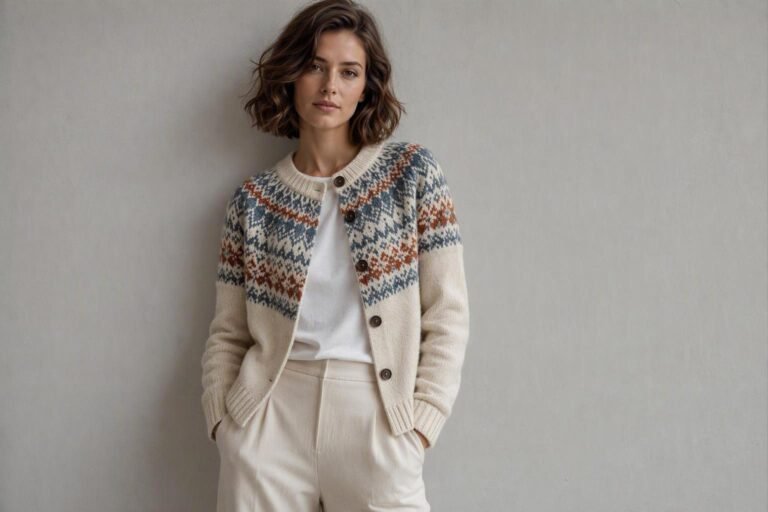


Cashmere has long been synonymous with luxury—a fabric so soft, warm, and scarce that it commanded high prices and lifetime care. But recently, the market has been flooded with “affordable luxury.” Brands like Quince offer $50–$60 cashmere sweaters, claiming quality that rivals high-end Italian heritage brands.
At Xindi Knitwear, we know the manufacturing reality behind these price tags. When the price of a finished sweater is lower than the cost of the raw yarn required to make it, something in the supply chain is breaking.
Here is the truth about the economics, environmental impact, and quality trade-offs of budget cashmere.
Why Do Ultra-Budget Cashmere Brands Like Quince Seem Like Such a Great Bargain?
Direct-to-consumer brands often market their low prices as the result of “cutting out the middleman.” While there is some truth to supply chain optimization, the math often relies on venture capital subsidies rather than manufacturing breakthroughs.
What Are Quince’s Specific Cashmere Product Claims?
To understand the market, let’s look at the specifications Quince publishes. They generally tier their products to upsell consumers from a “hook” price to a “luxury” price.
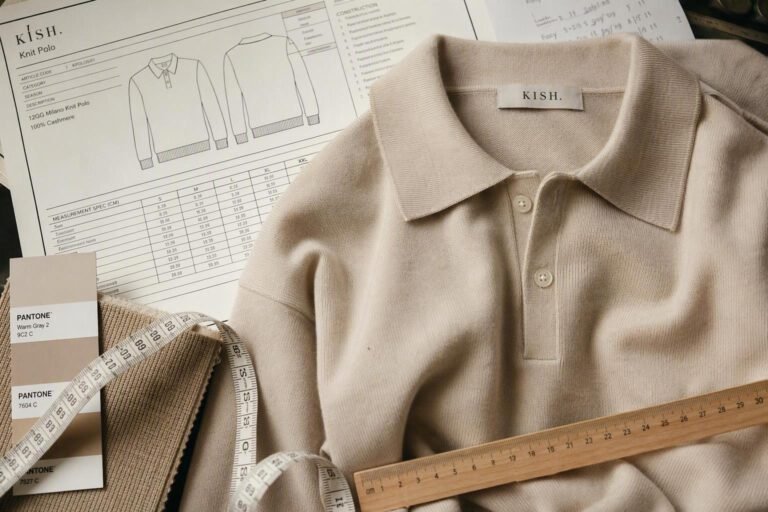
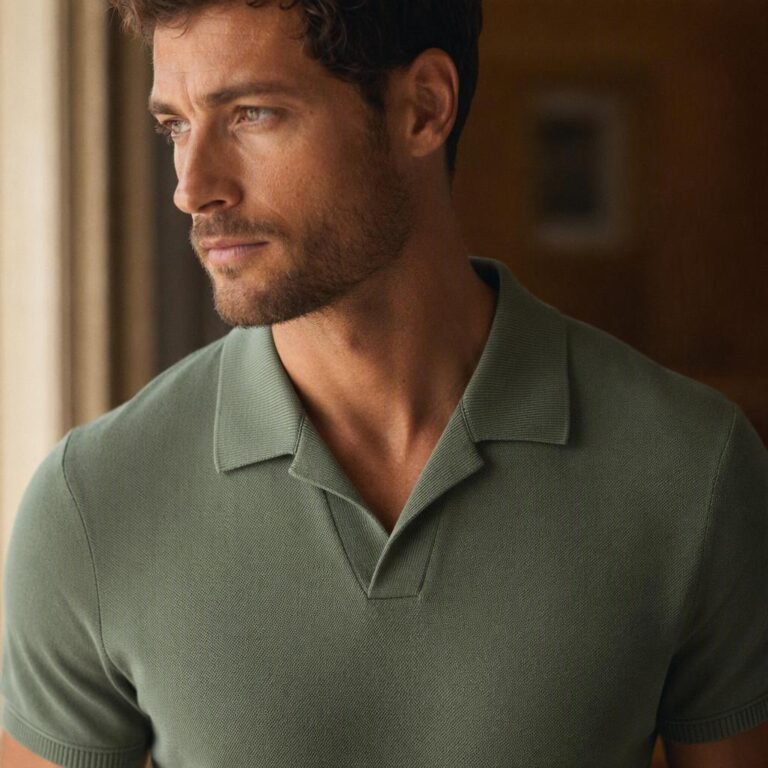
100% Grade-A Mongolian Cashmere Johnny Collar Polo ($60)
-
Micron thickness: 15.8–16.2 micron (Industry standard for decent cashmere, but on the coarser end of “fine”)
-
Gauge: 12 gauge
-
Fiber length: 34–36mm
Luxe Baby Cashmere Crewneck Sweater ($200)
-
Material: 100% Mongolian baby cashmere (from goats under one year old)
-
Micron thickness: 14.5–14.9 micron (Ultra-fine)
-
Gauge: 5 gauge (Chunky knit)
-
Fiber length: 30–32mm
How Does Quince Compare to Mainstream Brands?
In our analysis of the knitwear manufacturing process, we find that the quality level of Quince’s entry-level cashmere is comparable to mass-market giants like Uniqlo. While they feel soft initially, both tend to pill and lose shape relatively quickly.
Furthermore, many of these “disruptor” brands operate on a Venture Capital subsidy model (similar to Everlane’s early days). They burn cash to acquire customers with artificially low prices. Once the capital runs out, prices inevitably rise, or quality drops further.
The Real Cost of Cheap Cashmere: Yarn, Production, and Labor Economics
As a manufacturer, this is where the math stops adding up for the $60 sweater.
What Are the Actual Production Costs Behind Cashmere?
If you source yarn from premium mills like Todd & Duncan, Cariaggi, Loro Piana, or the premium lines of Consinee, the yarn cost alone ranges from $132 to $330 USD per kilogram.
Let’s break down the cost for a standard 4-ply cashmere sweater, which typically weighs between 400g and 550g:
-
Yarn Cost: At premium rates, the yarn alone can cost $50–$150+.
-
Manufacturing: Knitting, linking, washing, milling, drying, and labeling.
-
Labor: Skilled technicians and manual finishing.
For many budget brands, the retail price is lower than the raw material cost of a high-end sweater. This implies that corners are being cut—usually in the blending of shorter fibers or sourcing from unregulated regions.
Debunking the “Grade A” Myth
Many brands market “Grade A” cashmere. However, in actual mill terminology, “Grade A/B/C” is not a standardized technical metric. True quality is defined by:
-
Micron thickness: 14.5–15.8 microns is the premium range.
-
Fiber length: 32–36mm (longer fibers pill less).
-
Color: Whiter raw fibers require less bleaching, maintaining strength.
Premium mills like Loro Piana tightly control who can use their yarn because the finishing process (washing and milling) can make or break the fiber.
The Environmental Crisis: How Cheap Cashmere is Destroying Grasslands
The drive for $60 cashmere has created an ecological disaster in Mongolia and Northern China.
Why Are Cashmere Goats Destructive?
Unlike sheep, which graze the tops of grass (allowing it to regrow), cashmere goats have sharp hooves and graze by pulling plants out by the root. This destroys the topsoil.
The Timeline of Regulatory Collapse
-
The Past: Government regulations limited herd sizes. Cashmere was scarce, expensive, and high quality.
-
The Present (Post-Deregulation): Over the last 30 years, regulations disappeared. Herders, trying to survive on dropping raw material prices, exploded the goat population.
This created a vicious loop:
-
Low Prices drive skyrocketing demand.
-
Overgrazing turns fertile grasslands into desert.
-
Malnourished Goats produce coarser, shorter fibers (lower quality).
-
Sweaters Disintegrate faster, forcing consumers to buy more, restarting the cycle.
Comparing Quince to Premium Alternatives
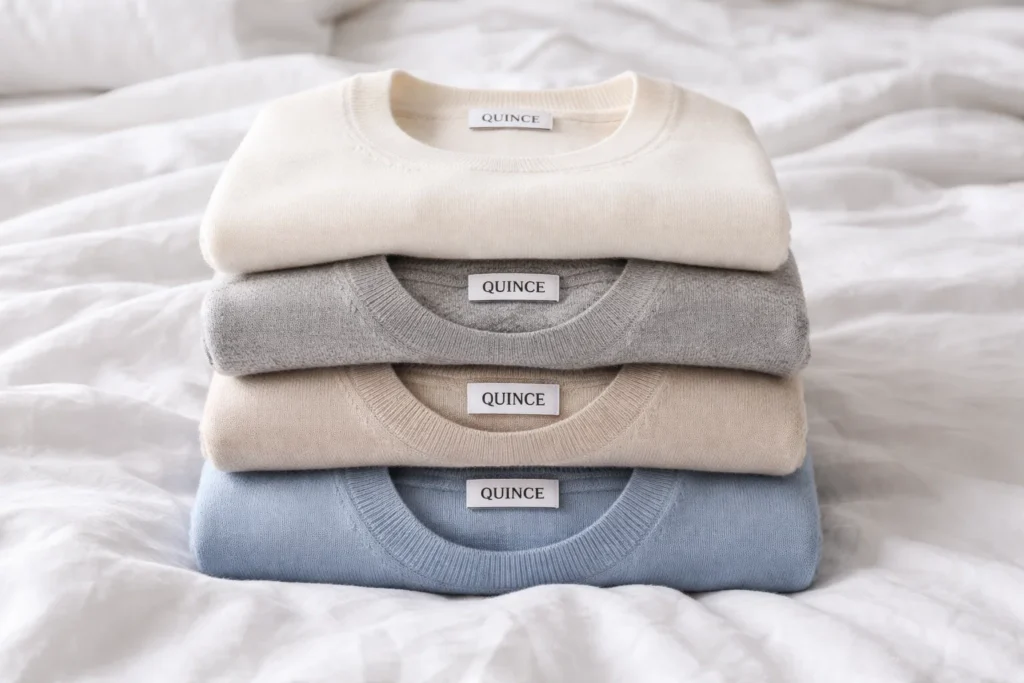
Is the extra money for a brand like Johnstons of Elgin or Missoni worth it? Generally, yes.
-
Longevity: High-end Scottish and Italian cashmere can maintain shape and integrity for 3+ years, whereas budget cashmere often looks “tired” after a few washes.
-
Sustainability: These heritage mills control production quantities and have long-term relationships with herders, ensuring animal welfare and land sustainability.
Alternative Fibers: Sustainable and Durable Options
At Xindi Knitwear, we often advise our clients to look beyond cashmere if they want to offer luxury without the ethical baggage of the budget market. There are incredible sustainable yarn options that offer better durability and warmth.
Cashmere Blends
Another option is to choose more economical cashmere blends instead of 100% cashmere.
For example, a yarn with 15% cashmere and 85% silk keeps much of cashmere’s softness and warmth, but silk lowers the material cost and adds a smooth, lightweight drape that works well for spring knits. Similarly, blends like 5% cashmere and 95% cotton can feel surprisingly close to “real” cashmere on the body while being significantly cheaper to produce, because the cashmere content is so low and cotton is a far more affordable base fiber.
For shoppers, these blends can deliver almost the same cozy, luxurious sensation at a better price point, with less pressure on cashmere supply.
Quince’s Yak Hair Alternative
Quince has introduced Yak wool products. While Yak is more breathable and generally more sustainable than goat farming, budget production lines still face durability issues compared to premium Yak producers.
Better Alternatives for Your Brand
If you are building a collection, consider these fibers:
-
Merino Wool: Excellent warmth, lower land pressure than goats.
-
Alpaca: Often softer than mid-tier cashmere and highly durable.
-
Yak Hair: Superior breathability and warmth.
-
Camel Hair: Great longevity and lower ecosystem impact.
How Xindi Knitwear Addresses These Industry Problems
We refuse to compete in the “race to the bottom.”
Xindi’s Approach to Manufacturing
We recommend that brands prioritize merino, yak, and alpaca over cheap cashmere. When we do manufacture cashmere, we focus on sourcing from mills that ensure fiber traceability and durability.
We believe that the business case for quality is strong: durable products reduce return rates and build massive brand loyalty. Fast fashion creates customers for a season; quality manufacturing creates customers for life.
If you are ready to build a knitwear line based on quality rather than compromise, contact us to discuss your custom knitwear project.