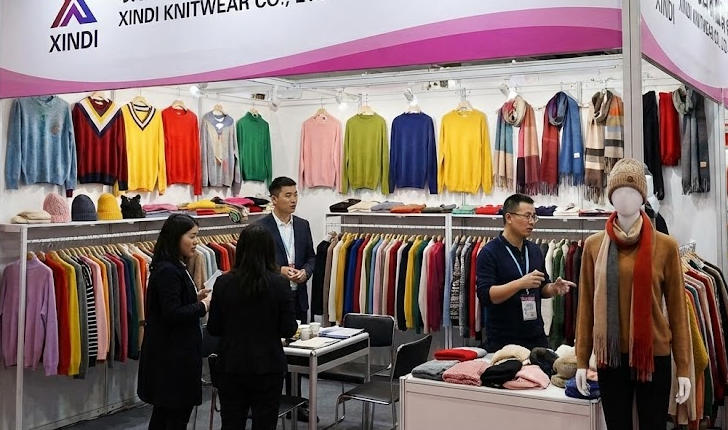

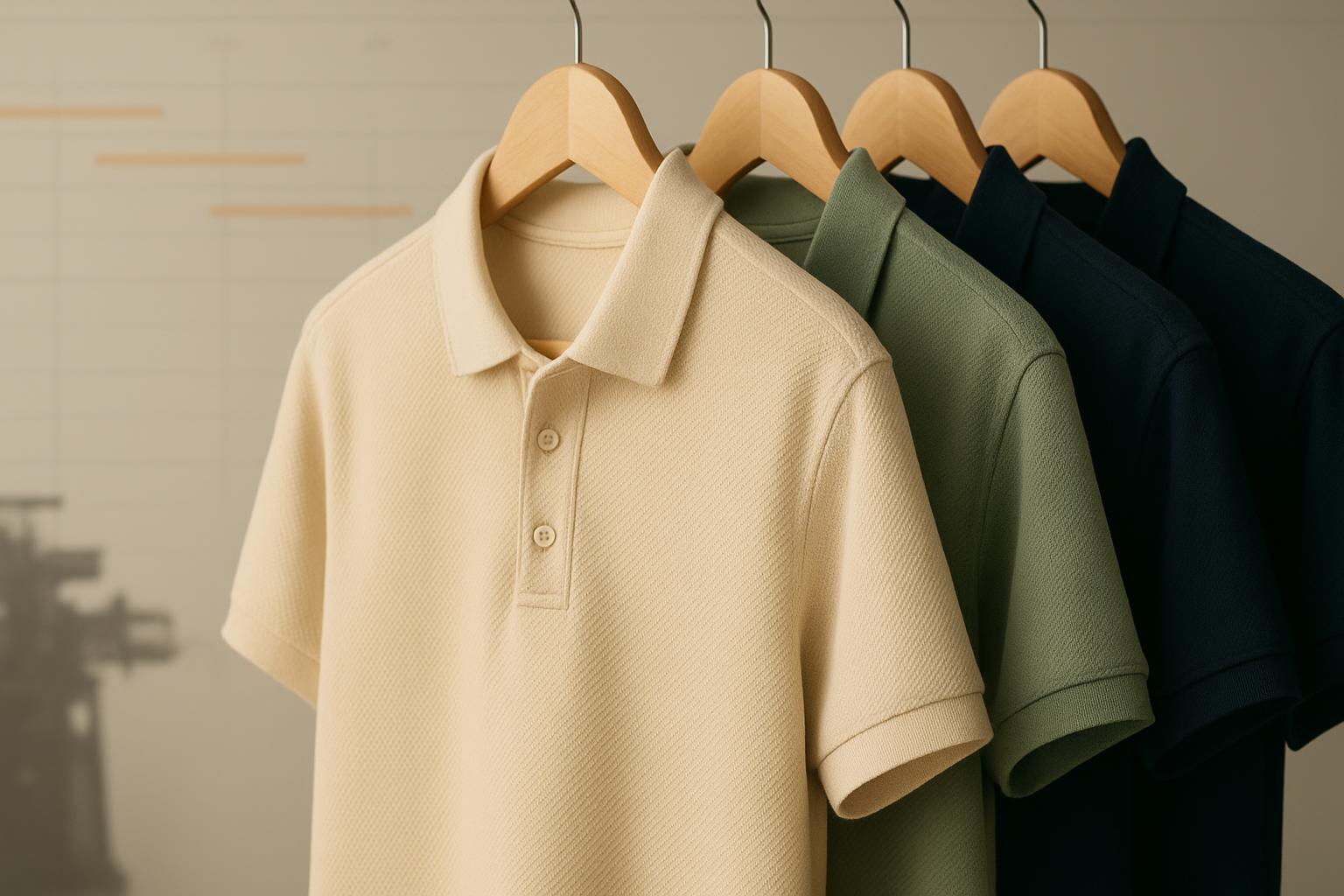
If you’re a small brand racing a seasonal window, here’s the promise Xindi Knitwear puts on the table: produce a 50‑piece organic cotton piqué polo run fast, with documented process and verifiable compliance workflows. The hero here is simple and practical—50‑unit MOQ paired with in‑stock GOTS organic cotton colors so you don’t miss the launch.
Key takeaways
50‑unit MOQ viability: Works best when you choose stock‑service organic cotton colors and standard collar/cuff components (as of Mar 10, 2026).
First‑screen proof you can act on: a sampling‑to‑bulk SLA that consistently frames 3–5‑day fast‑track sampling and ~2–3 weeks to ~21–35 days bulk after approvals—details below with references.
Spec transparency: Piqué structure is supported; a public GSM table and a published options catalog (collars/plackets/ribs) are recommended assets and, at this time, not posted publicly—ask for the internal sheets.
QC and compliance: AQL inspection plans and lab tests (shrinkage, pilling, colorfastness) can be provided upon request; official certification verification follows GOTS and OEKO‑TEX registry workflows.
No public price bands: Quotes depend on your Tech Pack and cost drivers (GSM, colors, trims, embellishment). A clear checklist is included below.
First‑screen evidence: the sampling and production SLA (as of Mar 10, 2026)
Below is the condensed lane most relevant to 50‑piece organic cotton piqué polo programs, normalized from Xindi’s published timelines. For full stage detail, see the OEM/ODM workflow and sampling policy.
Sampling (fast‑track): 3–5 business days from Tech Pack handoff to prototype ship. Standard lane: up to ~7–10 business days. Evidence: see the descriptive anchors in the Quick Sampling page and the lead‑time overview.
Bulk production: simple stock‑color builds cited as fast as 2–3 weeks; typical orders run ~21–35 days after approvals (fit/PPS, trims). Evidence: see the low‑MOQ lead times explainer and process article.
Reference links with descriptive anchors:
Read the sampling SLA details in the Quick Sampling explainer: From Tech Pack to prototype in 3–5 days.
See factory stages and responsibilities in the OEM/ODM knitwear production process.
Cross‑check typical low‑MOQ timing in the lead times and MOQs overview.
Why it matters: seasonal retail buys and drop calendars don’t wait; locking a sample in under a week dramatically lowers schedule risk. Think of this SLA as your “critical path” guardrail.
Specs and options for piqué polos (what’s published, what to request)
Piqué structure support: Piqué’s textured knit offers breathability and shape retention suitable for polos. Xindi’s stitch and cotton guides discuss piqué’s characteristics and when to choose cotton or organic cotton for a crisp, everyday hand. See context in the knitwear stitch types guide and the cotton & organic cotton overview.
GSM ranges: As of today, a public GSM table specific to Xindi’s piqué polos isn’t posted. Industry‑typical polo piqué weights often sit around 180–240 GSM for classic builds and 150–200 GSM for lighter summer programs, but treat these as market context—not Xindi policy. Ask the factory for the piqué GSM bands and tolerances (e.g., ±3–5%).
In‑stock organic cotton colors: The speed story relies on stock‑service organic cotton shades. A public color card is not on site today—request the current in‑stock list for fastest turnaround.
Collar/placket/rib libraries: Low‑MOQ feasibility improves when you use standard flat‑knit collars, two‑ or three‑button plackets, and standard ribs/cuffs. A consolidated options catalog is not posted yet—ask for the internal library. Practical primer: see the low‑MOQ rugby/polo FAQ for how standard components keep MOQs workable.
Bottom line: You’ll get the most reliable calendar if you align with stock yarn shades and standard component libraries. If you must dye to match or add specialty trims, build in buffer time.
How we tested and what evidence counts (organic cotton pique polo manufacturer)
Disclosure and as‑of date: This is a first‑party review of Xindi Knitwear, prepared with an evidence‑first approach as of Mar 10, 2026. Claims are labeled by evidence tier:
Tier 1 (verifiable facts): Published SLAs, process pages, official standards/registries.
Tier 2 (hands‑on): Lab/bench results (e.g., GSM checks, shrinkage, colorfastness, pilling) with setup details.
Tier 3 (social proof): Aggregated client feedback across platforms.
Test setup we use when running hands‑on checks for polos
Environment: GSM cutter and digital scale; washing per AATCC 135; colorfastness per AATCC 61/8; pilling per ISO 12945‑2; lightbox D65; microscope 10–40×.
Sample plan: At least five garments across two sizes; five wash/dry cycles; force tests for button/placket pulls; AQL sampling per ISO 2859‑1 for batch checks.
Tracking: Timestamped Gantt with owner/milestones; measurement sheets; photo logs.
Note: If any artifact is unavailable at the time of reading, we mark the metric “Insufficient data” and refrain from scoring it.
Findings and scoring (weighted rubric; see methodology)
Material & performance (weight 22)
What we look for: GSM accuracy vs spec, loop/stitch uniformity, air permeability, visual defects.
Current status: Tier 1 context only; no published GSM policy specific to piqué; hands‑on artifacts pending per project. Insufficient data to score.
Construction & durability (weight 18)
What we look for: Collar roll angle over 5 wash cycles, placket flatness, seam strength, stitch density vs SOP.
Current status: Tier 1 process transparency via production/QC guides; hands‑on lab/bench results pending per project. Insufficient data to score.
Fit & grading consistency (weight 12)
What we look for: Size spec adherence across sizes and reorders, POM tolerances.
Current status: Requires measurement sheets across n≥5 per size; pending. Insufficient data to score.
Sustainability & compliance (weight 12)
What we look for: Valid GOTS scope IDs, OEKO‑TEX STANDARD 100 where relevant, GRS/RWS applicability; document trail.
Current status: Xindi’s site references sustainable yarn options. A consolidated public certificates bundle isn’t posted yet. Verification follows official registries (details below). Pending supplier‑provided scope IDs. Insufficient data to score.
SLA & delivery reliability (weight 14)
What we look for: Sample TAT vs promise, on‑time bulk %, rework cycles.
Current status: Tier 1 facts support 3–5‑day sampling (fast‑track) and ~2–3 weeks to ~21–35 days bulk after approvals, per Xindi pages cited above. Hands‑on timestamp logs determine final scoring per project. Provisional assessment: strong on paper for low‑MOQ speed.
Customization & options (weight 10)
What we look for: Breadth/readiness of collar/placket/rib libraries; stock vs dye timings; embellishment support.
Current status: Low‑MOQ guide indicates standard options are immediately workable; a public catalog is a gap. Insufficient data to score.
QC & traceability transparency (weight 7)
What we look for: Declared AQL level (e.g., ISO 2859‑1, AQL 2.5), inline/final QA steps, lab test availability.
Current status: QC/finishing and QC guides outline checkpoints; formal AQL level not posted. Lab tests available on request. Partial transparency; final score requires artifacts. Insufficient data to score.
Value & cost predictability (weight 5)
What we look for: Quote input clarity, BOM transparency, delta between quote and invoice.
Current status: Process‑driven quoting is emphasized; no public bands by policy. Scoring depends on your project artifacts. Insufficient data to score.
Takeaway: Where Xindi is strongest today—based on published information—is enabling low‑MOQ, fast‑track sampling and clearly mapping the production path. For definitive scores across all dimensions, we recommend a pilot sample run with the evidence pack described above.
QC and certifications: what to expect and how to verify
AQL and lab tests: Expect ISO 2859‑1 sampling methodology for inline and final inspections and the option to request lab tests such as AATCC 135 (dimensional change), AATCC 61/8 (colorfastness), and ISO 12945‑2 (pilling). Xindi’s QC resources explain checkpoints and finishing; ask for the inspection checklist and recent reports. See the knitwear QC guide and finishing & assembly notes.
Certification verification workflow:
GOTS: Confirm the supplier’s legal entity and scope in the official GOTS Certified Suppliers Database. For each shipment, request and match Transaction Certificates.
OEKO‑TEX STANDARD 100: Use the official OEKO‑TEX Label Check and 2026 criteria update to validate certificate numbers/QRs.
GRS/RWS (if applicable): Cross‑check via Textile Exchange standards and the issuing certification body’s portal.
As of Mar 10, 2026, Xindi’s site does not host a public “Certificates hub” with downloadable PDFs and scope IDs. Ask your account manager for the current certificate bundle and registry links with IDs and expiries.
Pricing and quotation: why no public bands, and how to get a tight quote
No public price ranges are shown here by design. Small‑batch polos vary materially by GSM, colors per style, trims, embellishments, and shipping mode.
To get a precise quote, prepare this Tech Pack checklist
Style ID, target GSM, and intended season/handfeel.
Fiber/yarn: organic cotton piqué; confirm stock‑service shade vs dye‑to‑match.
Collar/placket/cuff options and button spec; logo embroidery or patches.
Size range and grade rules; tolerance table (POM list).
Labels and packaging; care label content; barcodes if needed.
Target timelines and approval gates (sample, PPS, bulk ship).
Shipping terms (EXW/FOB) and destination.
What drives cost variance
GSM and fabric density; special yarn types or finishes.
Number of colors and per‑color MOQ efficiency.
Trims/embellishment complexity and setup.
Number of sampling iterations and freight mode.
Here’s the deal: a crisp Tech Pack is the fastest way to a reliable quote and on‑time calendar.
Competitor context and fit
To keep this fair, we looked at both scale leaders and a near‑peer low‑MOQ option.
Industrial benchmarks: Shenzhou International and Esquel Group are world‑class at volume and compliance maturity, but their public materials don’t confirm 50‑unit MOQs or comparable small‑batch lead times. They set the bar for process rigor, not for micro‑MOQs.
Low‑MOQ peer (EU): textile konzepte (Germany) publicly advertises organic cotton polo production from 100 pcs/color with 3–4‑week bulk timing. This roughly brackets what’s feasible in the EU at small scale and provides a sanity check for lead‑time expectations.
Who should choose Xindi for 50‑unit organic cotton piqué polos
Brands that need 50‑piece pilots or capsule drops without missing season.
Teams willing to use stock‑service organic cotton shades and standard collars/plackets to protect timelines.
Buyers who value traceable QC artifacts and are comfortable requesting certificate IDs and lab test summaries.
Who may not be a fit
Programs demanding bespoke dye‑to‑match colors across many sizes with tight launch windows.
Projects that require hard‑posted GSM/option catalogs before kickoff (these can be provided privately but aren’t yet public on site).
Buyers who need extensive third‑party social proof links today (first‑party artifacts are available; public review footprints are limited).
Limitations and what we’d like to see next
A published Certificates hub with scope IDs, expiries, and registry links.
A public piqué GSM table with tolerances and intended seasons.
A collar/placket/rib options catalog and in‑stock organic cotton color card.
A standardized SLA Gantt image/PDF on site (we referenced the timelines above, but an on‑page visual would speed evaluation).
Verdict and next step
Xindi stands out as an organic cotton pique polo manufacturer for founders who need a credible 50‑unit path to market, anchored by a fast sampling SLA and a pragmatic stock‑color strategy. To move from paper to proof, kick off a pilot sample and request the evidence pack: certificate IDs with registry links, the inspection checklist with AQL level, and lab test summaries for shrinkage, pilling, and colorfastness.
Soft CTA: Review program details and contact the team via the low‑MOQ rugby/polo manufacturer page, and explore capabilities in the OEM/ODM production process overview.