Sweater Manufacturing Guide
Sweater manufacturing is one of the most technically demanding categories in the apparel industry. Unlike woven garments that rely on cutting and stitching, sweaters are constructed through yarn engineering, knitting structures, machine programming, and highly skilled linking and finishing processes.
This guide provides a complete, factory-level explanation of how sweaters are designed, developed, knitted, assembled, and quality-controlled in a modern OEM/ODM knitwear factory.

Types of Sweaters
Sweaters come in diverse silhouettes and stitch constructions. Understanding each type helps brands choose the right pattern, yarn, gauge, and production method.
Crewneck / V-Neck / Turtleneck / Mock Neck
Crewneck Sweater
A timeless, circular-rib neckline suitable for both men and women. Crewnecks typically use 1×1 rib, 2×2 rib, or self-fabric binding to maintain elasticity.
Best for: Casualwear, uniforms, corporate knitwear
Technical notes: Neck opening stability is controlled by rib height and tension
V-Neck Sweater
Features a shaped neckline formed through fully fashioned decreases on the machine.
Best for: Business wear, school uniforms
Technical notes: Linking accuracy at the V-point determines symmetry
Turtleneck Sweater
A high collar folded over once or twice, knitted in rib to ensure proper recovery.
Best for: Winter sweaters, premium wool pieces
Technical notes: Yarn must balance warmth and elasticity
Mock Neck Sweater
Shorter than a turtleneck with a modern, minimal aesthetic.
Best for: Lightweight merino, fashion basics
Technical notes: Stand collar requires controlled tension for shape retention
Chunky / Lightweight / Oversized
Chunky Sweater (Low-Gauge 1.5G–3G)
Heavy-weight, warm, textured products commonly made from wool, acrylic blends, or roving yarns.
Factory requirements: Low-gauge machines (1.5G/3G), careful anti-pilling treatment
Lightweight Sweater (12G–16G)
A fine, smooth sweater suitable for spring/fall and premium retail markets.
Factory requirements: High-gauge machines (12G/14G/16G), strict stitch density control
Oversized Sweater
Dropped shoulders, relaxed fit, and extended body width.
Factory requirements: Accurate flat measurement + controlled shrinkage to maintain proportions
Yarn Selection for Sweaters
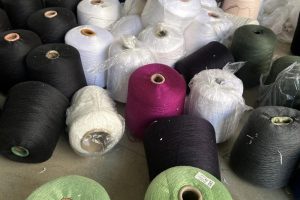
Yarn dictates the sweater’s feel, performance, warmth, durability, and price point. Selecting the right yarn ensures product stability throughout production and consumer use.
Wool & Merino Wool
Wool is prized for insulation and breathability, while Merino offers superior softness, moisture regulation, and anti-odor properties.
Best gauges: 5G–14G
Key finishing: Wool washing, anti-pilling enzyme wash
EEAT factors: RWS-certified wool is preferred by global brands
Cotton
Soft, breathable, and ideal for spring/summer sweaters.
Best gauges: 7G–16G
Technical notes: Higher shrinkage; requires pre-shrunk yarn or controlled relaxation finish
Sustainability: Organic cotton (GOTS) increasingly demanded
Synthetic & Blended Yarns
Includes acrylic, polyamide (nylon), polyester, viscose, and modal.
Benefits: Cost efficiency, colorfastness, durability
Applications: Fast fashion, children’s sweaters, textured stitches
Blend examples: Acrylic/nylon for chunky cable; viscose/nylon/poly for silky drapes
Eco-Friendly & Recycled Yarns
Growing category for responsible fashion sourcing:
Recycled polyester (GRS)
Recycled cotton
Bamboo viscose
Biodegradable Tencel blends
Sorona® plant-based fibers
These are used extensively in EU market sourcing for low-impact knitwear.
How Sweaters Are Made (Factory Workflow)
Modern sweater production follows a systematic OEM/ODM workflow integrating machine programming, knitting, linking, washing, and quality control.
Step 1 — Knitting
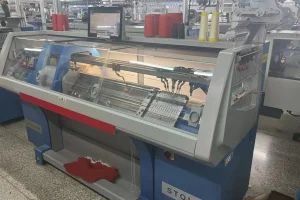
Panels are knitted on computerized flat knitting machines (STOLL, Shima Seiki, or Cixing).
Inputs: Yarn, gauge, stitch design, machine program
Outputs: Front panel, back panel, sleeves, collars, rib trims
Quality requirements: Even tension, no loops dropped, clean jacquard floats
Step 2 — Fully Fashioned Shaping
“Fully fashioned” means shaping is done on the machine, not cut from fabric.
Benefits: Cleaner fit, reduced waste, premium appearance
Techniques: Narrowing, widening, fashioned armholes, neck shaping
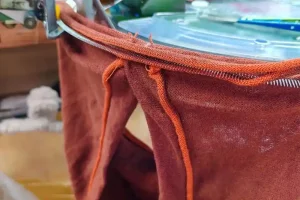
Step 3 — Linking (Assembly)
Linking is the most labor-intensive and skill-critical step.
Tools: 10G–14G linking machines depending on stitch density
Focus areas:
Neckline joining precision
Armhole seam smoothness
Rib-to-body tension balance
Common issues prevented: Misalignment, loose seams, seam breakage
Step 4 — Washing & Blocking (Finishing)
The garment undergoes washing to relax fibers, remove spinning oil, and stabilize shrinkage.
Types of wash: Softener wash, enzyme wash, wool wash
Key purpose:
Control shrinkage
Enhance touch & drape
Fix dimensions
Blocking: Sweater is shaped on boards to final size
Step 5 — Final Quality Control + Packing
QC specialists check:
Measurements (tolerance ± 1–1.5 cm depending on brand standard)
Pilling resistance
Color consistency
Panel symmetry
Strong seams and neckline stability
Sweaters are then pressed, folded, poly-bagged, and packed in export cartons.
Sweater Manufacturing Techniques
Sweaters achieve their appearance through structural knitting techniques. Below are the most common factory-applied methods.
Cable Knitting
Interlacing yarns to create rope-like textures.
Best gauges: 3G–7G
Engineering considerations: Cable tension must be balanced to avoid panel skewing
Jacquard
Multi-color patterns created by carrying yarn floats on the reverse side.
Best gauges: 3G–14G
Technical notes: Float length control prevents snagging and weight imbalance
Intarsia
Color-blocked patterns with no floats on the back.
Use: High-end fashion sweaters
Production: Requires multi-feeder machines + highly skilled programming
Pointelle
Eyelet or lace-like holes created through tuck and transfer stitches.
Best gauges: 12G–16G
Sensitive to tension; requires careful washing to preserve shape
Waffle
A 3D honeycomb-like structure providing warmth and volume.
Best gauges: 5G–12G
Thick yarn demands controlled feeding to avoid panel distortion
Rib
Elastic structure created by alternating knit and purl stitches.
Functions: Hem, cuff, neckline, full-body rib sweaters
Rib types: 1×1, 2×2, 3×3, half-cardigan, full-cardigan
Common Production Issues (and How to Prevent Them)
Sweater manufacturing can face predictable challenges. Top factories use standardized controls to prevent defects.
Shrinkage
Caused by yarn relaxation after washing.
Factory solutions:
Pre-shrunk yarn
Wash test before bulk
Tension control
Precise blocking
Shedding / Pilling
Common with wool, acrylic, and brushed yarns.
Factory solutions:
Anti-pilling finishes
Fiber length management
Lower surface friction yarns
Pilling test (Martindale) before production
Measurement Inconsistency
Knitted garments naturally stretch and recover; controlling this is a science.
Factory solutions:
Strict washing formula
Blocking boards
Dimensional stability SOP
Experienced QC measurement teams
Needle Holes (Drop Stitches / Broken Loops)
A technical issue caused by machine settings or worn needles.
Factory solutions:
Daily machine calibration
Preventive replacement of needles
Real-time monitoring of knitting program
FAQs
The full workflow for OEM sweater manufacturing process includes yarn sourcing, knitting on computerized flat-knitting machines, fully fashioned shaping, manual or machine linking, industrial washing for shrinkage control, blocking to achieve final measurements, and multi-stage QC before export packing. Each stage must follow strict tension, gauge, and dimensional-stability standards to ensure consistent bulk production for global apparel brands.
Selecting yarn for premium knitted sweater production depends on the target season, price point, fabric performance, and sustainability requirements. Merino wool or cashmere blends work best for luxury winterwear; cotton and viscose blends are ideal for lightweight transitional sweaters; recycled polyester or GRS acrylic blends are preferred for cost-efficient mass production. A professional factory will recommend yarns based on gauge, stitch structure, and expected shrinkage.
Sweater sizing accuracy in bulk knitwear production is influenced by knitting tension, yarn relaxation, washing formulas, and blocking techniques. Factories must apply standardized measurement boards, pre-wash testing, and controlled finishing to keep size tolerance within ±1–1.5 cm. High variability often results from inconsistent yarn lots or improper post-wash handling.
Common defects in factory-made sweaters include shrinkage, pilling, shedding, twisted panels, and needle holes. Preventive methods include pre-shrunk yarn, anti-pilling treatments, balanced machine programming, scheduled needle replacement, real-time knitting inspection, and standardized washing processes. A strong QC system checks panels before linking and again after finishing.
Knitting techniques influence the production cost of custom knitted sweaters. Cable stitches use more yarn and require slower machine speed; jacquard increases yarn consumption and needs careful float control; intarsia demands advanced programming and skilled operators, making it the most labor-intensive. Requesting a tech pack with gauge, yarn count, and stitch diagram helps factories estimate accurate costing and lead times.