
Donegal sweaters are chosen as much for feel as for the look of their colored flecks. Comfort here isn’t one thing—it’s a blend of next-to-skin softness (itch threshold), early‑life pilling behavior, warmth-to-weight versus cozy bulk, and how crisply those flecks read after the yarn blooms. This comparison focuses on woollen‑spun Donegal-style yarns in lambswool and merino.
Key takeaways
Merino typically wins for next-to-skin comfort and warmth-to-weight; lambswool leans into cozy loft and a heritage halo.
Pilling is construction-led: twist, ply, spin system, and finish can flip outcomes more than the fiber label.
For sharp Donegal fleck definition, a smoother base (often tighter, plied merino) keeps edges cleaner after wash; lambswool’s bloom can “fog” flecks pleasantly for a rustic look.
Verify with matched swatches: same gauge, ply, and nep density; run a short wear test and one cold handwash before committing.
TL;DR: Which should you pick?
Best for sensitive-skin or neckline comfort: Merino Donegal around 18.5–20.5 μm with a low coarse‑fiber tail. Finer micron and higher crimp density usually feel gentler and recover shape better.
Best for cozy, traditional loft: Lambswool Donegal in woollen‑spun, lower‑twist constructions blooms into a warm, rustic hand with a classic halo.
Best for crisp fleck storytelling: Merino Donegal in a tighter, plied construction tends to preserve fleck edge clarity after washing; confirm with macro photos of matched swatches.
Lambswool vs merino: side-by-side at a glance
Dimension | Lambswool (Donegal woollen-spun) | Merino (Donegal woollen-spun options) |
|---|---|---|
Typical micron band (apparel) | ~19–24 μm; broader distribution; higher coarse-fiber tail risk | ~18.5–21.5 μm; narrower distribution; lower coarse-fiber tail |
Handfeel / itch threshold | Rustic; mild prickle possible at neck for sensitive users | Softer next-to-skin; better neckline tolerance for most |
Pilling tendency (early life) | Higher if low twist/singles; improves with plied/higher twist | Often lower in tighter plied yarns; construction can still dominate |
Warmth-to-weight | Good via loft; heavier for same warmth | Strong; finer fibers + crimp = efficient insulation per GSM |
Absolute loft / cozy feel | Excellent bloom/halo after wash | Moderate bloom; cleaner surface |
Fleck (nep) clarity after wash | Halo can soften/blur fleck edges (pleasantly rustic) | Smoother surface keeps fleck edges crisper |
Shape retention | Good; can grow if loose spin/gauge | Very good; crimp aids recovery and fit stability |
Care tolerance | Non‑superwash needs gentler care; superwash improves tolerance | Similar; superwash status matters more than fiber label |
Sustainability schemes available | RWS, OEKO‑TEX, GRS, GOTS depend on supply line | Same; certification options supplier‑dependent |
Cost/availability (qualitative) | Often more cost‑accessible at small volumes | Often pricier for comparable specs |
Footnotes: pilling uses ISO 12945‑2 visual grading language (1–5). Abrasion context aligns to Martindale (ISO 12947/ASTM D4966). Construction and finishing can override fiber‑level expectations; verify on matched swatches.
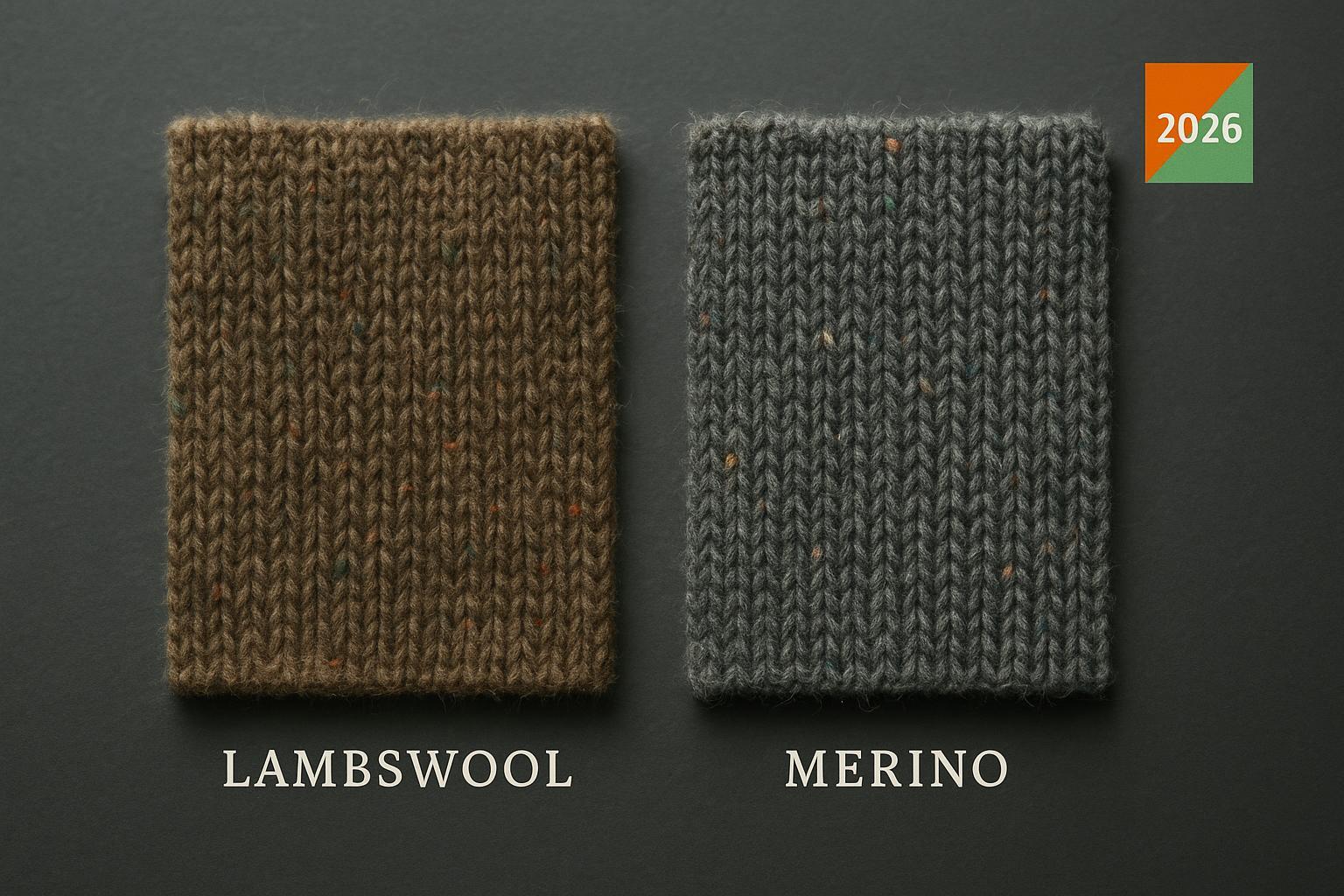
Caption: Both swatches knit to ~10GG equivalent, 2‑ply, similar nep density; left lambswool shows a slightly fuzzier halo and softened fleck edges, right merino appears tighter with crisper flecks.
Methods and testing notes (how to verify before you commit)
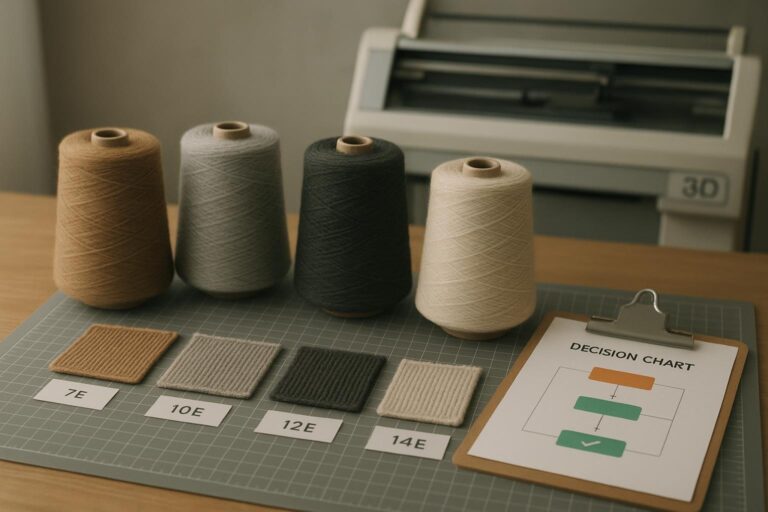
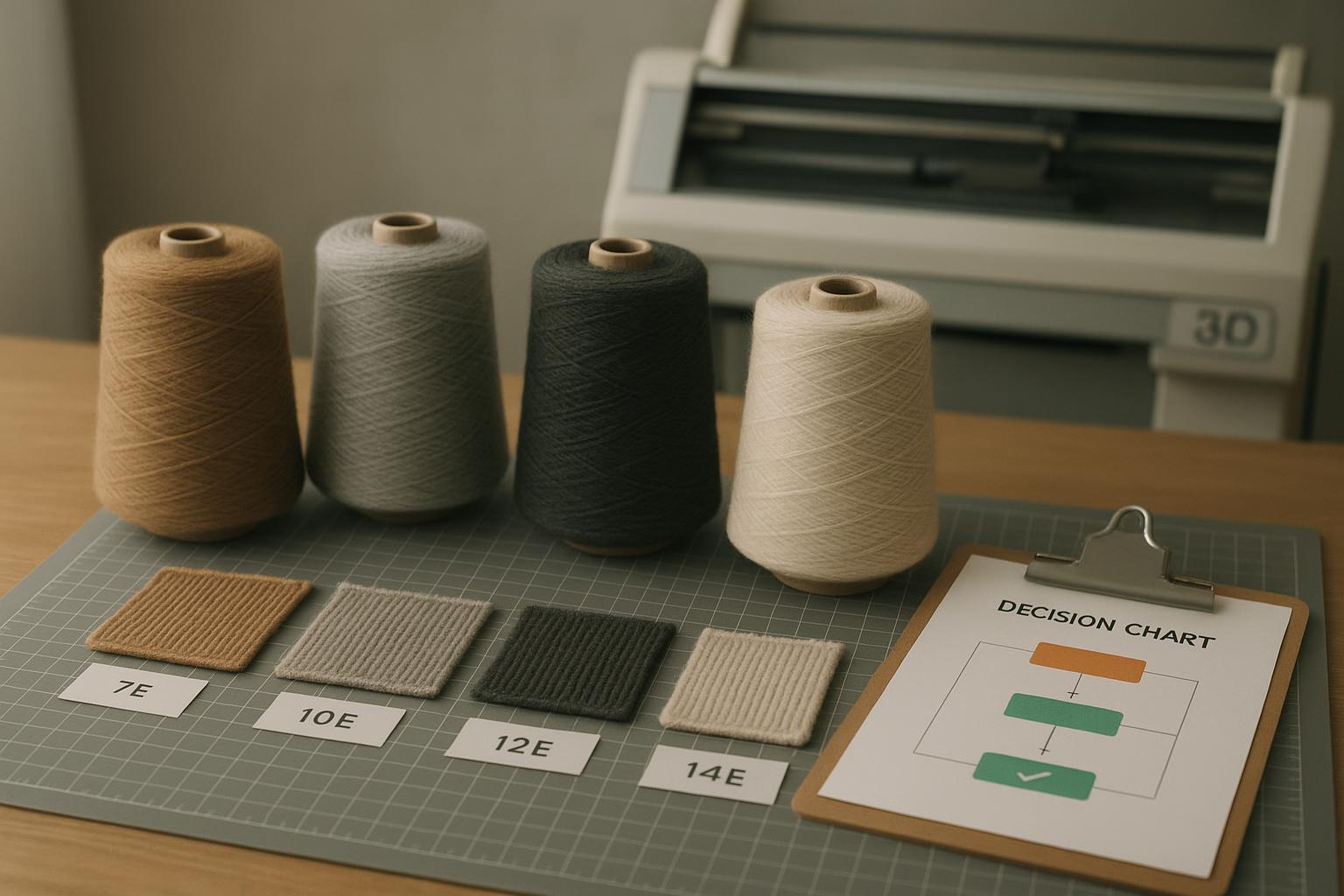
Swatch protocol: Knit matched-gauge swatches (e.g., 7–12GG sweater gauge equivalents), same ply and similar twist; record GSM. Photograph macros in consistent light; count visible flecks per 10 cm² and rate edge clarity pre/post wash.
Wear‑test diary (light): Over 7 days, note neckline/inner forearm comfort at 30/120/180 minutes and observe pilling in cuffs/underarms/strap zones. Map observations to ISO 12945‑2 grades (5=no change; 1=very severe pilling). See the standard’s grading principles in the sample overview from ISO 12945‑2:2020 via a standards publisher.
Care test: One cold‑water handwash (no softener), flat dry; record dimensional change and loft/halo change; re‑shoot macro images.
Abrasion context: Treat Martindale (ISO 12947 / ASTM D4966) as a durability framework, not a consumer‑visible pass/fail. Use supplier cycle data if available for context only.
According to the clinical review in Acta Dermato‑Venereologica, prickliness largely arises from coarse fibers above ~30–32 μm rather than allergy; minimizing this coarse‑fiber fraction improves comfort for next‑to‑skin wear. See the medical journal’s explanation in the 2017 article Debunking the Myth of Wool Allergy for the comfort mechanism. Link below in References.
Fiber science that predicts feel (micron, coarse tail, and “itch”)
Fine fibers bend more easily and press on the skin with less force. That’s why average micron and the coarse‑fiber tail (the percent of fibers above ~30–32 μm) matter. Commercial merino sweater yarns commonly target roughly 18.5–21 μm, keeping the coarse tail low and improving neckline tolerance for most wearers. Industry notes and market distribution reports document this trend, while lambswool spans a wider micron range depending on breed and sourcing, which can raise the chance of prickle in the neck for sensitive users. For deeper background on micron ranges and itch thresholds in knitwear, see our concise explainer in the Wool / Merino Yarn Guide.
Evidence anchors: clinical mechanism for prickle (coarse fibers), micron targets for comfort in apparel merino, and distribution context from reputable industry bodies.
Pilling: label vs construction (what actually moves the needle)
Early‑life pilling is driven by surface fiber mobility. Woollen‑spun yarns with low twist or singles constructions have more free ends at the surface; those ends entangle under friction into pills. Plied yarns and higher twist levels trap fibers more effectively, reducing pilling—though very high twist can stiffen hand. Visual assessments use ISO 12945‑2’s 1–5 scale; pair those references with your 7‑day wear diary for a grounded read. If pilling risk is mission‑critical (backpack straps, cuffs), specify plied constructions and, where appropriate, an anti‑pilling finish—then verify on swatches. For a broader look at finish options and construction trade‑offs, review our Wool Blends & Performance Blends note and the Sweater Manufacturing Guide.
Warmth, weight, and shape: crimp vs cozy loft
Merino’s fine fibers carry higher crimp density, which traps more air per unit mass, giving you better warmth‑to‑weight and springy recovery. That often means a lighter sweater at a given comfort level and better shape retention at the cuffs and hem. Lambswool, by contrast, excels in absolute loft and that “hug‑me” cozy feel—especially in woollen‑spun, lower‑twist yarns that bloom after washing. Choose based on whether your collection needs packable lightness and recovery (lean merino) or a traditional bulk‑warm silhouette (lean lambswool).
Fleck definition: keeping the Donegal story sharp (or intentionally soft)
Donegal’s visual identity depends on colored neps standing out against the base. A smoother, tighter, plied construction—often on a finer merino base—tends to keep fleck edges crisp after wash. Lambswool’s natural halo and bloom can soften those edges, which many brands prefer for a vintage, weathered look. The most reliable way to decide is to shoot macro photos of matched swatches pre‑ and post‑wash and compare fleck counts and edge clarity side by side.
Scenario picks and a quick decision path
Here’s a compact way to decide.
If next‑to‑skin comfort is the priority → Choose merino Donegal at ~18.5–20.5 μm, plied, tighter twist.
If cozy, rustic loft defines your brand → Choose lambswool Donegal, woollen‑spun, modest twist, accept a soft halo.
If early pilling is your top fear → Prioritize construction (plied, higher twist) and consider anti‑pilling finish; fine merino bases often grade better early on ISO 12945‑2.
If crisp fleck storytelling matters → Favor smoother bases (often merino, tighter plies); verify with macro photos after wash.
If unit cost and small MOQs matter most → Lambswool lines are often more cost‑accessible; confirm with current supplier quotes.
Sampling SOP: A/B swatches that answer the real questions
Request matched-gauge swatches: same gauge, ply, and similar twist; note yarn count and nep ratio.
Capture macro photos under consistent light; count flecks per 10 cm²; record GSM.
Run a 7‑day wear diary plus one cold handwash; grade pilling vs ISO 12945‑2 reference images.
Compare stretch/recovery (e.g., 20% stretch for 30s on cuffs) and fleck edge clarity; adjust twist/ply or finishing if pills or blur are unacceptable.
Disclosure (neutral sidebar): Xindi Knitwear (Knitwear.io) is our product. For teams that want to reduce decision risk, Xindi can source both lambswool and merino Donegal yarns with documentation of micron ranges and available certifications, typically turns around matched A/B swatches in 3–7 days depending on yarn availability, and offers options (twist/ply/finish) to reduce early‑life pilling. See process context in our guides on Custom Yarn Solutions and Sweater Manufacturing.
FAQs
Which wool is best for a Donegal sweater for sensitive skin?
Merino usually. Aim for ~18.5–20.5 μm with a low coarse‑fiber tail and choose a plied, tighter‑twist construction. The clinical literature indicates prickle is driven by coarse fibers over ~30–32 μm; keeping that fraction low improves comfort for most wearers.
Does merino or lambswool pill more in Donegal sweaters?
It depends on construction. Woollen‑spun singles or low‑twist yarns pill sooner regardless of label. Plied, higher‑twist merino bases often show better early ISO 12945‑2 grades, but you can improve lambswool outcomes with plied constructions and appropriate finishing—verify on matched swatches.
How does micron affect itchiness in wool sweaters?
Finer fibers bend with less force and feel gentler; the proportion over ~30–32 μm is the main prickle driver. Commercial merino sweater yarns commonly sit around 18.5–21 μm to improve neckline tolerance for most users.
Merino vs lambswool: which gives better Donegal fleck clarity?
Smoother bases (often tighter, plied merino) tend to keep fleck edges sharper after wash. Lambswool’s halo softens edges for a pleasing, vintage effect. Choose based on the visual brief and confirm with matched macro photos.
What about superwash—does it stop pilling and shrinkage?
Superwash improves home‑care tolerance and reduces felting risk. Pilling outcomes are mixed and remain construction‑dependent. Use mild detergent, skip softeners, and flat dry per Woolmark guidance.
References and further reading
Clinical mechanism for prickle and coarse‑fiber threshold: see the 2017 paper Debunking the Myth of Wool Allergy in Acta Dermato‑Venereologica explaining why fibers above ~30–32 μm drive itch in most cases. Acta Dermato‑Venereologica, 2017
Pilling test language: grading scale (1–5) and reporting elements summarized from the standard. See the sample overview for ISO 12945‑2:2020 via a standards publisher. ISO 12945‑2:2020 pilling (modified Martindale)
Abrasion framework context (Martindale cycles): overview of ISO 12947 / ASTM D4966 principles for apparel knits. Martindale abrasion overview (ISO 12947)
Warmth‑to‑weight and crimp/elasticity in merino: summary notes from an industry body explaining why finer merino traps more air and recovers better. IWTO Wool Notes (2024)
Evidence that merino‑based Donegal yarns exist in the market (e.g., “Soft Donegal” 100% merino tweed yarns): see representative product pages. Studio Donegal “Soft Donegal” (examples)
Further reading on process and planning (house resources):
Micron ranges, itch thresholds, and yarn choices for knitwear are summarized in our guide. Wool / Merino Yarn Guide
Sampling and A/B swatches workflow for custom yarns. Custom Yarn Solutions
Gauge, GSM planning, and finish options in knitwear development. Sweater Manufacturing Guide
Pilling mitigation through blend/finish choices. Wool Blends & Performance Blends