
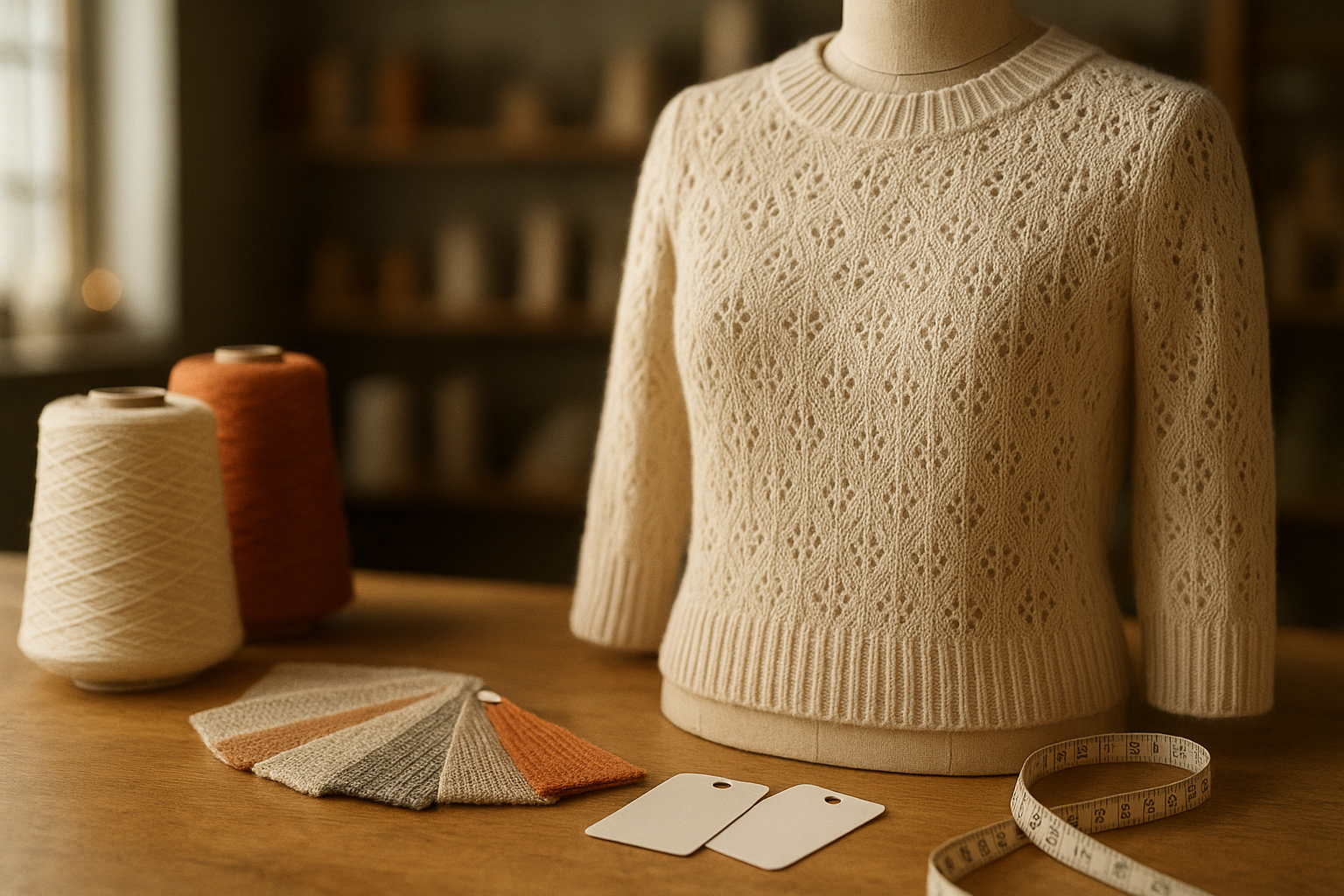
If you’re an indie label planning a pointelle sweater, you’re not just picking a factory—you’re picking how much risk you’re willing to carry. Pointelle’s openwork structure looks effortless on a product page, but it’s unforgiving in sampling and even less forgiving in bulk: tension drift shows up as distorted holes, snagging becomes returns, and finishing changes fit faster than your spec sheet can keep up.
Verdict: If your priority is low MOQ, fast sweater sampling, and measurable QC (not vague promises), Xindi Knitwear is a strong contender—especially when you run the project like a controlled pilot with clear tests and tolerances.
Who this low MOQ pointelle sweater manufacturer is a fit for (and who it isn’t)
Strong fit if you:
Need low MOQs starting from 50 units to test a new silhouette or stitch idea without overbuying inventory.
Care about sampling speed because you’re planning around drop dates and wholesale appointments.
Want QC to be stated in testable numbers (pilling, fit tolerances, AQL)—not “we check everything.”
Are making fine-gauge pointelle and need tight control over tension + finishing so the lacework stays crisp after washing.
Not the best fit if you:
Only want the cheapest possible unit cost and don’t want to pay for sampling discipline, lab testing, or measurement control.
Don’t have (or won’t create) a clear tech pack / measurement spec—pointelle punishes “we’ll adjust later.”
Require a long list of publicly named US brand references (many indie brands require confidentiality).
Key Takeaway: A good pointelle partner is the one who can tell you what will fail—and how they’ll detect it before you ship.
A quick definition: pointelle sweater manufacturing (and why it goes wrong)
Pointelle is a knit structure that uses transfer and tuck-style stitch programming to create a repeated pattern of small holes (eyelets). You’re intentionally building “negative space” into the fabric—so small changes show up as big visual defects.
In production, pointelle fails in predictable ways:
Distorted holes / uneven pattern when stitch tension drifts or density isn’t locked
Laddering (runs) when a stitch drops in the openwork area
Snagging when floats or hole edges catch during wear
Fit drift after finishing when wash/blocking isn’t tuned for the yarn and gauge
Knitwear.io’s own technical guidance flags pointelle as best suited to 12G–16G, and notes it’s sensitive to tension and requires careful washing to preserve shape (see the Sweater manufacturing guide).
The 6 criteria I’d use to “review” a pointelle manufacturer (with proof, not vibes)
You can ignore most marketing copy and score a supplier on six things that directly impact sellable units (and returns).
1) Sampling speed plus loop control
A fast first sample doesn’t matter if you lose two weeks in revision cycles. The sampling KPI you want is speed and fewer loops. The published target here is 3–5 day sampling from a tech pack or photos—use that as a starting hypothesis, then validate what it means for your style.
Practical questions to ask:
What counts as “sampling” (first proto vs PPS)?
What inputs reduce rework (stitch chart, repeat size, graded spec, wash instructions)?
What are the common revision triggers in pointelle (hole distortion, neckline growth, sleeve length drift post-wash)?
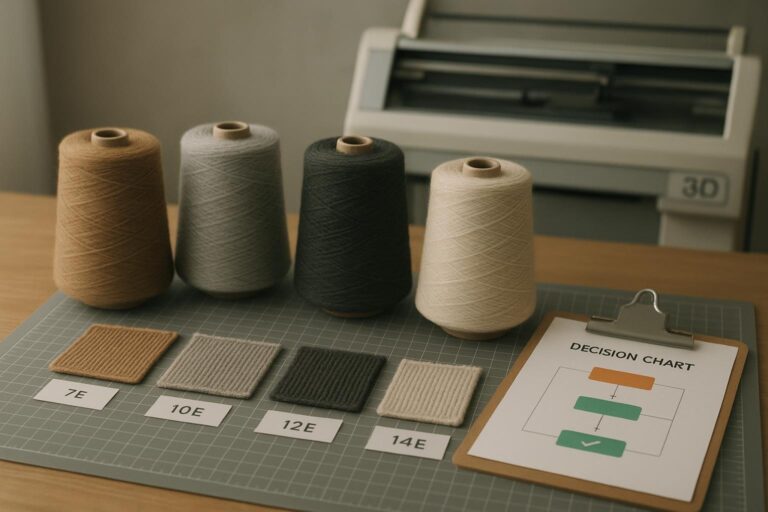
2) Fine-gauge reality: 12G–16G isn’t just a detail
For pointelle, gauge selection is the difference between “delicate” and “fragile.” A good factory can explain—in plain language—how gauge + yarn + stitch density affect:
hole clarity (too loose = sloppy; too tight = pattern loses definition)
snag risk
post-wash dimensional change
What to request with your quote:
Recommended gauge range for your design (often 12G–16G for pointelle)
Yarn options that reduce laddering/snags
Stitch density targets and what they’ll adjust first if fit shifts after wash
3) A real QC plan: knitwear QC pilling test AQL + fit tolerances
This is where a lot of suppliers lose trust: they say “QC is strict,” but can’t tell you what is measured, how it is tested, and what counts as pass/fail.
Knitwear.io publishes a QC guarantee page that is unusually measurable for knitwear. It includes examples such as:
Pilling: ICI Pilling Box testing at 7,200 tumbles with acceptance ≥ 4/5 on a photographic 1–5 scale
Fit tolerance windows: published ±cm ranges by silhouette and gauge/weight band
Pre-shipment inspection: AQL sampling aligned with ISO 2859-1 / ANSI Z1.4 (General Level II) and typical AQL levels
You can review those specifics directly in Knitwear quality guarantees: fit tolerance & pilling.
Why this matters for pointelle: openwork makes defects easier to see—dropped stitches, distortion, and inconsistent tension read as pattern errors, not “minor imperfections.”
4) Bulk repeatability (sample-to-bulk consistency)
Most indie brands don’t fail because the sample is bad. They fail because the sample is good and the bulk doesn’t match it. For pointelle, repeatability requires controls around:
yarn lot and shade continuity
tension settings and machine maintenance
finishing formula consistency (wash + blocking)
Ask what the factory does to keep the bulk aligned with the approved PPS. If the answer is only “we check,” push for the checkpoints and records.
5) Communication that reduces ambiguity (especially for openwork)
Pointelle has more “interpretation points” than a plain knit. If you’re a small team, the easiest way to lose time is vague feedback like “make it more delicate.”
What works better:
one reference photo for hole size and spacing
one tolerance table for key POMs
one agreed wash method for testing
If you can get those aligned early, you shorten the loop count even when you change yarns or adjust density.
6) Capability breadth without overclaiming
A supplier can be a great pointelle partner without being the perfect fit for every construction. If you’re evaluating a WHOLEGARMENT knitwear manufacturer for seamless styles, treat it like a separate checkpoint: ask what knit constructions are best suited to seamless vs linked panels, and what that means for lead time and finishing.
The credibility signal isn’t “yes we can”—it’s a clear recommendation with trade-offs.
What proof to request (so your review is decision-grade)
If you want to publish a real product-review style evaluation of a manufacturer, use proof you can show a reader without breaking confidentiality. Here’s a clean checklist:
A timestamped sampling timeline (what was provided, when feedback was sent, when the next sample shipped)
A yarn and gauge rationale tied to your pointelle repeat
Before/after wash measurements and what “in tolerance” means
A pilling test report (method + cycles/tumbles + grade)
AQL inspection summary (lot size, level, outcomes, defect categories)
Macro photos of hole uniformity and linking/finishing quality
Pro Tip: For indie brands, “QC transparency” is as much about reporting as it is about inspection. Ask for a one-page QC summary per style: method, cycles, grade, and measurement deltas after wash.
A practical workflow that keeps pointelle projects on schedule
This is the lightweight workflow that matches how small teams actually work—and prevents the most common pointelle failure modes:
Lock your non-negotiables: size spec + measurement tolerance, yarn composition constraints, and a reference photo of the hole size you want.
Start with a test panel: same yarn + gauge + repeat. Validate hole clarity and ladder resistance before knitting full panels.
Run a wash/block checkpoint: measure before and after. If fit shifts, adjust density before PPS.
PPS becomes the truth sample: approve based on measurable QC items, not just “looks good.”
Bulk with an AQL plan: decide defect thresholds and how issues escalate if something fails.
For finishing steps that often make or break sweater quality, see the Knitwear finishing & assembly technical guide.
What a ‘good’ sample package looks like for pointelle
If you’re serious about avoiding returns, ask for a sample package that makes quality measurable—not just visually appealing.
Here’s a practical, publishable checklist you can include in a product-review style post without exposing confidential buyer data:
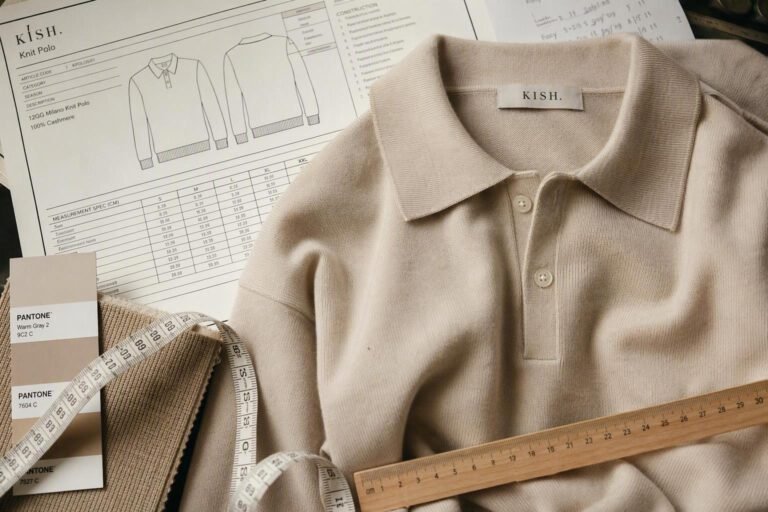
Spec snapshot: one-page measurement table with tolerances for key POMs (chest, body length, sleeve length, shoulder).
Construction notes: gauge, stitch density, and the pointelle repeat size (even if you don’t publish the exact program).
Finishing record: wash + blocking method used for testing (water temp, agitation level, dry method) and whether measurements are taken post-blocking.
Appearance standards: 3–5 close-up photos that define “acceptable” hole uniformity, seam/linking quality, and neckline stability.
QC evidence: at minimum, pilling method + cycles/tumbles + grade, plus an AQL summary for the bulk run.
Why this matters: pointelle defects are often pattern defects. A single dropped stitch can read like a design flaw. The fastest way to prevent that is aligning on what gets measured and what gets rejected.
The pointelle cost drivers indie brands should actually care about
Low MOQ doesn’t automatically mean “cheap.” In pointelle, the unit cost swings are usually driven by a few controllable factors:
Yarn choice and availability: certain blends look great in openwork but pill or snag more easily; small-lot booking can raise costs.
Gauge and knitting time: fine-gauge openwork can increase machine time; tighter density increases yarn consumption.
Sampling iterations: the more “interpretation” the design requires (hole size, drape, neckline growth control), the more loops you’ll run.
Finishing and stability work: wash trials, blocking, and re-measurement are not free—but they’re cheaper than returns.
A credible manufacturer won’t hide these drivers. They’ll tell you which knob to turn first when you need to balance aesthetics, durability, and margin.
Questions a US indie brand should ask before placing a low-MOQ PO
If your customer is in the US, your return window is short and your reviews are public. Before you place even a 50–150 piece order, make sure you have answers to these:
What’s the measurement tolerance and when is it measured? (Pre-wash vs post-wash vs post-blocking.)
What’s the agreed pilling method and threshold? (For example, ICI Pilling Box vs Martindale—choose what matches your yarn and use case.)
How do you prevent laddering and dropped stitches in openwork areas? (Maintenance, operator checks, rework policy.)
How do you handle shade consistency across small runs? (Dye lot booking, color approval process.)
What’s the escalation path if the bulk fails inspection? (Rework vs remake vs refund/discount timelines.)
These questions aren’t aggressive—they’re what a repeatable supplier relationship requires.
Pros and cons (an honest review)
Pros
Low MOQ (starting from 50 units) makes pointelle experimentation financially realistic.
3–5 day sampling (as published) supports seasonal calendars when your inputs are clear.
QC policies are described in measurable terms on Knitwear.io, which makes supplier evaluation simpler.
Cons / trade-offs
If you require publicly named case studies, you may need explicit client permission (confidentiality is common).
Fine-gauge pointelle can still require multiple iterations—speed doesn’t eliminate design ambiguity.
If your budget can’t accommodate test panels, wash checkpoints, and a clear QC plan, you’ll pay later in returns.
Next steps
If you’re evaluating Xindi Knitwear for a low-MOQ pointelle style, the fastest way to reduce risk is a small, measurable pilot:
Start with one pointelle style in the 12G–16G range
Approve based on a short QC checklist (wash measurements + pilling method + appearance standard)
Treat the first run as a repeatable template for the season
If you want, you can send a tech pack (or reference photos + measurements) and request a 3–5 day sampling timeline plus the QC items you want included in the sample package.