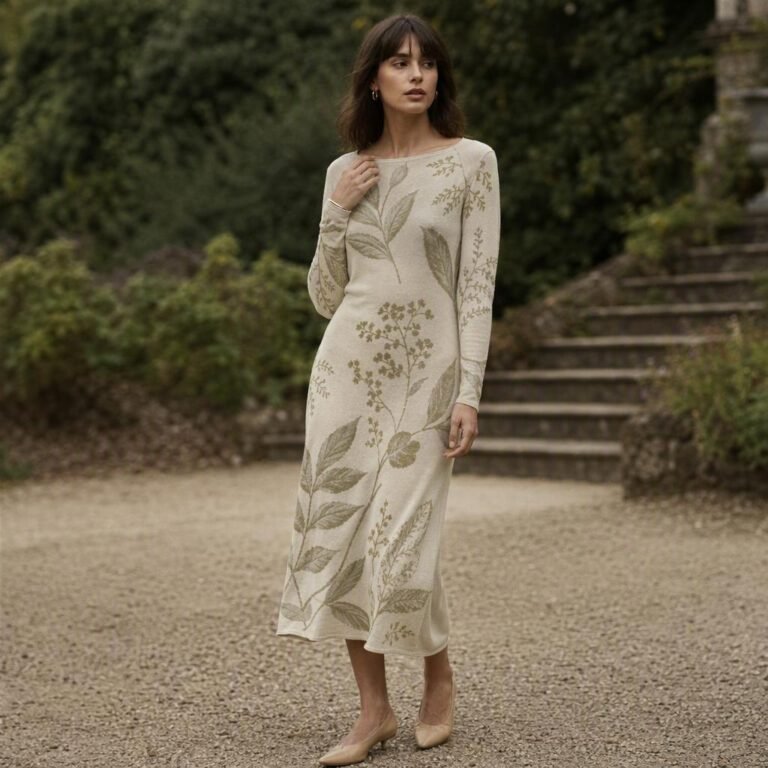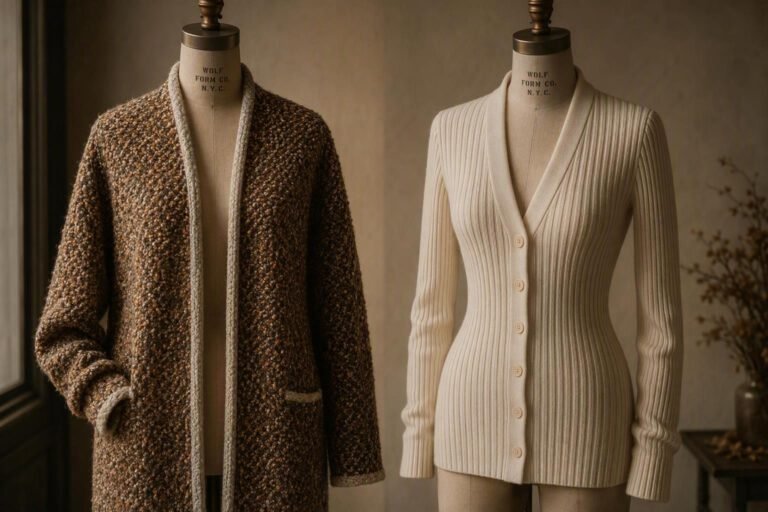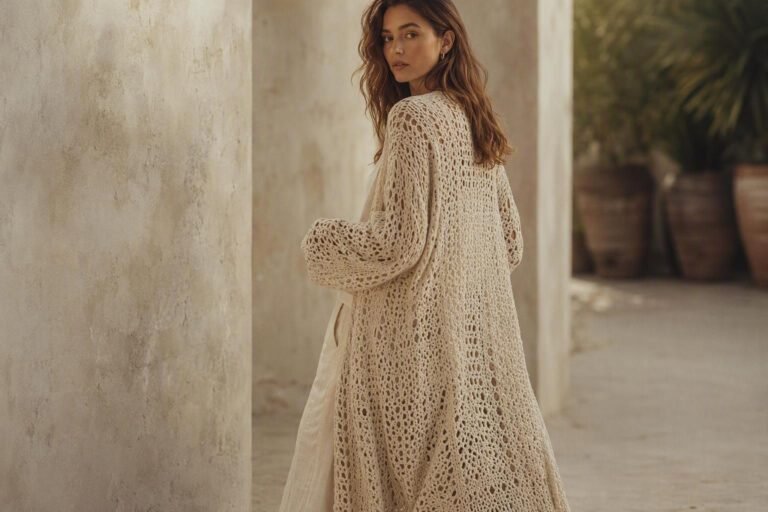

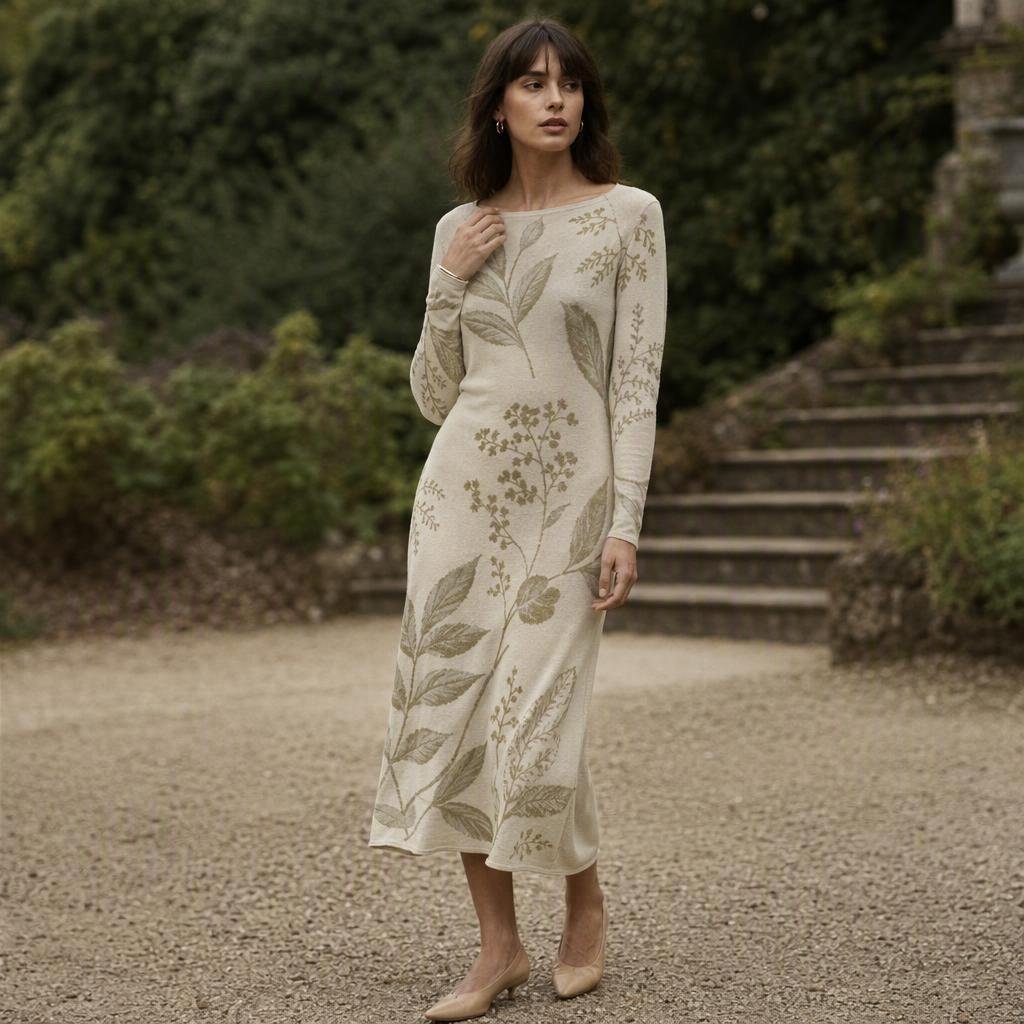
A botanical knit dress is having a clearly different moment from the florals of past seasons. The current wave is no longer about sugary, all-over prints. Designers are treating botanicals as a structure story: leaves, stems, and blooms are being knitted into the fabric, sculpted as texture, or rendered at a painterly, oversized scale — a direction that several trend trackers have begun calling a fresh take on florals (Vogue framed it across the spring runways in how to style the season’s prettiest floral dresses).
That detail matters if you are styling one. Because a botanical that is in the knit drapes and behaves differently from a botanical printed on top of it. It carries weight, moves with you, and reads as intentional rather than decorative. Handled well, a botanical knit dress looks like a considered wardrobe investment. Handled carelessly, it swings into costume or cottagecore cliché.
This guide covers the three decisions that decide whether a botanical knit dress works, the styling rules that keep it elegant, outfit formulas you can copy straight into your week, and — for anyone designing or selling knitwear — how those botanicals actually get into the fabric and what to specify for a small run.
What makes a botanical knit dress different
A “botanical” dress is not the same thing as a floral-print dress. Botanical imagery runs toward leaves, ferns, vines, stems, and garden bloom clusters — often in a more muted, grounded palette than a bright floral. On knitwear, the distinction goes deeper because the plant can be knitted in, not just printed on.
Three things set a knit botanical dress apart from a surface print:
The motif is a texture, not just a picture. When botanical shapes are knitted in, they add subtle dimension and can carry weight in patterned areas. This is why the 2026 shift has been described as florals turning textural — translating into petal-like openwork, floral motifs, and organic forms worked into the fabric, as this knitwear maker’s guide to floral texture explains.
The fabric drapes on its own logic. A knit dress holds its shape through the structure of the stitch and the yarn, not through seam tailoring alone. A botanical motif built into a firm fine-gauge body creates a dress that moves like a sculpted layer, which is a very different feel from a draped printed slip.
The palette does a lot of the work. Because botanicals live in the fabric, the base tone — cream, oat, stone, deep forest, inky navy — decides whether the dress reads fresh, moody, or romantic before you add a single accessory.
The result is a dress that behaves like a wardrobe piece in multiple seasons. Lighter botanical knit dresses work straight into spring and summer; darker, layered versions carry into autumn in the way the moodier “dark botanical” direction that Maiden Bloom traces in the 2026 dark-floral/ botanical trend suggests.
Key Takeaway: Think of a botanical knit dress as a textured wardrobe layer, not a printed statement piece. Because the plant is knitted into the fabric, the dress’s structure and palette do most of the styling for you.
The decisions that decide whether the dress works
Before you think about shoes and layers, settle three things about the dress itself. Get these right and everything else gets easier, whatever the label.
1. The motif scale and placement. Where does the botanical sit, and how big is it? A single column of fine leaves running down the center front reads sculptural and wearable. A large, painterly bloom panel across the upper back is a deliberate statement that needs an otherwise calm outfit. Tiny, dense all-over botanicals lean toward that pretty, ditsy feel you may want to avoid if the goal is elegant. Choose one starring motif and let it sit on a stable zone the eye lands on naturally.
2. The base tone. This is the single biggest lever. Light bases — cream, oat, stone, sage — read fresh, airy, and daywear. Deep bases — forest green, navy, chocolate, black — read refined and evening-appropriate and are the easiest to layer for fall. Muted, tonal earth palettes are the most reliable for a dress you will reach for in more than one season.
3. The cut and ease. A botanical knit dress looks best when it has a defined line somewhere: fitted through the bodice with a gentle A-line or column skirt, or relaxed but with a clear waist or belt point. A loose, shapeless knit dress with a dense motif can swallow your shape. Decide the silhouette before you style around it.
Pro Tip: When unsure, choose one clear botanical zone on a tonal base in a column or gently fitted silhouette. That combination is the hardest to get wrong and the most re-wearable.
The styling rules that keep it elegant
Once the dress is sorted, a small set of rules keeps the whole look refined rather than costumey.
Let the botanical be the single statement. The dress already carries pattern and texture, so everything else should stand back. Solid underlayers, plain outer layers, and one or two accessories let the botanical lead. The classic mistake is over-styling a patterned dress with competing prints and too many accessories — keeping it simple is what makes it read elevated.
Calm the rest of the outfit. Pair a botanical knit dress with clean, solid companions: a fine-knit cardigan or blazer in a tone pulled from the dress, plain tights, and tailored or simple shoes. Do not stack the botanical dress with a second bold print in the same outfit. If you want to mix a subtle stripe or texture, keep it a tonal, low-contrast one.
Give the silhouette a clear line. A botanical motif can get busy if nothing anchors the shape. If the dress is not fitted, add a slim belt at the waist, or choose a style with a seamed waist or subtle princess-line shaping, so the eye has a defined point to land.
Choose refined, minimal footwear and accessories. Pointed flats, low block heels, kitten heels, or sleek ankle boots read polished against a knit dress. Chunky, overly casual shoes pull it toward relaxed, which works for daytime but not for “elegant.” Keep accessories to one structured bag and delicate jewelry, and — if you want an intentional finishing touch — echo a single color from the botanical in your shoes or bag.
Respect the texture as a texture. Because the plant is in the knit, adding too many other textures can compete. One strong texture is enough when the dress already has knit patterning. A plain fine-gauge layer over or under it is usually the right call.
Keep this as your anchor: the botanical dress is the hero, everything else is a calm, solid, minimal supporting cast. One print, a defined waist, and refined accessories are the difference between elegant and costumey.
Outfit ideas for the week
Here are ready-to-wear formulas. Each treats the botanical dress as the centerpiece and keeps the rest of the look deliberately simple.
For a daytime garden or outing. Wear a tonal light-base botanical midi with flat sandals or pointed flats and a straw or simple tote. Leave accessories minimal — the dress does the talking. Add a fine-knit cardigan in a tone from the dress for breezy mornings.
For the office or a working lunch. Style a fitted botanical dress with a tailored blazer in a coordinating solid and low block heels or loafers. Keep jewelry delicate and your bag structured. The blazer adds the polish a patterned knit sometimes needs in a professional setting.
For an evening or event. Choose a deep-base botanical dress and pair it with kitten heels or strappy heels and a small clutch. Keep the hair simple and accessories light so the dress reads refined. A dark botanical on a column silhouette is the most evening-appropriate version.
For cool-weather layering. Layer a muted botanical knit dress over opaque tights with ankle boots, a slim belt at the waist, and a long structured coat or a fine-knit cardigan on top. The layering extends the dress past summer without letting the botanical get lost.
For travel or a low-effort day. A mid-length botanical dress over plain tights or leggings with loafers and a crossbody bag is one of the easiest, most comfortable looks. Choose a smaller, tonal motif so it stays low-effort and packable.
If you want to ease into the look, the last formula is the gentlest entry: a tonal, finer-motif dress treated almost like a solid, elevated layer.
Do and don’t: quick fixes that stop the costume look
A few fast rules keep a botanical knit dress looking deliberate rather than themed.
Do keep the botanical dress as the one patterned piece. Do pair it with clean, solid layers, tailoring, and refined minimal shoes. Do choose a tonal or deep base if you want it to last across seasons. Do prefer one larger motif on a stable zone over busy all-over botanicals.
Don’t stack the botanical with a second loud print. Don’t over-accessorize or pile on multiple competing textures. Don’t always reach for cottagecore-adjacent styling (prairie extras, heavy lace) if your aim is modern elegance.
If you already own a high-contrast or very floral botanical dress and it feels too much, change what surrounds it, not the dress: swap chunky shoes for pointed or low heels, cut the accessories to one piece, and add a tailored solid layer. The same dress can look completely different on a calmer base.
Design and source your own botanical knit dress
If you are an emerging label deciding whether to put a botanical knit dress in your line, the construction matters as much as the styling. A botanical on a dress is a patterned garment that also has to hold a defined body shape, so how the plant gets into the fabric shapes what is actually possible — and what it costs at low volume.
Botanicals enter a knit dress one of three main ways.
Intarsia treats each color as its own yarn island, joined to its neighbor only where the color changes. This gives a clean reverse with no floats, which makes it the strong choice for distinct leaf shapes, a column of stems, or a positioned bloom panel on a stably placed zone. Because each color block behaves like a small project, bold, isolated botanicals suit intarsia best, and multi-color botanical intarsia raises yarn minimums — a real factor when you order a small run.
Jacquard builds the pattern in by working multiple colors across the row, carrying the unused yarn as floats on the reverse. It suits repeating, all-over botanical micro-motifs and scales efficiently, but patterned areas can run denser or heavier, and the floats show on the inside of a dress you wear against the skin.
Printed-on applies the botanical artwork to the surface of a finished knit. It allows painterly detail, gradients, and near-photographic depth, and it is the fastest to sample visually. The tradeoffs are durability, colorfastness, and hand-feel — print can crack or flatten where a knit-in botanical would not.
The practical rule for a knit dress: fine, repeating botanical all-overs lean toward jacquard; a signature large leaf or bloom panel often suits intarsia; and painterly, gradient, photo-style botanicals favor printing. Whichever method you choose, map the motif to the dress panels before knitting so the botanical centers, side seams, and hem zones stay aligned, and keep detailed parts out of the most distortion-prone zones such as the bust apex and waist cinch.
Underneath the motif, fit is what decides whether the dress stays elegant. A botanical knit dress works best as a stable knit body with enough ease to move without clinging or collapsing, with deliberate shaping through the shoulder, armhole, bust, waist, and hip rather than relying on the fabric to “self-fit.” Finer gauges tend to drape more cleanly; heavier, dense motifs reduce drape. If you want a seamless body with no side seams to interrupt the botanical, a knit-to-shape approach such as a seamless WHOLEGARMENT knit lets a fine-gauge dress be engineered in one piece, which suits sculpted, fitted botanical silhouettes especially well.
For an emerging label this is where low-MOQ manufacturing exists to help you. You can develop the botanical motif, see a real swatch on the actual yarn and gauge, and test the fit before you commit to volume. Knit dresses and skirts typically run around 50 to 100 pieces per style and color, samples can be produced in a few days when your tech pack or artwork is ready, and certified yarn options are available to back a sustainable botanical story. The main planning caution with botanicals is color: multi-color intarsia motifs raise yarn minimums, so lean on stock-color yarn or simplify the palette if you want the lowest possible starting run.
Key Takeaway: For a botanical knit dress, choose the motif method that matches your plant — intarsia for clean signature leaves, jacquard for repeat all-overs, print for painterly detail — then protect the fit and placement. A real swatch tells you how the botanical drapes and holds before you scale.
Start with one botanical knit dress and build from there
The botanical knit dress is compelling right now because it is a textured, structured layer, not a disposable print. Own one good version, learn the rules above, and it will pull outfits together across seasons without ever feeling costumed.
Settle the motif placement, the base tone, and the cut first, then let the botanical lead. Keep the rest of the outfit solid and minimal, give the dress a clear line, and choose refined shoes and sparse accessories. Favor tonal, earthy, or deep bases for longevity and save brighter botanicals for statement days.
If you design or sell knitwear and have been thinking about a botanical dress for your next run, the same logic applies on the spec sheet. Pick the knit method that matches your motif, place it off the distortion zones, engineer the fit, and test a real swatch before you scale. Learn the differences in jacquard, intarsia, and printed knit, keep your knit motif legible and well placed, and start with a small run of custom knit dresses to see whether a botanical signature works for your customer.