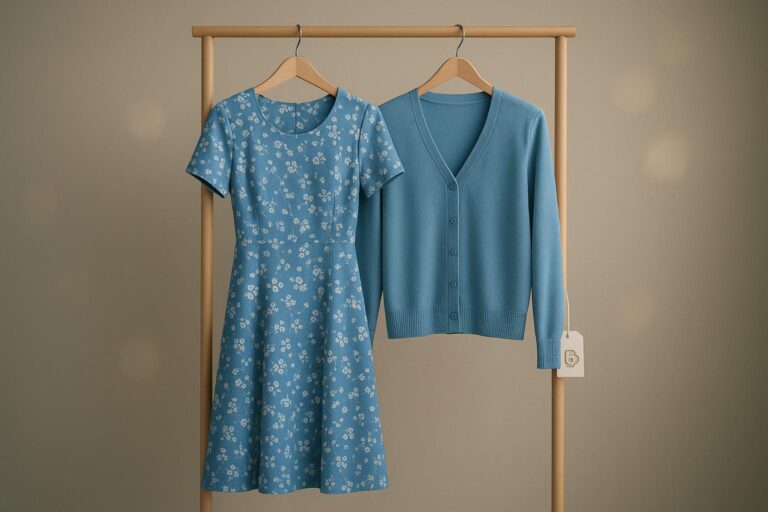

From the battlefields of the Crimean War to the high-fashion runways of Milan and the cozy living rooms of TikTok influencers, few garments have boasted the staying power of the cardigan. It is a chameleon of the fashion world—capable of being strictly professional, effortlessly bohemian, or undeniably luxurious.
For fashion buyers and retailers, the cardigan is more than just a seasonal item; it is a perennial best-seller that bridges the gap between seasons. For the consumer, it is the ultimate layering piece.
But not all knitwear is created equal. The difference between a cashmere cardigan that pills after one wear and one that lasts a decade lies in the details: the micron of the fiber, the tension of the stitch, and the precision of the manufacturing.
In this comprehensive guide—our “Cardigan Bible”—we dive deep into the technical specifications, style evolution, and sourcing secrets of the world’s most versatile sweater. Whether you are a brand looking to manufacture your next collection or a connoisseur of fine knits, here is everything you need to know.
What Exactly Defines a Cardigan?
At its core, a cardigan is a knitted garment that has an open front. Unlike a pullover (or jumper), which must be pulled over the head, a cardigan can be worn open or fastened using buttons, zippers, or a belt.
Cardigan vs. Sweater: What is the Difference?
While all cardigans are sweaters, not all sweaters are cardigans. The distinction is crucial for categorization and SEO.
-
The Pullover: A closed bodice, traditionally crew neck, v-neck, or turtle neck.
-
The Cardigan: Characterized by its open front. This structural difference dictates how the garment is manufactured (requiring plackets and facings) and how it is styled (allowing for layering).
Why is the Cardigan Considered a Wardrobe Staple?
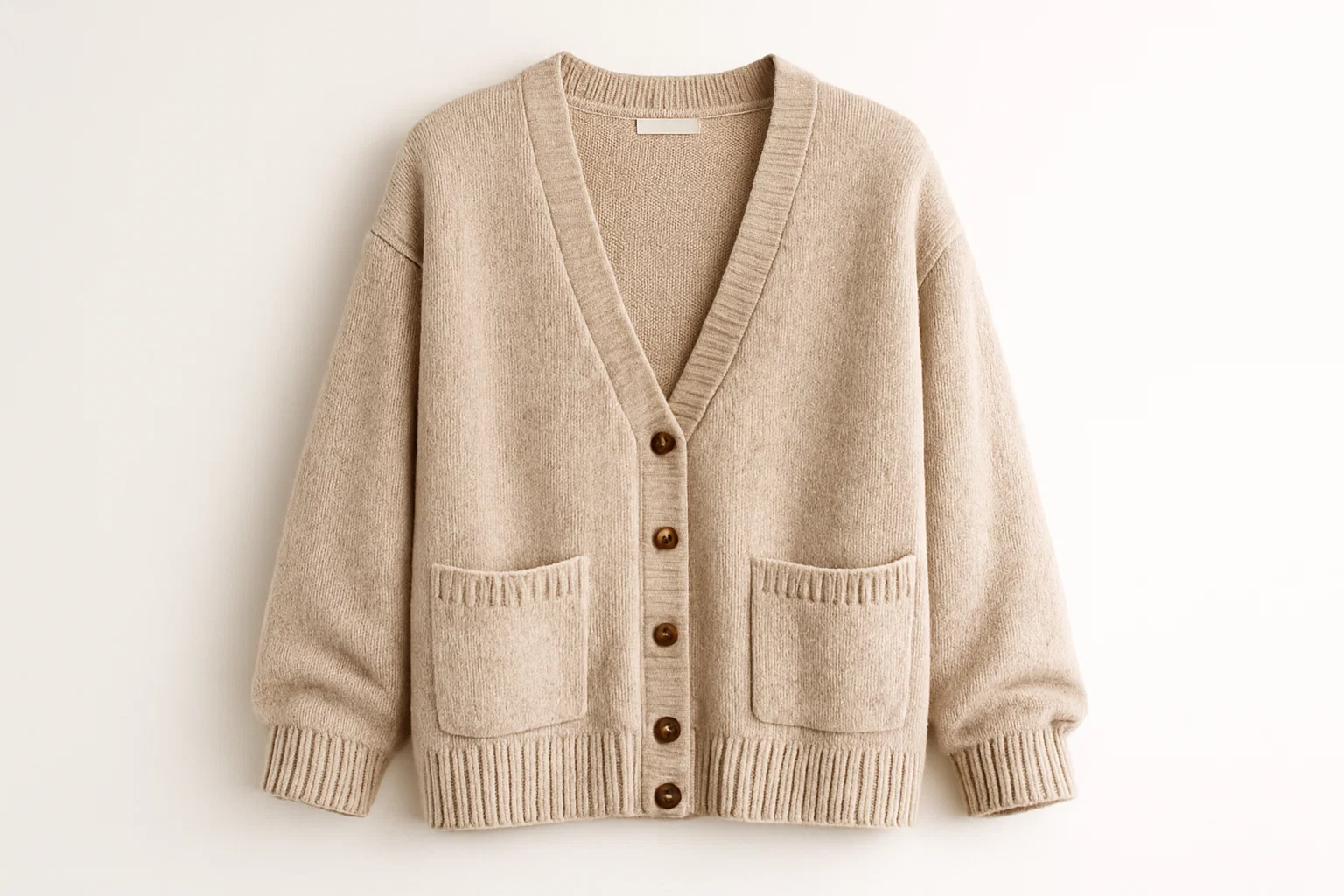
The cardigan’s dominance in the market—evident by the high search volume for terms like classic cardigan and everyday knitwear—comes down to versatility. It is the only garment that functions as outerwear in mild autumn weather and as a mid-layer during the freezing winter. From a navy blue cardigan worn as a corporate uniform to a slouchy oversized cardigan for lounging, it serves every demographic.
Which Materials Make the Best Cardigans? (Fabric & Fiber Analysis)
The soul of a cardigan lies in its yarn. For B2B buyers, choosing the right fiber composition is the single most important decision impacting price point and target market.
1. The Luxury Standard: Cashmere
If there is a king of knitwear, it is the cashmere cardigan. Sourced from the undercoat of Hircus goats, cashmere provides an insulation-to-weight ratio that wool cannot match.
-
Understanding Quality: Not all cashmere is equal. A high-quality mens cashmere cardigan or womens cashmere cardigan should be made from long-staple fibers (typically 34mm or longer) to prevent pilling.
-
The Classics: Search data proves that color trends come and go, but the black cashmere cardigan sweater and the navy cashmere cardigan remain the highest-volume staples. These are investment pieces where buyers expect 2-ply or 4-ply construction for durability.
-
Modern Trends: Recently, we have seen a surge in demand for the cropped cashmere cardigan, catering to a younger demographic pairing luxury knits with high-waisted denim.
2. The Texture Kings: Mohair and Alpaca
For brands looking to add texture and visual depth to their collections, smooth yarns won’t suffice. This is where the “halo” effect comes in.
-
Mohair Cardigan: Made from the hair of the Angora goat, mohair is known for its high sheen and fluffy texture. A mohair cardigan sweater is often blended with silk or nylon to stabilize the structure. It creates a “fuzzy” look that is currently dominating street style.
-
Alpaca Cardigan: Slightly softer and warmer than sheep’s wool, alpaca is hypoallergenic (no lanolin). An alpaca cardigan sweater offers a similar brushed look to mohair but with a heavier, more substantial drape.
3. The Performance Choice: Merino Wool
For the classic fine gauge look, Merino wool is the industry standard.
-
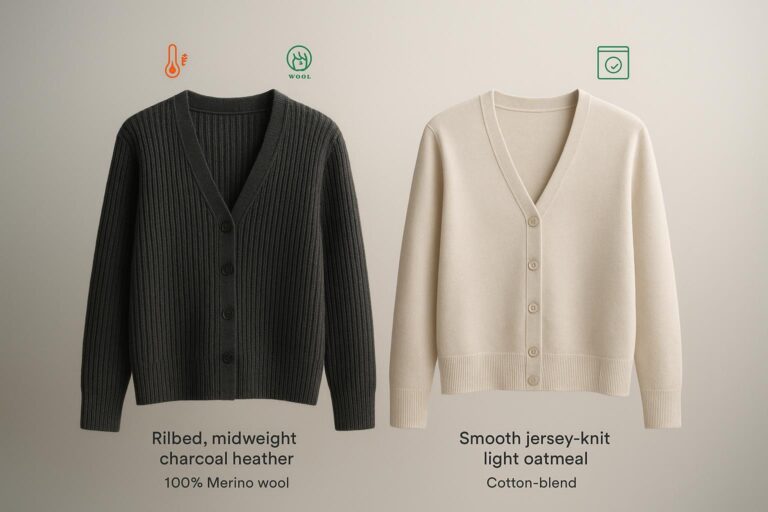
Functionality: Unlike coarser wools, Merino is ultrafine (often below 20 microns), making it comfortable directly against the skin. A merino wool cardigan sweater is breathable, moisture-wicking, and naturally odor-resistant.
-
Menswear Staple: The navy lambswool cardigan men search volume indicates a strong preference for wool in men’s office attire, but Merino is often the upgrade buyers seek for a less itchy experience.
4. Summer Knits: Cotton and Linen
Knitwear is not just for winter. The cotton cardigan and linen cardigan sweaters are essential for Spring/Summer collections.
-
Breathability: Vegetable fibers like cotton and linen allow air to circulate. A cropped cotton cardigan or a loose open front cardigan in linen is perfect for breezy summer nights.
-
Weight: These yarns are heavier and have less elasticity (memory) than wool. Expert manufacturing is required to ensure a cotton cable knit cardigan holds its shape over time and doesn’t “grow” on the hanger.
5. The Synthetic Debate
While natural fibers hold the prestige, synthetic blends (Acrylic, Polyester, Nylon) drive the mass market.
-
Durability & Price: Blending wool with nylon increases durability, which is why you often see a chunky knit cardigan or longline cardigan made with a blend to keep the price accessible while maintaining the bulky silhouette.
How to Navigate Cardigan Lengths and Silhouettes
Once the material is selected, the silhouette defines the style tribe.
The Rise of the Cropped Cardigan
Driven by the Y2K revival, the cropped cardigan has seen explosive growth. Whether it’s a cropped cashmere cardigan or a fitted cotton version, this silhouette is designed to meet the waistband of trousers or skirts, creating a flattering ratio for the wearer.
The Longline and Duster
On the opposite end of the spectrum is the longline cardigan or duster cardigan sweater. These pieces, often reaching the knee or ankle, act as a soft coat. A long duster cardigan offers dramatic movement and is a favorite in the “boho” and “comfort” sectors.
The Oversized and “Grandpa” Fit
Comfort remains king. The grandpa cardigan—typically characterized by a slouchy fit, dropped shoulders, and perhaps a v-neck—transcends gender. It relates closely to the oversized cardigan trend, where buyers size up for that “borrowed” look.
Exploring Necklines and Collars: The Frame of the Face
The neckline dictates the formality and function of the cardigan. While the body provides warmth, the collar provides the character.
1. The Shawl Collar: Masculine Elegance
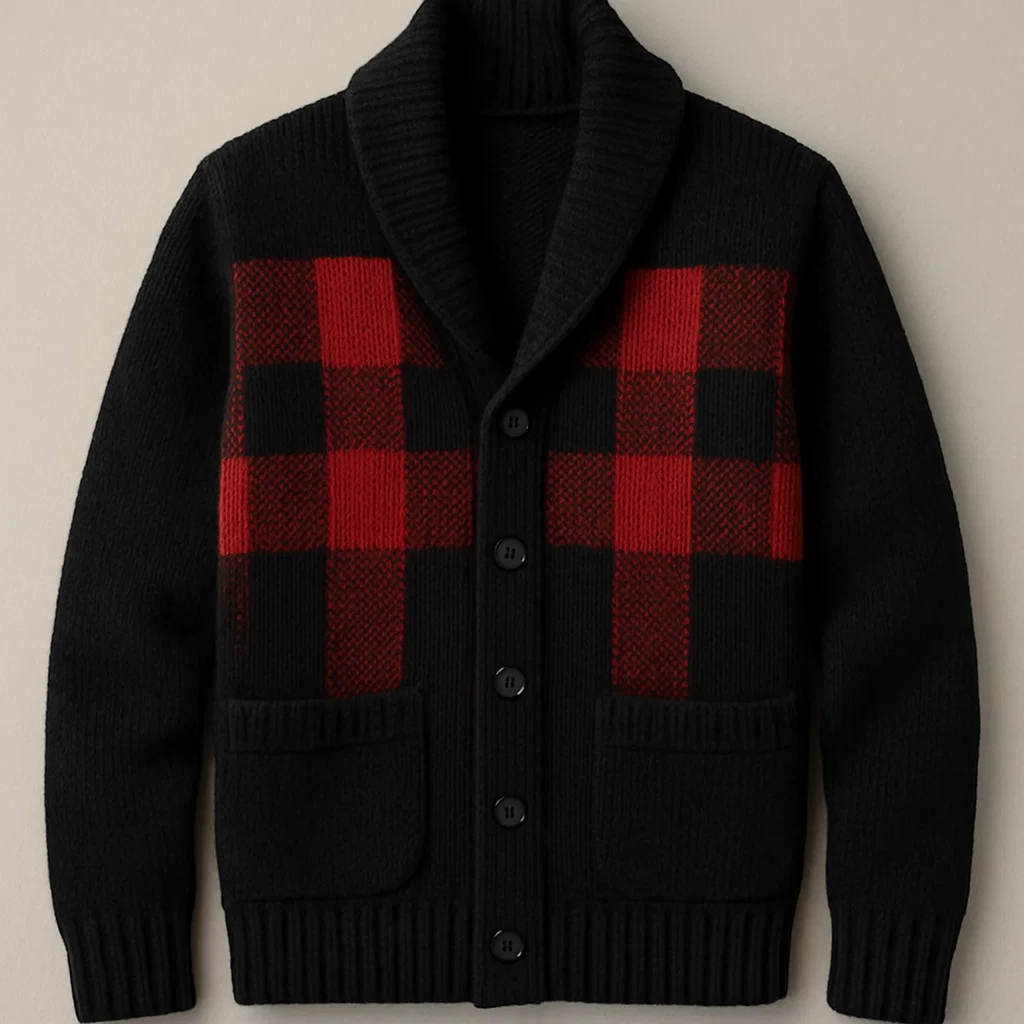
Few garments exude the rugged sophistication of a shawl collar cardigan. Distinguished by a continuous rolled collar that curves around the back of the neck and tapers down the front, this style is synonymous with “old money” aesthetics and icons like Steve McQueen.
-
Why it sells: It is a high-value item. The mens shawl collar cardigan (and increasingly the shawl collar cardigan mens search term) suggests a buyer looking for a jacket alternative.
-
Manufacturing Insight: This collar requires more material and often a higher gauge (thicker knit) to maintain the “roll” structure without collapsing.
2. The Classic V-Neck
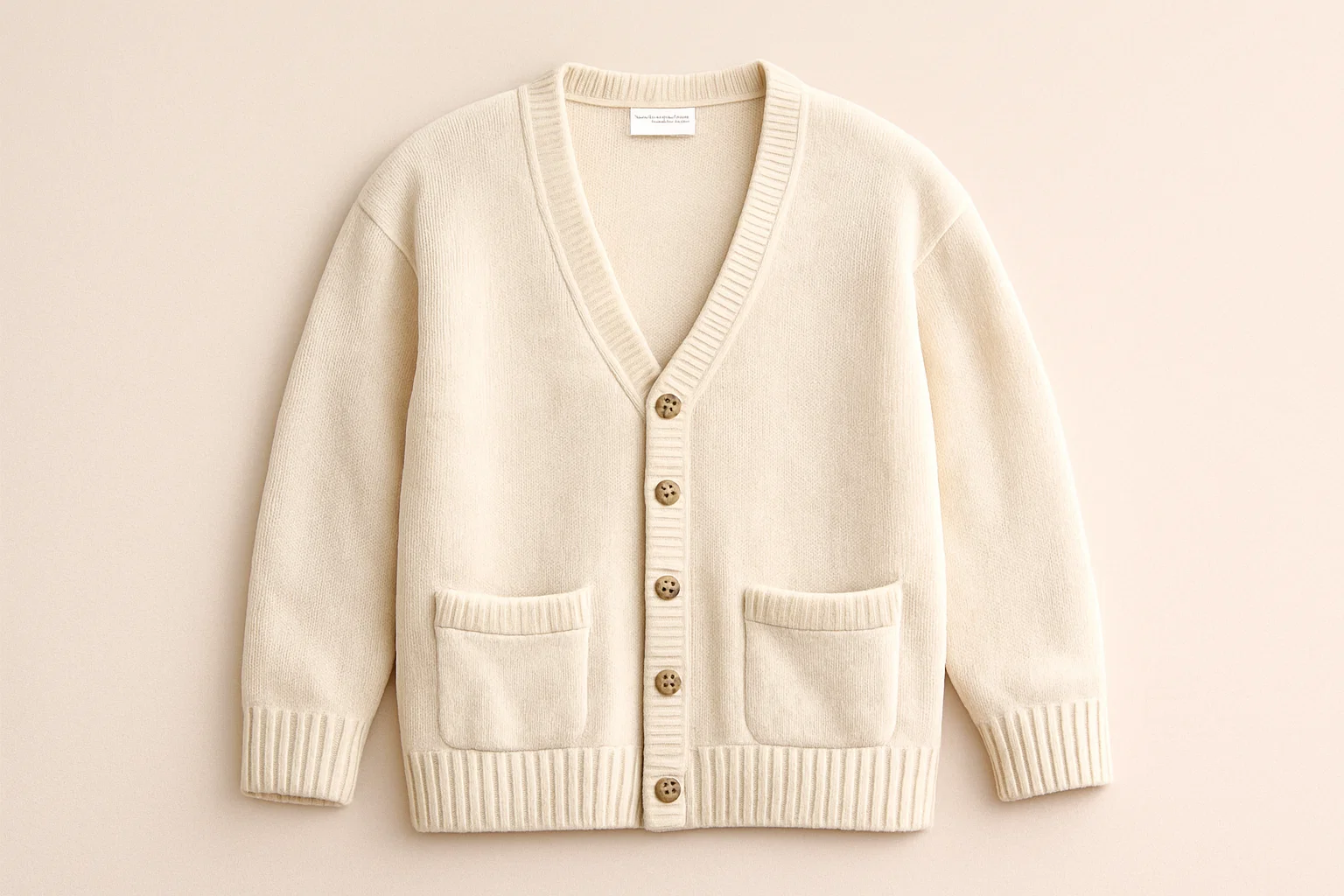
The v-neck cardigan is the chameleon of the category. It is the standard for school uniforms, office wear, and light layering.
-
Styling: The depth of the “V” matters. A deep v leans towards high fashion and trends, while a standard V is preferred for the corporate navy blue cardigan.
-
Versatility: It is designed to show off the layer underneath—be it a tie, a t-shirt, or a necklace.
3. The Kimono and Open Front
Moving away from structure, we have the kimono cardigan sweaters.
-
The Silhouette: Inspired by Japanese garments, these feature wide, loose sleeves and typically lack fasteners.
-
Market Fit: This style often overlaps with the duster cardigan sweater category. It is popular in the “resort wear” and “lounge” markets, often utilizing lighter materials like linen or viscose blends for drape.
Mastering Knit Techniques and Textures
For a B2B buyer or a knitwear enthusiast, the “stitch” is where the magic happens. This is the difference between a flat, basic garment and a piece of art.
1. Crochet and the “Handmade” Look
There is a massive surge in interest for the crochet cardigan. Search terms like crochet cardigan pattern free and granny square cardigan pattern are dominating trends, driven by the DIY movement and festival fashion.
-
The Manufacturing Reality: True crochet cannot be replicated by standard knitting machines; it requires hand labor or specialized hook machines.
-
The Look: It features larger loops and a distinct “craft” aesthetic. Popular iterations include the floral crochet cardigan or the patchwork style. For mass production, brands often use “lace knits” or “raschel knits” that mimic the openwork of crochet to keep costs viable.
2. Pointelle: The Feminine Touch
If you see a cardigan with a delicate pattern of tiny holes creating a geometric or floral design, you are looking at pointelle.
-
The Trend: The pointelle cardigan has seen a resurgence in the “coquette” and “balletcore” trends.
-
Why it works: It offers ventilation and a vintage, delicate feel without the bulk of chunky knits. It is exceptionally popular in womens merino wool cardigan sweaters where texture is desired without weight.
3. Cable Knit and Fisherman Styles
Originating from the Aran Islands, the cable knit cardigan (or fisherman knit cardigan) is defined by its raised, crossing layers of yarn that resemble ropes.
-
Function: Originally designed to provide extra insulation (the crossing yarns create air pockets), today it is a style statement.
-
Key Keywords: Buyers frequently search for chunky cable knit or specific heritage patterns. This technique consumes significantly more yarn than a plain jersey stitch, which is why these cardigans often command a higher price point.
4. Jacquard and Intarsia: Knitting with Color
When a cardigan features a specific image or multi-colored pattern woven into the fabric (not printed on top), it is done via Jacquard or Intarsia.
-
Argyle: The classic diamond pattern found in the argyle cardigan is a form of intarsia/jacquard.
-
Fair Isle: The fairisle cardigan, characterized by bands of multi-colored geometric patterns, is a winter staple.
-
Pictorial: Trendy items like the cardigan with stars or cardigan with oranges rely on these advanced knitting techniques to create crisp, clear images within the knit structure.
Styling Guide: How to Wear a Cardigan
The cardigan’s greatest strength—versatility—can also be its greatest challenge. With so many variations, how do you style them without looking dated?
For Women: The Art of Layering
-
The Twin Set Revival: What was once considered “retro” is now chic. The cardigan and tank set (or 2 piece cardigan sweater set) is trending. Wearing a matching knit camisole underneath a cropped cotton cardigan creates a cohesive, polished look suitable for the office or a dinner date.
-
What to Wear Under a Cardigan: This is a top searched question.
-
For Oversized/Chunky Knits: Balance the volume with a fitted tee, a bodysuit, or a slip dress.
-
For Fitted Cardigans: Wear them as a top! Button it all the way up and tuck it into high-waisted denim.
-
-
The Belted Silhouette: If you are wearing a longline cardigan or a wrap cardigan sweater, the fabric can sometimes overwhelm your figure. A belted cardigan (or adding your own leather belt) cinches the waist, restoring shape and adding an element of structure to a cozy outfit.
For Men: Smart Casual to Streetwear
-
The Varsity Aesthetic: The varsity cardigan (or letterman cardigan) is having a major moment in streetwear. Unlike the classic blazer, it offers a preppy, collegiate vibe. Pair it with a white tee and wide-leg chinos for a modern look.
-
Office Professional: Replace the stiff suit jacket with a navy blue cardigan or a merino wool cardigan sweater. Worn over a crisp button-down shirt and tie, it commands respect while offering superior comfort.
Manufacturing & Quality Check (The Expert’s Guide)
Whether you are a fashion buyer sourcing for your next collection or a customer investing in a forever piece, understanding how a cardigan is made is the only way to ensure quality.
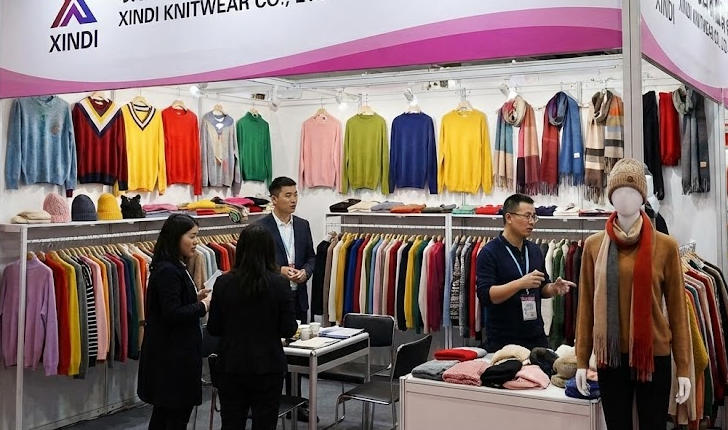
At Xindi Knitwear, we believe transparency in manufacturing is key. Here is what to look for:
1. The Seams: Linking vs. Overlocking
Turn the cardigan inside out.
-
Linking: In high-quality knitwear, the seams (where the sleeve meets the body) are “linked” stitch by stitch. The seam will look flat and almost invisible. This is time-consuming but ensures the garment moves with you.
-
Overlocking: In mass-market, cheaper productions, the pieces are cut from a sheet of knit fabric and sewn together with a sewing machine (cut-and-sew). This creates a bulky, raised seam that is less durable.
2. The Buttons and Placket
The “placket” is the strip of fabric where the buttons and holes sit.
-
Stability: A quality cardigan will have a reinforced placket (often with grosgrain ribbon backing) so the buttonholes don’t stretch out or “gape” after a few wears.
-
Material: Look for natural materials. Pearl buttons (Mother of Pearl) feel cool to the touch and offer an iridescent shine that plastic cannot mimic. Horn or Corozo buttons are also signs of premium manufacturing.
3. Understanding “Gauge” (GG)
Gauge refers to the number of needles per inch on the knitting machine.
-
High Gauge (12GG – 16GG): Fine, thin, and lightweight. Think merino wool cardigan womens or fine cashmere. Ideal for layering.
-
Low Gauge (3GG – 7GG): Chunky, thick, and heavy. This is used for your fisherman knit cardigan or chunky cable knit.
-
Buyer Tip: A lower gauge isn’t “worse”—it’s just a different style. However, a low gauge knit requires significantly more yarn by weight, which justifies a higher price point.
4. The Pilling Reality
“Will it pill?” This is the #1 question.
-
The Truth: All natural fibers (Cashmere, Wool, Mohair) have the potential to pill because they are short fibers twisted together. Friction causes loose fibers to migrate to the surface.
-
The Fix: Higher quality yarn (longer staple length) pills less. Synthetics like Acrylic pill badly and are hard to remove. Natural fiber pills can be easily removed with a sweater comb, and the garment often improves with age.
Conclusion
From the trenches of history to the digital storefronts of today, the cardigan remains an undefeated champion of the wardrobe. It is a canvas for textile innovation—from the cloud-like touch of a mohair cardigan to the intricate geometry of a fair isle pattern.
For the wearer, it is a hug in clothing form. For the retailer, it is a reliable anchor product that drives sales across seasons.
Ready to Create Your Own Collection? At Xindi Knitwear, we specialize in bringing premium knitwear concepts to life. Whether you need a 12GG fine merino production or a chunky 3GG hand-knit look, our factory combines traditional craftsmanship with modern manufacturing efficiency.