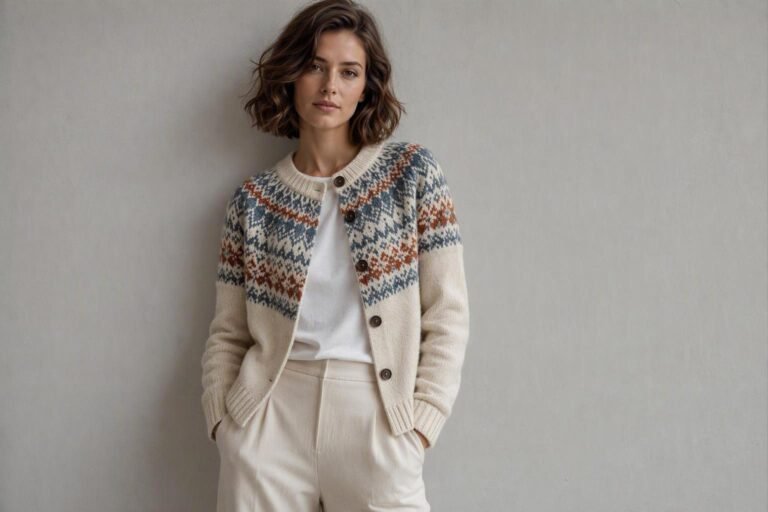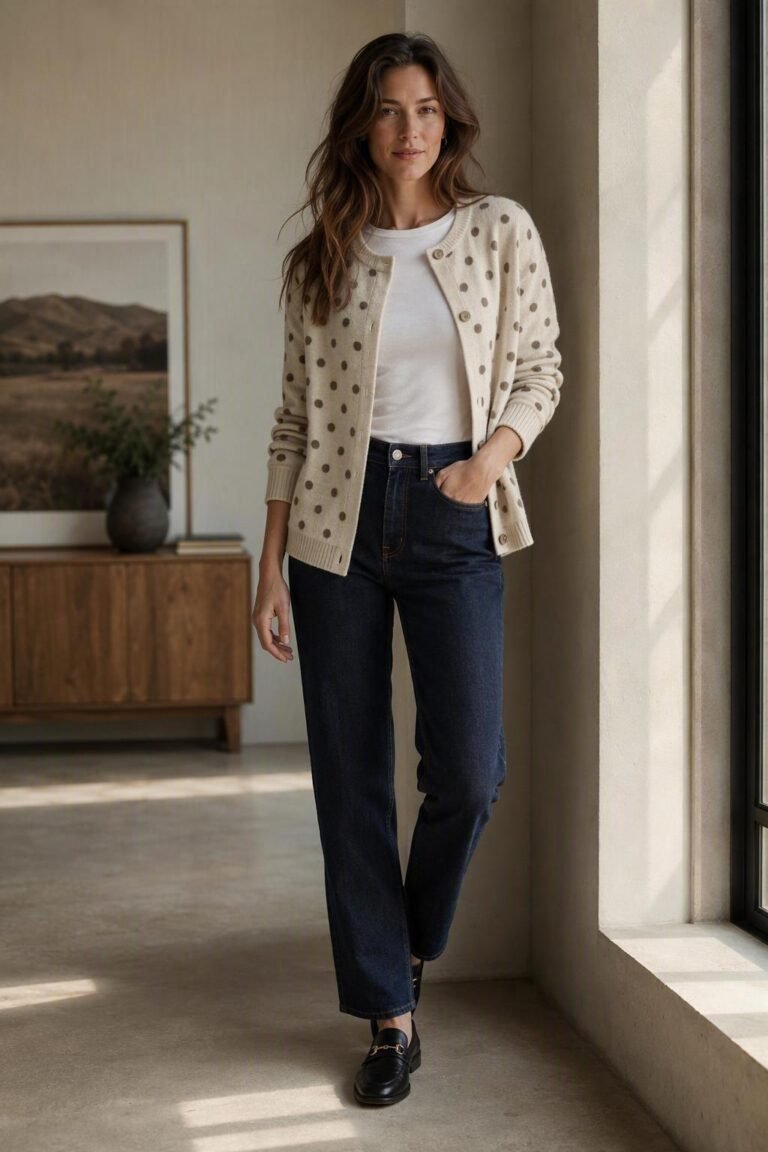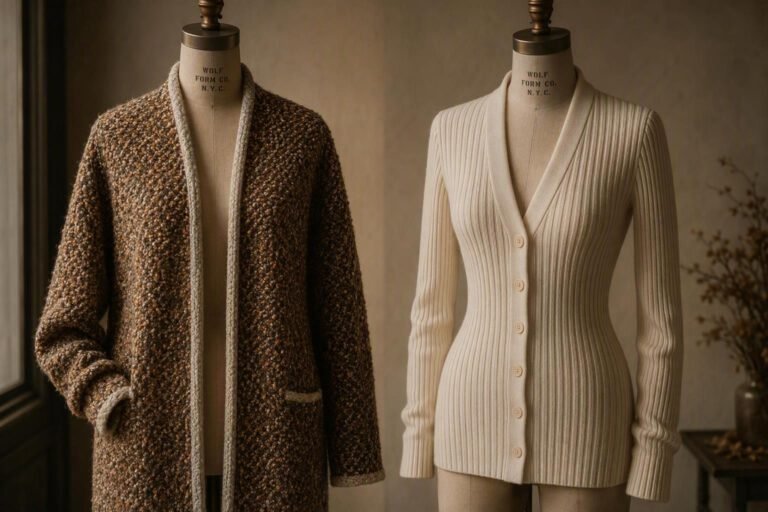

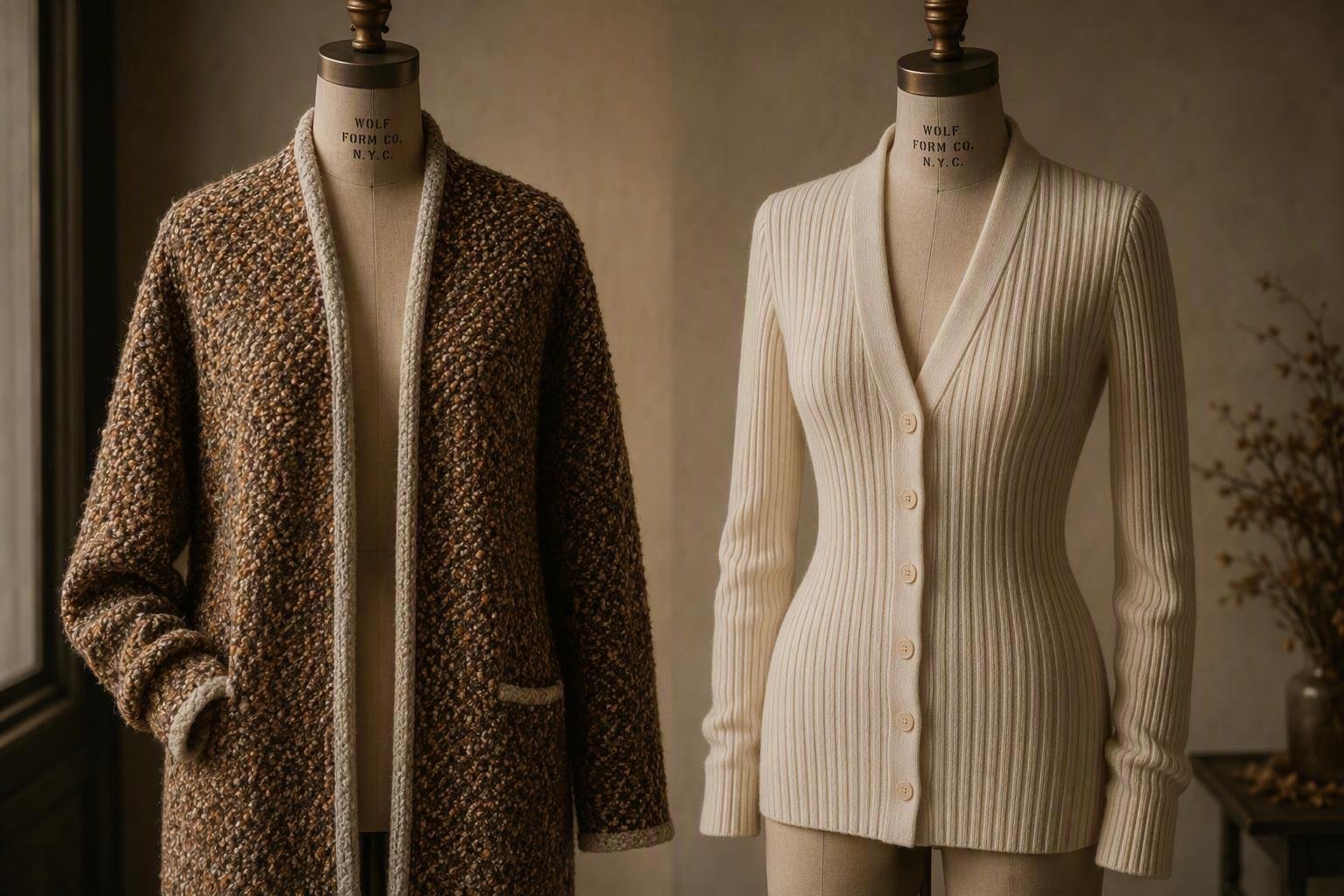
Choosing between a tweed cardigan vs a ribbed cardigan is rarely about knitwear fashion trivia. When you plan a cardigan for your label, the first decision is often not the color or the buttons. It is which construction to build the silhouette on: a textured outerwear-leaning tweed cardigan, or a close-fitting ribbed cardigan. Each changes the yarn you buy, the stitches your factory programs, and how the piece sells against the rest of the collection.
This is a source-side walkthrough, written for emerging brands and designers running small runs. It compares the two against the criteria that actually decide a project: how they look and feel, how they are built, how warm and wearable they are, what you must specify to a mill, and what they cost to sample and produce at low MOQ. A quick verdict for skimmers first, then the detail.
Criterion | Tweed cardigan | Ribbed cardigan |
|---|---|---|
Defined by | Yarn effect: flecked, mottled, nubby wool surface | Knit structure: alternating knit/purl columns |
Texture & hand | Rustic, woolly, textured, coatigan-sized | Smooth with raised vertical ribs, elastic, fitted |
Silhouette mood | Heritage, country, tailored, statement outerwear | Modern, body-skimming, easy layering, sporty-chic |
Structure names | Jersey/textured knit with tweed-effect yarn; bouclé | 1×1, 2×2, 3×3 rib; half/full cardigan; Milano rib |
Typical gauge | ~7–10GG structured; finer 12–14GG for refined looks | ~8–12GG commercial rib; 14–16GG refined fine rib |
Warmth | Denser, warmer, more protective | Lighter, good indoors-to-outdoors layer |
Role in assortment | Higher-margin hero/statement piece | Broader sell-through wardrobe workhorse |
Look and hand
Tweed is not a knit structure. It is a yarn and factory effect: a medium-to-heavy wool or wool-blend surface with a slightly rougher hand and visible flecks, slubs, or mixed-color depth. Barucci’s tweed fabric guide (2026) describes tweed as wool known for its rougher surface and wide range of color and weave effects. On a cardigan, that reads as heritage, country, and quietly tailored, closer in spirit to a jacket you button than a knit you pull on.
Ribbing is the opposite story: the surface comes from the stitches themselves. Alternating knit and purl columns create raised vertical cords that compress and snap back. Fine 1×1 rib reads refined and fitted; a broader 2×2 or 3×3 reads chunkier and more deliberate. It skews modern, casual, and body-conscious rather than rustic.
Key Takeaway: remember which is which because they are not the same kind of thing. Tweed describes the yarn/look; rib describes the stitch structure. You can even knit a tweed-effect yarn in a rib structure if you want both.
Structure and construction
For a ribbed cardigan the concept is the repeat. In a 1×1 rib one knit stitch alternates with one purl, giving the finest, most elastic, tightest-recovery surface; a 2×2 rib alternates two and two, giving broader, thicker, softer channels that read as deliberate texture. Wider repeats like 3×3 or 4×2 are chunkier and better for structured pieces, at the cost of some close-fit control. Technically these are weft-knit structures made on rib machines, and they recover better than a plain knit, which is the whole reason rib suits a fitted body.
For a tweed cardigan the structure is usually simpler, because the yarn does the talking. A plain or textured knit body in a tweed-effect or bouclé yarn carries the flecks and loops, but the factory needs to control the surface, not just the repeat. Specify whether you want tweed flecks, bouclé loops, or a mohair-style halo, and where that effect should appear. Clean, fully-fashioned shaping and linked seams keep a textured yarn from looking bulky at the seams.
Warmth, wearability, and styling
There is a clean divide in how these sell. A tweed cardigan is generally denser and warmer, the kind of piece that fills in for a light coat, a “coatigan” that anchors an outfit. It pairs well with denim, tailoring, or minimalist bottoms where the knit is the focal point. Its limits are real too: chunky texture can feel bulky indoors and reads as more of a statement than an everyday layer.
A ribbed cardigan is lighter and more adaptable. Because it skims the body and recovers its shape, it works under a jacket, over a dress, or as a matching set, and it is easy to dress up or down. Trend coverage for 2025-2026 shows both directions staying relevant, with expressively textured knits as hero pieces while slim ribbed cardigans resurge in cropped and tied shapes. As one useful rule of thumb from buyer-side analysis: ribbed sells as the elevated basic people repeat-buy, while tweed sells as the premium hero that gives a collection its point of view.
What to specify to a factory
The gap between a good idea and a good sample lives in the tech pack. For each construction, tell the mill the structure, the gauge, and the yarn behavior you need, not just the word “cardigan.”
For a ribbed cardigan:
Name the repeat. “Ribbed” alone does not tell a factory enough, because 1×1, 2×2, half-cardigan, and full-cardigan are different programs that change fit and hand. Choosing between 1×1 and 2×2 rib for a fitted knit is a real spec decision.
Give a gauge. Knitwear.io’s machine gauge selection groups chunky (1.5–5GG), mid (7–10GG), and fine (12–18GG); commercial full-body rib cardigans commonly sit in the 8–12GG zone, with 14–16GG for a finer, premium rib.
Set recovery targets. A fitted rib has to stretch and return or it bags out after wear and washing. Specify negative ease, any elastane percentage, and acceptable growth after laundering, and confirm it on a washed pre-production sample rather than trusting a generic chart.
For a tweed or bouclé cardigan, the plan shifts from stitch to yarn:
Describe the surface, not just “textured.” Give the fiber blend and count, whether you want flecks, loops, or a halo, and acceptable substitutions, because the yarn itself is the design.
Pick a stabilizing structure. Plain jersey, a textured stitch, or a Milano rib keeps a bouclé or tweed yarn stable and drapey rather than messy.
Talk about the gauge your yarn demands, typically a mid 7–10GG for structured fashion cardigans and 12–14GG for a finer, more refined tweed/bouclé look.
Agree on surface quality control: loop size, fuzz and snag tolerance, and how evenly color flecks distribute across dye lots.
Wool and merino blends are the flexible default for both, and rib and wool/merino guidance explains how the same yarn family behaves across structures. Machine gauge is the biggest single lever on how dense, warm, and expensive each garment becomes.
Sampling, lead time, and cost at low MOQ
For a small label, how these develop is as important as how they wear. On gauge alone, a low-gauge heavy tweed or chunky-textured cardigan consumes noticeably more yarn by weight than a finer-gauge piece, which raises unit cost and justifies a higher price point. A fitted fine-gauge rib, by contrast, uses less material but demands clean recovery engineering, so your risk sits in fit and wash behavior rather than in material weight.
A sensible small-run path is to start with cut-and-sew to validate fit and sales, then move to fully-fashioned or WHOLEGARMENT seamless once you have sell-through data. Knitwear.io’s cardigan manufacturing and quality guide walks through the construction and QC points that matter here: linked seams that sit flat versus bulkier overlocked edges, a reinforced placket so buttonholes do not gape, and long-staple yarns that pill less.
At low volume, cardigans and knit jackets generally start around 60–100 pieces per style and color, and sampling runs on a few days rather than weeks. For an emerging label the practical question is not whether your factory can do your tweed or your rib; it is which one you can afford to develop and test in the season window you actually have, and low-MOQ production explains the ranges and sampling windows you can plan around. Budget for a physical swatch and a pre-production sample either way, then wash-test before you commit to bulk.
Sustainability and certification
Both constructions can be built responsibly, but the certification work differs. Ribbed cardigans lean on yarns with recovery, so recycled-content or certified merino blends with a little nylon or elastane are common. Tweed and bouclé are usually wool-rich, so traceability of the wool and any fleck/blend components is the priority. Whatever you choose, ask your mill which certifications it can actually attach to the finished yarn, whether OEKO-TEX, RWS, GRS, or GOTS, and get the certificate chain rather than a loose claim. Your buyers and your marketing both depend on that being real.
Which should you choose?
There is no universal winner, and pretending there is one makes a mediocre assortment. Anchor the choice in where the piece sits in your line.
Choose ribbed as your volume core. If you need broad sell-through, easy styling content, and a lower-risk silhouette that a retail and DTC customer can wear often, a body-skimming 1×1 or 2×2 ribbed cardigan is the workhorse. This is also the friendlier option if your team is small and you want a soft first development at low MOQ.
Choose tweed as your hero and differentiator. If the brand has a craft, texture, or heritage point of view, a tweed or textured cardigan is your margin and identity piece, warmer and more statement than a workhorse. It makes sense when you have a clear lookbook direction and can carry a denser, higher-priced garment.
Run selected details either way. A tweed-effect yarn in a rib structure, or a plain tweed cardigan with ribbed placket and cuffs, gives you both textures on one silhouette, and lets a single factory sample serve two product stories.
If you are early and still validating, open with the ribbed cardigan to test fit and demand, then layer in a tweed hero once you have sell-through. When you are ready, ask for cardigan yarn and structure swatches in both directions, confirm gauge and recovery on washed samples, and plan a small pilot run that keeps your inventory risk low while you learn which construction your customer actually re-buys.