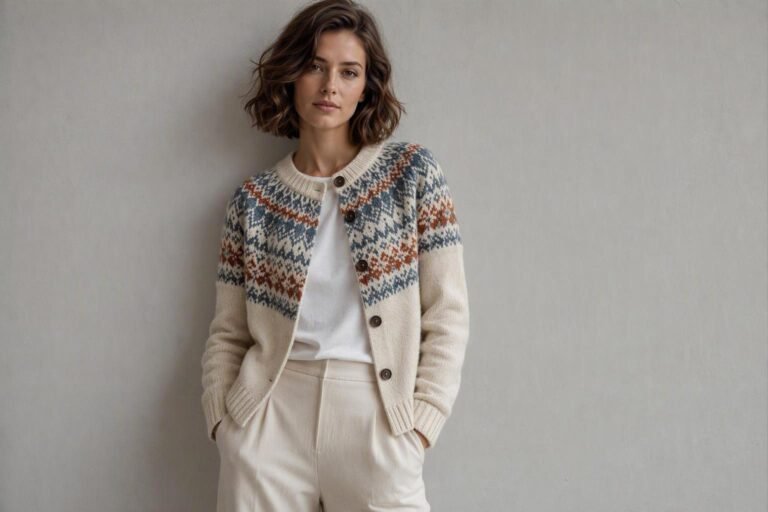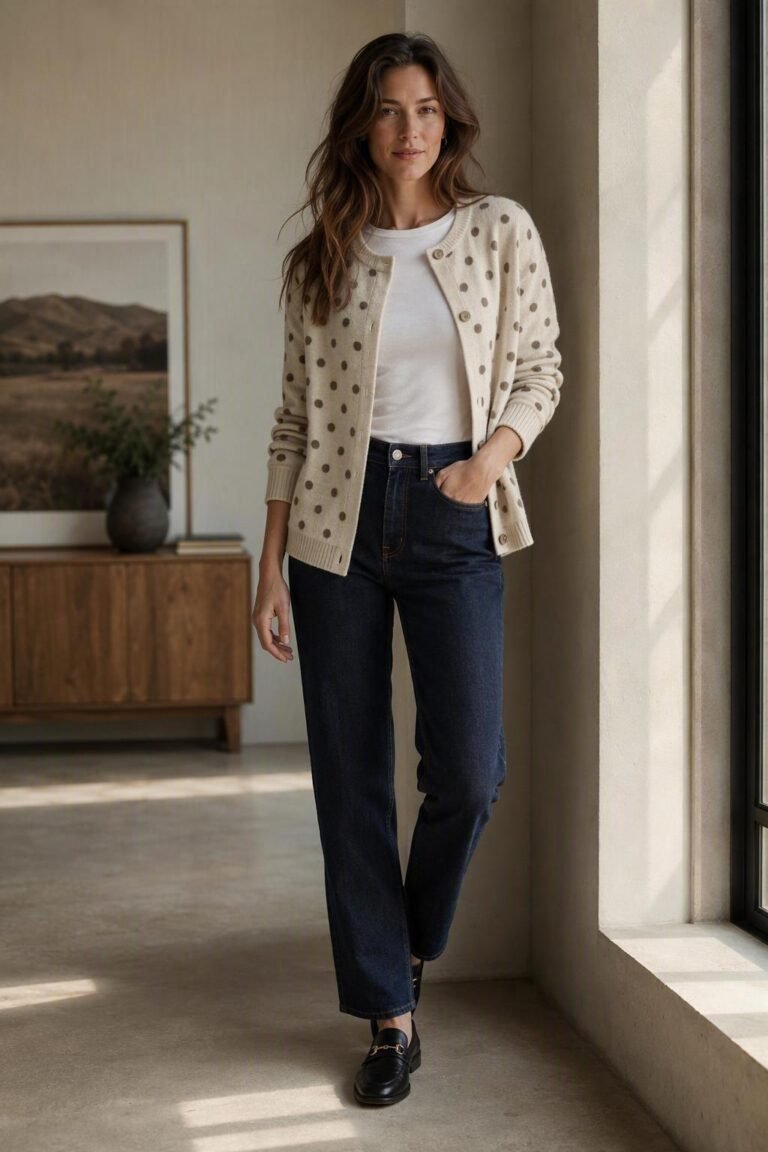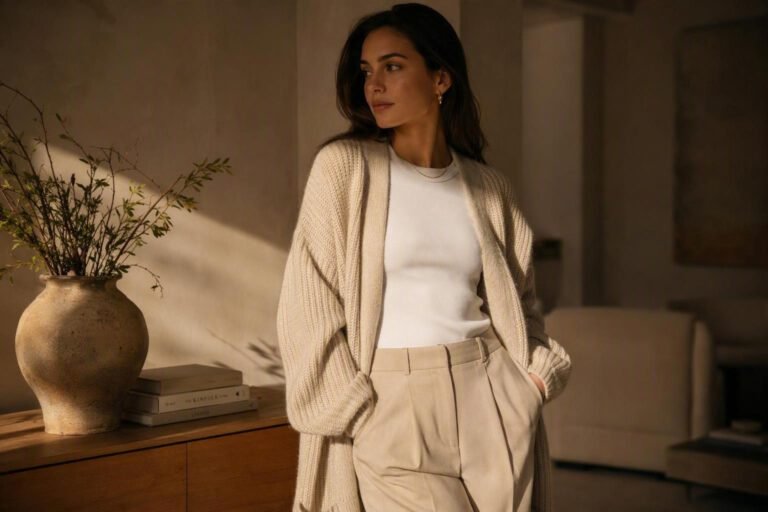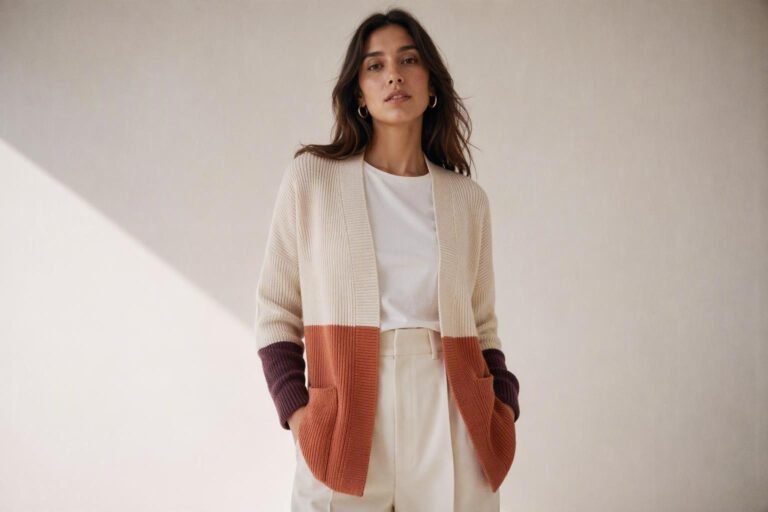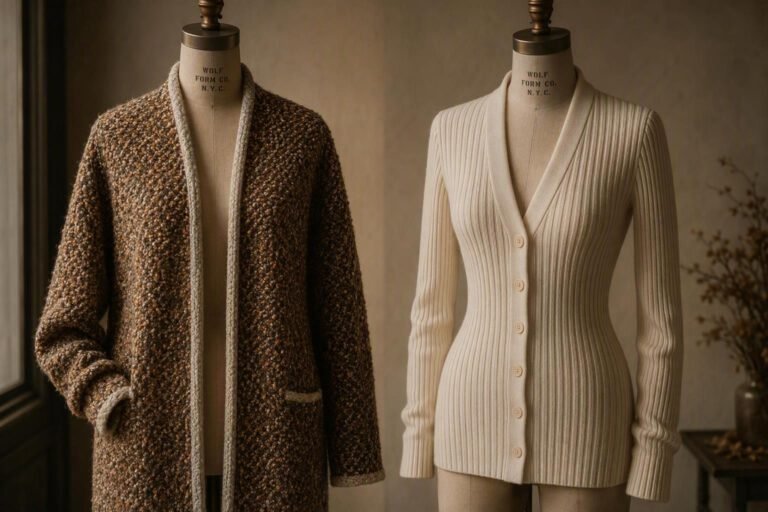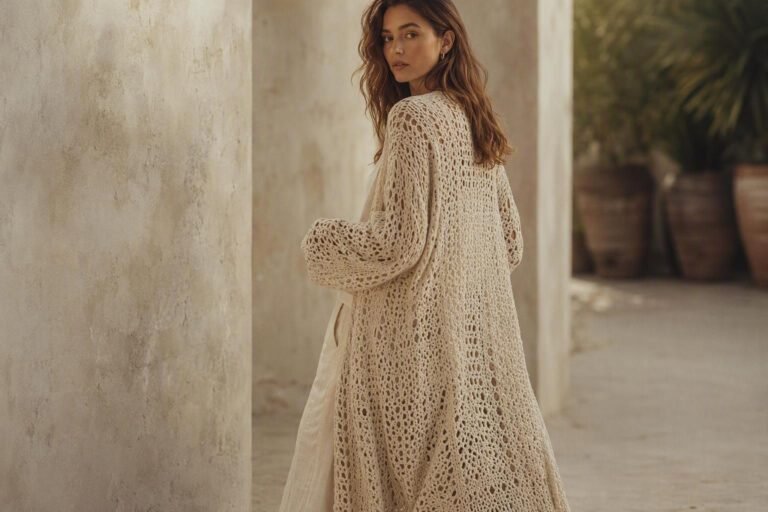

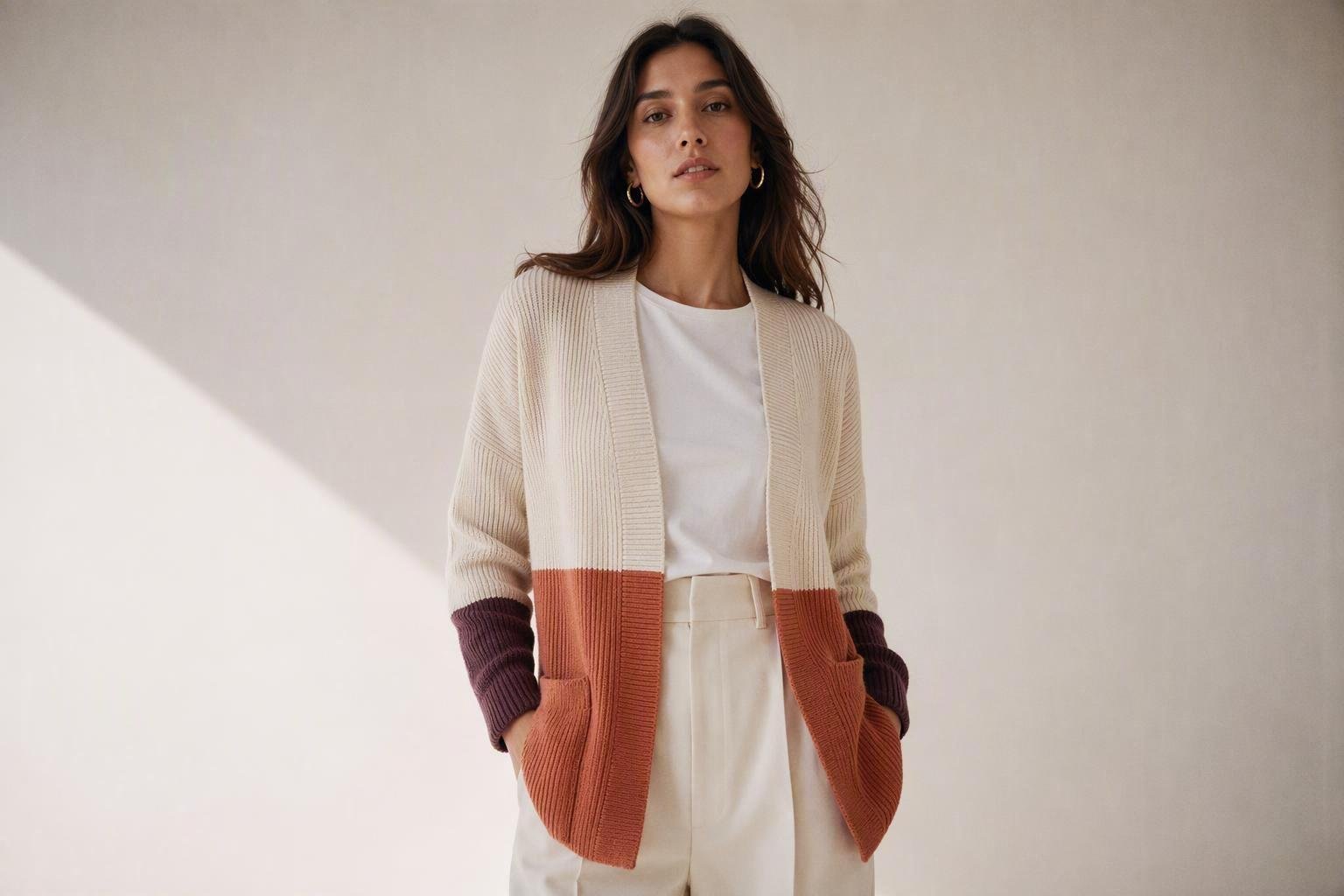
A color block cardigan is one of the fastest ways for a small label to look intentional. It reads as a clean, graphic statement — no fussy print, no repeating motif — just bold panels of color doing the work. Better still, it’s a style shoppers keep reaching for: color-blocking reappears on retail floors season after season as the “easy personality” piece for women’s knits.
What most indie founders don’t realize is that a color block cardigan is quietly technical. Those crisp lines between colors aren’t printed on — they’re structural. Where the block lands, how the colours join, and how the panels scale from a size XS to a size XL all decide whether the piece looks sharp or cheap.
This guide is for emerging labels who want to put their own color block cardigan into the world: which technique builds the blocks, how to pick a palette and block placement, how to spec and grade it, how to shoot it so it sells, and how to produce a small run without a brutal MOQ.
Key Takeaway: A color block cardigan looks premium when the block boundaries are clean and the palette is disciplined — a couple of strong colors handled well beats a busy mix every time.
What a color block cardigan is (and isn’t)
Let’s pin the definition down, because the term gets used loosely. A color block cardigan is a cardigan where the look is built from large, solid panels of contrasting color — think an ivory body with a terracotta lower half, or a navy body with contrast sleeves. The colors sit in clean blocks rather than as a small repeating pattern.
That separates it from two close cousins:
A patterned / motif cardigan uses a graphic — florals, geometrics, a logo — where the colorwork draws a picture. A color block cardigan draws no picture; the blocks themselves are the design.
A printed cardigan applies ink on top of the fabric. On a color block cardigan, each colour is actual yarn knitted in, so it has the depth, hand-feel, and durability of a real knit.
For shoppers this is a big part of the appeal: the colour can’t crack, peel, or fade out like a print, and the fabric feels substantial rather than flimsy. For a designer, it’s the honest route to a bold look that still reads as premium knitwear.
What this means for you: when you spec one, you’re not describing a print. You’re describing a structural colour story that a factory has to knit and join.
How colour blocks are actually knitted in
There are a few ways to build solid blocks, and each changes your cost, your sampling time, and how clean the result looks. Getting this decision right up front saves you from an expensive surprise later.
Intarsia: the default for large, crisp blocks
Intarsia is colourwork where each colour area is knitted from its own separate yarn “island.” Because every block runs its own feed, nothing is carried across the back of the fabric — you get a clean reverse with no floats. That makes intarsia the natural choice for a bold, two-block statement, because the joins stay tidy and the garment stays light. Xindi’s intarsia and jacquard techniques page makes the point plainly: intarsia is “a color-blocking technique” built for large, crisp colour fields.
The honest trade-off is cost. Intarsia is slower to knit and needs multiple yarn carriers, so factories often quote it as noticeably more expensive than a machine-driven alternative, and it runs best in mid gauge — roughly 7–10 gauge is the sweet spot for clean panels. Save it for the design where a big, unbroken block is the whole point.
Panel blocking: when the cardigan’s own seams do the work
You can also build a colour story from the garment’s own construction. Knit the front lower panel in one colour, the upper yoke or sleeves in another, then link the pieces together. This “fully-fashioned panel blocking” is a natural fit for cardigans because the front opening, side seams, and sleeve caps already give you clean places for a colour change. It’s often the most practical route for a tonal or horizontal split, because you’re working with whole panels instead of programming many colour changes inside one panel.
Jacquard and banding: for blocks that repeat
Jacquard works multiple colours in the same course and carries the unused yarn behind as floats. It’s efficient and machine-friendly, but for true large solid blocks it has a catch: the floats add weight and can snag or distort on a fine single-layer cardigan. Where jacquard genuinely earns its place is a repeated block — say a colour band that recurs down the body or a coordinated sleeve-and-hem story — where the repeat is small enough that floats stay manageable. Xindi’s jacquard vs intarsia vs prints guide walks through exactly which method suits a solid effect versus an all-over pattern.
Stripes: the fast, low-cost colour block
A stripe uses simple colour changes between courses, with no intricate float or panel management. If your “blocking” is really horizontal banding, or you want an easy, economical way to introduce colour, stripes are the lowest-risk option — quick to sample and friendly to a small budget. They just read differently from a clean geometric block.
Pro Tip: Decide before you brief — is this one big hero block (intarsia or panel blocking), a repeated banded block (jacquard), or a simple horizontal colour stripe? The answer drives sampling time, cost, and how many colourways you can realistically launch.
Picking the right block placement
Where the colour changes land shapes the whole garment. A colour boundary can sit at the natural seams (waist, hip, yoke, sleeve cap) or cut across a panel for a bolder, more graphic effect. The rule of thumb that keeps a design balanced: keep the number of colours low and decide the boundary around a stable reference point so the line stays crisp and reproducible.
Two placement tricks work consistently well:
Use darker blocks to rebalance a silhouette. A deeper colour on the lower half or on side panels reads as slimming and grounding, while a light upper body keeps it approachable. It’s the same effect stylists use with a dark column from the waist down.
Let a bright block own one focal zone. Put your hero colour on the upper body or sleeves and keep the rest simple, so the eye lands where you want it.
What this means for you: if you’re unsure, mirror the blocks symmetrically across the two fronts and the back, and keep the placket (the button band) continuous. Asymmetry is a deliberate choice — plan it, don’t let it happen by accident.
Choose a palette that sells
Colour is the entire product here, so the palette deserves more thought than the average knit. A few practical rules will keep it from drifting into chaotic:
Stay within 2–4 colours. The further apart your colours sit on the colour wheel, the fewer you should use — two bold opposites can look sharp, but five colours screaming at once rarely do.
Start from a neutral base, then add. An ivory, black, navy, or taupe background with one or two high-contrast accent blocks is the safest commercially and the easiest to style.
Test value, not just hue. A navy block on a near-black body disappears. Turn your palette photo to black and white — if the blocks stop separating, they won’t read on a shelf either.
Balance bold and wearable. A couple of jewel tones or a rich accent read as a fashion piece, while a full rainbow of unrelated brights reads as costume. Your shopper wants personality without effort.
What this means for you: two to three colours on a single block cardigan keeps both the design and the sourcing simple. Every extra colour splits your order across more yarn and machine setups, which pushes your MOQ up — a disciplined palette is a genuine cost lever.
Silhouette: cropped, oversized, or classic
The block layout and the fit have to agree. A few guidelines:
Cropped reads fashion-forward and lets a block carry the eye toward the waist. Works best with a high-waisted trouser or skirt and a clean, sharp block — the shorter length keeps the geometry punchy.
Oversized is a relaxed statement piece, but it needs simpler block geometry and fewer colour changes. At a large scale, busy blocking starts to look muddled; two big, calm panels suit an oversized cardi far better than several small ones.
Classic / mid-hip is the workhorse. A clean two-block colour story on a standard fit grades most cleanly across sizes and layers over almost anything, which makes it the smartest first launch.
If you plan a colour block cardigan outfit as a lookbook or product-page story, the silhouette is half the sell: a cropped or gently shaped block cardi over denim or a tailored trouser reads modern and versatile, not frumpy.
Spec the blocks so the sample matches your sketch
This is where most small-label disappointments start. A mood-board cardigan looks lovely as a photo, then the sample arrives with the block line drifting across the seam or the colours swapped in the wrong panel. The fix is to spec colour placement like the construction detail it is.
Give the factory a piece-based colour map, not “colour-blocked as shown.” For each piece, spell out:
Which colour sits where, with a Pantone or yarn reference.
The boundary location measured from a stable point — on the body, from the high point of shoulder (HPS); on a sleeve, from the sleeve cap.
Whether the boundary must align level across the side seams, shoulder, and placket.
How the join is made at every block edge (knitted transition, intarsia join, or a linked panel seam).
The rib handling — whether neck, cuff, and hem ribs are self-colour or a deliberate contrast, and whether the rib is part of the block story or purely functional.
Grading is the detail that makes or breaks it. Don’t just grade overall length and chest width — also grade the colour boundary by proportion of body length, not by fixed centimetres. If you shift blocks by the same fixed amount on every size, the block can look too tall on a size S and too short on an XL. Grade the boundary proportional to the garment so the visual balance holds across your whole size run, and keep placket width and rib heights either fixed or minimally graded.
The cleanest way to de-risk a bold block is to knit a small block swatch on the actual gauge — just the colour join — before you order a full sample or bulk. It’s cheap, it tests the boundary seam and the hand-feel of two colours next to each other, and it catches 90% of the “the sample doesn’t look like my sketch” problem at the cheapest possible moment.
Style and shoot it like the premium piece it is
A color block cardigan has more styling range than people give it credit for. In the current US market, color-block cardigans read as a statement layer — the piece that adds personality to an otherwise simple outfit. Stylists consistently pair them over a plain tee or tank with denim, a slip skirt, or high-waisted trousers, letting the cardigan be the focal point.
Three rules do most of the work on a product page or lookbook:
Make the cardigan the one hero. Ground everything else in solids — white, black, cream, denim. The moment you compete with a printed or busy layer underneath, the block reads as clash rather than statement.
Show fit accurately. Lead with an on-model hero so shoppers see sleeve length, how the blocks sit on the body, and how the cardi drapes open and closed.
Get a macro knit close-up. The block boundaries and knit texture are what justify your price. A tight shot of the clean colour join is worth more than a dozen moody shots of the whole outfit.
On a US direct-to-consumer page, shoot on a clean neutral backdrop with minimal props — a block cardigan sells itself when the colour does the talking. What this means for you: if you’ve made a disciplined two-colour piece, let that discipline show in the photography rather than hiding it behind a busy set.
Produce a small run without a monster MOQ
The good news: a color block cardigan is very producible at low volume, provided you don’t balloon your own requirements. What pushes a small run’s MOQ up isn’t the colour blocking itself — it’s custom yarn, too many colours, complex trims, and a wide size band.
The levers are consistent across manufacturers:
One core cardigan block, and change only the colour layout between styles.
Two to four colours max on your first run.
Stock yarns and stock colours. Factory-holding or stock-available yarn is one of the strongest low-MOQ enablers; custom dyeing carries its own minimums.
Standard buttons and trims. Custom-branded buttons are great, but confirm the trade-off on the first order.
A tight first size band. Launch your core sizes, then expand with sell-through data.
These levers matter even more for colourwork. At a facility with structured quick sampling, a classic cardigan runs about five to six days for fabrication, and adding intarsia or jacquard colour programming typically stacks on two to three more days — around seven to eight days for a multi-colour piece, per Xindi’s quick-sampling timeline. Build that window into your sell-in calendar rather than discovering it at the last minute.
A capable low-MOQ cardigan partner will take a colour-block style from around 50–100 pieces per style and colour — Xindi’s low-MOQ production page spells out that 60–100-piece band for cardigans, with fast prototyping and stock-colour availability. The short version: block cardigans are not an intrinsically high-MOQ style — but they’re colour-led, so the smart move is to swatch the colour join before you commit to a size range, and keep the palette disciplined so a single bold run stays affordable.
Sustainable yarn for a colour-led brand story
If your brand leads with sustainability, a block cardigan is a good canvas. The certifications worth knowing in plain terms:
OEKO-TEX — the finished product is tested for harmful substances; class level matters for closeness to skin.
RWS (Responsible Wool Standard) — wool from responsibly treated sheep and well-managed land.
GRS (Global Recycled Standard) — tracks recycled content through the supply chain.
GOTS — certified organic cotton from field to finished garment.
A sustainable knitwear supplier can cover several of these, and picking one aligned to your story — say a GRS-recycled wool or organic cotton for a clean block — gives you a credible environmental claim you can lead with on the product page. Just keep it honest: confirm with the factory which fibres and certifications the exact yarn actually holds, rather than assuming one certificate covers everything.
Common questions about designing a color block cardigan
Is a color block cardigan the same as a patterned or printed one? No. “Patterned” usually means a repeating graphic or motif. A color block cardigan is built from large solid panels of contrasting colour, with no picture drawn. And a true block cardigan is knit in coloured yarn, not printed on top — so it keeps the depth and hand-feel of a real knit.
Should my solid blocks be intarsia or jacquard? For one large, crisp solid block, intarsia (or panel blocking) gives the cleanest result with no floats on the back. Jacquard is more efficient for a small repeating block or banded colour pattern, but carries floats that add weight and snag risk on a fine single-layer cardigan.
Can I sample a colour block before I order bulk? Yes, and you should. Ask for a small block swatch — just the colour join on the right gauge — before committing to a full sample or bulk. It tests the boundary seam and how the two colours sit together, and it’s far cheaper to fix a swatch than a whole run.
How do I stop the block shifting between sizes? Grade the colour boundary by proportion of body length from a base size, not by fixed centimetres, and anchor the boundary to a stable point like the high point of shoulder (HPS) on the body and the sleeve cap on a sleeve. Add a clear tolerance for how far the line may drift at seams.
Why does my colour block look muddy when knitted? Usually it’s a contrast problem. If two blocks are close in value (how light or dark they are), they blur together. Compare them in black and white — if the blocks stop separating, darken or lighten one so the boundary reads clearly.
Key takeaways
A color block cardigan is built from large solid panels of contrast colour, not a print and not a repeating motif.
Choose the construction that matches the block: intarsia or panel blocking for one big crisp block, jacquard for a repeated block, stripes for simple colour.
Keep the palette to 2–4 colours, test value (not just hue), and decide block placement around a stable reference point.
Match silhouette to block geometry — simple blocking suits oversized; cropped carries a sharper block.
Spec a piece-based colour map with boundary measurements and grade the boundary proportionally across sizes.
Swatch the colour join before bulk, keep stock yarns and a tight size band, and plan a ~7–8 day colourwork sampling window into your calendar.
Next steps (for small labels)
If you’re ready to turn a color-block concept into a real SKU, the fastest safe sequence is: lock your palette and choose your block direction, sketch the colour map on a clean flat, then start with a block swatch so you can see the two colours and their join on the actual gauge before you order bulk.
Xindi Knitwear (Knitwear.io) runs low-MOQ cardigan programs from around 50–100 pieces per style and colour, with intarsia and jacquard colourwork and certified yarn options for small designers. If you want help tightening your colour spec or validating a palette on stock yarn, that’s a sensible first conversation — request colour swatches on your chosen yarn and confirm a sampling plan aligned to your sell-in window before you place a bulk order.