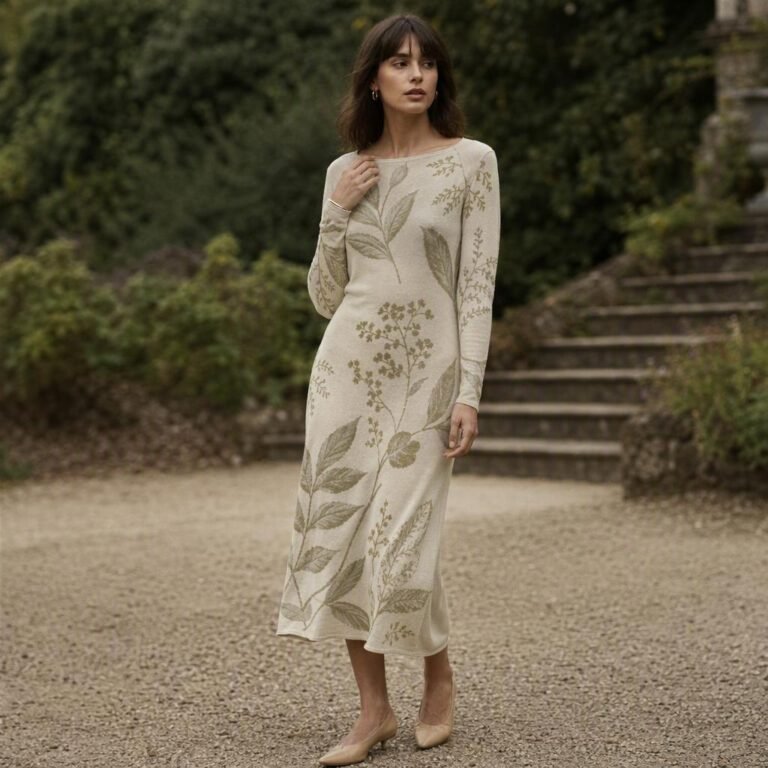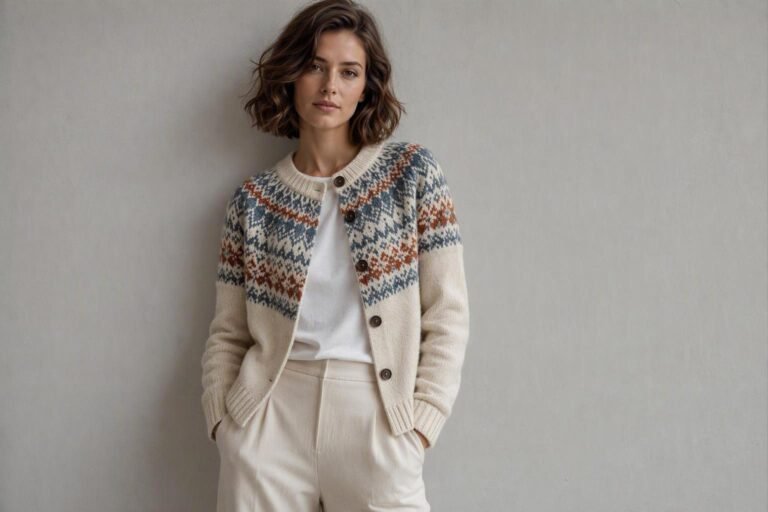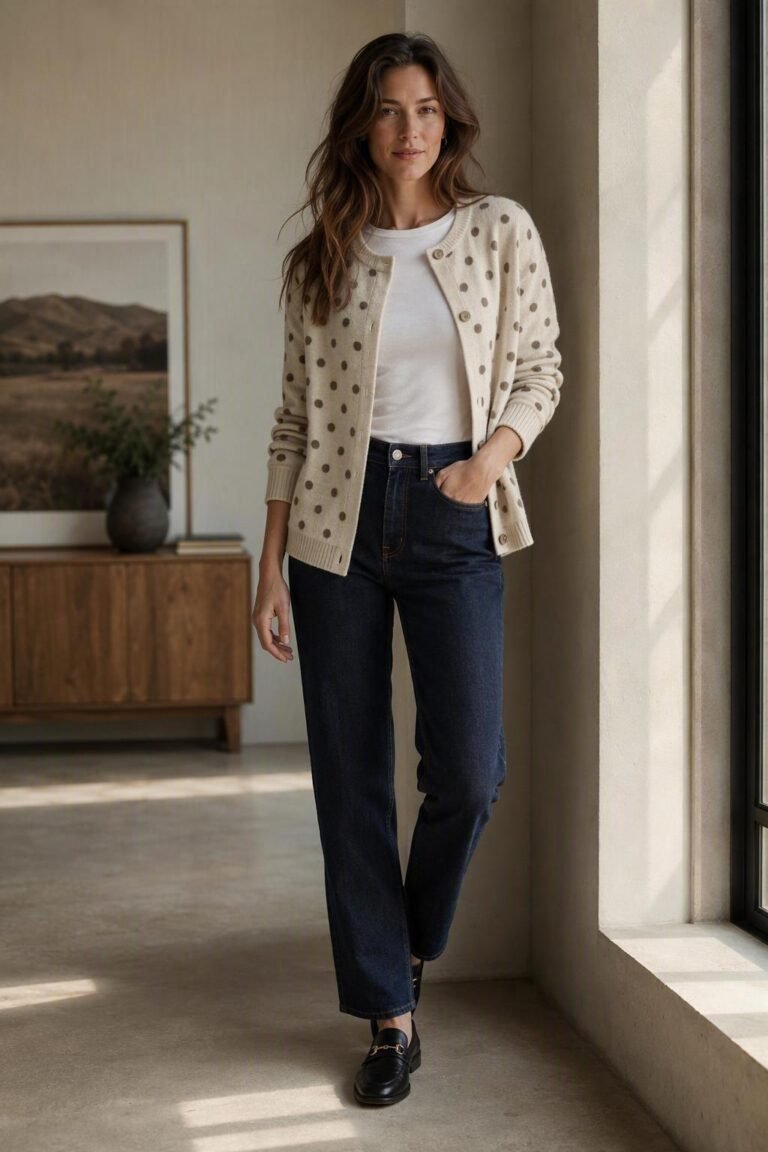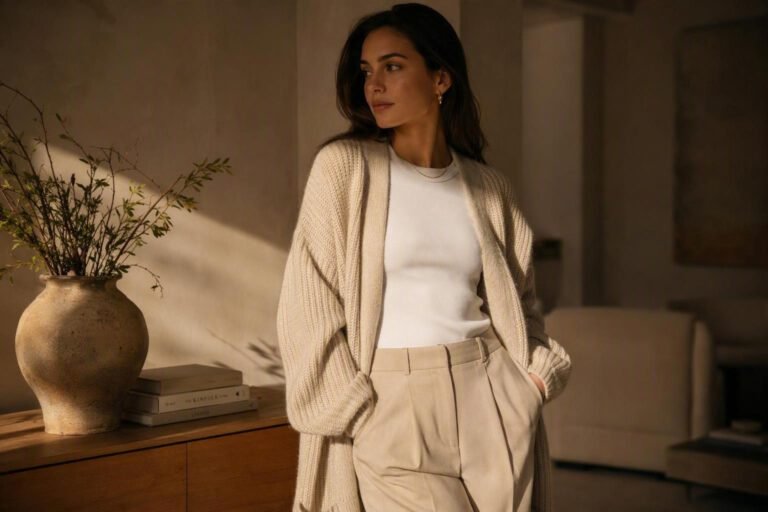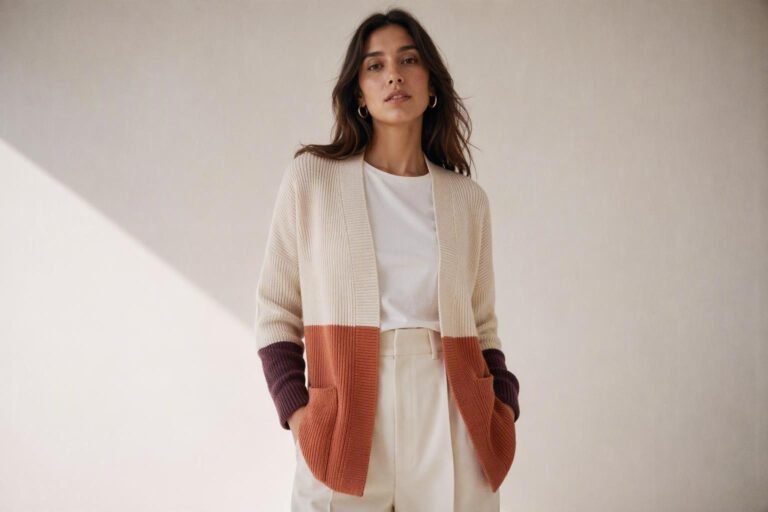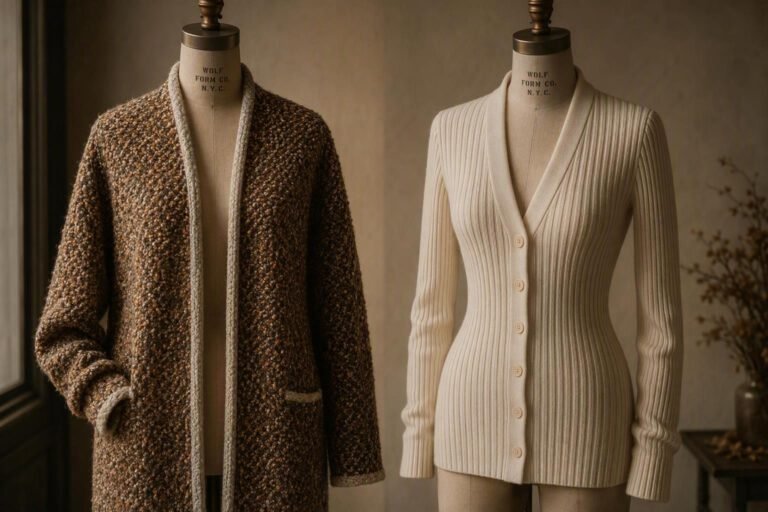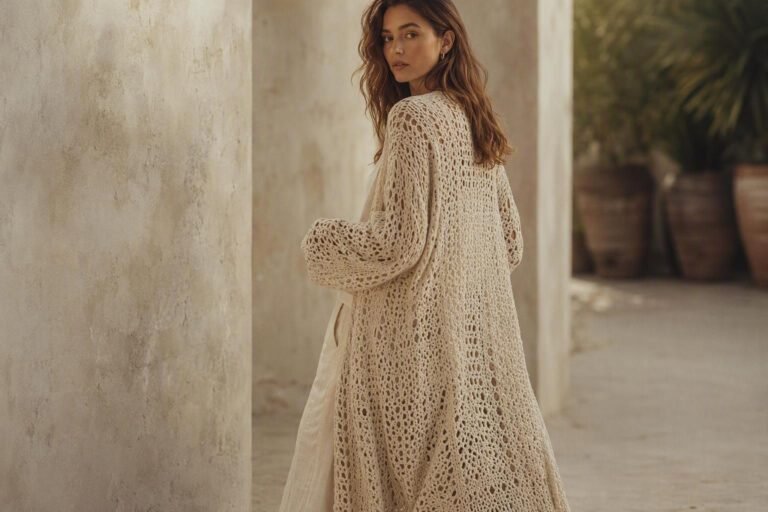

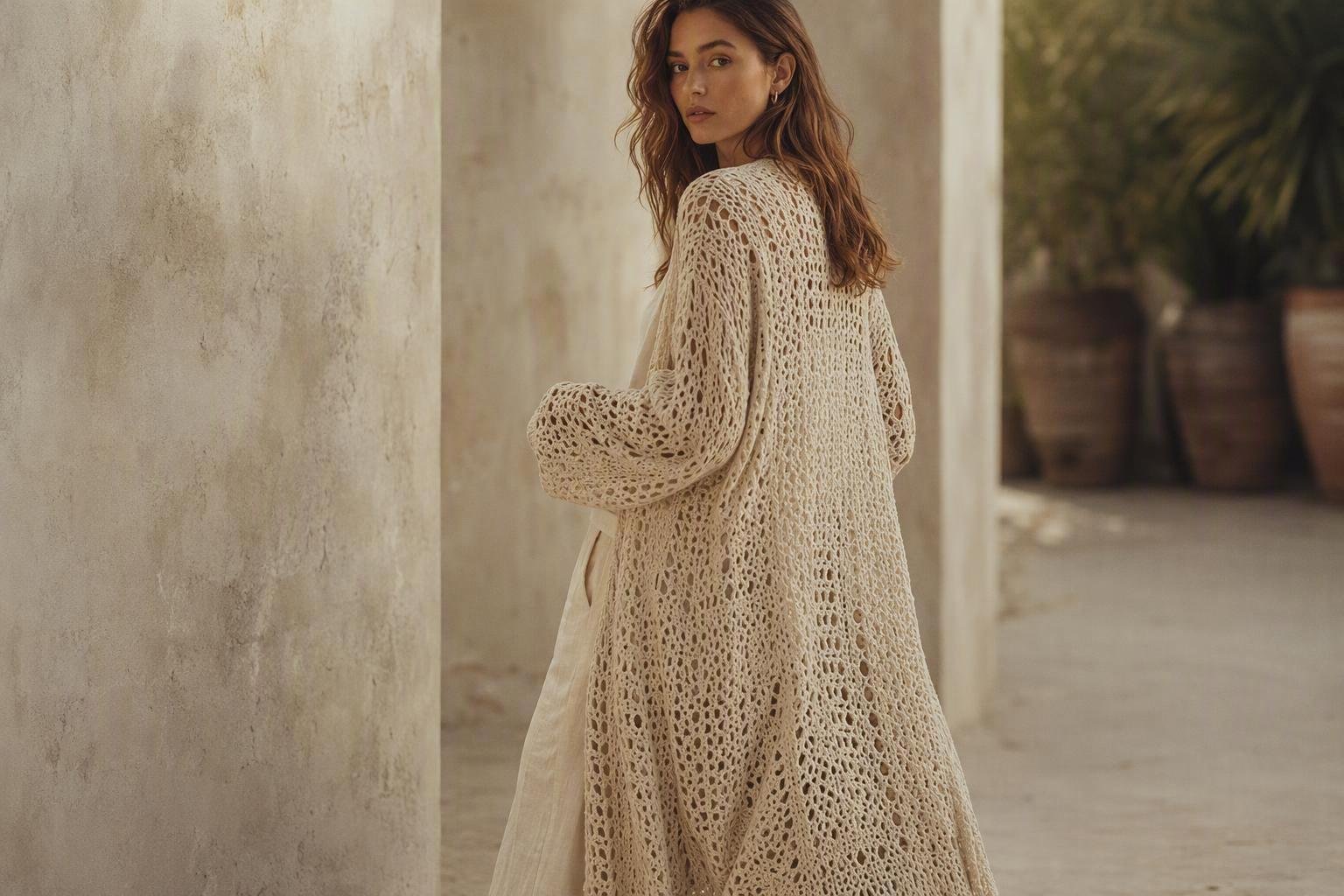
A floor-grazing, handcrafted-looking cardigan is one of the most photogenic pieces a young knitwear label can drop. Every stitch reads as artisanal, and the open, textured fabric photographs beautifully across social and editorial channels.
The problem is that the look everyone loves on the mood board is genuinely expensive to scale. True hand crochet cannot be mass-produced the way knitting can, so a full-handmade style carries labor that quickly eats a small brand’s margin.
That tension — wanting the “long crochet cardigan” aesthetic, needing a price a small-batch launch can survive — is exactly what this guide addresses. We walk through how to define the crochet-look you actually want, choose yarn and gauge that protect drape, pick the production route that fits your collection, and source the piece at a low minimum order. By the end you’ll know how to take the idea from a reference image to a manufacturable cardigan without guessing.
Key Takeaway: “Crochet” on a knitted cardigan is usually a look, not a mandate. Decide whether you want true hand crochet, a machine-knit stitch that mimics it, or a hybrid with hand-finished trims — each changes cost, lead time, and consistency.
Define the Crochet Look You Actually Mean
Most young brands fall in love with an image, not a construction method. Before any yarn or factory conversation, pin down what the cardigan should feel and look like, because “crochet-look” spans a wide spectrum.
At one end is the loose, open, hand-done fabric — raised loops, irregular holes, a boho, holiday, or free-spirited mood. At the other is a tighter, more structured crochet that sits closer to a classic knit cardigan. Between them sit granny-square geometry, lace meshes, scalloped edges, and other openwork details. Understanding where your long crochet cardigan sits on this range is the first thing your development partner will need to know.
For a commercial cardigan, the distinction that matters most is openness. The more open and loopy the structure, the more it strains under washing and wear, and the harder it is to keep consistent across dozens of pieces. A cardigan built to sell usually sits at the structured end, or borrows one open crochet detail — a hem, cuff, or trim — rather than making the whole body openwork.
Write the target down as a short spec: silhouette (fitted, relaxed, oversized), length (hip, mid-thigh, maxi), openness (dense, scattered holes, fully open), and where you’d allow a hand-finished touch. This becomes the reference your tech pack and factory use later.
Choose the Yarn So the Cardigan Keeps Its Drape
Yarn decides whether the piece photographs like a couture duster or puddles into something you can’t style. For any wearable, the smart order is to pick by end use: how it should drape, whether it needs structure or stretch, how it must wash, and the climate it targets.
For a long cardigan, prioritise drape and resilience over bulk. Very heavy yarns make a floor-length garment heavy and hard to wear; lighter weights move better and keep a flowing line. Wool and merino blends give warmth with good recovery and shape-holding, which suits cooler-weather and transitional drops. Wool-cotton blends split the difference. For warm-weather or sheer layering, cotton and linen read breathable and lightweight — the classic crochet beach-cardigan territory. This mirrors how yarn guides for garment crochet steer makers toward drape and easy-care, as Yarn.com’s crochet yarn guide does for drape-focused wearable projects.
Two practical points matter for a brand:
Care and behaviour must match the label claim. If your wash-care tag promises machine washing, the yarn and finish have to survive it — state that assumption up front rather than discovering it at QC.
The drape and structure live in the stitch as much as the fiber. Texture stitches hold shape; a very open, lacy fabric gives a lighter, more seasonal feel but needs tighter gauge discipline and cleaner finishing because flaws show.
Anything wool or animal-fiber also opens the door to certified sourcing. Young labels increasingly ask about RWS, GOTS, GRS, and OEKO-TEX yarn chains so the sustainability story matches the product. Naming the certification you want early avoids a last-minute scramble for traceability documents.
Lock the Gauge and Construction for a Repeatable Fit
Here is where a hand-done pattern and a sellable cardigan diverge. A maker can adjust as they go; a factory grade needs a locked gauge and panel logic.
Gauge is stitches and rows per inch, and it is the foundation of commercial consistency. Once yours is fixed, panel width and body length become arithmetic instead of guesswork. For a long crochet cardigan this matters more than for most pieces because length is the most gauge-sensitive dimension — a small drift changes where the hem falls, where armholes sit, and where pockets land.
The brand-friendliest construction is panel-based and mostly rectangular: a back panel, two fronts, and sleeves worked separately and seamed, with ribbing, collar, and pockets added afterward. That structure is easy to grade because you size by changing chain counts and row counts rather than re-engineering the garment, and it keeps sampling fast and consistent. It is also exactly how most long crochet cardigan patterns are laid out for multi-size wear.
In crochet patterns you’ll commonly see single crochet, half double crochet, and double crochet used for the body, with ribbing worked tighter or in back-loop-only single crochet for a crisp, clean edge. When you translate this to a factory, define:
fibre and (where it matters) the mill or approved blend
hook or machine gauge for the body and for any ribbed edge
a gauge swatch dimension and its acceptance range
seam and finishing order
proportional markers for length, armholes, and pocket placement per size
What this means for you: nailing gauge and a rectangular, panel-based build is what keeps your sample matching your bulk and your size run matching across colors — two of the biggest quality headaches for new labels.
Pick a Production Route for the Long Crochet Cardigan
This is the decision that shapes cost, timeline, and margin. There are three realistic routes for a small brand, and most labels end up using the second or third.
True hand crochet. You get the maximum artisanal story — real irregularity, authentic handmade texture. But there is no production machine that turns out true crochet the way looms and knit machines handle yarn, so a fully handmade body is slow, labour-heavy, and hard to scale, as Nicki’s Homemade Crafts explains on why crochet can’t be machine-crafted. It works for a limited hero piece positioned as artisan, not for a repeatable core SKU.
Machine-knit simulation. Flat-knit machines can reproduce the visual of crochet using lace meshes, tuck and transfer effects, and openwork stitch structures. This gives the handcrafted look at a factory price with far better consistency across pieces. It trades a little authenticity for control, which is usually the right trade for a commercial launch.
Hybrid. A machine-knit body with hand-done accents — crocheted hems, scalloped or twisted trims, applied motifs or motifs joined by hand — gives you the premium, handcrafted detail at the edges while keeping the bulk efficient and consistent. This is a common way to justify a higher retail price without making the whole garment by hand.
If you’re not sure, start with the structured end and add one hand-finished accent, then test the openness on a sample before committing. The rule the trade uses is simple: crochet-look that must scale and repeat sells best as knit simulation plus selective hand finishing; a one-off hero piece can carry true hand crochet.
Pro Tip: When briefing a factory, never rely on the term “crochet-look” alone. Attach a stitch diagram, an openness reference, a gauge, and a note on where handwork is allowed — the vague phrase means different things to different makers.
Build the Spec, Then Source It at Low MOQ
Once the look, yarn, gauge, and route are settled, you’re ready to source. Send the factory a clear tech pack — sketches, full measurements, stitch details, yarn composition, colour references, trim and label notes — plus a reference image if you have one. Many knitwear factories reverse-engineer the garment from a tech pack and can quote accurately against it.
A few numbers give you a realistic frame. Knitwear suppliers commonly quote cardigan minimums around 60 to 100 pieces per style and colour, with simpler styles able to start lower and crafted details recommending more. Recommended gauges for cardigans and knit jackets typically land in the 5G to 12G range. Sampling timelines for classic cardigans usually run in the 5 to 6 days range once details are confirmed, though open crochet-like or hand-finished pieces may take longer.
What drives cost up at small batch is colour count and machine scheduling, not the label size itself. If you keep to few colours, use stock or certified yarns that don’t need custom dyeing, and avoid all-over texture that slows the machine, you protect both your MOQ and your per-piece price. Add the point: whole-garment and other low-MOQ manufacturing routes can suit very small runs, though they limit some design freedom and depend on machine availability.
Before you sign off on bulk, agree the QC checks you’ll hold the factory to:
measurements against the approved size spec
shrinkage after washing or finishing
pilling performance
colour fastness and dye consistency
seam and linking quality, including button and trim strength on a cardigan
acceptance of a pre-production sample before bulk begins (an AQL of 2.5 is a common standard)
Key Takeaway: Keep the launch version simple — a few colours, a panel-based build, one hand-finished detail — and the low-MOQ path stays clean. Complexity at small batch is what pushes unit cost and lead time up.
Styling a Long Crochet-Look Cardigan for the US Customer
Because this is a fashion piece first, how it reads on the customer matters as much as how it’s made. The long, open cardigan earns its place in a US market drop for its layering flexibility — over summer dresses, against tanks and jeans, or on top of knit sets as the season cools.
Two styling notes tend to sell the style well. First, because a floor-length open cardigan adds a lot of fabric, a lighter drape (finer yarn or a more open stitch) photographs better and is easier to wear than a heavy blanket of texture — the same reason most long-cardigan patterns are built from simple panels and worked bottom-up so the length is easy to control row by row, as Make and Do Crew explains in its long cardigan guide. Second, the “crochet” character is often strongest when it stays at the edges — a scalloped hem or hand-finished cuff reads artisan without overwhelming the styling. That restraint also, conveniently, keeps production consistent, because true crochet can’t simply be spun at scale the way knit fabric can. When you brief your listing or editorial team, lead with the “handcrafted, layered, easy” feeling and show it styled over contrasting layers so the openness reads in photos.
Next Steps to Bring the Cardigan to Market
You now have the four pieces to move a long crochet-look cardigan forward with confidence: a defined look, a drape-first yarn, a locked gauge and panel build, and a production route that fits a small-batch launch.
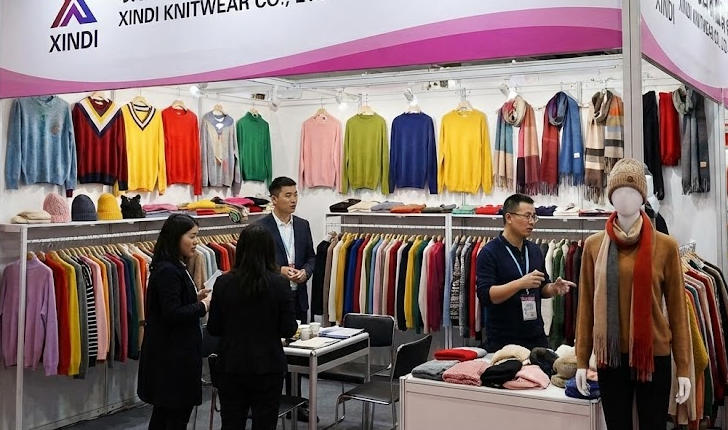
The practical next move for a young label is a paid development sample. Send one ref image and a short spec to a low-MOQ knitwear partner, approve the gauge and silhouette, then stress-test wash and wear before you commit to bulk. Manufacturers that specialise in low-MOQ private label can point you to cardigan-appropriate gauges, certified yarns, and hand-finish options — including suppliers like Xindi Knitwear whose custom knit cardigan development covers everything from sampling to bulk.
Before you hit send on that first order, get clear on your low-MOQ production expectations and the sampling timeline you’re working to, and agree the quality-checks that will define an approved piece. Do that, and the long crochet-look cardigan moves from a beautiful mood board to a real, sellable part of your collection.