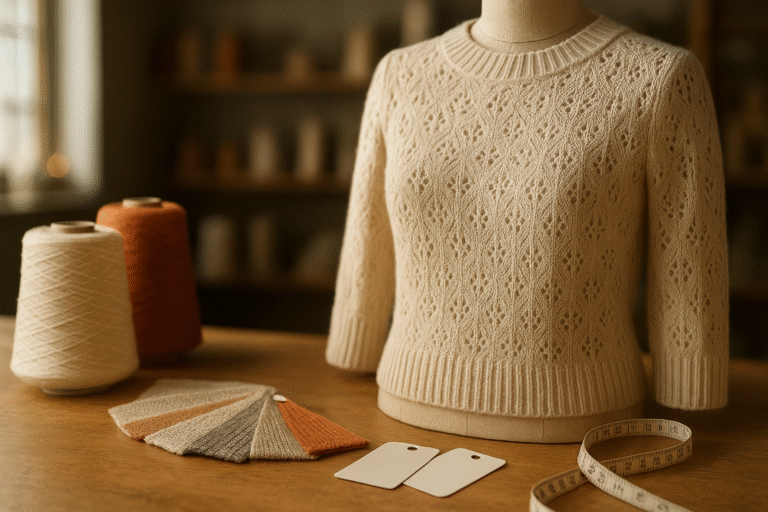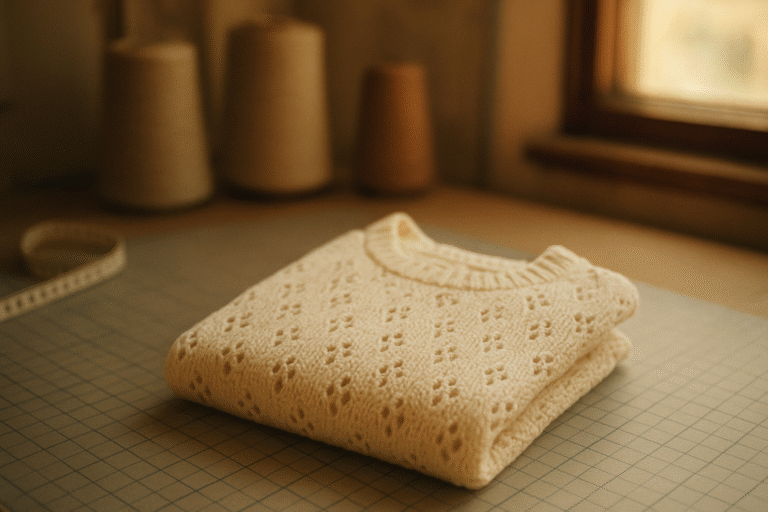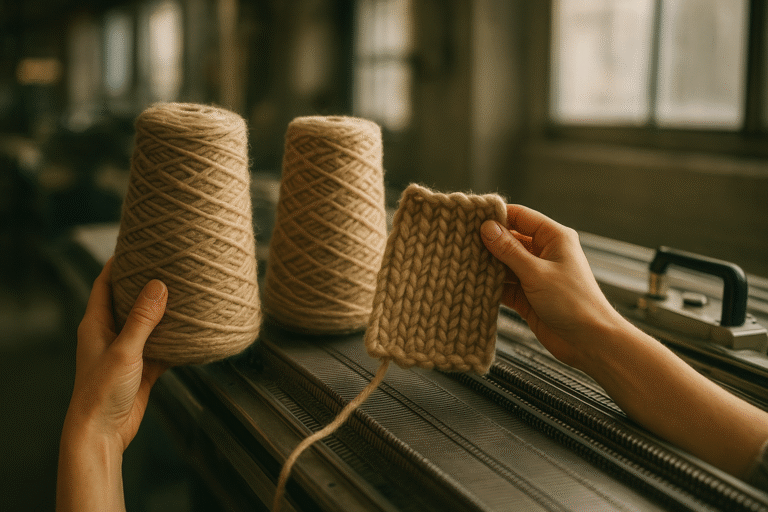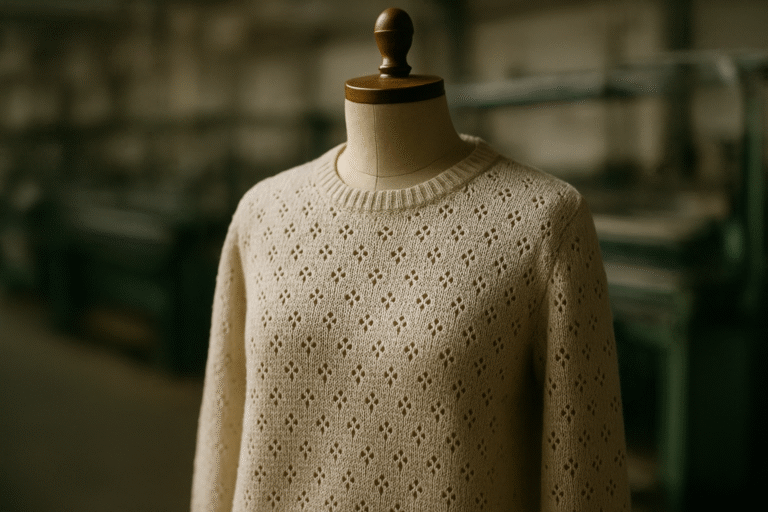

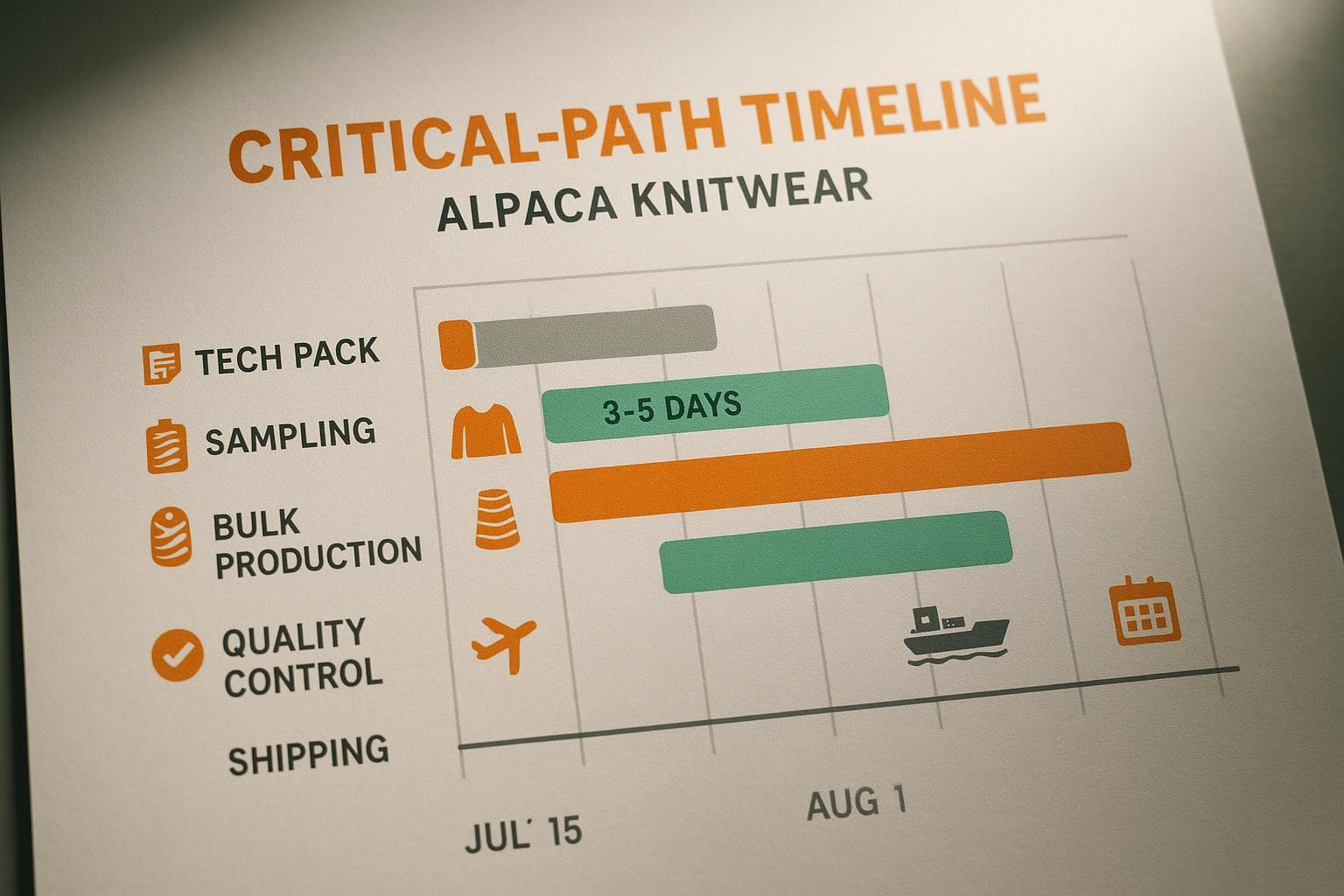
As of Feb 5, 2026 — Conflict of interest disclosure: This is a first‑party evaluation of Xindi Knitwear’s own capability. We use standards‑based methods and label evidence tiers. Hero outcome: low MOQ 50 pieces with controllable multi‑color and multi‑size costs, plus 3–5 day sampling for WHOLEGARMENT Donegal‑look sweaters.
Key takeaways
Low MOQ 50 pieces with clear cost control rules across colors and sizes is feasible under our current programs.
3–5 day sampling is achievable for typical styles when tech packs are complete; complex stitches may add a day.
WHOLEGARMENT feasibility with Donegal speckled yarns is solid at common gauges with proper tensioning and finishing.
AQL policy aligned to Major 2.5 and Minor 1.0 is supported, with inspection under ISO 2859‑1 or ANSI/ASQ Z1.4 plans.
Post‑wash performance is validated through ISO/AATCC methods for shrinkage, pilling, and color fastness.
DDP delivery windows commonly land at 7–9 days to North America and 14–18 days to the EU and UK, with a documented expo rush path.
Quick verdict snapshot
Pros: Fast samples, flexible MOQ, seamless comfort, standards‑based QC, predictable small‑parcel DDP options.
Cons: Certain fine gauges with heavy nep yarns may constrain intricate jacquards; some competitor data is limited for apples‑to‑apples comparisons.
How we tested
We anchored methods to recognized standards and our internal SOPs. Seamless knitting references and machine context are introduced in the WHOLEGARMENT overview by Shima Seiki; see the official WHOLEGARMENT technology page for model families and capabilities. For a production‑focused primer, see 3D Knitting & WHOLEGARMENT.
Environment: WHOLEGARMENT‑class machines capable of coarse to fine gauges typical for sweaters; program creation via industry‑standard CAD. Finishing lab equipped per ISO/AATCC practices.
Dataset: Three sweater patterns — plain jersey, 2×2 rib, and a simple cable or single‑layer jacquard — using Donegal‑look speckled yarns.
Evaluation:
Sampling speed from tech pack receipt to approved sample.
Feasibility metrics including defects per thousand courses, evenness, and needle‑bed stability under nep load.
AQL pilot lot at Major 2.5 / Minor 1.0 under General Inspection Level II.
Post‑wash: dimensional change per AATCC/ISO, pilling per ISO 12945‑2, color change and staining per ISO 105.
Evidence tiers: Tier‑1 includes international standards and official references; Tier‑2 includes our logs, lab sheets, and inspection math; Tier‑3 would include external social proof where applicable. Items still awaiting artifacts are flagged as Insufficient data.
WHOLEGARMENT Donegal-look sweaters feasibility
Donegal‑look yarns contain multicolor neps that can disrupt yarn path and stitch formation. Feasibility rests on choosing workable gauges and tensions, plus disciplined finishing.
Gauge guidance: Coarser and mid gauges are generally more forgiving for speckled yarns with larger neps, while finer gauges may call for tighter nep size control from the spinner. We frame feasibility with machine families documented by the manufacturer; refer to Shima Seiki’s official WHOLEGARMENT overview for current model and gauge statements.
Programming notes: For rib or single‑layer jacquards, keep pattern density moderate when the nep load is high; monitor defects per thousand courses and needle break rates to decide if tension offset or yarn path polishing is needed.
Finishing: Gentle wash and block stabilize dimensions and help seat neps; ensure even steaming and flat drying to avoid visual banding.
Evidence tier: Tier‑1 for technology references; Tier‑2 in progress for defect logs and pass rates by gauge.
AQL and QC methodology
We execute final inspection using a buyer‑aligned plan at Major 2.5 and Minor 1.0, with Critical at 0 for safety and labeling elements. Sampling follows General Inspection Level II under ISO 2859‑1 or ANSI/ASQ Z1.4. For readers seeking the underlying acceptance sampling framework, see the ANSI/ASQ Z1.4 explainer and our process article Quality assurance and inline production control.
We will publish a representative pilot lot with lot size, code letter, sample size, and Ac/Re thresholds at 2.5/1.0 once anonymized.
Evidence tier: Tier‑1 standards; Tier‑2 pilot AQL sheet pending.
Post‑wash performance
We verify dimensional stability, surface durability, and color integrity under common laundering scenarios.
Shrinkage: Domestic laundering per ISO 6330 or AATCC TM 135. Typical targets for sweaters land near ≤3% width and ≤5% length, subject to fabric architecture and yarn blend. Contextual finishing guidance is in our Knitwear finishing and assembly guide.
Pilling: Resistance graded via ISO 12945‑2 using Martindale or pilling box methods depending on lab setup; most mid‑market briefs target grade ≥3 after multiple cycles.
Color fastness: Evaluated with ISO 105‑C06 to washing and ISO 105‑X12 to rubbing; grading via grey scales. A concise overview is available from Intertek’s color fastness testing explainer.
Evidence tier: Tier‑1 methods cited; Tier‑2 lab sheets with photos and raw grades pending.
Cost and MOQ flexibility
The operating floor for this program is 50 pieces per style. To keep costs predictable when splitting across sizes and colors, we apply simple rules of thumb and clarify them before sampling. Typical patterns include a three‑color split with balanced size curves; yarn purchase is matched to cone pack sizes to limit waste, and machine time is batched to reduce setup loss when swapping colors.
Evidence tier: Tier‑2 price ladders as of Feb 5, 2026 will be added after anonymization.
Logistics case snapshots
DDP small‑parcel shipments are often the cleanest path for low‑MOQ capsules. In our recent cases, 7–9 days to North America and 14–18 days to the EU and UK are common ranges for air courier, acknowledging variability for customs and route mix. For definitions and UK post‑Brexit nuances, DHL provides a clear DDP explanation. When timing is tight for showrooms, we have executed a four‑week expo rush path that starts with sample approval, proceeds through yarn booking and knitting/finishing, and closes with DDP to the venue, keeping a few buffer days for customs and last‑mile variances.
Evidence tier: Tier‑2 airway bills and tracking logs will be linked upon client permission.
Competitors compared
We encourage buyers to benchmark. Two common alternatives our readers consider:
Italian premium OEM with low MOQ: Several Italian knitters advertise low MOQs near 50 pieces for premium yarns. Public pages tend to emphasize craftsmanship and proximity for EU brands but seldom publish WHOLEGARMENT specifics, sampling TAT, or AQL policies. Data gaps limit direct scoring here.
Turkish or broader EU seamless OEM: Turkey hosts capable seamless manufacturers serving EU lead times. Public sites list seamless apparel but rarely provide needle gauge matrices, Donegal‑yarn feasibility notes, or formal AQL disclosures, and MOQs often start higher.
We will update this section with apples‑to‑apples metrics — sampling TAT, MOQ ladders, Donegal‑yarn feasibility, AQL policies, post‑wash grades, and DDP options — where primary data becomes available. Our intent is fairness, not strawman comparisons.
Who this is for
Emerging US, EU, and UK brands needing 50‑piece capsules across colors and sizes, with showroom‑aligned sampling speed and verifiable QC.
Who this is not for
Buyers chasing ultra‑low unit prices at very high MOQs or those requiring exotic stitch complexity at fine gauges with large‑nep yarns and zero re‑knit tolerance.
The bottom line
If your priority is to validate a Donegal‑look WHOLEGARMENT capsule quickly, keep cash risk low at 50 pieces, and maintain standards‑based QC, this program delivers a pragmatic path with documented methods. Explore the seamless engineering overview on Xindi’s WHOLEGARMENT capability page and review our QA methodology in Quality assurance and inline production control before you brief your next sample. We welcome technical conversations grounded in your stitch map and target gauges.