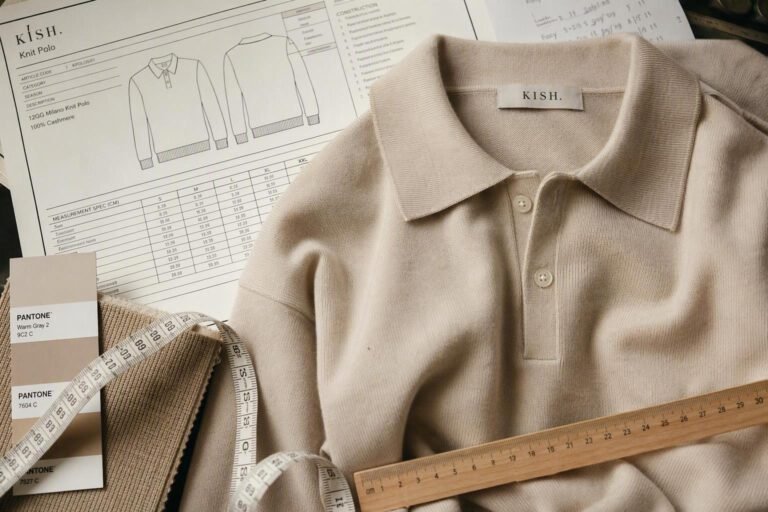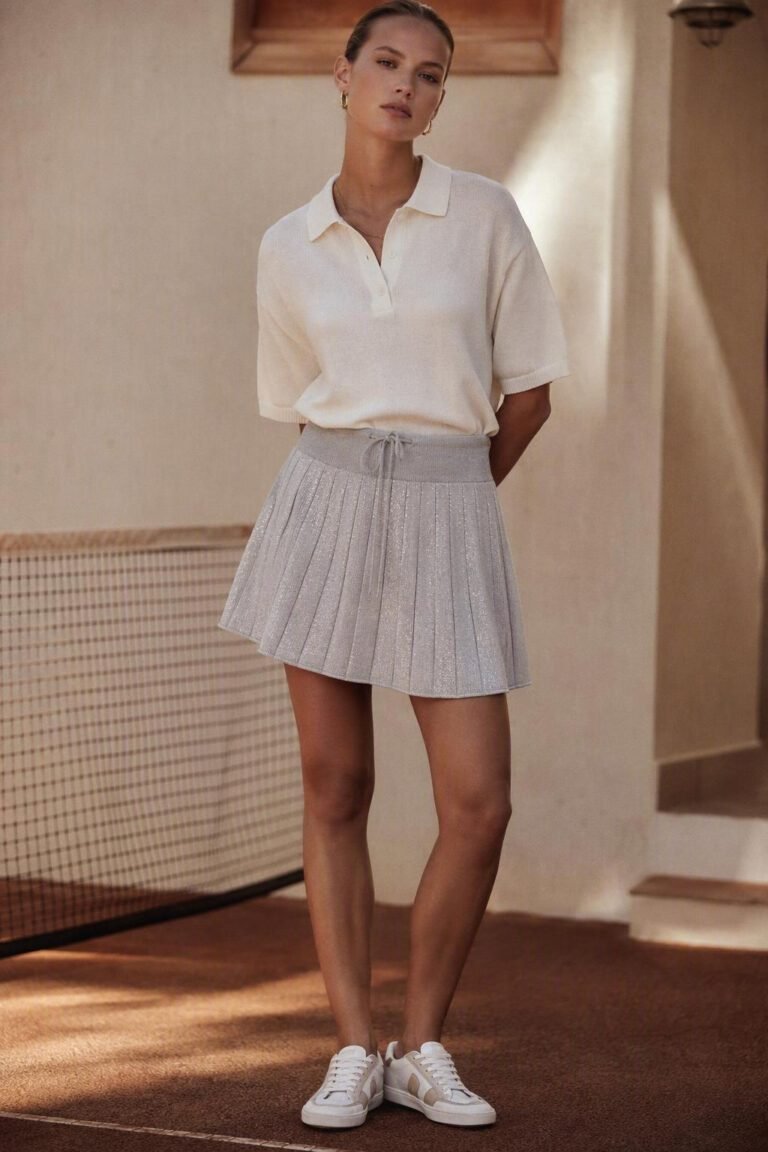

If you’re building a “polo sport” sweatsuit set—think a polo-collar top paired with joggers—you’re not just sourcing a hoodie factory. You’re sourcing a product where collar construction, color control, and wash durability can make or break repeat orders.
This guide is for decision-stage indie labels in the US who are ready to start sampling with a low MOQ and want fewer surprises on timeline, QC, and cost.
Key Takeaway: Low MOQ isn’t a single number. It’s usually a production system constraint—colors, materials, and process flow—not “how much cotton your garment weighs.”
1) Define what “polo sport sweat suit” means in production terms
“Polo sport” is an aesthetic shorthand. Historically, it’s been used by major brands (for example, Ralph Lauren’s 1990s “The Story of Polo Sport”)—but for sourcing, you should translate the vibe into build decisions.
Here are the spec choices that matter most before you request quotes:
Collar options (and how they change MOQ and defect risk)
Self-fabric collar (same body fabric): easiest for low MOQ, lower trim sourcing friction.
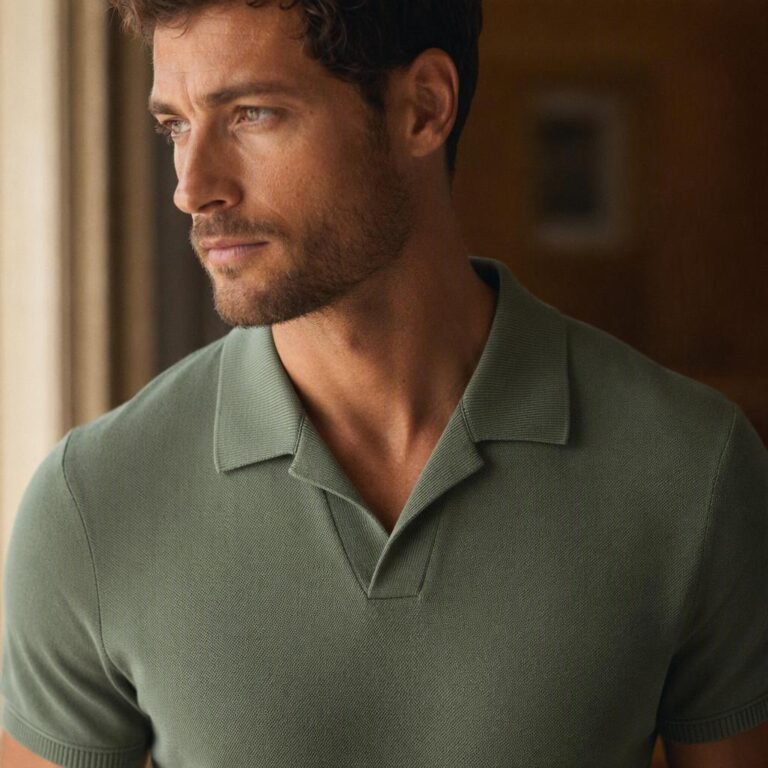
Rib collar: sharper “polo” look, but you need the rib spec locked (gauge, elasticity, recovery). Rib drift is a common repeat defect.
Woven collar + placket: looks clean, but it’s closer to cut-and-sew polo construction—more trims, more sewing steps, often higher MOQs.
Fabric choices for cotton-heavy sets
For “polo” sweatsuit sets, brands usually land in one of these constructions:
French terry (loopback): breathable, cleaner exterior surface.
Fleece (brushed interior): warmer, but the brushed face can increase visible wear over time.
Double knit: more structure and polish, typically a bit heavier and more stable.
If you need the top to feel elevated (collar stands, placket sits flat), a smoother exterior like French terry or a more structured knit often reads more “premium” than a fuzzy fleece.
2) Needs assessment: what to lock before you email factories
Factories can’t quote accurately—or hit your deadline—if your spec is still moving.
Before you send RFQs, lock these five things:
Target MOQ per color (e.g., 50–100 sets)
Color strategy (stock colors vs custom dye)
Collar construction (self / rib / woven) + button/placket details
Size run plan (balanced across S–XL vs narrow run)
Wash + performance requirements (pilling, shrinkage, colorfastness)
Pro Tip: If you can only do one “grown-up” thing in your first season, do this: write a one-page QC spec (tests + acceptance targets) and attach it to your tech pack. It prevents most “we thought you meant…” problems.
3) How to evaluate a low-MOQ polo sweatsuit set manufacturer
This is the decision-stage framework. You’re evaluating whether the supplier can deliver sample-to-bulk reproducibility with your target MOQ—and whether the quote reflects reality.
The three questions that matter most
Can they support your MOQ per color without cutting corners?
Can they explain their sampling ladder and what gets “locked” at each milestone?
Can they name and run the tests you’ll enforce—before you scale?
If any answer is vague, you’re not looking at a partner—you’re looking at a risk.
4) Low MOQ realities for cotton yarn sets (and how to keep it low)
Low MOQs are constrained by minimums upstream (yarn/fabric, dye lots, trims) and by factory flow (setup time, machine allocation, QC overhead).
A few realities to plan for:
Your MOQ is usually per style, per color
Many suppliers treat low MOQ as “50–100 pcs per style per color” (not mix-and-match across colors). Knitwear.io breaks down how this works in its Low MOQ Production guide.
If you want three colors at 50 units each, that’s not “150 total.” It’s three separate production problems.
Colors drive MOQ (because dyeing and yarn minimums do)
Even if a single garment only needs a small amount of yarn, each yarn color has a minimum at the mill level. Practically, that means every extra colorway raises MOQ pressure.
What to do if you need low MOQ:
Start with 1–2 core colors (black/navy/grey), then add seasonal colors after fit is proven.
Ask whether the factory can use stock colors or existing yarn/fabric programs.
If custom dye is non-negotiable, budget extra time for lab dips / strike-offs and be realistic about minimums.
The “set” problem: top + bottom must match
Matching sets raise risk because:
shade must match across components
shrinkage must be aligned (top and bottom can’t age differently)
handfeel must feel consistent
That’s why you should treat a sweatsuit set as one system—not two separate garments.
5) A low-MOQ sampling timeline that doesn’t collapse at bulk
You want a sampling ladder that protects you from the classic low-MOQ failure mode: the sample is fine, the bulk is not the same.
A practical ladder looks like this:
Step 1: Prototype sample (shape + construction)
Goal: confirm silhouette, collar idea, and overall build.
Lock at this step:
construction direction (collar type, pocket type)
early measurement targets
obvious risk points (rib recovery, placket curling)
Step 2: Fit sample (measurements + balance)
Goal: dial fit and proportions.
Lock at this step:
measurement table + tolerances
shrinkage assumptions (you’ll test later, but you need a baseline)
size label strategy (US grading expectations)
Step 3: Pre-production sample (PPS/PP)
Goal: your “bulk blueprint.” Materials and workmanship should match real production.
Lock at this step:
fabric/yarn + finishing recipe
trims (buttons, drawcord tips, labels)
decoration method (embroidery/print) placement and size
packaging and labeling requirements
Step 4: Top-of-production sample (TOP)
Goal: confirm the first bulk run matches your PPS.
Lock at this step:
final shade match
bulk workmanship consistency
defect examples (what counts as major vs minor)
If you want a detailed milestone checklist and a realistic timeline window, Knitwear.io’s low MOQ private-label pilot checklist is a good reference.
6) QC for cotton sweatsuit sets: tests + inspection you can enforce
(If you’re searching specifically for a cotton sweatsuit set manufacturer, this section is what you’ll want to turn into a one-page QC spec.)
You don’t need a 20-page lab manual. You need a small number of tests that map directly to returns:
pilling that looks cheap fast
shrinkage that changes fit
dye transfer/fading
Knitwear.io’s Knitwear QC Guide covers the biggest drivers (pilling, shrinkage, and tension control) and how they show up in production.
Pilling: define method, checkpoints, and pass/fail language
If you want one pilling method that factories understand, specify ISO 12945-2 (Martindale). Knitwear.io offers a spec template in its ISO 12945-2 Martindale pilling checklist.
Operational way to write it into your tech pack:
method: ISO 12945-2
evaluation checkpoints and target grade
what happens if it fails (re-test after yarn/twist/finish change)
Shrinkage / dimensional stability: pick the standard your market expects
For the US market, it’s common to reference AATCC standards alongside ISO. If your team needs a quick explainer for how brands name tests, Wooter’s sportswear fabric testing overview summarizes AATCC/ISO test naming.
⚠️ Warning: If a supplier can’t tell you which defects count as major vs minor for your product (collar twist, rib stretch-out, shade mismatch, seam popping), your AQL number won’t save you.
7) Quote comparison: how to vet a polo collar tracksuit set supplier
When two factories quote different prices at low MOQ, it’s usually because they’re pricing different assumptions.
Ask for a cost breakdown that separates:
material (yarn/fabric)
dyeing (stock vs custom)
knitting/cutting + sewing
wash/finishing recipe
trims and branding (labels, buttons, packaging)
testing and inspection (who pays, when)
Common hidden-cost triggers for polo sweatsuit sets:
extra colors (each color acts like a separate MOQ)
collar complexity (rib spec, reinforcement, placket structure)
embroidery with multiple thread colors
special packaging requirements
If you’re comparing a rugby collar sweatsuit manufacturer versus a more general cut-and-sew shop, watch for whether they can explain collar stability, rib recovery, and wash behavior—not just “we can sew it.”
8) Red flags and deal-breakers
Decision-stage sourcing isn’t about “finding the cheapest.” It’s about avoiding failure modes that kill your second order.
Red flags worth walking away from:
No sampling ladder: they want to jump from proto to bulk.
Vague QC language: “we check everything,” but no test standards, no acceptance targets.
No plan for shade control: no mention of lab dips/approval when custom colors are involved.
No sample-to-bulk reproducibility story: they can’t explain how PPS maps to production.
Slow, inconsistent communication before you’ve even paid.
Next steps (if you’re ready to start sampling)
If you want a low-MOQ path that’s optimized for speed and reproducibility, start by sending a tight tech pack and asking for a sample ladder + QC plan in writing.
As a reference point, Knitwear.io publishes its thinking on low-MOQ process and quality control.
CTA (high intent, no fluff): If you have a tech pack (or a clear reference photo), share your target MOQ, color count, and required tests—and we’ll map a sampling timeline (proto → fit → PP → TOP) plus a QC/test plan for your low MOQ sweatsuit manufacturer shortlist.