
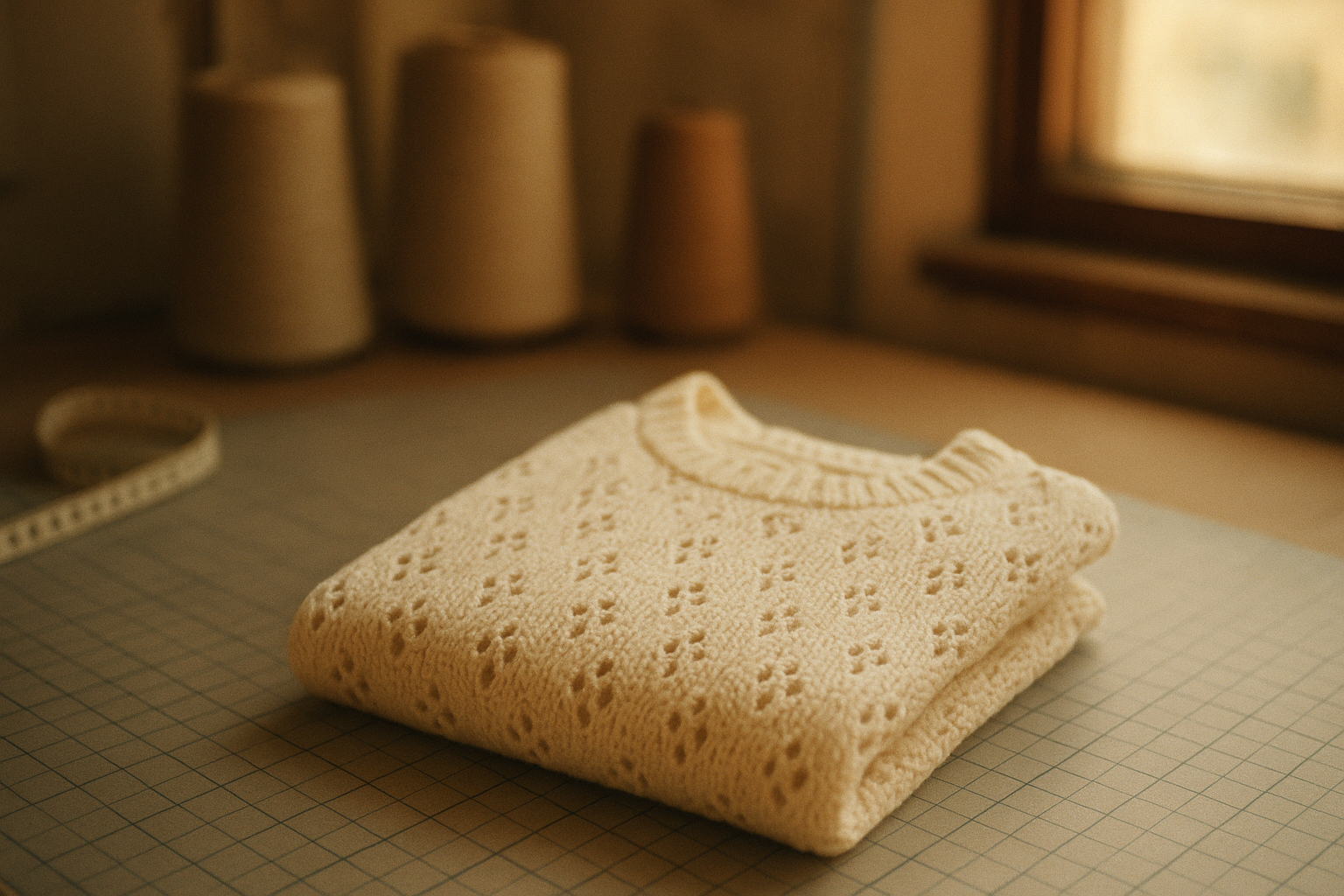
If you’re a US indie brand trying to place a 50-piece pilot of a pointelle (openwork) sweater, you’ve probably seen quotes that feel all over the place — even when the design looks “simple.”
This post is a practical, vendor-neutral way to read those quotes.
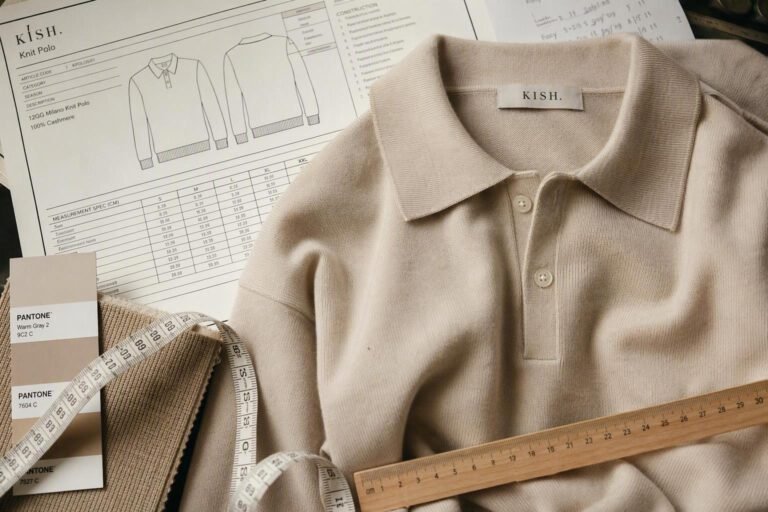
If you’re looking for a custom knit sweater quote breakdown you can reuse style after style, the structure below is designed to be copy/pasteable into your own costing sheet.
Scope note (important): this is about factory unit cost only (EXW/FOB-style vendor comparison). It does not cover duty, freight, 3PL, or retail markups.
Key takeaways
Low MOQ pricing is mostly about fixed cost amortization (programming/setup, sampling, small-lot handling) and yarn inefficiency — not factory “mystery margins.”
For most pointelle sweaters, yarn + knitting time are the two biggest moving parts. Everything else is usually a smaller add-on — until you add too many variants.
MOQ is commonly per style per color, so extra colors don’t just add dye cost — they can multiply minimums and fragment production.
If you want a clean apples-to-apples comparison, lock garment weight, gauge, pointelle coverage, trims, color route, and size/color ratio before you ask for final pricing.
Stock-service yarn colors usually buy you lower MOQ pressure and faster approvals versus custom dye routes.
Ask every factory to break the quote into: yarn → knitting → linking/seaming → washing/finishing → trims/branding (a structure Knitwear.io describes in its Low MOQ Production overview).
Important for vendor comparison: if two quotes use the same headings but different assumptions (weight, gauge, color route), the “breakdown” still won’t be comparable. Lock assumptions first.
1) Yarn type and yarn price band (knitwear MOQ pricing starts here)
Yarn is the most obvious cost driver — and also the easiest place for quotes to become non-comparable.
How it shows up in a quote
Fiber composition (e.g., cotton/poly blend)
Yarn route (stock-service vs custom-dyed)
Yarn count / yarn thickness
Certifications (if required)
Typical cost direction (neutral ranges)
Yarn cost is often the largest single component in a sweater quote.
Two factories can quote the “same” cotton/poly blend but be using different counts, different cotton grades, or different spinning sources.
What to ask your factory (copy/paste)
“What exact yarn spec are you quoting (composition + count + supplier)?”
“Is this stock-service yarn or custom dye to Pantone?”
“What is the assumed yarn overage/waste for a 50 pcs run?”
Pro Tip: If your goal is vendor comparison, ask for two prices: (1) stock-service closest color, (2) custom Pantone route. You’ll learn instantly whether you’re paying for color economics or for the knit itself.
2) Garment weight (grams) and yarn consumption
For knits, grams per piece often explains pricing differences faster than any other spec.
How it shows up in a quote
“Target weight” (e.g., 400g) or stitch density target
Size set assumptions (S–XL vs XS–XXL)
Typical cost direction (neutral ranges)
More grams = more yarn = higher unit cost.
Pointelle/openwork can be tricky: the fabric looks “light” visually, but the structure can still require meaningful yarn depending on stitch pattern and stability needs.
What to ask your factory
“What garment weight are you assuming in your costing for each size?”
“Do you have a weight tolerance (±%) we should spec to avoid surprise cost changes?”
3) Gauge selection (e.g., 12GG) and machine availability
Gauge impacts both fabric feel and production realities (which machines can run it efficiently).
How it shows up in a quote
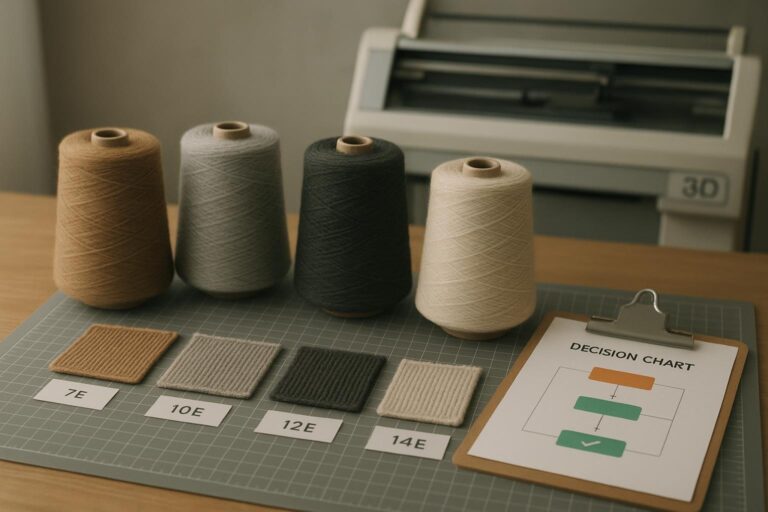
Gauge callout: 7GG / 12GG / 14GG
Machine type constraints (flat knitting vs specialized equipment)
Typical cost direction (neutral ranges)
Gauge affects stitch size, drape, and how the yarn behaves.
For readers who want a plain-language refresher on gauge, see DiamondKnitland’s guide to knitting machine gauge.
What to ask your factory
“Are you quoting this on the gauge we specified, or are you proposing an alternative gauge to hit cost?”
“Will a gauge change alter the garment weight or handfeel?”
If you’re benchmarking across multiple vendors, it helps to treat gauge as part of your sweater OEM cost drivers list: it affects yarn behavior, stitch size, and which machines the factory schedules your style on.
4) Pointelle pattern coverage and stitch complexity
Pointelle is not just “a texture.” It’s a set of stitches (often transfer-based openwork) that can increase knitting time and increase the risk of defects if the pattern is aggressive.
How it shows up in a quote
“All-over pointelle” vs “panel pointelle” vs “localized openwork”
Pattern repeat size and placement
Stability requirements (does it need tighter areas, plating, or reinforcement?)
Typical cost direction (neutral ranges)
More coverage + more complex openwork generally increases machine time and QC sensitivity.
What to ask your factory
“Is the pointelle pattern knit as a single program across the body, or split into multiple panels/programs?”
“What are the likely defect risks (snagging, holes opening too much, distortion) and how do you control them?”
5) Programming, setup, and sampling amortized over low MOQ (why low MOQ pointelle sweater pricing jumps at 50 pcs)
This is where low MOQ pricing often feels “unfair” — because you’re paying for work that doesn’t scale down linearly.
How it shows up in a quote
Development / programming charge (sometimes embedded in unit cost)
Sampling charge or “sample refundable after bulk” terms
Typical cost direction (neutral ranges)
Small runs cost more because of setup time and yarn loss — a dynamic Knitwear.io calls out in its Low MOQ Production page.
What to ask your factory
“How much of this unit cost is fixed-cost amortization at MOQ 50?”
“If we reorder the same program later, what cost drops out?”
Key Takeaway: If a factory can’t explain where programming/setup is in the quote, you can’t compare vendors — you’re just comparing how they hide fixed costs.
6) Size set width and size ratio
A 50-piece order becomes expensive fast if it’s spread across too many sizes.
How it shows up in a quote
Minimum units per size
“Size ratio required” constraints
Typical cost direction (neutral ranges)
More sizes means more patterns, more checks, and less production efficiency.
Many factories think in “minimum per size per color” terms when they accept low MOQs.
What to ask your factory
“Do you have a minimum per size at MOQ 50?”
“Can we run a tighter size set for the pilot (e.g., S–L only) and expand later?”
7) Colorways: per-color MOQ rules and yarn economics
Colors are the fastest way to break your cost plan.
How it shows up in a quote
MOQ stated per style per color
Surcharges for extra colors
Typical cost direction (neutral ranges)
Many factories set MOQ per style per color — Knitwear.io explains the logic in Low MOQ Knitwear Lead Times & MOQs.
What to ask your factory
“Is MOQ per color, or can we aggregate colors?”
“If we do 2 colors, what’s the recommended per-color split to avoid surcharges?”
8) Stock-service yarn colors vs custom dye to Pantone
For indies, this is often the difference between a realistic pilot and a money pit.
How it shows up in a quote
Lab dip charges / lead time
Minimum dye lot requirements
Typical cost direction (neutral ranges)
Custom color routes introduce setup and minimums that are hard to amortize at low volume.
Cotton Incorporated’s technical bulletin on Small Lot Dyeing explains why small lots are inherently less efficient than bulk dyeing.
What to ask your factory
“Can we match to the nearest stock shade for the pilot?”
“If we must do Pantone, what’s the true minimum and what’s the timeline for lab dips?”
9) Trims and add-ons: buttons, plackets, reinforcements
Buttons sound small — until you’re doing low MOQ with custom selection and extra labor.
How it shows up in a quote
Button unit cost + sewing/attachment labor
Minimums for custom buttons
Typical cost direction (neutral ranges)
Any trim that requires sourcing, approvals, or extra handwork tends to cost more at 50 pcs.
What to ask your factory
“Are buttons from your stock library or custom-sourced?”
“Is button attachment counted as standard labor or an add-on process?”
10) Branding and packaging: labels, hangtags, polybags, inserts
Branding is usually not the biggest cost driver — but it can create surprise line items.
How it shows up in a quote
Woven label vs heat transfer vs satin label
Care label printing
Hangtag material and finishing
Packaging (polybags, size stickers, custom print)
Typical cost direction (neutral ranges)
These add-ons are generally manageable if you keep them standard in the pilot.
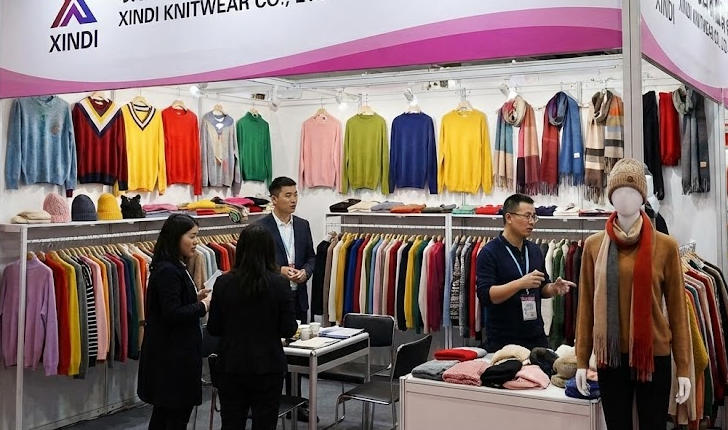
Xindi’s capability set includes private-label options (labels, hangtags, packaging) per its published overview on Knitwear.io.
If you want a deeper process view (what happens between tech pack → sample → bulk), you can cross-check against the Low MOQ private-label pilot checklist.
What to ask your factory
“What private-label items are included in your unit cost vs quoted separately?”
“What are the minimums for custom hangtags or printed packaging?”
11) Finishing and quality requirements (washing, measurements, defect tolerance)
Finishing can be “silent cost” — especially on openwork where drape and stability matter.
How it shows up in a quote
Washing method (softener, anti-pilling, pre-shrink expectations)
Measurement tolerance & inspection standards
Rework allowance
Typical cost direction (neutral ranges)
Better finishing usually improves consistency (and reduces returns), but it costs time and process control.
What to ask your factory
“What finishing steps are included (washing, pressing, steam blocking)?”
“What measurement tolerances and QC checkpoints do you apply for pointelle/openwork?”
Xindi example BOM + MOQ-to-cost curve (how to interpret it)
Below is a practical way to turn a quote into something you can compare.
Example BOM (based on your shared baseline)
Style: pointelle sweater (all-over pointelle) with printing
Yarn: cotton/polyester blend
Target weight: 400g
Gauge: 12GG
Trims: buttons
MOQ: 50 pcs
How the MOQ-to-cost curve usually behaves (directional)
At low MOQ, the unit cost typically behaves like:
Unit cost = Variable costs (mostly yarn + knitting/assembly time) + Fixed costs / Units
So the “curve” is steep early:
Going from 50 → 100 pcs often reduces unit cost meaningfully because you’re spreading programming/setup and small-lot inefficiencies across more pieces.
Going from 300 → 500 pcs still helps, but usually less dramatically.
If you want to make vendor quotes comparable, ask each factory to provide:
unit cost at 50 pcs
unit cost at 100 pcs
unit cost at 200 pcs
what changes at each tier (what fixed cost drops out, what efficiency improves)
Key Takeaway: The number you want isn’t just “price at 50.” It’s “price at 50 and the slope of the curve.” A factory with a slightly higher 50-unit price but a cleaner curve can be a better long-term partner.
Next steps (a simple quote-comparison checklist)
Before you approve any pricing for a low MOQ pointelle sweater, make sure every vendor has confirmed:
Garment weight per size (or a weight tolerance)
Gauge and pointelle coverage (all-over vs panels)
Color route (stock-service vs custom dye)
MOQ rules (per style per color) and any minimum per size
Trims (buttons) and whether they’re stock or custom
Branding/packaging inclusions vs add-ons
Finishing steps and QC tolerance
If you want, share your tech pack (or even just sketches + measurements) and your target FOB — and we can return a transparent cost-driver breakdown and a clean BOM template you can reuse for future styles via Xindi Knitwear (Knitwear.io).