
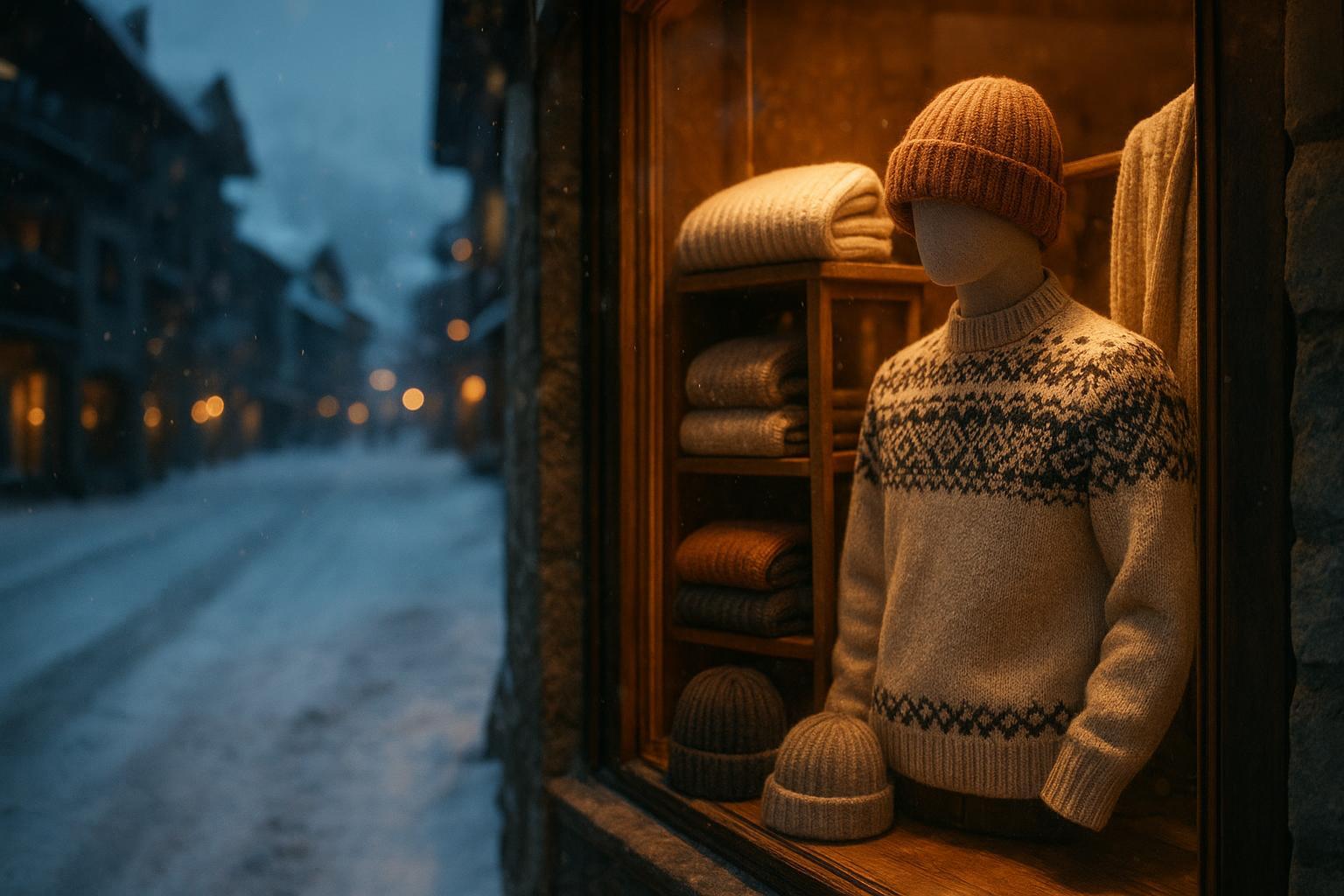
If you’re an emerging fashion label, an event like the 2027 FIS Alpine World Ski Championships is less “sports news” and more a planning deadline.
It compresses your calendar, shapes your creative direction (après-ski, alpine heritage, performance layering), and creates a predictable spike in what shoppers want to wear—whether they ever put on skis.
According to the International Ski and Snowboard Federation, “FIS Alpine World Ski Championships 2027 in Crans-Montana confirmed” (FIS, 2024) the event will take place in Crans-Montana, Switzerland, Feb 1–14, 2027.
This post gives you:
a practical merchandising + content timeline,
trend-safe knitwear direction for winter 2026–27 (no hype, no fake stats),
and a list of ready-to-assign knitwear topics built around the event and the broader “ski season” retail moment.
Key Takeaway: Treat Crans-Montana 2027 as a calendar anchor for winter knitwear—then build a capsule and content plan that can still sell even if the trend cycle shifts.
What “après-ski knitwear” really means in 2027 merchandising
“Après-ski” isn’t a single look. It’s a merchandising lane: warm, tactile, photogenic layers that work in three settings:
On the mountain (under outerwear)
Off the slopes (restaurants, hotels, village strolls)
Far from the Alps (people buying the vibe from New York, Chicago, Seattle)
In ski fashion coverage, the idea that shoppers build complete “ski looks” (including stylish inner layers) keeps showing up. Vogue captured this shift in “For Fashion, Ski Season Is Booming” (Vogue, 2026), highlighting the winter travel wardrobe and calling out items like Fair Isle knits and cashmere sweaters as part of the après-ski picture.
A quick glossary (so your team stops talking past each other)
Base layer: the layer next to skin (often merino) designed for warmth and comfort.
Midlayer: insulating layer worn over a base layer (sweater, half-zip, cardigan).
Après-ski: the social/lifestyle moment after skiing—where cozy and polished matter as much as technical performance.
Engineered / 3D-knit / seamless: knit structures built with shaping and zones (rib, stretch, ventilation) that reduce bulk and improve comfort.
A 2027 capsule plan that won’t collapse if the trend changes
Most small brands don’t fail because the product is “bad.” They fail because the timeline and buy depth don’t match their risk tolerance.
Here’s a structure that keeps you flexible.
Step 1: Decide what your capsule is for
Pick one primary use scenario:
Travel + resort dressing (most flexible)
Spectator warmth (beanies, scarves, heavy knits)
Performance layering (merino blends, base layers)
If you try to do all three with your first event-timed capsule, you’ll split your budget and dilute your point of view.
Step 2: Use a “hero + support + add-on” assortment
A resilient event capsule usually looks like:
1 hero knit (statement sweater, sweater dress, jacquard crew)
2–3 support knits (solid merino turtleneck, rib half-zip, cardigan)
2 add-ons (beanie, scarf, neck warmer)
Why this works: if the hero silhouette underperforms, your supports and add-ons can still carry sell-through.
Step 3: Build your color plan like a retailer, not a moodboard
A common small-brand trap is over-coloring.
Instead:
1 core neutral (ivory, charcoal, navy, espresso)
1 alpine accent (red, cobalt, pine)
1 “graphic lane” (Fair Isle / stripe / topographic motif)
Then control risk by limiting colorways on your higher-MOQ styles.
Pro Tip: Your “graphic lane” can do the storytelling heavy lifting. Keep the rest of the assortment calmer so the capsule photographs as a collection.
Après-ski knitwear trends 2027: the SKU map retailers can actually buy
Trends are only useful if they translate into buyable SKUs and clear product pages.
Below is a retailer-friendly map you can use to plan your line sheet, your photos, and your copy.
Capsule lane | What it looks like | Best knit constructions | Price perception lever | Failure mode to avoid |
|---|---|---|---|---|
Heritage alpine | yoke motifs, restrained Fair Isle, classic crews | jacquard yoke, rib trims, mid-gauge | story + pattern craftsmanship | novelty graphics that feel like souvenir merch |
Quiet-luxe resort | tonal sets, clean necklines, elevated basics | fine-gauge rib, Milano stitch, compact knits | handfeel + fit + finishing | too thin to feel worth it |
Performance-led layering | sleek base layers, mock necks, half-zips | merino blends, engineered panels, seamless where relevant | comfort + versatility | overpromising “technical” performance without testing |
Accessory add-ons | beanies, scarves, neck warmers | rib, cable, plush textures | gifting + bundle value | scratchy handfeel and weak recovery |
If you’re selling DTC and to stockists, this map also helps your wholesale pitch: you can show how each lane fits a retail floor, not just an Instagram grid.
Knitwear directions that are safe to plan around for winter 2026–27
Forecasting is fragile. So instead of “this will be huge,” plan around directions that have repeatedly shown up in ski-season retail and winter layering behavior.
1) Inner layers become the outfit
The moment you walk into a lodge, your outerwear comes off. That means your midlayer has to stand alone.
Merch implications:
clean necklines (turtlenecks, mock necks)
textures that read on camera (rib, cable, jacquard)
silhouettes that work with denim and tailored pants, not just ski pants
2) Heritage patterns, used sparingly
Fair Isle and alpine motifs are evergreen when you use them with restraint.
Make the pattern feel designed, not novelty:
limit motifs to yoke, chest, or cuffs
keep base colors neutral
avoid busy all-over patterns unless your brand is known for maximalism
3) Merino and merino blends as a credible layering story
Merino is often positioned for cold-weather comfort: warmth-to-weight, breathability, and odor resistance (benefits vary by blend and construction, so don’t promise miracles).
Merch implications:
merino-blend base layers or fine-gauge turtlenecks
“travel knit” positioning (packable, re-wearable)
smoother handfeel for wider audience appeal
4) Seamless/engineered knits as comfort and fit upgrades
Engineered knits are a smart way to create a “premium feel” without relying on a logo.
Merch implications:
cleaner silhouettes (less bulky seams)
body-skimming fits that still layer
zones: rib panels, stretch zones, or contour shaping
5) Sustainability language needs receipts
If you want to talk about responsible sourcing, keep it specific:
name the certification (RWS, GRS, GOTS, OEKO-TEX)
clarify what it covers (fiber, processing, testing)
only claim what you can document
Here’s a practical copy checklist you can hand to your marketing team before anything goes live:
“Certified” → which standard, exactly?
“Recycled” → is it GRS/RCS-backed, and what content %?
“Organic” → is it GOTS-backed, and what scope?
“Non-toxic” → do you mean OEKO-TEX testing, and what class?
The Crans-Montana 2027 content calendar: how to time your knitwear storytelling
A lot of “event content” fails because it’s posted too late (everyone’s already bought the sweater) or too early (no one cares yet).
Here’s a practical timeline you can adapt.
9–12 months out: build the narrative and the SEO base
This is where you publish evergreen-but-anchored pieces:
“what is après-ski style” (definition/explainer)
fiber guides (merino vs cashmere blends)
fit and layering education
Why now: you’re building search authority before the noisy season.
4–8 months out: shift to planning and product-adjacent posts
This is where you publish the pieces that move inventory later:
capsule wardrobe guides
packing lists (from a merch angle)
sizing and fit content
accessory pairing content
0–3 months out: publish the “moment” content
This is where you publish:
gift guides
“what to wear right now” content
event-week outfit formulas
limited drops (if you do them)
If you’re going to run a micro-capsule or pop-up, you want your supporting content already indexed.
What to merchandise (and what to avoid) for a ski-championship season
A simple 6-week pre-event execution sprint (for small teams)
If your team is small, your biggest risk isn’t taste—it’s bandwidth. This sprint plan keeps product, content, and wholesale messaging moving in parallel.
Week 1: Lock the sellable story
Pick 1 capsule lane to lead with (heritage alpine, quiet-luxe resort, performance layering, or accessory add-ons).
Write your “one sentence” product promise (warmth, comfort, travel versatility, or pattern craft).
Decide the 3 hero images you need for the campaign (flat lay, lifestyle, detail texture).
Week 2: Finalize the SKU math
Freeze your hero/support/add-on assortment.
Limit colorways on the hero style.
Draft your size run plan and define what “good fit” means (ease + length + sleeve).
Week 3: Build the proof points
Create a certification/documentation folder (only what you can actually back up).
Write fiber copy using precise language (what the yarn is, what it’s blended with, and what it’s designed to do).
Draft care guidance that matches the construction.
Week 4: Content production week
Draft 2 SEO posts (from the topic list) + 1 email/newsletter.
Produce 8–12 short social assets (texture close-ups, fit notes, palette story, behind-the-scenes).
Week 5: Wholesale readiness
Write a one-page line sheet per capsule lane.
Add a retailer-ready “why this will sell” note (without promising sell-through): price perception lever + display story + add-on plan.
Week 6: Launch and iterate
Publish your event-timed post(s) and update product pages.
Track only the basics: which SKU gets saves, which page gets time-on-page, and what customers ask in DMs.
Key Takeaway: The win is not predicting the exact 2027 trend—it’s building a capsule and content engine that can adapt fast.
Strong knitwear categories for event-season retail
rib beanies and balaclava-adjacent hats
scarves with elevated textures
merino base layers (tops)
half-zip knits and mock necks
chunky rib crews
yoke-pattern sweaters (tasteful Fair Isle)
sweater dresses (for lodge-to-dinner)
knit sets (top + pant) for travel days
Common mistakes small labels make
Over-branding: if the graphic is the whole point, you’re competing with official merch.
Too many colors: each colorway multiplies MOQ risk.
No “easy add-on”: accessories often drive AOV and giftability.
Sustainability overclaiming: one vague claim can poison retailer trust.
⚠️ Warning: Don’t build your whole capsule around a single novelty graphic. If it misses, you’re left with dead stock you can’t re-merge into next winter.
27 knitwear content topics you can publish for Crans-Montana 2027 season
Use these as blog posts, newsletters, or retailer-facing lookbook copy. Each idea includes a suggested angle and what to include so a small team can execute.
Event + destination anchored
1) “Crans-Montana 2027: What to Wear as a Spectator (Layering Guide)”
Angle: spectator warmth + comfort + photo-ready layers
Include: base/mid/outer framework; accessory checklist; fabric do’s/don’ts
2) “Après-Ski Knitwear Trends 2027: What Retailers Should Actually Buy”
Angle: trend-safety + buy depth strategy
Include: hero/support/add-on model; colorway risk control
3) “Swiss-Inspired Knitwear Without the Costume: Motifs That Feel Modern”
Angle: heritage, but restrained
Include: motif placement ideas; palette rules; examples of overdoing it
4) “Topographic Knits: How to Translate Mountain Maps Into Wearable Graphics”
Angle: graphic design process
Include: stitch options (jacquard vs intarsia); readability; size constraints
5) “Lodge-to-Dinner Knitwear: Silhouettes That Don’t Look Like Base Layers”
Angle: elevated resort dressing
Include: sweater dress fits; neckline strategy; styling formulas
Fiber and material education (high SEO value)
6) “Merino vs Cashmere vs Merino Blends for Après-Ski: How to Choose”
Include: trade-offs (pilling, warmth, cost); care guidance; labeling cautions
7) “What RWS, GRS, GOTS, and OEKO-TEX Mean for Knitwear (And What They Don’t)”
Include: definitions; documentation checklist; compliant claim language
8) “How to Write a Knitwear Material Description That Sounds Premium (Without Lying)”
Include: sensory phrasing; what to avoid; examples by fiber type
9) “Anti-Pilling in Knitwear: What You Can Promise, What You Can Only Test”
Include: pilling drivers; testing basics; care label impact
10) “Warmth Without Bulk: Knit Constructions That Layer Under Outerwear”
Include: gauges; stitches; fit notes; sleeve bulk control
Merchandising + planning (B2B decision support)
11) “The 12-Week Knitwear Drop Timeline for Winter Events”
Include: sampling rounds; approvals; packaging; freight buffers
12) “Low-MOQ Color Strategy: How to Offer Options Without Getting Stuck”
Include: core/seasonal/graphic lanes; re-order logic
13) “Size Run Planning for Après-Ski: Fewer Returns, Better Margin”
Include: grading basics; fit model notes; bust/hip ease; shrinkage considerations
14) “Accessory Add-Ons That Improve AOV: Beanies, Scarves, and Neck Warmers”
Include: attachment rate strategy; gift positioning
15) “Private Label vs Custom Knitwear: Which One Fits Your First Event Capsule?”
Include: speed vs uniqueness trade-off; cost drivers; MOQ differences
16) “Sampling Round Checklist: What to Approve Before You Greenlight Bulk”
Include: measurement tolerances; stitch definition; handfeel; wash test plan
17) “What to Put in a Knitwear Tech Pack for Patterned Sweaters”
Include: artwork grid; repeat size; yarn count; label placement
Design and construction (expertise content)
18) “Jacquard vs Intarsia vs Embroidery for Alpine Motifs”
Include: pros/cons; cost drivers; durability; lead-time impact
19) “Rib, Cable, and Waffle: Textures That Photograph Well in Winter Campaigns”
Include: stitch behavior; weight; drape; styling notes
20) “Seamless/Engineered Knits: When They’re Worth It (And When They Aren’t)”
Include: fit benefits; cost; development iteration expectations
21) “Half-Zip Knitwear: A Pattern Guide for a Clean Collar and No Curling”
Include: collar construction; zipper quality; reinforcement
22) “Sweater Dress Fit: How to Avoid the Two Classic Failures (Too Tight / Too Sack)”
Include: ease math; yarn choices; lining or layering suggestions
Retail storytelling that still sells product
23) “Après-Ski Color Stories: Tonal Neutrals vs Retro Alpine Brights”
Include: palette blocks; how to shoot it; how to merchandise it
24) “The ‘Ski Fit’ Without the Ski: Styling Knitwear for City Winters”
Include: outfit formulas; accessory pairings
25) “Winter Capsule Lookbook Template (Copy/Paste Outline)”
Include: sections; shot list; product naming conventions
Retail activation ideas you can scale
26) “How to Run a Limited Après-Ski Capsule Drop (Without Burning Your Team)”
Include: SKU limits; pre-order vs in-stock; launch comms
Reference: limited-edition capsules and pop-up activations in the Minnow après-ski capsule story (WWD, 2025)
27) “Pop-Up Merch Checklist for Winter Events: What to Stock and What to Skip”
Include: size mix; POS needs; packaging; returns policy; weather-proofing
SEO keyword cues (for your content ops checklist)
If you want your writers to hit the right intent without sounding spammy, you can assign one of these phrases per article:
“knitwear merchandising ideas for winter events”
“ski event merchandise knitwear”
“merino base layer knitwear wholesale”
“sustainable certified yarns for knitwear”
A simple sourcing workflow to keep your 2027 plan realistic
Even if you’re not ready to commit to bulk, you can de-risk the season by running the planning steps in order.
Finalize your capsule architecture (hero/support/add-on)
Lock the color strategy (core + accent + graphic lane)
Create a sampling plan (how many rounds, what must be approved)
Confirm certification documentation needs (what your stockists require)
Build content alongside development (don’t wait for final goods)
If you’re mapping sampling and lead-time milestones, start with a concrete sampling workflow overview like the Quick Sampling process, then pressure-test your commitment level with a planning framework like the low-MOQ private-label pilot checklist. For teams that need an end-to-end view, use this step-by-step production guide and keep a trend reference handy via Knitwear Trends.
Key takeaways
Crans-Montana 2027 is a calendar anchor: plan backward from Feb 1–14, 2027.
Build a capsule that can sell even if trends shift: hero + support + add-ons.
Treat après-ski as a merchandising lane (inner layers become the outfit).
Use heritage motifs sparingly so they read modern.
Keep sustainability claims specific and documentable.
Publish content early enough to rank before peak season—and use the topic list above to stay consistent.
Next steps (soft)
If you want to move fast without overcommitting, a low-MOQ sampling run is often the best first step. Xindi Knitwear can support small-batch development for emerging labels—if you want a quick baseline on speed and workflow, start with the sampling process outlined on Knitwear.io’s Quick Sampling page and use it to build your internal timeline.