
If you’re building an outerwear capsule for a small label, the Patagonia Better Sweater Jacket is a useful “reference garment.” Not because you should copy it, but because it’s a clear example of a specific product idea:
a sweater-knit look on the outside
a brushed fleece feel on the inside
a lifestyle-friendly silhouette that still works as a layer
This post breaks down what the Better Sweater Jacket is (using only verifiable, public specs), then gives you a practical framework to spec, sample, and QC a similar sweater-knit fleece jacket for your own line—without borrowing Patagonia’s design details.
What is the Patagonia Better Sweater Jacket, exactly?
(For product development, you can think of it as a sweater-knit fleece jacket built around recycled polyester fleece and comfort-first construction.)
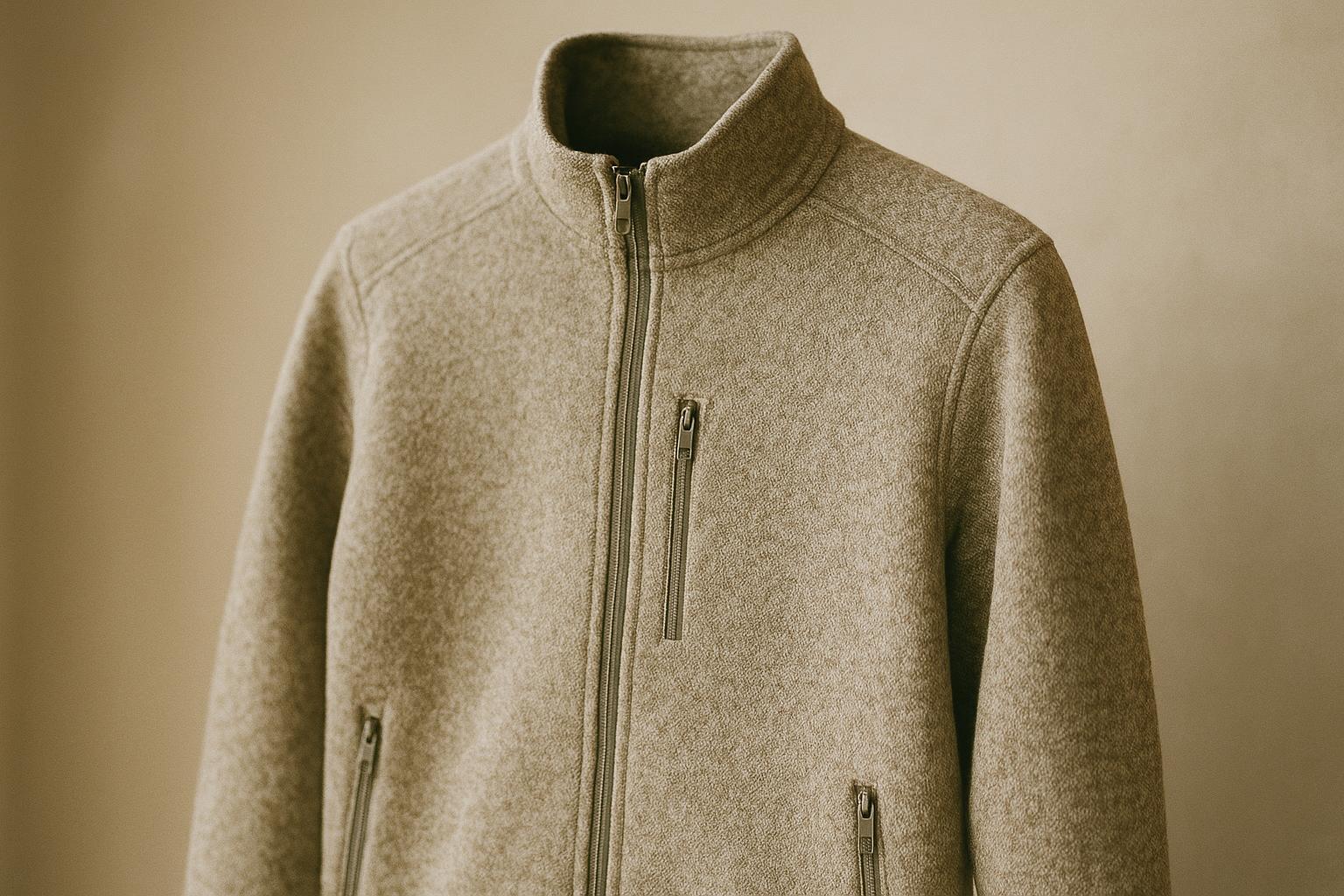
Think of it as a fleece jacket engineered to look more like a sweater.
Patagonia describes the Better Sweater Jacket as a warm, low-bulk, full-zip jacket made from 100% recycled polyester knit fleece—with a sweater-knit exterior and a soft fleece interior (see the official Patagonia men’s product page linked below).
Here are the details that matter for benchmarking:
Main fabric: 10-oz 100% recycled polyester knit fleece (i.e., recycled polyester fleece with a knit face)
Trim / pocket bag fabric: 5.3-oz 100% recycled polyester brushed tricot
Construction callouts: raglan sleeves, flat-seam construction, zip-through stand collar, zippered hand pockets, plus a chest pocket
Source for the above list: Patagonia Men’s Better Sweater Jacket product page
Women’s fit note: women’s version is described as slim fit on the Patagonia Women’s Better Sweater Jacket product page
Key Takeaway: As a benchmark, this jacket isn’t “mystery tech.” It’s a very specific materials + construction recipe executed cleanly.
The benchmark checklist: what to measure before you start sampling
If you want fewer sampling rounds, don’t start with “make it like this.” Start with “what are we actually matching?”
Below is a checklist you can run on any reference fleece/knit jacket (including the Better Sweater). Use it to create the first version of your tech pack.
1) Fabric: sweater-knit face + fleece back
In practice, you’re balancing four things:
Handfeel (softness, itch risk, “cozy” perception)
Visual texture (heather look, knit-like face)
Durability (pilling and snag risk)
Thermal comfort (warmth vs breathability)
Two practical spec fields that keep your team aligned:
Fiber content + recycled content target (e.g., 100% polyester, recycled where possible)
Fabric weight (often tracked as GSM — i.e., fleece jacket fabric weight in product-dev shorthand)
Fabric weight is one of the few numbers you can use early to avoid “this feels wrong” surprises later. Even broad GSM bands can prevent obvious mismatches.
If you want a quick reference point for how factories talk about knit weights, Exploretex includes a simple GSM range overview in its discussion of fabric weight (GSM) in private-label manufacturing.
Pro Tip: For emerging labels, pick one “hero requirement” for fabric first run (usually pilling resistance or softness). Trying to max both with no budget or testing plan is how you get stuck in sample limbo.
2) Fleece jacket pilling risk: decide what “acceptable” means
Patagonia’s own care notes mention that the garment can be prone to pilling and that pills can be removed (see the pilling note on the Patagonia men’s product page referenced above).
So for your line, the question becomes:
Do you want a clean, smooth face (often higher pilling/snags risk)?
Or a more textured/heathered face that hides wear better?
In your tech pack, define:
a basic wear-test expectation (e.g., wash/wear cycle count before approval)
the visual threshold for pilling (what level fails)
3) Seams: reduce bulk without losing strength
Two construction choices show up in Patagonia’s spec (see the Patagonia men’s product page referenced above):
(These details are part of why the Better Sweater works as a clean, low-bulk sweater-knit fleece jacket rather than a sloppy, boxy fleece.)
Flat-seam construction (to reduce bulk and seam chafe)
Raglan sleeves (mobility + comfort)
Both are smart for a jacket people wear for hours.
What to benchmark:
seam bulk under a backpack strap
seam appearance on the face fabric (puckering is common on stretch fleece)
seam strength around pockets and zipper ends
4) Zippers + pocket build: where “nice” becomes “premium”
On a fleece jacket, customers touch the zipper every time they wear it. That makes zipper choice, zipper installation, and zipper wave control a make-or-break detail.
Benchmark these:
zipper smoothness (one-hand pull)
zipper garage/chin comfort (Patagonia calls out a zipper garage in the official spec)
pocket opening angle and hand comfort
pocket bag fabric feel (Patagonia lists brushed tricot pocket bags)
5) Cuff + hem trim: the hidden durability system
Patagonia describes “shape-holding” trim at cuffs and hem that resists abrasion (see the Patagonia men’s product page referenced above).
For your jacket, decide early:
do you want a clean hem, or a binding/trim finish?
where are the abrasion points (desk edge, bag strap, hip)?
A small trim change can massively change perceived quality and repair rate.
Translate the benchmark into a tech pack (without over-spec’ing)
A good first tech pack for a sweater-knit fleece jacket doesn’t need 50 pages. It needs the fields that prevent rework.
Here’s a practical “minimum viable spec set” for your first proto:
Fabric: composition, recycled content target, weight (GSM), color method (if relevant), and face/back description
Trim/pocket bags: material and weight
Silhouette + fit intent: slim/regular, layering intent, target body ease
Key POMs + tolerances: chest, body length, sleeve length, bicep, hem opening
Sleeve type: raglan vs set-in (benchmark decision)
Pocket map: pocket count, zipper lengths, pocket bag depth
Zipper spec: type, length, tape color, puller, zipper garage requirement
Hem/cuff finish: binding type, elasticity, abrasion reinforcement zones
Label/branding placement: keep it simple for first proto
If you’re building this inside a development timeline, a clean process matters as much as the spec itself. Centric’s overview of apparel workflows is a good reminder that prototypes should be tested for wearability and durability before you lock production (see Centric Software’s product development strategy guide).
From there, keep your approval workflow tight—especially if you’re ordering small runs—so changes don’t creep in between sample rounds.
⚠️ Warning: Don’t approve the “perfect-looking” first proto until it survives laundering. Fleece changes: handfeel shifts, seams relax, and pilling can appear fast if the face is vulnerable.
A simple test plan for the first two sample rounds
You don’t need a lab-heavy program to be disciplined. You need a repeatable checklist.
Round 1 (proto):
fit + mobility check (arms forward, arms overhead, seated)
pocket usability + zipper wave check
seam comfort check under straps
Round 2 (SMS / revised proto):
laundering check (shrink, twist, face texture)
pilling watch (high-friction zones: underarm, side panel, cuffs)
trim abrasion check (desk edge, bag strap rub)
If you’re new to working with factories, it helps to have a clear sampling workflow and a version-controlled feedback loop. This is where a manufacturer guide like Knitwear.io’s custom knitwear manufacturer guide is useful—not for hype, but for setting expectations on inputs, timelines, and approvals.
Red flags when developing a sweater-knit fleece jacket
These are the issues that burn time and cash for small labels:
The fabric looks premium in hand, but pills fast once worn
The zipper “waves” the front body because the tape and fleece behave differently
Pocket openings distort the silhouette (especially if the face knit is soft)
Your grading doesn’t match stretch behavior, so sizes feel inconsistent
Your cuff/hem finish looks clean, but abrades quickly
If you’re evaluating factories, use a criteria-based approach instead of vibes: sampling speed, small-batch MOQ terms, QC checkpoints, and documentation for materials. Knitwear.io’s guide on how to choose a custom knitwear supplier for your brand is a good checklist-style reference.
Quick consumer section: who the Better Sweater Jacket is (and isn’t) for
If you’re reading this as a buyer, the Better Sweater Jacket is typically loved as a casual, versatile layer: warm enough for day-to-day wear, easy to throw on, and “sweater-like” in appearance.
It’s usually not the best pick if you need:
an ultralight piece for packability
a highly breathable fleece for high-output activity
strong wind protection on its own
(Those aren’t criticisms so much as reminders of what a midweight fleece jacket is designed to do.)
Key takeaways
The Patagonia Better Sweater Jacket is a strong benchmark because its public spec is clear: recycled polyester knit fleece, brushed tricot trims, flat seams, raglan sleeves, and durability-focused hem/cuff finishes.
If you’re developing something similar, start with a benchmark checklist (fabric, pilling risk, seams, zippers, trim), then translate that into a tight tech pack.
For small labels, the fastest path is not “more details”—it’s fewer, better-defined approval checkpoints across sampling and wash/wear testing.
Next steps
If you want a second set of eyes on your spec before you burn weeks on sampling, Xindi Knitwear (Knitwear.io) can help you turn a reference garment into a factory-ready checklist—materials, pocket map, tolerances, and a simple test plan.
Start with the high-level process overview here: OEM/ODM knitwear production process.