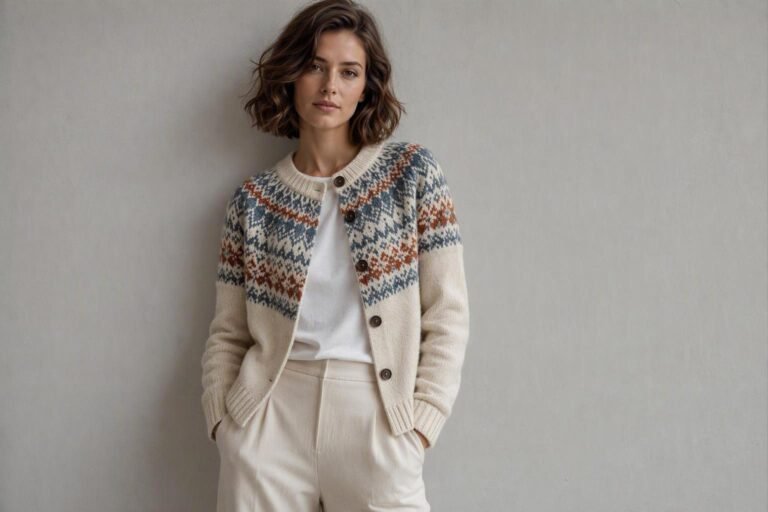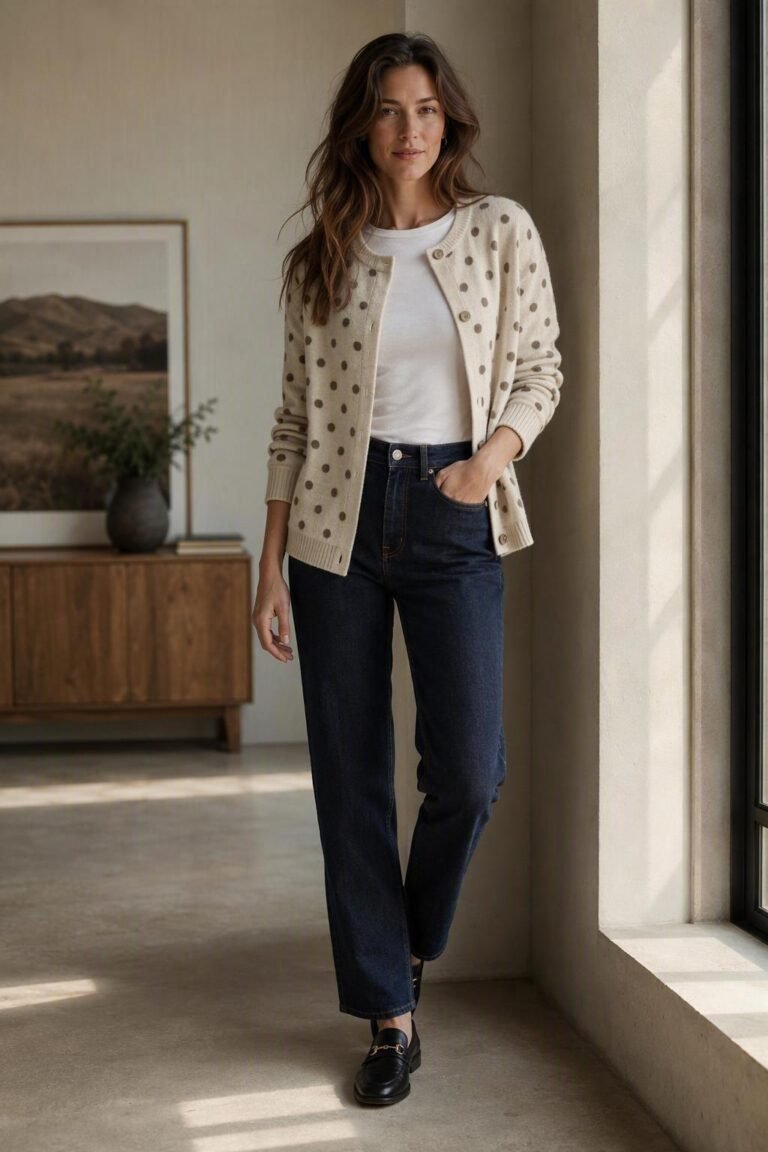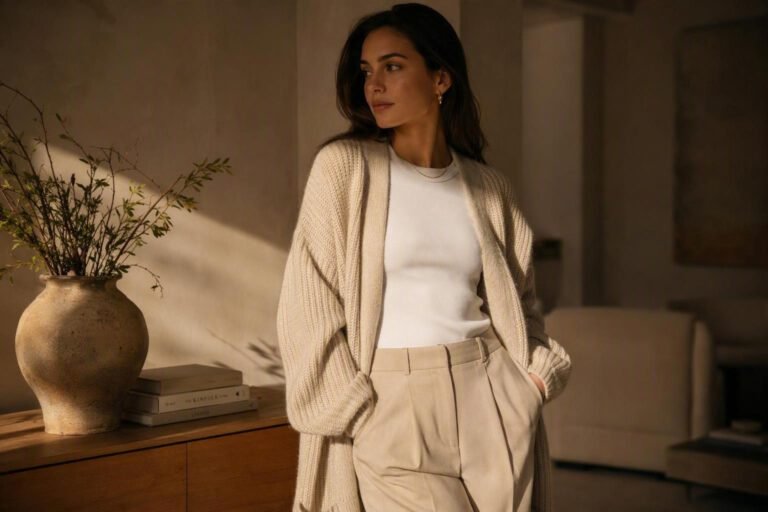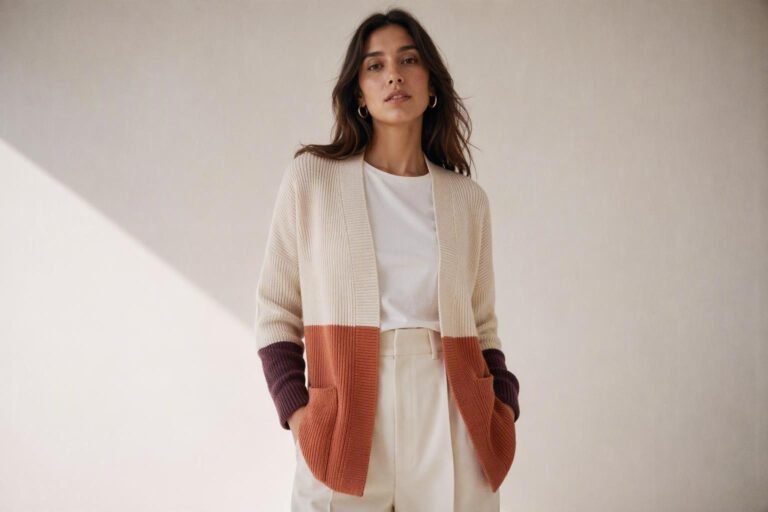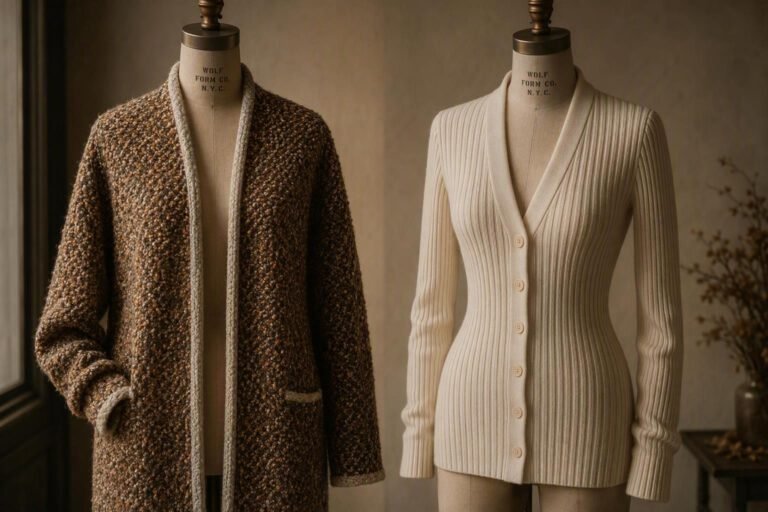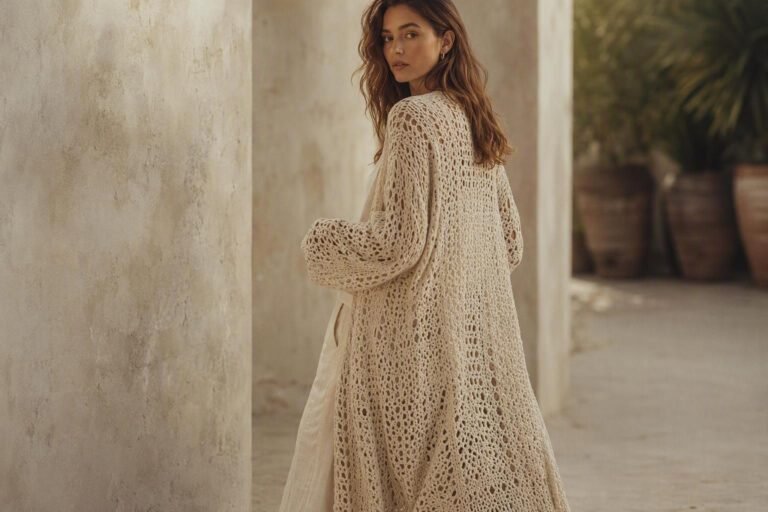

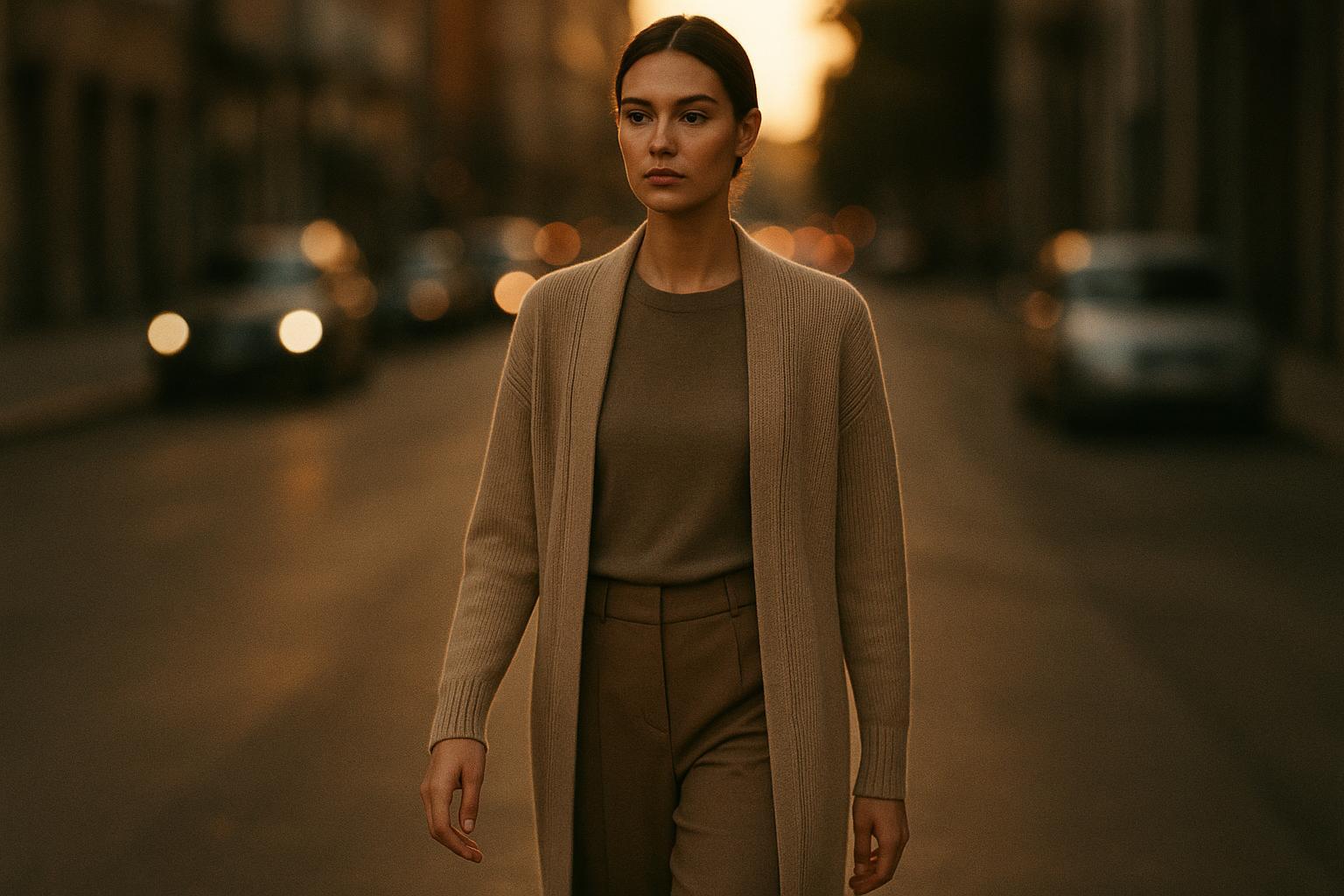
If you’re building a cardigan capsule (or just trying to make one hero knit photograph well), the duster cardigan is both a gift and a trap.
It’s a gift because a longline silhouette creates instant editorial energy: movement, drama, and a clean vertical line that reads premium in a scroll.
It’s a trap because one wrong choice—too much volume underneath, a limp hem, pockets that balloon at the hip—and your product page suddenly looks like loungewear.
This guide is written for emerging labels creating lookbooks and product pages. You’ll get:
A practical definition so your team briefs consistently
A set of proportion rules you can reuse across shoots
Outfit formulas that photograph well (not just cute in real life)
A shot list you can hand to your photographer
Knit-specific design notes you can pass to production so the styling you want is achievable
Key Takeaway: A duster cardigan looks polished when it has one clear silhouette job—either a clean vertical layer or a defined waist—and everything else in the look supports that job.
Step 1: Make sure everyone means the same thing by duster cardigan
A duster cardigan is a long, open-front (or lightly closable) cardigan that typically hits below the knee to mid-calf. Think longline cardigan, but with more emphasis on length and movement.
Why this matters for brand teams: the longer the hem, the more your cardigan behaves like outerwear in photos. That changes how you style it (and how you shoot it).
A few practical notes you’ll want aligned before you style:
Length: knee / mid-calf / ankle-grazing (each reads differently on camera)
Front: open, single-button, tie-belt, or self-belt
Fabric behavior: drapey vs. structured (this is the difference between editorial and robe)
Volume: sleeve fullness, shoulder shape, and pocket bulk all read louder in long silhouettes
If you want a quick reference for common duster formulas and length pitfalls, pull ideas from this duster cardigan outfit breakdown and translate them into your brand’s styling system.
Step 2: How to style a duster cardigan using 5 proportion rules
These five rules are the backbone. If your team follows them, you’ll reduce why does this look off reshoots.
Rule 1: Keep the base outfit streamlined so the cardigan can be the drama
A long cardigan adds visual volume just by existing. So the base layer has to do the opposite.
Shoot-friendly base layers:
A fitted tee or bodysuit + straight or skinny jeans
A slim knit top + tailored trouser
A column dress (body-skimming) under an open cardigan
If you need a reminder of why fitted layers matter (and how to avoid the slouchy trap), Jo-Lynne Shane’s notes on cardigan fit choices that prevent the frumpy look are a useful baseline.
What this means for you: if your cardigan is relaxed, your base should be clean. If your base is relaxed, your cardigan needs structure.
Rule 2: Decide whether you’re creating a column or a waist point
Every good duster look on camera is doing one of these two things:
Column of color: a tonal outfit underneath so the cardigan reads like a frame
Waist point: a belt, tie, or partial button to give the viewer an obvious shape
If you don’t choose, you usually end up with shapeless.
Practical ways to create a waist point:
Add a belt over the cardigan (especially with fine-gauge knits)
Tie a self-belt slightly above the natural waist
Button one button (or just the top) to suggest shape
Tuck the base top to show the waistband
If you want an easy checklist-style reminder (belt, sleeve push, footwear), this summary of belt-and-footwear proportion rules for long cardigans is a helpful reference.
Rule 3: Control the shoulder and sleeve story because long silhouettes amplify it
Two cardigan details will quietly ruin a shoot:
Dropped shoulders that create a slouchy upper body
Wide sleeves that stack bulk at the elbow and wrist
When you’re styling a duster cardigan, push sleeves up intentionally (mid-forearm) and make sure the shoulder line looks deliberate.
What this means for you: on a longline cardigan, cozy can read lazy unless the upper body is clean.
Rule 4: Match hem length with footwear so it doesn’t visually drag
The longer the cardigan, the more important footwear becomes.
Mid-calf dusters are easiest to style with flats, sneakers, or ankle boots.
Ankle-grazing dusters often look best with a heel (even a low block heel) to avoid the hem visually collapsing into the ground.
A simple rule: if the hem is near the ankle, you need either height or a strong leg line (slimmer pant, tonal shoe).
Rule 5: Use texture intentionally (one hero texture per outfit)
Knitwear photographs as texture. That’s great—until you stack multiple competing textures.
Chunky knit + distressed denim + big scarf + heavy boot = visual noise.
For lookbooks, pick one hero texture (usually the cardigan), and keep the rest simpler.
Step 3: Use these 8 duster cardigan outfit formulas built for lookbooks
These are not random outfit ideas. They’re reusable shoot formulas you can apply across colorways and sizes.
Formula 1: The tonal column (best for premium minimal brands)
Long cardigan outfit formula:
Tonal base (black, charcoal, cream) top + bottom
Duster cardigan in the same family (or 1 shade lighter)
Clean shoe (pointed flat, sleek boot, or minimal sneaker)
Why it works: the eye reads a long, uninterrupted line. Your knit becomes the hero without trying.
Formula 2: The denim anchor (casual, but not sloppy)
How to wear a long cardigan without it looking like loungewear:
Fitted tee or bodysuit
Straight or slim jeans
Duster cardigan worn open
Ankle boot or crisp sneaker
Style note: keep denim clean (no heavy distressing) if your cardigan is textured.
Formula 3: The tailored trouser contrast (cleanest brand look)
Longline cardigan styling formula:
Slim knit tank or fine-gauge top
Tailored trouser (pleat is okay; volume is not)
Duster cardigan worn open or lightly belted
Loafer, pointed flat, or heeled boot
This is the formula that makes even a soft knit read designed.
Formula 4: The waist-defined dress (the fastest route to shape)
Duster cardigan outfit ideas that read feminine and structured:
Body-skimming midi dress
Duster cardigan belted (or tied)
Boot (ankle or knee-high) depending on hem length
Avoid pairing a very long cardigan with a very flowy maxi dress unless you want a deliberate boho look.
Formula 5: The slim skirt pairing (editorial, but still wearable)
Fitted top
Slim midi skirt (not A-line, not pleated)
Duster cardigan open
Minimal heel or sleek flat
This works because the skirt maintains a clean line under the cardigan.
Formula 6: The modern cozy athleisure (only if the cardigan is clean)
Legging or slim knit pant
Simple sweatshirt or fitted long sleeve
Duster cardigan open
Minimal sneaker
To keep it from reading sloppy: the cardigan needs structure (clean placket, pockets that don’t balloon, hem with weight).
Formula 7: The evening layer (your knit as a soft coat)
Slip dress or sleek column dress
Duster cardigan worn open
Heeled sandal or boot
Keep jewelry simple; let the knit texture read as luxury.
Formula 8: The warm-weather duster (lightweight, but still intentional)
Tank + high-waisted short or light trouser
Lightweight duster cardigan
Sandal
This works best when the cardigan is breathable and drapey—otherwise it reads season-confused.
Step 4: Add three styling details that instantly make the cardigan look more premium
You can have the right outfit formula and still miss the polished cues. These three details matter on camera.
Detail A: Push sleeves up to mid-forearm
It signals intention. It also creates a waist-adjacent focal point (especially when belted).
Detail B: Decide your front treatment (open vs closed vs belted)
Open: clean vertical line; best for tonal columns
Partially buttoned: suggests shape without looking tight
Belted or tied: strongest waist definition; best for structured looks
Detail C: Watch pocket placement and bulk
Pockets are functional, but on a long cardigan they can add volume exactly where most people don’t want it: hips.
If your brand wants pockets, style around them:
choose a slim base (no bulky layers)
avoid anything that adds volume at the hip (wide belts + big pockets can fight)
Step 5: Shoot it like knitwear (your product page needs texture, drape, and proof)
A duster cardigan sells through feel—and your photos have to communicate feel.
For knit-specific photo basics (natural light, crisp focus, clean backgrounds), New Wave Knitting’s tips to improve your knit product photos are a solid starting point.
Here’s the practical shot list that works for most labels.
The must-have shot list for a duster cardigan
Full front (open)
3/4 front (shows depth + placket)
Side profile (shows hem hang + pocket bulk)
Back view (checks shoulder fit and overall line)
Movement shot (a step forward to show hem swing)
Detail: knit texture close-up (stitch definition)
Detail: cuff + hem finish (rib, binding, or rolled edge)
Detail: placket and any button (or belt tie)
What this means for you: if you only shoot the front view, you’re hiding the garment’s most valuable proof points.
Two outfit variations you should include even if your budget is tight
Tonal column look (premium baseline)
Tailored trouser look (clean contrast)
That’s enough to show versatility without turning a product page into a lookbook editorial.
Step 6: Knit-specific design notes you can add to your tech pack (so styling is easier)
If you know how you want to style the cardigan, you can spec for it.
If you want drape (fluid movement)
Consider:
finer gauge and lighter weight
constructions that hang cleanly
hems that don’t flare
If you want structure (soft coat feel)
Consider:
slightly heavier knit or added hem weight
stable placket construction
pocket reinforcement so pockets don’t sag
If belting is part of your styling direction
Consider:
adding a self-belt or belt loops
designing a closure point (button or hidden snap) that creates shape without gaping
This is also where sampling speed matters. If you’re iterating on length, belt placement, or pocket proportion, plan a fast prototype loop—Knitwear.io’s quick sampling overview is a useful reference for scheduling those iterations.
If you want a broader due-diligence checklist before you commit to bulk, use the custom knitwear supplier checklist to structure what you verify (fit checks, QC gates, and change control).
Step 7: Fix the 7 most common duster cardigan styling mistakes
Mistake 1: Oversized cardigan + oversized base
Fix: keep one layer streamlined.
Mistake 2: Hem that hits the ankle in a casual look
Fix: shorten to mid-calf, or use height + tonal shoes.
Mistake 3: Dropped shoulders that read slouchy
Fix: choose a cleaner shoulder or style hair/pose to open the neckline.
Mistake 4: Bulky scarf + bulky knit
Fix: one hero texture per outfit.
Mistake 5: Pockets ballooning at the hip
Fix: slimmer base + avoid side poses that push the pocket outward.
Mistake 6: Everything is beige washout
Fix: add contrast in shoe/bag, or shift 1 tone darker/lighter.
Mistake 7: No proof of texture
Fix: add close-ups and crisp focus. If the knit isn’t readable, shoppers assume it’s cheap.
Key takeaways
A duster cardigan photographs best when you pick one silhouette goal: a clean vertical column or a defined waist.
Keep the base outfit streamlined; let the long layer be the drama.
Use belt, partial button, or tuck as your fastest shape tools.
Shoot knitwear like knitwear: angles + movement + close-ups are non-negotiable.
If you want the cardigan to style a certain way, spec for it (hem weight, placket stability, pocket behavior).
Next steps (for emerging labels)
If you’re turning this into a real SKU, two practical moves reduce risk fast:
Run a tight sampling loop to lock the proportion details (length, belt placement, pocket size). If you need rapid prototypes, start with Knitwear.io and plan your first iteration via quick sampling.
Use a supplier evaluation framework before you commit to bulk (quality, MOQs, fit checks, and process).