

Peak season compresses everything. A capsule that took four months to develop in spring needs to be sampled, fit-approved, graded and in a carton before a retailer’s window closes — and the calendar does not stretch when a yarn is backordered or a hangtag arrives with the wrong barcode.
The failures that hurt most are rarely dramatic. They are decisions that were discussed, assumed, and never signed: a fabric swapped for a mill’s closest available lot, a size range approved from one base-size sample, a packaging spec settled after the garment was already right. Each of those ambiguities is cheap to resolve before the first sample and expensive to resolve after cutting.
This is a governance checklist, not a design guide. It covers five decisions — approval ownership, material substitutions, size curves, packaging specifications and quality thresholds — plus an escalation-deadline matrix that puts a date on each one. Every item is written as a binary test: locked or not locked. It is built for emerging labels running peak-season calendars with low-MOQ partners, and it is a tool for locking decisions, not a template to copy verbatim. Your order’s risk profile should decide how far each item is pushed.
Why Lock Decisions Before Sampling, Not During It
Sampling is usually described as a creative checkpoint: make the sample, review the design, adjust the fit, move on. That description is incomplete. Sampling is also where production cost is decided. A seam finish chosen at sample stage sets sewing time. A fabric choice sets cutting waste. A trim change sets whether the supplier can ship on schedule. A late fit correction changes fabric consumption. Each of those decisions is far cheaper to make before the sample than after it.
The most expensive version of this problem is a sample made from incomplete information. A few reference photos and a general size direction can start a conversation, but they rarely produce a garment anyone can approve. The sample comes back “technically made” but not close enough, and the team then spends weeks explaining what should have been in the brief. A practical tech pack does not need to be elaborate, but it should carry technical flats, measurement specs, fabric direction, trim details, construction notes, a size reference and design comments.
Substitute materials deserve their own warning. Fabric changes affect drape, stretch, opacity, shrinkage, seam puckering, pressing behaviour, garment weight, recovery, cutting accuracy and fit. A knit sampled in a fabric with different stretch and recovery will mislead the fit review even if the silhouette looks right. Substitute fabric can be useful for testing construction or general silhouette early, but the sample should be labelled as such, and fit-critical details should not be approved until the material behaves close enough to the intended production fabric.
Late design changes, missing trims and vague approvals each generate another sample round, another courier cost, another review meeting and another update to the production file. Poor version control makes this worse: when designer, founder, merchandiser, pattern maker and factory are all working from different files, nobody can say which approval is current.
The five decisions below are the points where that ambiguity most reliably becomes a bulk failure. The checklist’s job is narrow and mechanical: convert “we discussed it” into “we signed it,” with a name and a date attached.
Decision 1: Approval Ownership — One Name per Decision
The rule is simple to state and hard to hold during a busy season: every locked decision has exactly one accountable approver. Contributors advise. The accountable person signs. Everyone else is informed.
The RACI family of responsibility matrices exists precisely because cross-functional work creates ownership ambiguity, and the distinction that matters here is between the person who does the work and the person who owns the outcome and signs off. In a small team the same person can be both — but the clarity still has to be written down. Variants such as DACI (driver, approver, contributors, informed) make the same separation with different labels; pick one vocabulary and use it consistently across the season.
What goes wrong without it is predictable. The designer assumes the founder approved the neckline. The founder assumes the merchandiser checked it with the factory. The factory, receiving two sets of comments, implements the more recent email. By the time anyone notices, the sample is wrong and the calendar has lost a week.
Locked or not locked:
A named approver is recorded for each of the five decisions in this article — not a department, a person.
A named backup approver is recorded for peak-season absences, with the same signing authority.
Contributors are listed alongside their input scope, so it is clear who was consulted on fit, who on costing, who on compliance.
One approval document version is designated as current and explicitly supersedes prior email threads and comment files.
Each approval record carries a date and a version number that matches the tech pack it approves.
What this means for you: if two people can approve a decision, neither owns the outcome. During peak season, that gap is where late changes enter.
Decision 2: Material Substitutions — Classify Before You Sample
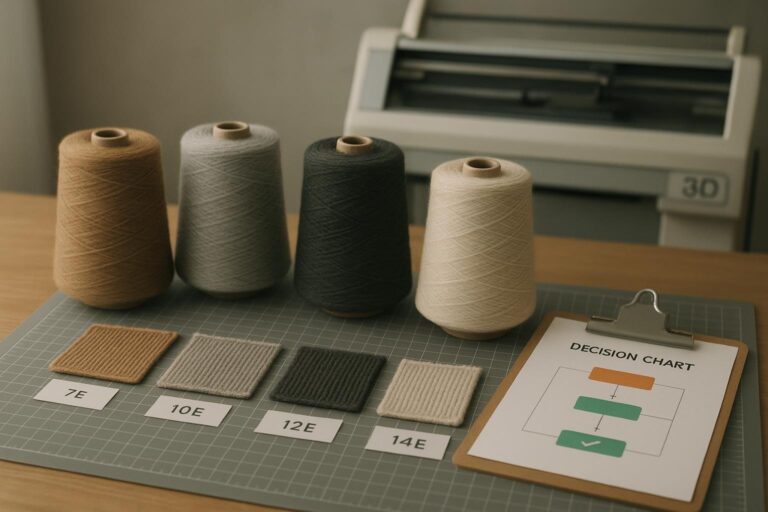
Most substitution disputes start with a reasonable-sounding equivalence: same fibre content, same nominal weight, therefore the same fabric. That inference does not hold. Two fabrics with the same cotton percentage and nominal weight can still differ in handfeel, opacity, stretch, recovery, spirality, pilling tendency, shrinkage and sewing behaviour. Yarn count, yarn twist, stitch length, knitting gauge, fabric density, finishing, compaction and batch control all influence the result.
That is why substitution classification has to be based on tested behaviour, not on a fibre-percentage match. A three-tier system, defined in writing before sampling begins, gives both sides a shared answer when the mill’s lot is unavailable.
No-go. Materials whose substitution would change fit-critical behaviour: anything affecting stretch, recovery or shrinkage in a way the approved pattern depends on. A substitute here is not a substitution; it is a new development.
Conditional. Materials that may be substituted if specified trigger tests pass and the buyer accepts the result. The written definition should name the tests, the acceptance criteria, who pays for testing, and how long results take.
Pre-approved. Materials already tested and accepted for this style or an equivalent construction, recorded with mill, lot and test references.
The trigger tests for the conditional tier are the ones that catch the failures a visual check misses:
Dimensional change after home laundering — AATCC TM135, which the association notes is related to ISO 3759. It measures length and width change of fabrics subjected to home laundering procedures.
Colourfastness to laundering — AATCC TM61, an accelerated test that approximates the colour change from five hand or home launderings in a 45-minute test.
Colourfastness to crocking — AATCC TM8 or ISO 105-X12. Note that ISO 105-X12 states there is no known correlation of results between the two apparatus types it describes, so the method and apparatus should be named, not just the property.
Pilling — ISO 12945-2 (modified Martindale) or ASTM D4970/D4970M. ASTM is explicit that its Martindale pilling method is not recommended for acceptance testing, and that if it is used for acceptance it should be used with caution because interlaboratory data are not available. Treat pilling as a property to be agreed with a named method, cycle count and minimum rating — not a yes-or-no question.
Thresholds stay buyer-defined. This article does not supply pass/fail numbers, because the right number depends on the garment, the market and the wearer’s expectations.
Locked or not locked:
Substitution tiers are defined in writing and shared with the mill and factory.
The conditional tier lists required tests, acceptance criteria, cost owner and turnaround time.
The no-go list explicitly includes anything affecting fit-critical stretch or recovery.
Every approved material is recorded with mill, lot and test references, and the record is attached to the approval version.
What this means for you: a substitution approved on fibre content alone is not an approval. It is a deferred fit review.
Decision 3: Size Curves — Freeze the Range, Not Just the Base
A fit-approved sample represents one size. A collection needs that design to work across a range without losing silhouette, construction logic or function — and grading is the technical process that carries the approved base into the rest of the range. The process usually begins only after the base-size fit has been approved. The grader confirms the range, studies measurement increments, assigns movements to cardinal points, applies rules manually or in CAD, and checks the resulting pattern nest. Finished measurements, adjoining seams, notches, internal components and design-detail positions must then be reconciled.
The recurring failures are well documented: grading before base approval, treating grading as uniform scaling, confusing body and garment increments, applying rules only to main pieces, ignoring size breaks, failing to reconcile pattern measurements, and approving a full range from the base-size sample alone. Internal marks fail in the same way — a pocket outline grades but its drill points stay in the base location, a button stand widens while buttonholes do not move.
Three measurement layers have to agree before the range is frozen. The body measurement chart describes the intended wearer and establishes the sizing framework. The finished-garment specification sets the required garment result, including intended ease and styling. The pattern measurement confirms that the graded geometry can produce that specification. Approval is strongest when the body chart, garment spec, graded patterns, sample findings and production file version all tell the same story.
One distinction is worth stating plainly: a tolerance defines acceptable manufacturing variation around a target measurement; a grade defines the intended difference between sizes. They serve different purposes, and a tolerance should not be used to excuse a grading discrepancy.
Shrinkage and process compensation need an owner. If the factory applies compensation to a graded pattern while the brand continues to assess the unmodified specification, the two parties end up with different technical truths — and the first place that shows up is a bulk measurement report.
Locked or not locked:
The base pattern is version-numbered and fit-approved before grading begins.
Body chart, graded spec and graded pattern are reconciled, with calculation methods documented where they differ.
Representative sizes — at minimum the lower and upper ends of the range — are physically sampled per a risk-based plan. A new or technically sensitive range may justify every size; every graded pattern should be measured regardless.
Ownership of shrinkage or process compensation is explicitly assigned in writing.
Any size break or segmented rule is documented with the reason it was introduced.
What this means for you: a base-size approval is not a range approval. Freeze the range, not just the base.
Decision 4: Packaging Specifications — Lock the Full Pack Before the First Sample
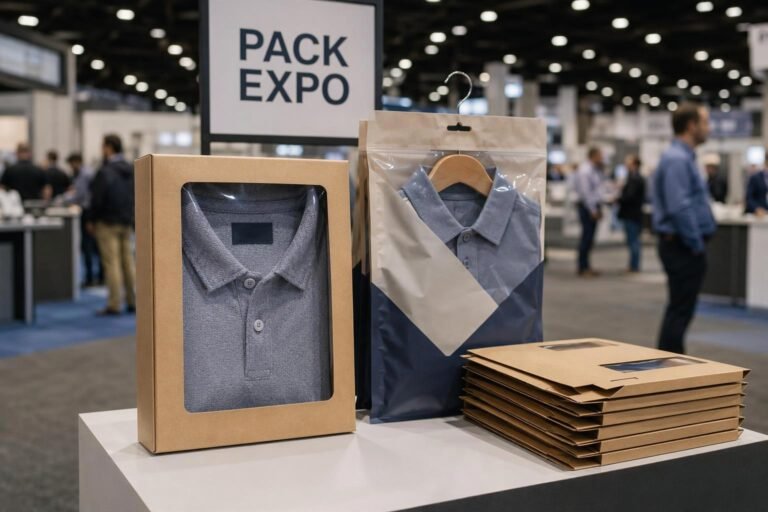
Packaging is the decision most often deferred because it feels like it belongs at the end. It does not. Folding method, bag type, sticker placement, label attachment, carton quantities, carton marks and assortment ratios all affect costing, carton planning and retail compliance — and several of them affect the garment’s construction or finishing. A fold that creases a collar or a bag that traps moisture is a garment problem, not a logistics problem.
Trims compound this. Buttons, zippers, snaps, elastic, labels, drawcords, thread, interlining, packaging and hangtags all need confirmation. If any component is missing, late, unavailable or inconsistent with the approved sample, production can stall. The classic version: the first sample uses substitute trims, the silhouette is approved, and the final zipper turns out to have a different weight or the chosen button is unavailable in bulk.
As an illustration of the specification surface a buyer has to pin down, Xindi’s own private-label programme covers individual poly or biodegradable bags, size stickers, custom logo printing and moisture-control packaging for export-ready knitwear, plus paperboard, kraft, fabric or leather tags with embossed, foil-stamped or die-cut shapes and barcode or QR integration. That is a menu of options, not a default — each line is a decision that has to be chosen, dimensioned and signed before the first sample, or it will be chosen for you by whoever is packing.
Locked or not locked:
A packaging spec sheet is signed with dimensions, materials and finishing for every component.
Barcode and QR data are verified against the retailer’s or stockist’s actual requirements, not a previous season’s file.
Carton quantities, carton marks and assortment ratios are confirmed, including how ratios interact with the size curve.
Packaging samples are approved alongside the garment sample, not after it.
Moisture-control or export packaging requirements are stated if the destination or transit time calls for them.
What this means for you: packaging locked after the garment is approved is packaging locked after the carton plan, the label print run and possibly the care label copy.
Decision 5: Quality Thresholds — Agree the Method and the Judge
A quality threshold is only enforceable when three things are agreed in writing before sampling: the test method, the acceptance judge and the defect classification. Without all three, a bulk inspection becomes a negotiation, and the party with the shipping deadline usually loses it.
The method families are the same ones that govern substitution testing, which is convenient — one test programme can serve both decisions:
Dimensional change — AATCC TM135, related to ISO 3759.
Colourfastness to laundering — AATCC TM61.
Colourfastness to crocking — AATCC TM8 or ISO 105-X12.
Pilling — ISO 12945-2 or ASTM D4970/D4970M, with ASTM’s acceptance-testing caution noted above.
The method name alone is not enough. Editions and options matter: AATCC TM135 offers four washing temperatures, three agitation cycles and four drying procedures, and the chosen combination is part of the specification. ISO 12945-2’s second edition moved visual assessment of pilling, fuzzing and matting to ISO 12945-4, so the rating procedure should be named too.
Disagreement between labs is a real risk, and ASTM addresses it directly. Its D4970 guidance states that if a disagreement arises from differences in values reported by purchaser and supplier, the statistical bias between the two laboratories should be determined by testing specimens randomly drawn from one sample of material, with competent statistical assistance recommended and a probability level chosen by both parties before testing starts. If bias is found, either its cause must be corrected or both parties must agree to interpret future results with the known bias in mind. The quality-threshold decision should name that path in advance rather than inventing it mid-dispute.
AQL levels and sampling plans are buyer decisions. This article deliberately supplies no numbers; the buyer sets them, and the inspection stage — inline versus final — should be agreed rather than assumed.
Locked or not locked:
A named method and edition is recorded for each test, including options such as wash temperature and drying procedure.
Buyer-defined tolerances and rating scales are recorded against each method.
Defect classes — critical, major, minor — are defined with examples relevant to this garment.
The inspection stage is agreed: inline, final, or both, with the sampling plan named.
The testing laboratory is identified, and the dispute-resolution path is written down.
What this means for you: “good quality” is not a threshold. A method, a judge and a tolerance are.
The Escalation-Deadline Matrix: Co-Signing the Calendar
The five decisions above are only as good as the dates attached to them. The escalation-deadline matrix is a one-page document, built from the order’s time-and-action calendar, that both brand and factory sign. Its purpose is to make slippage visible before it cascades.
A working time-and-action calendar treats each row as one job — lab dip approval, fit sample submission, PP sample approval — with a planned start, planned finish, owner and dependency, plus actual dates updated weekly. The exact milestone count depends on the product and the buyer’s compliance regime, but the structure is consistent, and the sampling window is where most production risk is created or removed.
The matrix adds the governance layer to that calendar. Its columns:
Column | What it records |
|---|---|
Milestone | The decision or deliverable being tracked |
Planned date | The committed date from the calendar |
Actual date | Updated weekly |
Owner | The single accountable person |
Dependency | What must happen first |
Escalation trigger | Days of slippage before escalation fires |
Escalation contact | Named person on each side |
Decision deadline | The last date a change can be made without invalidating the milestone |
The cost gradient is why the matrix matters. A spec change that lands before the fabric purchase order is placed costs little. After the fabric has been dyed, it costs a redye. After the goods have been cut, it costs a remake. The matrix should therefore flag which milestones a late change invalidates — not just that a date has moved.
Locked or not locked:
Every decision in this article has a freeze date in the matrix.
Escalation contacts are named on both sides, with timezone coverage stated.
A change log is maintained with reason codes — wear-test failure, buyer request, mill substitution — so the season’s changes can be analysed later.
A weekly actual-versus-plan review is scheduled, with the owner named.
The matrix is co-signed by both parties before the first sample is submitted.
What this means for you: an unsigned calendar is a plan. A co-signed matrix is a commitment with an escalation path.
The Pre-Sampling Governance Checklist
The consolidated checklist below groups the five decisions and the matrix by phase. Each item is a yes/no judgment. A style is cleared for sampling only when every item is marked locked and the matrix is co-signed.
Before tech pack release
☐ Tech pack includes technical flats, measurement specs, fabric direction, trim details, construction notes, size reference and design comments — an incomplete brief guarantees a sample nobody can approve.
☐ A named approver and a named backup are recorded for each of the five decisions.
☐ Contributors and their input scope are listed.
☐ One approval document version is designated current and supersedes prior threads.
☐ Substitution tiers are defined in writing and shared with mill and factory.
☐ The conditional tier lists required tests, acceptance criteria, cost owner and turnaround.
☐ The no-go list covers anything affecting fit-critical stretch or recovery.
Before sample submission
☐ The base pattern is version-numbered and fit-approved before grading begins.
☐ Body chart, graded spec and graded pattern are reconciled.
☐ Representative sizes are selected for physical sampling per a risk-based plan.
☐ Shrinkage and process compensation ownership is assigned in writing.
☐ Packaging spec sheet is signed with dimensions, materials and finishing.
☐ Barcode and QR data are verified against current retailer requirements.
☐ Carton quantities, marks and assortment ratios are confirmed.
☐ A named method and edition is recorded for each quality test, with options stated.
☐ Buyer-defined tolerances and rating scales are recorded.
☐ Defect classes are defined with examples.
☐ Inspection stage and sampling plan are agreed.
☐ Testing laboratory and dispute-resolution path are named.
☐ Every decision above has a freeze date in the escalation matrix.
☐ Escalation contacts are named on both sides with timezone coverage.
Before sample approval
☐ The sample is labelled as made in substitute fabric if it is — do not approve fit-critical details on a substitute.
☐ Approved material is recorded with mill, lot and test references.
☐ Packaging samples are approved alongside the garment sample.
☐ Comments identify location, issue, required change, measurement impact and whether another sample is needed.
☐ The approval record carries a date and a version number matching the tech pack.
Before bulk release
☐ Every graded pattern is measured and its nested progression reviewed, regardless of physical sampling scope.
☐ Critical seam relationships are checked for every ordered size.
☐ The change log is current, with reason codes recorded.
☐ The weekly actual-versus-plan review is scheduled.
☐ The escalation matrix is co-signed by both parties.
Completion statement: the style is cleared for sampling only when every applicable item above is marked locked and the escalation matrix is co-signed. Items that do not apply should be marked not applicable with a reason, not left blank.
Key Takeaways
Sampling is a cost-control gate. Unresolved decisions there become bulk rework, redyes and missed windows.
One accountable approver per decision, with contributors separated from the signer. If two people can approve, neither owns the outcome.
Material substitutions need written tiers and trigger tests, because fibre content and nominal weight do not predict handfeel, stretch, recovery, shrinkage or pilling.
A base-size approval is not a range approval. Reconcile body chart, graded spec and graded pattern before bulk, and assign ownership of shrinkage compensation.
Packaging and quality thresholds must be specified with method, judge and tolerance before the first sample — and every freeze date belongs in a co-signed escalation matrix.
Optional Reader Questions
How long should a decision freeze take before sampling?
There is no universal number, and any article that supplies one is guessing. The drivers are concrete: how many materials need testing, how long the chosen labs take to return results, how many approvers sit in the chain, and how many time zones separate them. A single-material, single-approver style with a local lab can freeze quickly; a multi-colour range with conditional substitutions, third-party testing and a sign-off chain across three time zones cannot. Build the freeze duration backwards from the escalation matrix’s decision deadlines rather than forwards from a target date.
Can we lock decisions after the first sample if we’re behind schedule?
Some can, some cannot, and the cost gradient tells you which. A change landing before the fabric purchase order costs little. After dyeing, it costs a redye. After cutting, it costs a remake. Decisions that can be conditionally deferred are the ones whose downstream cost is still low — packaging artwork, for instance, if the carton plan has not been committed. Decisions that cannot be deferred are the ones that determine what the sample is testing: material behaviour, base fit and quality thresholds. Approving fit-critical details on a substitute fabric is not a deferral; it is an approval you will have to withdraw.
What if our factory and our lab disagree on a test result?
This is exactly why the quality-threshold decision should name a dispute path before sampling. ASTM’s D4970 guidance describes the shape of that path: determine whether there is statistical bias between the two laboratories by testing specimens randomly drawn from one homogeneous sample of the material, assign them randomly in equal numbers to each lab, and compare average results using a probability level both parties chose before testing began. If bias is found, either correct its cause or agree to interpret future results with the known bias in mind. Competent statistical assistance is recommended. Your written path should name who performs the comparative test and who pays.
How does this checklist change for a 50-unit run versus a larger order?
The governance items stay the same; the sampling scope and inspection intensity scale with risk. A narrow range in a familiar block may justify sampling the base plus representative lower and upper sizes, while a new or technically sensitive range may justify every size. Every graded pattern should be measured regardless of how many are physically sampled. Inspection intensity follows the same logic — risk, range width, construction complexity and volume — and the buyer sets the sampling plan either way. Low volume is not a reason to skip the freeze; it is a reason the rework cost hurts more relative to the order.
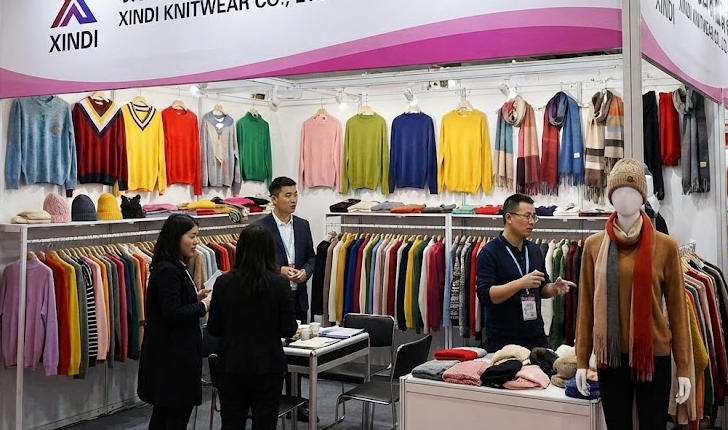
Where does Xindi fit into this process?
Xindi’s pre-sampling support, as described by the company, includes 3–5 day sampling from tech packs or photos, low MOQs from 50 units, certified yarn options including OEKO-TEX, RWS, GRS and GOTS, sizing experience across US, EU and Asian markets, and private-label packaging. Those are capabilities to confirm against your own decision matrix — ask which tests the mill can supply, which packaging options are available for your destination, and how the escalation contacts map to your calendar. They are not a guarantee of outcomes, and they do not replace the five decisions above. If you want to test the fit, the practical next step is a swatch and a single sample against a locked brief.