
In 2026, you will notice that wool material for suits includes worsted, flannel, tropical, merino, cashmere, alpaca, mohair, and vicuna. Wool material for suits is known for its strength, breathability, and resistance to wrinkles, making it an excellent choice for various occasions. The type of wool material for suits you select will influence both the appearance and comfort of your suit, so understanding the different options is essential. Wool material for suits remains popular worldwide, with China, the United States, and India being the largest consumers. Men’s suits crafted from premium wool material for suits and wool fabrics are recognized for their style and comfort.
Aspect | Details |
|---|---|
Demand Transformation | There is a shift toward better and higher-quality wool material for suits, especially in sports and outdoor apparel. |
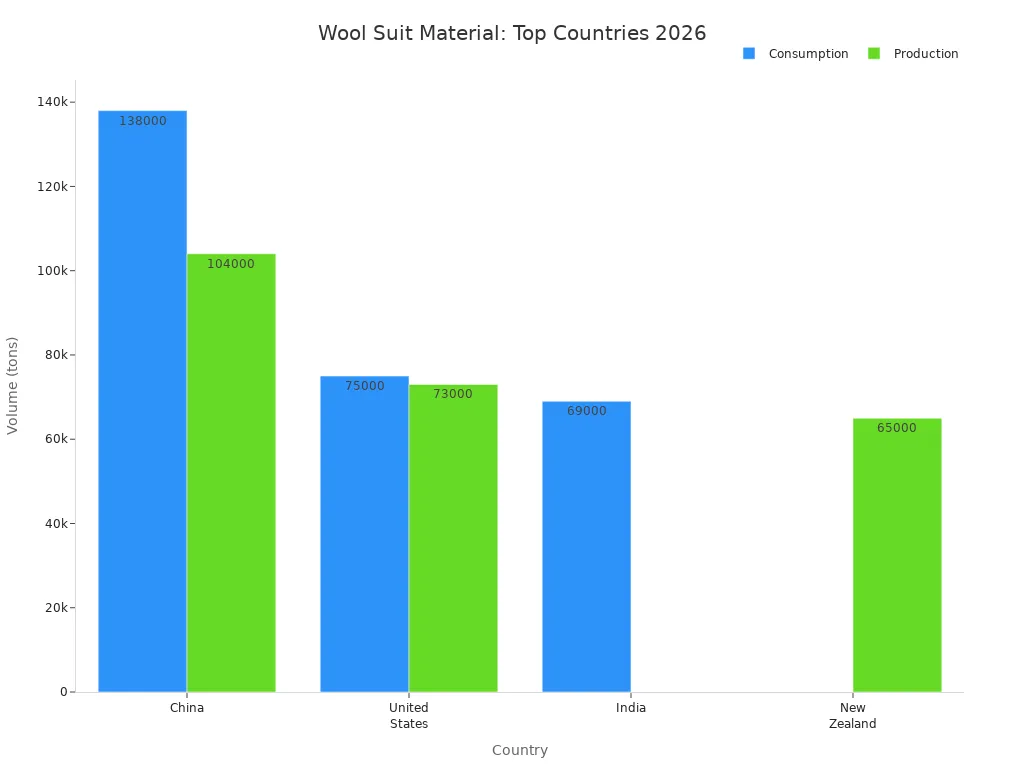
Leading Consumers | China (138K tons), United States (75K tons), and India (69K tons) are the top users of wool material for suits. |
Luxury Sector | Very fine wool material for suits is used in luxury fashion, and its price remains relatively stable. |
Production Concentration | The main producers of wool material for suits are China (104K tons), United States (73K tons), and New Zealand (65K tons). |
Export Dynamics | New Zealand leads in exporting wool material for suits, with $165 million (37% share), followed by Australia and the UK. |
Pricing Trends | The average export price for wool material for suits in 2024 was $2,609 per ton, which is 4% lower than last year and below previous years. |
Key Takeaways
Learn about the types of wool for suits: worsted, woollen, and blends. Each type changes how the suit looks and feels.
Pick tropical wool if the weather is hot. It helps you stay cool and look neat.
Try merino wool for wearing all year. It feels soft, pulls away sweat, and stops bad smells. This makes it good for daily wear.
Look at eco-friendly wool blends. These choices help the planet and still feel nice and look good.
Notice the super numbers on wool tags. Bigger numbers mean the fibers are finer. But, the way the wool is made also matters for quality.
Types of Wool for Suits
When you choose a suit, you need to know the main types of wool. The types of wool used in suits fall into three main categories. Each category has unique features that affect the look and feel of your suit.
Category | Description | Examples |
|---|---|---|
Worsted Wool | Made from long-staple fibers, smooth surface, ideal for business suits. | Tropical Wool, Gabardine, Barathea |
Woollen Wool | Uses short-staple fibers, fluffy texture, vintage casual vibe. | Flannel, Tweed |
Wool Blends | Combines wool with other fibers for enhanced properties. | Wool and Silk, Wool and Cashmere, Wool and Polyester, Wool and Elastane |
You will see that worsted wool and woollen wool are the most common types of wool for suits. Wool blends are also popular because they add new qualities to the fabric.
Woollen vs. Worsted
You can spot the difference between woollen and worsted wool by touch and appearance. Woollen wool feels softer and fluffier. It gives your suit a cozy and relaxed look. Worsted wool feels smoother and denser. It makes your suit look sharp and polished.
Woollen wool is softer, fluffier, and more elastic.
Worsted wool is smoother, denser, and more durable.
Woollen wool can sag and snag more easily.
Worsted wool keeps its shape and shows clear stitches.
If you want a suit for business, worsted wool is a smart choice. If you want a suit for casual or vintage style, woollen wool works well. Both types of wool have their place in modern suits.
Super Numbers Explained
When you shop for suits, you may see super numbers on the label. These numbers tell you about the fineness of the wool fibers. Higher super numbers mean the fibers are finer and the fabric feels softer.
Super numbers show how fine the wool fibers are, measured in microns.
Each higher number means the fibers are thinner.
A higher super number does not always mean better quality. The quality of a suit also depends on the raw wool, how it is spun, and how it is finished.
You should look at super numbers as one part of the story. The types of wool, the way the wool is made, and the final fabric all matter for the quality of your suit.
Classic Wool Materials
Merino Wool Benefits
Many good suits use merino wool. Merino wool comes from merino sheep. These sheep make some of the finest wool fibers. You can wear merino wool suits in any season. Merino wool feels soft on your skin. It does not itch like rougher wool. Merino wool keeps you warm when it is cold. It also keeps you cool when it is hot. This wool soaks up sweat, so you stay dry. Merino wool also stops bad smells. This makes it great for men’s suits you wear all day.
Tip: Merino wool suits are great for travel and work. They stay fresh and feel comfortable.
Here is a table that shows how merino wool compares to other wool types:
Property | Merino Wool | Other Wool Types |
|---|---|---|
Warmth | Excellent warmth retention | Varies, generally good |
Moisture-wicking | Absorbs up to 30% of its weight | Less effective, e.g., alpaca wool |
Odor resistance | Naturally antimicrobial | Varies, generally less effective |
Comfort | Soft, less itchy | Can be itchy, especially coarser types |
Insulation when wet | Maintains insulation | Generally loses insulation when wet |
Weight | Lightweight | Heavier than merino wool |
You will see merino wool in suits for work, travel, and daily use. Merino wool gives you a suit that feels light and looks nice. It will last for many years.
Cashmere Wool Qualities
Cashmere wool is one of the most fancy suit materials. You can feel the difference right away. Cashmere wool feels softer than merino and mohair. Cashmere wool comes from the undercoat of cashmere goats. Suits made from cashmere feel gentle on your skin. They do not cause itching. Cashmere wool keeps you warm but is not heavy. You can wear cashmere wool suits in cold weather and still feel good.
Cashmere wool keeps you warmer than merino wool and mohair. Cashmere wool suits are hypoallergenic. This means they are good for people with sensitive skin. Cashmere wool does not itch, so you can wear it close to your body. You will see cashmere wool in suits for fancy events and special occasions.
Note: Cashmere wool suits cost more than other wool suits. But you get extra softness and warmth.
Cashmere wool gives you a suit that feels fancy and looks nice. You will like the comfort and style of cashmere wool suits.
Mohair and Alpaca Features
Mohair and alpaca wool have special features for suits. Mohair comes from Angora goats. You will see mohair in suits that need a smooth feel and shine. Mohair does not wear out fast. Your suit will look good for a long time. Mohair wool suits look bright because the wool holds color well. You get a suit that stands out with color and shine.
Alpaca wool comes from alpaca animals. Alpaca wool feels soft and does not pill much. Alpaca wool suits last for years and keep their color. Alpaca wool is a strong choice instead of other wool types. You will find alpaca wool in suits for both work and casual days.
Here is a table that shows the durability and sheen of mohair and alpaca wool:
Fabric Type | Durability Characteristics | Sheen Characteristics |
|---|---|---|
Mohair | Known for its resilience, resists wear and tear, retains beauty over time. | Natural sheen enhances dyed colors, making them vibrant and long-lasting. |
Alpaca Wool | Durable and less likely to pill, making it a long-lasting alternative. | Dyes evenly, with colors maintaining their vibrancy for extended periods. |
You can remember these features with this list:
Alpaca wool: Tough, soft, keeps color bright, a strong option.
Mohair is sometimes called a “diamond fiber” because it shines. You will see mohair and alpaca wool in suits that need to look good and last long. These wool types help you make a suit that is strong and stylish.
Specialty Suit Fabrics
Specialty suit fabrics give you more choices for style and comfort. These fabrics have unique textures and blends that make your suit stand out. You can see how specialty fabrics differ from classic wool materials in the table below.
Fabric Type | Characteristics | Intended Use |
|---|---|---|
Specialty Fabrics | Unique textures, specific weaves, and blends that enhance appearance and functionality. | Formal or specific occasions |
Classic Wool | Versatile, durable, and breathable, suitable for everyday wear. | Everyday wear |
Worsted Wool Versatility
Worsted wool is one of the most flexible options for suits. You can wear worsted wool suits to formal events like dinners or weddings. You can also style worsted wool with jeans or chinos for summer outings. This wool works well with many weaves, so you get different styles and patterns. Worsted wool gives your suit a smooth finish and sharp look. You can choose worsted for business, casual, or special occasions. The fabric stays strong and keeps its shape, so your suit looks good for a long time.
You can match worsted wool with different clothes for different looks.
You can find worsted in many patterns and styles.
Flannel Wool Warmth
Flannel wool is popular for suits in cooler weather. Flannel has a soft, fuzzy texture that feels cozy. Many people think flannel wool keeps you warm even when wet. Scientific tests show that wool and fleece lose insulation when wet. Flannel wool does not keep warmth as well as some believe. You should wear flannel wool suits in dry, cool weather for the best comfort. Flannel suits look classic and feel soft. You can choose flannel for work or casual days. Flannel wool gives your suit a relaxed style and gentle feel.
Flannel wool feels soft and warm in dry weather.
Flannel suits work well for fall and winter.
Flannel wool adds a vintage touch to your suit.
Tropical Wool for Warm Climates
Tropical wool is a smart choice for suits in hot weather. This wool is lighter and has a looser weave than regular wool. Air moves easily through tropical wool, so you stay cool. Tropical wool suits keep a professional look, even in summer. You can wear tropical wool to work or events when it is hot outside. Other fabrics like linen and performance blends also help you stay cool, but tropical wool gives you the classic suit style. You can trust tropical wool to keep you comfortable and stylish.
Tropical wool lets air flow, so you do not get too hot.
Tropical wool suits look sharp in warm weather.
You can choose tropical wool for summer or travel.
Exotic and Premium Wool Material for Suits
When you look at exotic and premium wool, you find fibers that make suits special. These wools have qualities that are better than classic worsted wool. You get extra softness, strength, and warmth. Many fancy suits use these rare fibers for a unique look and feel.
Vicuna Wool Luxury
Vicuna wool is the most luxurious wool you can get. Only the fanciest suits use this wool. Vicuna wool feels softer than any other fiber. This wool comes from the vicuña, a wild animal in South America. Getting vicuna wool takes a lot of time and care. That makes it rare and very expensive. People collect the wool in ways that protect the animals. Vicuna wool suits are super warm and comfortable. The lightness and softness make every suit feel amazing.
Here is a table that shows why vicuna wool is so special:
Aspect | Description |
|---|---|
Exceptional Softness | Vicuna wool is known for its unmatched softness, making it highly desirable. |
Rarity | The wool is rare due to the limited population of vicuñas and sustainable harvesting practices. |
Labor-Intensive Process | The production of vicuna wool involves a complex and labor-intensive process, contributing to its high cost. |
Sustainability | Ethical harvesting practices and conservation efforts enhance its premium status. |
Comparison | Compared to other luxury fibers, vicuna wool is softer and warmer, reinforcing its luxury appeal. |
Tip: If you want the best suit, pick vicuna wool. You get warmth, softness, and something very rare.
Other Rare Types of Wool
There are other rare wools that make suits stand out. These fibers give you comfort, style, and last a long time. Many top suits mix worsted wool with exotic fibers to save money but keep the luxury. You see these wools in fancy clothes and accessories.
Here is a table that compares rare wool types and their uses:
Wool Type | Characteristics | Typical Uses |
|---|---|---|
Merino Wool | Fine fibers, very soft, wicks away sweat, allows air flow | Activewear, base layers |
Alpaca Wool | Light, warm, hypoallergenic, feels like silk | Blankets, scarves, jackets |
Vicuna Wool | Beautiful, rare, very soft, light, one of the most expensive fibers | High-end clothing |
Angora Wool | Very soft, fluffy, retains heat | Sweaters, hats, gloves |
Cashmere Wool | Soft, warm, light, comes from cashmere goats | Expensive sweaters, blankets |
Virgin Wool | Highest quality, freshly spun, long-lasting | High-quality blankets, coats |
Llama Wool | Strong, warm, water-resistant, rougher than alpaca | Coats, rugs, large blankets |
Camel Wool | Soft, long-lasting, incredibly warm | Coats, jackets, warm blankets |
Mohair Wool | Smooth, shiny, long-lasting | High-end outfits, home textiles |
Qiviut Wool | Very soft, light, eight times warmer than sheep’s wool | Expensive clothes like scarves |
Shetland Sheep Wool | Fine, soft fibers | Knits, tweed, various textiles |
You will see that premium and exotic wool suits cost a lot more than regular ones. Suits made from merino wool or cashmere can be very expensive. Synthetic suits are cheaper but do not feel as nice or last as long as real wool. Some suits mix worsted wool and polyester to save money and make them stronger.
Note: When you pick a suit, think about what each wool type offers. Exotic wools give you comfort, warmth, and style that really stand out.
Sustainable and Innovative Wool Blends
Eco-Friendly Suit Materials
You can pick eco-friendly wool blends if you want to help the earth. Many new fabrics use wool from places that treat animals and nature well. Some blends mix wool with other natural fibers. These suits look nice and feel good to wear. In 2026, you will see these choices when shopping for suits:
Gold Forever uses Super 160’s wool that is certified by the Responsible Wool Standard. This blend has gold powder for a fancy touch and keeps your suit eco-friendly.
Pashmina mixes cashmere from the Changthangi goat with certified merino wool. You get warmth and style and support good wool practices.
Extreme Vicuna uses only vicuña wool. This rare fiber comes from careful animal care and makes your suit very soft.
Eco-friendly suit materials often use recycled wool, rPET, or hemp. These fabrics use less resources than regular wool and worsted wool. Recycled wool helps the earth and lets you make a smart choice. Wool breaks down in about six months. Synthetic fabrics can last for hundreds of years. You can look for certifications like the Responsible Wool Standard or the new Materials Matter Standard. These show your suit meets high green goals.
Certification Name | Description |
|---|---|
Responsible Wool Standard (RWS) | Focuses on animal care, land use, and social rules for wool. |
Materials Matter Standard | Aims for green ways to make raw materials and lowers harm to nature. |
Tip: You can help the earth by picking suits made from certified wool blends.
Performance Wool Blends
Modern wool blends make your suit work better. You will find suits that mix wool with polyester, nylon, cotton, or silk. These blends make your suit stronger, more comfy, and easier to clean. You can wear these suits for work, trips, or special days.
Performance Enhancement | Description |
|---|---|
Durability | Wool blends use man-made fibers to make suits last longer and fight damage. |
Shape Retention | Blends help your suit keep its shape after washing or wearing. |
Moisture Management | Wool blends soak up sweat and dry fast, so you stay comfy. |
Comfort | Adding cotton or silk makes suits softer and nice to wear. |
Thermal Regulation | Wool blends help control heat, so you feel good in any weather. |
Breathability | Blends let air move, making suits good for all seasons. |
Wrinkle Resistance | Wool blends wrinkle less, so your suit looks neat all day. |
You can find wool blends with polyester for strength and less wrinkles. Nylon makes suits tougher. Cotton gives breathability and warmth. Silk gives your suit a smooth feel and soft shine. You can pick worsted wool blends for a sharp look and easy care. These choices help you get a suit that fits your needs and style.
Wool Material for Suits Comparison
Key Features Table
When you look at wool material for suits, you should check some main things. Think about where you will wear the suit and what season it is. Also, think about how much money you want to spend. Heavy wool is good for fancy events. Light wool material for suits is better for casual times. Wool keeps you comfy all year. It keeps you warm in winter and lets air move in summer. You can find wool material for suits that fits what you need.
Here is a table that shows the main features of different wool types and weaves:
Feature | Worsted Yarn | Woolen Yarn |
|---|---|---|
Fabric Density | Dense, durable fabrics | Fluffy, insulating fabrics |
Ideal Use | Superior drape | Ideal for winter |
Weight Range | 280g (four seasons), 230g-300g (summer), 340g-500g (winter) | 230g-300g (summer), 340g-400g (winter) |
Weave Type | Description | Characteristics |
|---|---|---|
Plain Weave | Simple interlacing of yarns | Versatile, breathable, wrinkle-resistant |
Twill Weave | Diagonal ribbing pattern | Durable, superior drape |
Hopsack Weave | Unique texture from specific interlacing pattern | Textured, often used in formal wear |
Tip: Pick wool material for suits by looking at the weave and weight. This helps you match your weather and style.
Pros and Cons Overview
You might have some problems when picking wool material for suits. The quality of wool can change how it feels and looks. Some people worry about animal care on big farms. Blends with man-made fibers can last longer than cheap wool.
Here is a table that shows the good and bad sides of common wool blends:
Wool Blend Type | Pros | Cons |
|---|---|---|
Wool-Polyester | Resilience, minimal ironing needs | Less breathable than pure wool |
Wool-Rayon or Wool-Viscose | Softer feel, better drape, luxurious appearance | Reduced strength when wet, higher shrinkage risk |
Wool-Silk or Wool-Cashmere | Exceptional softness, natural sheen | More expensive, requires careful handling |
Stretch Wool Blends | Enhanced mobility, comfortable fit | Degrades over time with heat exposure |
Look for wool material for suits that matches your money and style.
Pick blends if you want more comfort or strength.
Check where the wool comes from to make sure it fits your values.
Note: Wool material for suits gives you lots of options. You can find a good mix of comfort, style, and price.
You have many wool suit choices in 2026. These include worsted, woolen, and blends. Suit weights range from 230g to 400g. Four-season wool suits work for all climates. For summer, pick high twist wool or lighter suits. For winter, flannel or tweed suits keep you warm. Daily business suits should use four-season wool at 280g to 300g. Formal suits need lighter wool in summer and heavier wool in winter. When shopping, think about tradition, new ideas, and the planet. The table below lists mills with classic and modern wool suits.
Mill Name | Special Features | Best For |
|---|---|---|
Reda | Combines sustainability with luxury through Rewoolution recycled wool technology | Environmentally conscious clients and active professionals needing performance fabrics |
Ermenegildo Zegna | Balances traditional elegance with modern performance | Modern professionals who need suits that perform exceptionally while looking traditionally elegant |
FAQ
What is the best wool for a suit in hot weather?
You should choose tropical wool. This fabric has a loose weave and lightweight feel. Air moves through the fibers, so you stay cool. Tropical wool keeps you comfortable and looking sharp during summer.
How do I care for my wool suit?
You need to brush your suit after each wear. Hang it on a wide hanger. Use a steamer to remove wrinkles. Dry clean only when necessary. This routine helps your suit last longer.
Are wool blends good for sensitive skin?
You can wear wool blends if you have sensitive skin. Merino and cashmere blends feel soft and gentle. These fabrics rarely cause itching. Always check the label for natural fibers.
Can I wear a wool suit all year?
You can wear a wool suit in every season. Four-season wool works well for most climates. Choose lighter weights for summer and heavier fabrics for winter. Wool keeps you comfortable in changing weather.
What makes vicuna wool special?
Vicuna wool feels softer than any other fiber. It comes from a rare animal in South America. The wool is light, warm, and very expensive. You find vicuna in luxury suits and accessories.