
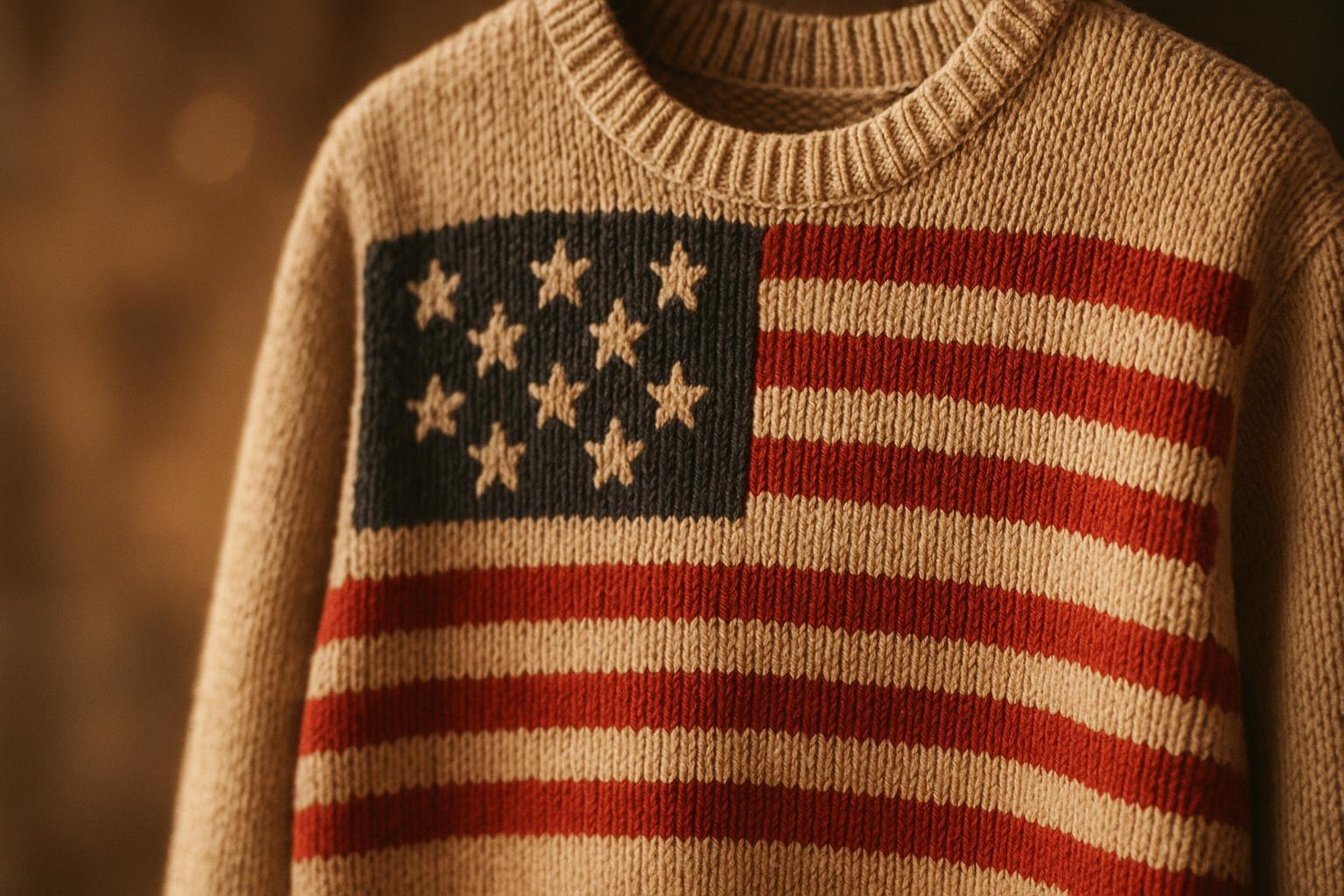
If you’re developing an american flag sweater for a drop, a capsule, or a brand statement piece, the hardest part usually isn’t “designing a flag.” It’s choosing the right construction method so the sweater still looks premium after sampling, grading, production, and real wear.
The same artwork can look:
crisp and “built into the garment,”
bulky and stiff,
slightly wavy at the edges,
or clean on day one… then crack, snag, or distort after wash.
That outcome is mostly determined by one decision: intarsia vs jacquard vs surface decoration (embroidery/appliqué) vs print.
Below is a brand-friendly way to pick the technique, spec it, and avoid common failures—without turning this into a political conversation. This is purely a product-development guide.
Key takeaways
Key Takeaway: Choose intarsia when the flag is the hero graphic and you want a clean, premium knit-in look. Choose jacquard when you need repeatable production and can manage floats. Choose embroidery/appliqué for patch-style placement. Choose print for speed, color detail, and lower-cost execution.
Key Takeaway: Most sampling problems come from tension at color changes (intarsia) or float management (jacquard)—so your tech pack should specify join rules, float-length limits, and a swatch approval process, not just “make it like the photo.”
Key Takeaway: If your brand promise includes “soft handfeel” and “premium knit,” treat embroidery, appliqué, and print as a stretch + handfeel engineering problem, not just decoration.
A quick decision matrix (use this before you draw anything)
If your team is literally debating jacquard knit vs intarsia, this is the simplest way to decide.
Method | Best for | Watch-outs | What to request in sampling |
|---|---|---|---|
Intarsia | Big flag panels, bold stripes, clean color blocks | Slower; join-line holes/distortion if tension is off | Swatches showing join quality + edge straightness; confirm finishing method |
Jacquard (stranded) | Repeating motifs, star fields, scalable production | Back-side floats can snag or tighten fabric | Float-length rules; consider ladder-back for long floats; stretch test swatches |
Embroidery / appliqué | Chest patch, sleeve badge, small flag placement | Can stiffen drape; puckering if not stabilized | Stabilizer choice + stitch density; placement map; wash test |
Fast development; detailed graphics; promo styles | Can crack/fade; less “knit-craft” feel | Stretch + wash durability test; handfeel approval; placement stress test |
If you’re unsure, here’s a simple default:
Flag covers most of the front body → start with intarsia.
Allover stars/stripes effect → consider jacquard.
Small flag accent → embroidery/appliqué.
Photo-real or many colors → print.
Define the techniques (in brand terms, not hobby terms)
If you’ve been searching, you’ve probably seen phrases like intarsia sweater and “jacquard” used interchangeably. They’re not.
A lot of sampling goes sideways because “jacquard” and “intarsia” get used loosely. Here’s the practical definition you can share with a factory.
Intarsia
Intarsia is a knit-in color-block method where each color area is worked with its own yarn source. The benefit is a cleaner inside (no long floats running behind the fabric) and crisp blocks—great for large motifs.
The tradeoff is labor and risk at the edges: consistent color changes matter. A useful rule from KNITmuch’s “6 essential tips for knitting intarsia” is to pick up the yarn the same way at every color change to reduce gaps and uneven tension.
Jacquard (stranded colorwork)
In a brand development context, “jacquard” often means stranded colorwork: you knit with multiple yarns across the row and carry the unused color behind the fabric as floats.
Jacquard is often more scalable once it’s programmed (especially for repeating motifs), but floats can create two real problems:
snag risk, and
tightness/puckering if floats are pulled too taut.
Modern knit education often points out that long floats can make colorwork feel uncomfortably tight; see Modern Daily Knitting’s explanation of float-length problems.
If you need long spans (think: red stripes crossing a wide white area), one approach is ladder-back jacquard—a technique that anchors long floats more securely; Knit Darling’s ladder-back jacquard explainer is a clear reference.
Embroidery and appliqué
Embroidery stitches thread into the sweater after knitting. Appliqué attaches a separate fabric/patch layer (often stitched or fused + stitched).
They’re great when you want a badge placement (left chest, sleeve, hem)—and you don’t want the entire sweater to be colorwork.
But both change handfeel and stretch locally, so your placement and stabilization choices matter.
Printing puts the graphic on the sweater surface (screen, transfer, etc.). It’s often the fastest way to get a multi-color flag look—especially if you want fine detail. (This is the bucket many people mean when they search printing on knit fabric.)
The tradeoff: print can feel less “knit-integrated,” and you need to test stretch + wash durability so the graphic doesn’t crack or peel.
Evaluation criteria 1: How it looks and feels (the “premium knit” factor)
If your brand story leans into craft, heritage, or premium handfeel, this section is your north star.
Intarsia look and handfeel
Intarsia typically reads as the most designed-as-knitwear option for a big flag.
The front can look very clean.
The inside is usually cleaner than jacquard because you’re not carrying long floats.
Knitwear.io’s overview of Jacquard & Intarsia knit techniques is a good internal reference for explaining these aesthetic tradeoffs.
Jacquard look and handfeel
Jacquard can look rich and textured—especially with star fields—but the back-side structure matters:
floats add bulk,
floats can snag,
and float tension can change how the garment stretches.
Embroidery/appliqué look and handfeel
Embroidery/appliqué adds dimension. That can be a feature (badge-like, vintage, varsity, workwear), but it can also “fight” the softness of knitwear if the stitched area gets too dense.
Print look and handfeel
Print is the flattest option visually and tactically. It can work extremely well for promotional styles or graphic-forward concepts.
If you want to compare print against knit-in graphics, knitwear.io’s Jacquard vs Intarsia vs Prints provides a useful internal explainer.
Evaluation criteria 2: Translating stars and stripes into knit reality
An American flag graphic has two elements that behave very differently in knit production:
stripes (long, continuous spans of color)
stars (small repeated motifs)
That’s why “flag sweater” is rarely a single-technique decision.
Stripes: where intarsia often wins
Wide stripes across the body are where intarsia shines because you can keep the color boundaries clean without carrying long floats.
Stars: where jacquard can be more natural
A repeated star field can be a strong jacquard use case—especially if the stars repeat across a panel.
If the star field is small (e.g., 1–2 stars as an accent), intarsia may still be fine. But when the field repeats, jacquard often scales better.
Hybrid approach (common in real product development)
Many “best” executions are hybrid:
intarsia for big stripes,
jacquard for star repeat,
or a knit base plus a small embroidered patch.
If you want to plan motif translation before sampling, knitwear.io’s guide on motifs and graphic elements for knitwear is a practical internal resource.
Evaluation criteria 3: Scalability and sampling speed
You’re in TOFU right now, so you don’t need exact cost quotes—but you do need to understand what drives time and complexity.
Intarsia scalability
Intarsia is typically slower and more operator-skill-dependent. More color changes generally mean:
more yarn management,
more opportunities for tension inconsistency,
and more finishing attention.
That doesn’t mean “don’t do it.” It means you should plan for stronger sampling discipline.
Jacquard scalability
Jacquard can be efficient once the program and yarn plan are stable. The risk is that brands underestimate back-side management:
if floats are too long → snag risk,
if floats are too tight → fabric tightness and puckering.
Embroidery/appliqué scalability
Embroidery is often scalable if your design is stable, because it’s an add-on operation that can be standardized. The drivers are stitch count, placement count, and rework risk.
Print scalability
Print can be very scalable and fast, especially when you’re iterating artwork. But knit substrates introduce stretch behavior that you have to validate.
Evaluation criteria 4: Durability and failure modes (what actually goes wrong)
This is where most “flag sweater” development budgets get burned: you approve the artwork, but you didn’t approve the failure mode prevention.
Intarsia: join-line holes and wavy edges
The classic intarsia issue is holes or gaps at color joins.
One practical discipline is to standardize join behavior—again, KNITmuch (linked earlier) calls out consistency at color changes as a core quality lever.
What to put in your tech pack
A clear chart (or pixel map) of color areas.
A “join quality” standard: no visible holes at the join line when worn under light tension.
A swatch approval that includes edge straightness and tension uniformity, not just color correctness.
Jacquard: float snagging and tightness
Long floats can snag, and they can also pull the fabric tight.
A helpful explanation of why long floats create comfort/tightness issues is in Modern Daily Knitting (linked earlier).
If you anticipate long spans, ladder-back jacquard exists for a reason (see Knit Darling, linked earlier).
What to put in your tech pack
A maximum float length guideline (or a requirement for ladder-back on spans above a threshold).
A stretch/recovery test on the jacquard panel swatch.
A snag-risk check on inside floats in high-friction zones.
Embroidery on sweater: puckering and stiffness
Embroidery on knits needs stabilization and density control. Two solid references:
The common theme: keep the knit from stretching during stitching, and avoid designs so dense that they turn a soft sweater into a rigid panel.
What to put in your tech pack
Stabilizer spec (type + placement).
Stitch density expectation (especially for fill areas).
A “handfeel approval” step—on-body, not just flat.
Appliqué: edge lift and local rigidity
Appliqué can look premium, but if the attached piece is stiff or the bonding is too aggressive, the sweater stops behaving like a sweater in that zone.
What to put in your tech pack
Patch material spec (weight, stretch).
Attachment method (stitch + optional fuse), with a requirement that the panel still stretches appropriately.
Print: cracking and wash fade
Printing on knit is often about stretch compatibility.
What to put in your tech pack
Stretch test: approve the print after repeated stretch cycles.
Wash durability test: approve after laundering.
Handfeel standard: no plasticky board-feel if your brand positions as premium.
Evaluation criteria 5: What actually drives cost (without guessing numbers)
You don’t need “a price list” to make good decisions at TOFU. You need to understand what increases operator time, machine time, and rework risk.
Intarsia cost drivers
Intarsia tends to get more expensive when:
your design forces many separate yarn sources (lots of small color islands),
color boundaries wander and create frequent joins,
you need perfect edge straightness (which increases rework),
you’re developing multiple sizes that require re-charting.
In other words: a clean, simplified flag execution usually costs less than a highly fragmented, distressed, or “painted” look.
Jacquard cost drivers
Jacquard costs tend to rise when:
the motif creates long floats that need special management,
you need a cleaner interior (which can require different structures),
the yarn combination makes tension control difficult,
the design needs multiple swatch rounds to hit the right stretch and drape.
Embroidery/appliqué cost drivers
Surface decoration costs scale with:
stitch count and density,
number of placements per garment,
rework risk (misplacement is expensive),
backing and cleanup requirements.
Print cost drivers
Print costs scale with:
number of colors (depending on print system),
coverage area (big solid blocks are higher-risk on stretch),
required durability level (wash/stretch testing and iteration),
handfeel requirements (thin, flexible systems can cost more).
What to send your factory (the “make it match” checklist)
If you only send artwork, you’ll get a sweater that looks like the artwork in theory—but not necessarily in knit reality.
Here’s a factory-brief checklist that prevents 80% of sampling churn:
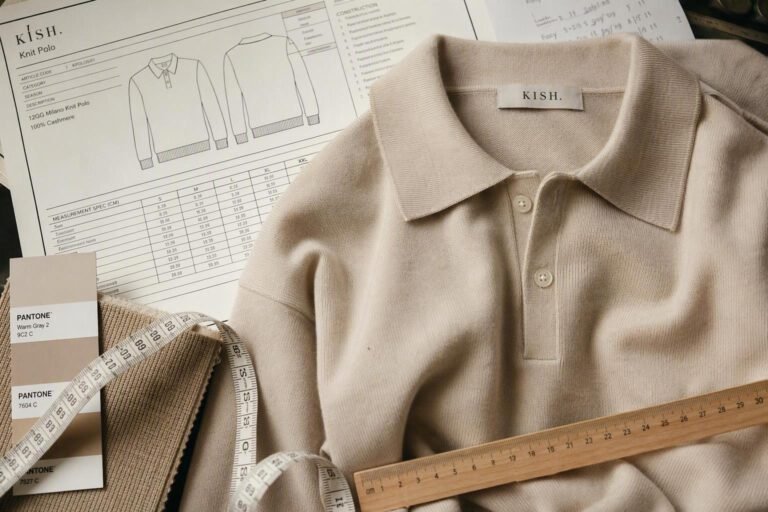
Artwork + knit-ready chart
Provide a simplified flag chart (pixel map) that matches the gauge.
Technique callout
“Intarsia for body stripes” or “jacquard for star field” — be explicit.
Color + yarn plan
List colors and yarn type for each color zone.
Float / join rules
If jacquard: max float guidance and whether ladder-back is required.
If intarsia: join-line quality standard.
Swatch approvals
Approve swatches for: color accuracy, edge straightness, stretch, and handfeel.
Finish + wash test
Require a wash/finish sample to ensure the graphic doesn’t distort after finishing.
If you need stitch terminology support while writing specs, knitwear.io’s knitwear stitch types is a useful internal reference.
Who should choose which method?
Choose intarsia if…
The flag is the hero graphic and you want it to feel “built in.”
You care about a clean interior.
You can tolerate a more careful sampling process.
Choose jacquard if…
You want a repeated star field or an allover effect.
You want a method that can scale once programmed.
You’re willing to manage floats (or use ladder-back techniques where needed).
Choose embroidery/appliqué if…
You want a placement flag (badge, patch, sleeve mark) instead of a full-front flag.
Your brand style is varsity/workwear/vintage.
You want to reduce knit-program complexity.
Choose print if…
You need speed and flexibility.
You want fine detail or lots of colors.
Your price point and brand story can support a printed graphic on knit.
FAQ
Is it “better” to do an american flag sweater in intarsia or jacquard?
If the flag is large and literal, intarsia often gives the cleanest knit-in look. If the design is more of a repeated motif (especially stars), jacquard can be a better production fit—as long as floats are managed.
Can I combine techniques?
Yes—and in many cases you should. A hybrid build (intarsia stripes + jacquard stars, or a knit base + small embroidery) is common when you want both clean blocks and scalable repeats.
What’s the fastest way to sample?
In practice, the fastest path is the one that minimizes rework: clear charts, swatches, and explicit join/float rules. “Fast” without a tight brief often becomes slow.
What should I test before bulk?
At minimum: handfeel approval, stretch/recovery on motif areas, snag risk (for floats), and a wash/finish test to confirm the graphic stays stable.
Next steps (low-commitment)
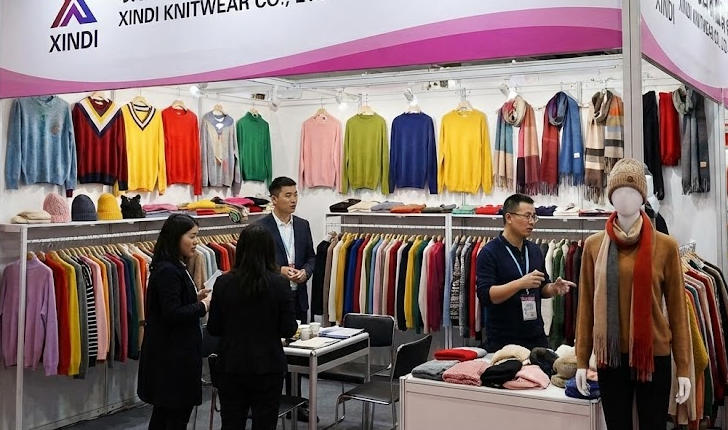
If you’re moving from concept to sampling and want a factory-friendly path (charts, swatches, and a repeatable approval workflow), you can browse Xindi Knitwear’s overview of private label knitwear to see what information typically speeds up sampling.